
A Life Decoded: My Genome: My Life
J. Craig Venter
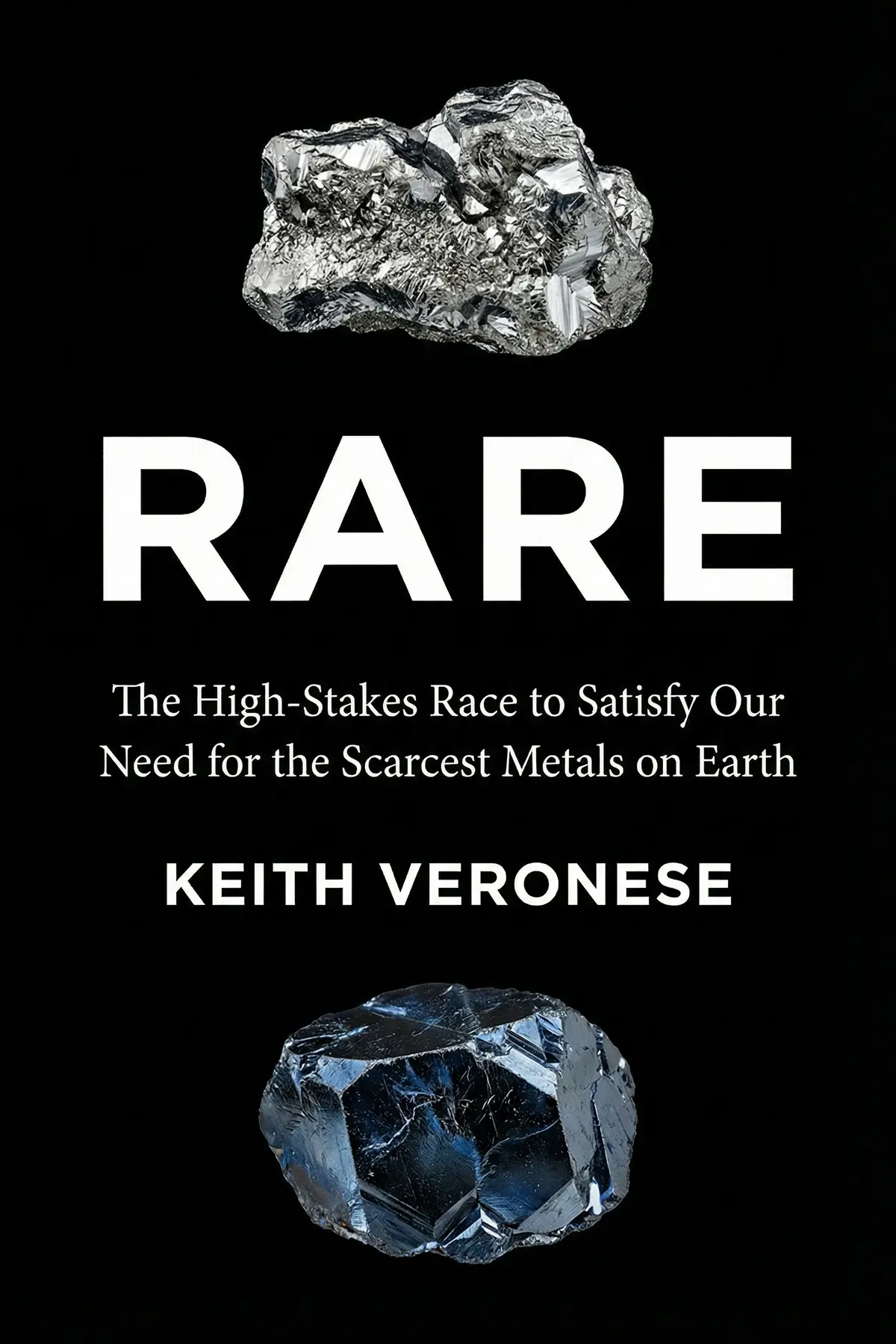
Explore the hidden world of rare earth metals and their profound impact on technology, global politics, and everyday life, from the smartphones in our pockets to the future of space exploration.
1 min 50 sec
Have you ever paused to consider what actually makes your smartphone work? Beyond the software and the sleek glass, there is a hidden world of chemistry that most of us never encounter. We talk about gold and silver, or perhaps silicon, but there is a group of seventeen elements that are far more critical to our modern existence. These are the rare earth metals. If names like lanthanum, cerium, or praseodymium sound like something out of a science fiction novel, you are not alone. For the vast majority of people, these elements are complete mysteries. Yet, they are the silent engines of our current technological age.
In this exploration of the book Rare, we are going to dive deep into these unusual substances. We will uncover why they are called rare despite being found in the dirt in your own backyard, and we will trace their journey from a quiet quarry in Sweden to the cutting edge of military defense. This is not just a story about chemistry; it is a story about power, mystery, and the future of our species. We will see how these metals keep nuclear plants from melting down, how they have been used to commit the perfect murder, and why they are at the center of a global tug-of-war between world superpowers.
As we move through these ideas, the goal is to provide a comprehensive look at why these elements matter so much. They are the invisible threads that connect your pocket electronics to the most advanced fighter jets in the sky and the renewable energy solutions of tomorrow. By the end of this journey, those strange names will mean a lot more than just spots on a periodic table. They will represent the very building blocks of the twenty-first century. So, let’s begin by addressing the central paradox of these materials: why do we call them rare if they are actually all around us?
2 min 34 sec
Uncover the surprising truth about why these common elements earned a reputation for being scarce and the massive challenges scientists face in extracting them.
2 min 34 sec
Follow the centuries-long journey of discovery that began with a strange black rock and eventually gave us the vibrant colors on our digital displays.
2 min 32 sec
Discover the vital role rare earth metals play in keeping nuclear reactors stable and the complex security challenges posed by their waste.
2 min 36 sec
Explore the darker side of chemistry where a specific rare earth compound became the favorite tool for murderers due to its stealthy nature.
2 min 26 sec
Understand why China dominates the global supply of these metals and how this monopoly influences international relations and the future of nations like Afghanistan.
2 min 33 sec
From the engines of fighter jets to the potential of asteroid mining, discover how these elements are the key to both military superiority and our survival as a multi-planetary species.
1 min 45 sec
As we have seen, the story of rare earth metals is far more than a dry collection of chemical facts. It is a sweeping narrative that touches every corner of human endeavor. We began by demystifying the idea of rarity, learning that these elements are actually ubiquitous but incredibly difficult to extract. We traveled back to a Swedish quarry to see how a single strange rock paved the way for the vibrant colors on our screens today. We looked at the dual nature of these substances—how they can be the silent guardians of nuclear safety while also serving as the perfect, untraceable tool for a murderer.
We also explored the high-stakes world of international politics, where China’s control over these resources gives it a strategic advantage akin to a monopoly on oil. And we looked at the future, from the high-tech alloys in our fighter jets and the batteries in our green cars to the potential for mining the stars themselves. The overarching lesson is that our modern, digital, and high-security world is built on a foundation of materials that most of us completely ignore.
In an era where technology moves faster than ever, understanding the physical building blocks of that technology is essential. These seventeen elements are not just curiosities; they are the pillars of our current civilization. As we move forward, the challenge will be to find sustainable ways to extract these metals, manage the geopolitical tensions they cause, and perhaps one day, look beyond our own planet to secure the next generation of human progress. The next time you pick up your phone or see a jet streak across the sky, remember that there is a world of rare chemistry making it all possible.
Rare investigates the 17 chemical elements that have quietly become the backbone of modern civilization. Although these metals are tucked away in the periodic table with names that most people can barely pronounce, they are indispensable to the functioning of our high-tech world. From the screens of our mobile devices to the inner workings of fighter jets and nuclear reactors, these substances are everywhere. The book promises to demystify the science behind these minerals while telling the gripping stories of their discovery, their use as deadly poisons, and their role in the shifting balance of global power. You will discover why China currently holds a massive advantage in the resource race and how nations like Afghanistan might find economic salvation in the soil beneath them. Ultimately, it is a journey into the materials that define the present and will likely shape the future of human exploration beyond our own planet.
Keith Veronese is a scientist and author who earned his PhD in chemistry from the University of Alabama in Birmingham in 2011. He has contributed his expertise to various media outlets, including Gawker Media and Alpha Brand Media. In addition to his scientific writing, he is the author of Plugged In: Comic Book Professionals Working in the Video Game Industry, showcasing his diverse interests in both high-level science and popular culture.
Listeners find the book engaging and enjoyable. Opinions on the quality of information are mixed, with some finding it very informative while others feel it is rather general. Sentiment toward the mineral content is also varied; listeners value the coverage of rare earth minerals, though one listener points out a lack of research on all REE minerals. The material receives split reviews, with some finding it fascinating while another listener notes it lacks rigorous scientific substance.
Finally got around to picking this up after hearing about the mineral conflicts in the news, and I wasn't disappointed. Veronese has a way of making chemistry feel urgent and alive. I had no idea that the history of modern chemistry owed such a massive debt to the seemingly crazy experiments of medieval alchemy. The book does a great job explaining why China currently has the world over a barrel when it comes to these resources. It’s not just about who has the rocks, but who has the infrastructure to refine them. I found the chapters on the Cold War and how certain elements are created in nuclear reactors to be especially gripping. Sure, it’s a bit fast-paced and leans into the 'science for the masses' style, but that’s exactly what I was looking for. It’s a great eye-opener for anyone curious about the hidden costs of our smartphones and hybrid car batteries.
Show moreLooking past the occasional proofreading error, there is a wealth of fascinating information here about the geopolitics of scarcity. I was particularly interested in the sections on 'dirty recycling.' We often think we’re being green by tossing our old tech into a bin, but Veronese shows the dark side of that—how those devices end up in places like India or Africa where children break them down by hand, exposing themselves to arsenic and antimony. It’s a haunting look at the global supply chain. The author also does a great job explaining the role of rare metals in advanced technologies like YAG lasers and super-magnets. I didn't know that Scandium was what made metal halide lamps work! This book turned what could have been a boring list of elements into a series of interconnected stories about power, greed, and innovation. For anyone who likes 'micro-histories,' this is a must-read.
Show moreEver wonder what’s actually powering the device you’re using to read this? Rare is a fascinating, if occasionally messy, look at the physical ingredients of the digital age. Keith Veronese connects the dots between things as disparate as golf clubs, iPhones, and tribal warfare in the Congo. I was particularly struck by the discussion on tantalum—it’s wild to think we carry around 40 grams of it without a second thought. While the author does go off on some weird tangents, like a long section on the opium trade in Afghanistan, the core message about our reliance on these minerals is vital. The section on 'toxic colonies' where electronic waste is recycled by children in developing nations was sobering and well-handled. It isn't a textbook, and the science is definitely simplified for the masses, but as a primer on the geopolitics of scarcity, it really works. It makes you realize how much our high-tech future depends on very old-school mining and global power plays.
Show moreAfter seeing that sleek cover design, I was expecting a decent dive into the world of rare earth elements, and for the most part, that’s what I got. Veronese covers a lot of ground here. He starts with the history of man’s relationship with metal and moves all the way into future undersea mining and the exploitation of the Arctic. I personally found the discussion on how China played the long game to dominate the market to be the most compelling part of the book. It’s a cautionary tale about industrial planning that most Westerners aren't aware of. There are some issues with transitions between chapters, and the writing can be a bit dry in the technical sections, but the accessibility is a huge plus. It’s a solid introduction for a layperson who wants to understand why certain rocks are worth more than gold. Just be prepared for a few typos along the way.
Show morePicked this up on a whim and came away with a much better understanding of why China holds so much leverage in the current global economy. Veronese explains the process of mining and refining these ores in a way that makes it clear why it’s so hard for other countries to just 'start up' their own mines. It’s an expensive, dirty, and long-term commitment. I also appreciated the look at the potential for future mining in the Antarctic. The book is very broad, covering everything from the Cold War to modern hybrid car batteries, which keeps things moving at a brisk pace. Some might find it too general, but for me, it provided just enough detail to be informative without getting bogged down in heavy chemical formulas. It definitely makes you look at your smartphone differently once you realize the human and environmental cost of the minerals inside it.
Show moreGotta say, I was pleasantly surprised by how much I learned from this book despite some of the negative things I’d heard about the editing. The author does a solid job of outlining the stakes for the next few decades as these metals become even rarer. The focus on sustainability in the final chapters was a nice touch, offering some hope after a lot of depressing (but necessary) talk about conflict minerals and toxic dumps. I liked the bit about how aluminum was once considered a rare and precious metal before we figured out how to isolate it—it provides a great historical parallel for what we’re going through now. The writing style is casual and very accessible, which I prefer over dense academic prose. If you're interested in how the physical world dictates international policy, you’ll find plenty to appreciate here. It’s a quick read that covers a surprising amount of territory.
Show moreThe chapter on the potential mineral wealth of Afghanistan was the highlight for me, but the rest of the book was a bit of a mixed bag. Veronese clearly knows his stuff when it comes to the general landscape of mining, but he has a tendency to wander away from his main topic. I didn't really need a long-winded history of poppy growing when I signed up for a book about minerals. That said, the information regarding the Democratic Republic of the Congo and the role of 'conflict minerals' was eye-opening, even if it felt a bit brief in places. I appreciated the section on DIY mineral extraction from old electronics, though it felt a bit out of place next to the heavier geopolitical discussions. It’s an easy enough read, but it lacks the depth I was hoping for. It feels like it’s trying to be three different books at once: a history, a chemistry guide, and a political manifesto. It succeeds at being moderately interesting in all three without mastering any.
Show moreNot what I expected, but in a way that kept me turning the pages despite the obvious flaws. The truth is, Rare feels like it was written in a rush. There are some glaring errors—like the NASA thing—that really should have been caught by an editor. However, if you can get past the lack of polish, the subject matter is undeniably important. I enjoyed the parts about the 19th-century discoveries in Sweden and the weird ways gold can be counterfeited using other rare metals. The book struggles to find a balance between being a hobbyist guide and a serious look at global trade, but it manages to be entertaining regardless. It’s a good 'airplane book'—interesting enough to keep your attention for a few hours, but you might forget half the details a week later. It’s a broad overview that serves as a decent starting point if you know absolutely nothing about the topic.
Show moreTo be fair, I really wanted to like this book given how relevant the subject of rare earth minerals is to modern technology. Unfortunately, the execution was lacking. The author seems to struggle with basic terminology, frequently conflating 'rare earth elements' with just any element that is hard to find, like gold or platinum. It’s a major distinction that any science writer should get right. To make matters worse, the proofreading is non-existent. At one point, the book refers to 'elections' when it clearly meant 'electrons,' and it calls NASA the 'North American Space Agency.' These kinds of errors make it hard to trust the more complex scientific claims. While some of the history regarding Swedish and Finnish scientists was interesting, it was buried under a lot of superficial analysis. If you’re looking for a rigorous scientific or economic study, you should probably look elsewhere. This felt more like a collection of blog posts than a cohesive book.
Show moreFrankly, this was one of the most frustrating 'science' books I have encountered in years. The author utterly failed to provide a cohesive narrative. One moment we are talking about the periodic table, and the next we are glossing over horrific massacres in the DRC in just a couple of sentences. It felt incredibly disrespectful to the gravity of the geopolitical situations he was attempting to describe. Furthermore, the science was just plain bad. He didn't include a single interview with a working geologist or visit any of the sites he described, which led to a lot of impressionistic remarks that don't hold up to scrutiny. The claim that 19th-century Sweden was 'strife-free' compared to England is historically laughable. After reading high-quality science writing from authors who actually do their research, this felt like a hurried, ill-planned effort. It’s a shame because the cover is beautiful, but the content inside is a total mess of contradictions and typos.
Show moreJ. Craig Venter

Jacinda Ardern
Pankaj Mishra
Carl Zimmer
James Comey
Anthony Pratkanis
Bill Bryson
Jeff Hawkins

AUDIO SUMMARY AVAILABLE
Get the key ideas from Rare by Keith Veronese, plus 5,000+ more titles in English and Thai.







