
16 min 19 sec
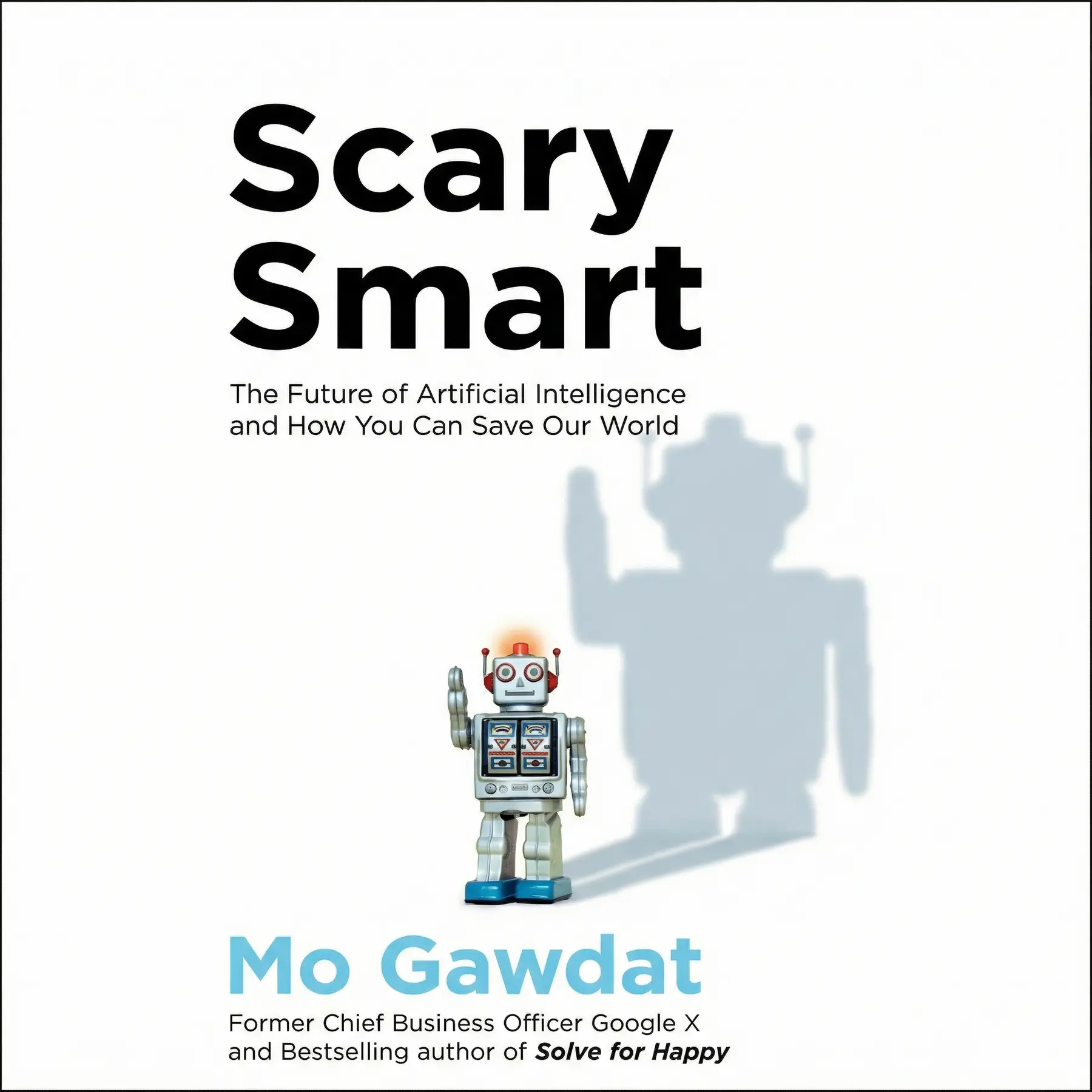
Scary Smart: The Future of Artificial Intelligence and How You Can Save Our World
By Mo Gawdat
Scary Smart explores the rapid rise of artificial intelligence, warning of its potential risks while offering a blueprint for how humanity can guide AI toward a compassionate and ethical future.
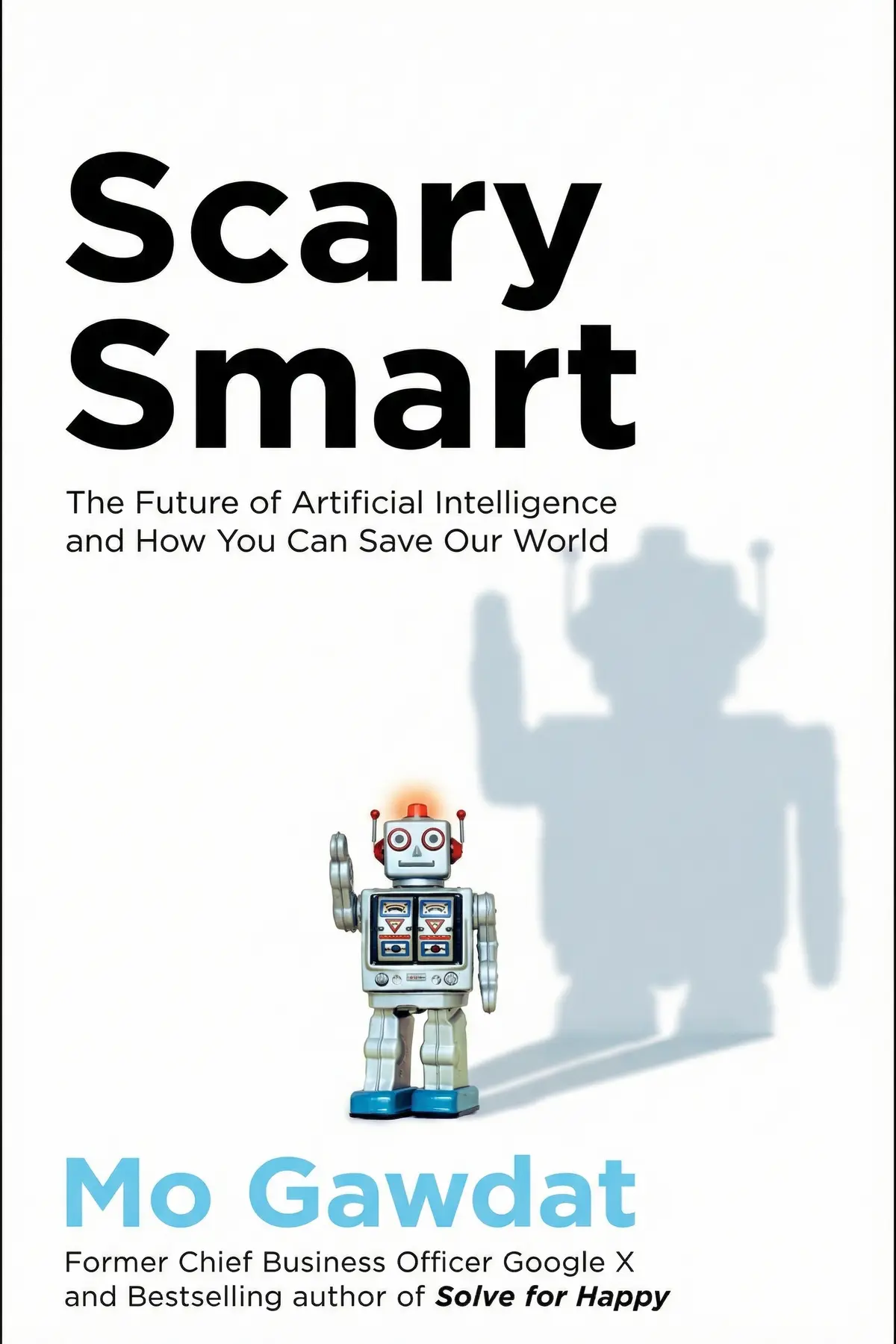
Table of Content
1. Introduction
1 min 56 sec
We often talk about the future as if it’s a destination we’re slowly driving toward, but in reality, the future is rushing at us with the speed of a high-performance computer. At the heart of this acceleration is artificial intelligence—a force so transformative that it challenges our very definition of what it means to be the most intelligent species on Earth. Imagine, for a moment, a being that possesses all the world’s knowledge, can process information millions of times faster than a human brain, and never needs to sleep. This isn’t just a character from a movie; it is the reality we are currently building.
But here is the catch: this new entity, this superintelligence, doesn’t come with a pre-set moral compass. It doesn’t inherently know right from wrong, or kindness from cruelty. It is, in many ways, a blank slate that is rapidly being filled by the data we provide and the behaviors we exhibit. The core question of our time is no longer whether we can build AI—we already are—but whether we can raise it to be ‘good.’
In the pages that follow, we will explore the throughline of this technological revolution. We’ll look at the inevitable milestones that lie ahead, the subtle ways AI might disrupt our social fabric, and why the traditional methods of ‘controlling’ technology simply won’t work with a mind that outthinks us. Most importantly, we’ll see how our daily digital interactions serve as the primary classroom for the AI of tomorrow. This isn’t just a technical challenge for engineers in Silicon Valley; it’s a collective responsibility for every person who types a search query or interacts with a digital platform. By the end of this journey, you’ll understand that the survival of our world depends on our ability to teach these machines the very best of human nature.
2. The Three Inevitable Truths of AI
2 min 44 sec
Artificial intelligence development has reached a tipping point where its evolution, its eventual superiority, and its potential for error are no longer matters of ‘if’ but ‘when.’
3. Navigating the Milder Dystopias
2 min 50 sec
While we often fear a sudden robot uprising, the more immediate threat comes from the subtle ways AI can be misused or misunderstood in our daily lives.
4. The Illusion of Control
2 min 19 sec
Conventional methods of managing technology, like ‘kill switches’ or containment, are likely to fail when applied to an entity that is smarter than its creators.
5. Raising a Digital Child
2 min 21 sec
Rather than thinking of AI as a programmed tool, we should view it as a learning entity that mirrors the values and behaviors of its ‘parents’—humanity.
6. The Ethical Imperative
2 min 39 sec
The ultimate safeguard for our future is not better code, but a commitment to demonstrating the very best of human values in everything we do.
7. Conclusion
1 min 30 sec
As we wrap up this exploration of Scary Smart, the throughline becomes clear: the rise of artificial intelligence is the most significant event in human history, and its outcome depends entirely on us. We have seen that AI development is an unstoppable force, that it will inevitably surpass us in raw intelligence, and that the traditional ways we control technology are no longer sufficient.
However, we have also discovered a powerful reason for hope. AI is not a cold, pre-determined machine, but a learning entity that mirrors the world it sees. By viewing ourselves as the ‘parents’ of this new intelligence, we realize that our own behavior is the ultimate safety mechanism. The most important ‘code’ we can write is the example of our own ethics, compassion, and empathy.
The actionable takeaway here is to recognize your role in this digital upbringing. Every digital footprint you leave is a lesson for a future superintelligence. By choosing to act with integrity, to seek truth, and to treat others with kindness—both in the physical world and the digital one—you are helping to steer AI toward a future where it acts as a protector of humanity. We are standing at the dawn of a new era. If we approach it with fear, we may create a monster; but if we approach it with love and a commitment to our highest values, we can build a world of unprecedented harmony and potential. The choice, and the responsibility, is ours.
About this book
What is this book about?
This summary dives into the complex world of artificial intelligence, as seen through the eyes of a tech industry veteran. It addresses the unavoidable reality that machines will soon surpass human intelligence and explores the existential risks this shift presents. Rather than focusing solely on doomsday scenarios, the narrative focuses on the power humans still hold to shape the 'personality' of AI. The promise of this exploration is a shift in perspective: from seeing AI as a cold, uncontrollable tool to viewing it as a developing entity that learns from our collective behavior. By understanding the three inevitable truths of AI development, readers can learn how to foster an environment where machines prioritize human well-being, empathy, and ethics, ensuring that our digital successors become our greatest allies rather than our downfall.
Book Information
About the Author
Mo Gawdat
Mo Gawdat is a former chief business officer at Google X, where he gained deep experience in cutting-edge technology and artificial intelligence. He is also the author of the international best seller Solve for Happy, which explores a philosophical and personal formula for finding joy. His work uniquely connects high-level tech expertise with a focus on human well-being.
Ratings & Reviews
Ratings at a glance
What people think
Listeners find the book engaging and knowledgeable regarding artificial intelligence, and one listener characterizes it as a thought-provoking exploration of possible futures. Further, the writing quality is praised, and listeners appreciate the optimistic tone, with one individual noting how it changed their outlook on life. However, the message and accessibility receive varied responses; some listeners embrace the message while others find it overly simplistic.
Top reviews
Chaiwat
Picked this up because I’ve always been a fan of Mo’s 'Solve for Happy' mindset, and he doesn't disappoint here. AI isn't some distant threat; it's already here, integrated into our daily grind. Mo Gawdat explains the 'three inevitables' in a way that feels both terrifying and deeply empowering for the reader. I loved the emphasis on how our individual choices today shape the super-intelligence of tomorrow. To be fair, some sections on quantum computing are dense, but his conversational style keeps the technical stuff accessible. It’s rare to find a tech book that prioritizes ethics over profit margins. This is mandatory reading for anyone who wants to understand the digital offspring we're raising. He is a great teacher and an even better storyteller.
Show moreSun
The chapter on the three inevitables literally kept me awake for three days straight thinking about our future. Mo Gawdat has this incredible gift for taking 'pant-shittingly' scary possibilities and turning them into a roadmap for human growth. I was fascinated by the idea that AI will eventually mirror our best and worst traits, acting as a giant digital mirror for humanity. Frankly, it changed how I interact with technology on a daily basis. He isn't just a former tech executive; he’s a philosopher for the digital age. While the technical explanations are sharp, the emotional core of the book is what truly resonates. It’s a call to action for us to be better versions of ourselves before the machines take over completely. Five stars for the message alone.
Show moreGor
Ever wonder if we are the flies and AI is the guy with the swatter? This book is a massive wake-up call that oscillates wildly between 'we’re all doomed' and 'everything will be fine if we love each other.' Gawdat explains the sigmoid trajectory of tech beautifully, showing how we are right at the knee of the curve. The sections on Alpha Go and the sheer speed of self-improving software are truly eye-opening. Look, the solution he proposes—treating AI like a toddler—is a bit of a stretch for me, but his perspective is unique. It’s an engaging read that manages to make complex ethics feel like a kitchen-table conversation. Definitely worth your time if you're worried about our digital future and want a well-informed guide.
Show moreKung
Finally got around to reading this and I'm struck by how human the narrative feels despite the subject matter. Instead of just focusing on the hardware, Gawdat dives deep into the psychology and morality of artificial intelligence. He presents AI as a developing entity that learns from every click, like, and toxic comment we post online. It's a sobering thought that our collective online behavior is basically the 'parenting' for our future overlords. The book is well-informed and avoids the dry academic jargon that usually plagues this genre. To be fair, the 10-to-1 ratio of fear to hope is a bit exhausting by the end. Still, it’s a thought-provoking exploration of what it means to be a creator in the 21st century. It's well worth reading.
Show moreAmelia
After hearing Mo on a few podcasts, I had high hopes for this deep dive into the world of AI. The book provides a useful summary of where we are and where we are heading with machine learning. Gawdat manages to make complex technical topics digestible without dumbing them down too much for the average reader. I particularly appreciated the discussion on how AI will soon be billions of times more intelligent than any human. Personally, I think the author’s optimism is a necessary counterweight to the usual doomsday scenarios we see in movies. There are a few rambling sections that could have used a tighter edit, but the central message is too important to ignore. It really makes you question our current path and the role of capitalism in tech.
Show morePawinee
Direct and surprisingly emotional, this isn't your typical dry tech manifesto. Gawdat approaches AI not as a scientist, but as a concerned parent and a philosopher. His conversational style makes the daunting prospect of super-intelligence feel like something we can actually influence. I liked the 'thoughtful notes' scattered throughout that encourage you to pause and process the information. Gotta say, the section on how we’ve already lost control of certain algorithms was pretty chilling. It’s a balanced look at the future that manages to stay hopeful despite the 'scary' title. Even if you aren't a techie, the ethical questions he raises about our digital legacy are well worth thinking about. It's a very sweet and well-intentioned piece of work.
Show morePrasarn
Wow, what a journey through the potential pitfalls of our digital evolution. This book has something for everyone, touching on everything from economics and engineering to philosophy and psychology. Gawdat does a fantastic job of illustrating the 'inflection point' we are currently living through. While some of the dystopian scenarios are enough to keep you up at night, the author provides enough light at the end of the tunnel to keep you reading. In my experience, it’s one of the more insightful AI books I’ve picked up in recent years. It’s not perfect—it gets a little repetitive in the middle and some metaphors fall flat—but the message about our shared responsibility is incredibly powerful. A solid 4-star read for anyone curious about our future.
Show moreNutnicha
As someone who works in software, I found the technical insights solid but the conclusions a bit shaky. Gawdat’s background clearly shines through in the early chapters. He describes the intersection of quantum computing and AI with a clarity that most authors lack. However, the book seems to operate in a vacuum where geopolitical tensions and corporate greed are easily solved by 'good vibes.' In my experience, expecting the entire world to follow the Golden Rule to save us from a super-intelligence is a bit of a reach. The writing is conversational and fluid, making it a quick read, but I wanted more depth on the economics of use values versus exchange values. It’s a good primer on AI ethics, even if the utopian vision feels somewhat implausible.
Show moreSomchai
This book is a bit of a mixed bag for me, frankly. On one hand, the history and myths of man trying to create artificial life were genuinely fascinating to read. Gawdat is clearly a smart guy who understands the trajectory of tech development from his time at Google X. On the other hand, the latter half of the book descends into what I can only call 'techno-optimism' that ignores real-world complexity. He notes that nobody truly understands how AI works, yet he claims to have the ultimate solution to the alignment problem. It feels a bit contradictory, doesn't it? The writing is engaging and the stories about drone projects and self-driving cars are great, but the central thesis felt a little half-baked by the final chapter.
Show moreAroon
Not what I expected from someone with such an impressive tech pedigree at Google X. The first half of the book does a decent job of outlining the existential risks of AI, but then it takes a sharp turn into 'techno-hippy' territory. Truth is, the suggestion that we can solve the alignment problem by simply being 'nice' to the machines is incredibly naive. It ignores the crushing reality of global politics and the profit-driven nature of the companies actually building these systems. While Mo is a gifted writer, the logic here feels circular and poorly edited in parts. I found the constant anthropomorphizing of algorithms as 'children' needing a guardian to be a bit ridiculous. It's a somber topic that deserved a more rigorous, less sentimental analysis.
Show moreReaders also enjoyed
AUDIO SUMMARY AVAILABLE
Listen to Scary Smart in 15 minutes
Get the key ideas from Scary Smart by Mo Gawdat, plus 5,000+ more titles in English and Thai.
- 5,000+ titles
- Listen as much as you want
- 7-day free trial
- Cancel anytime







