
14 min 57 sec
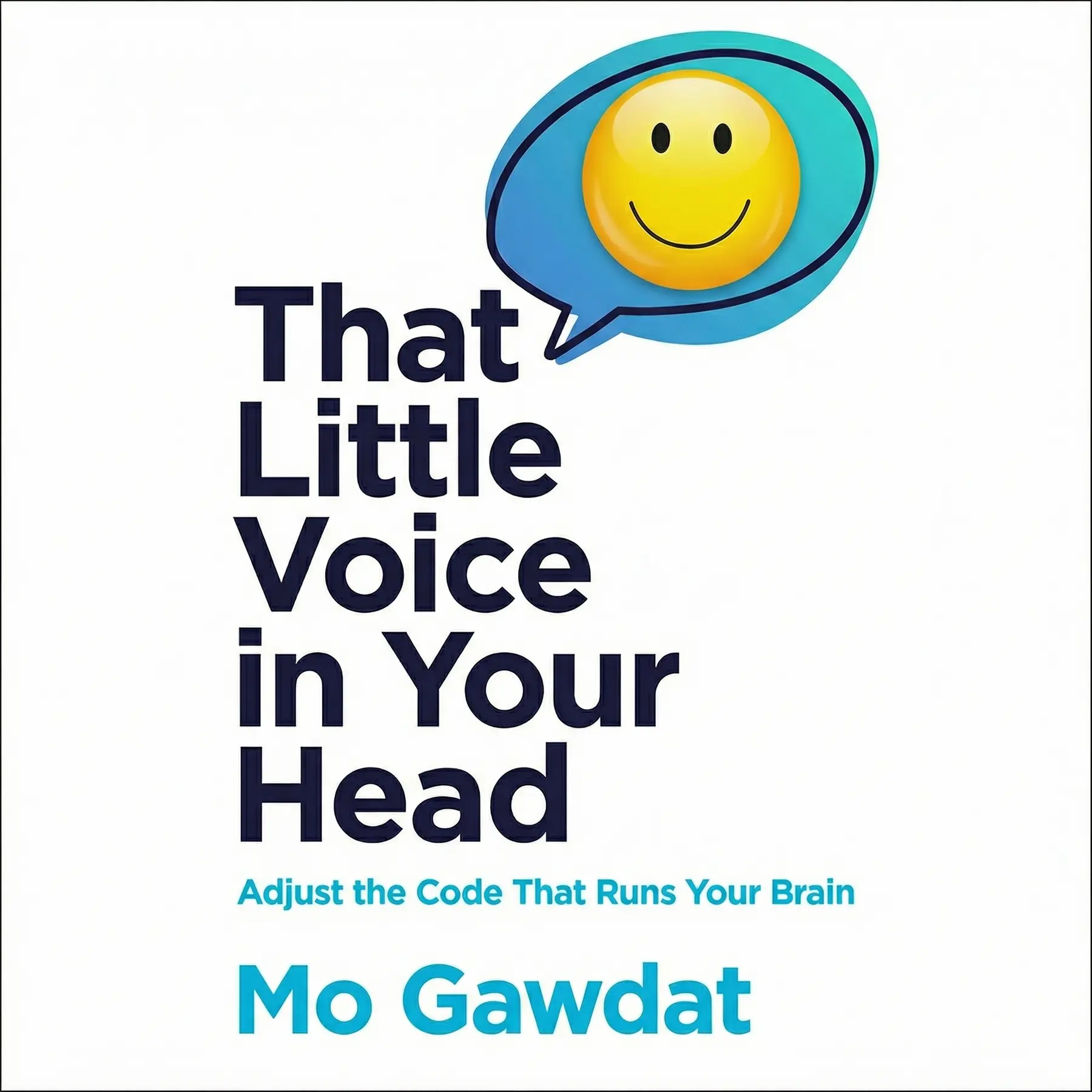
That Little Voice in Your Head: Adjust the Code That Runs Your Brain
By Mo Gawdat
Discover how to treat your brain like a computer system that can be debugged. This guide provides actionable steps to silence negative self-talk and reprogram your mind for lasting happiness.
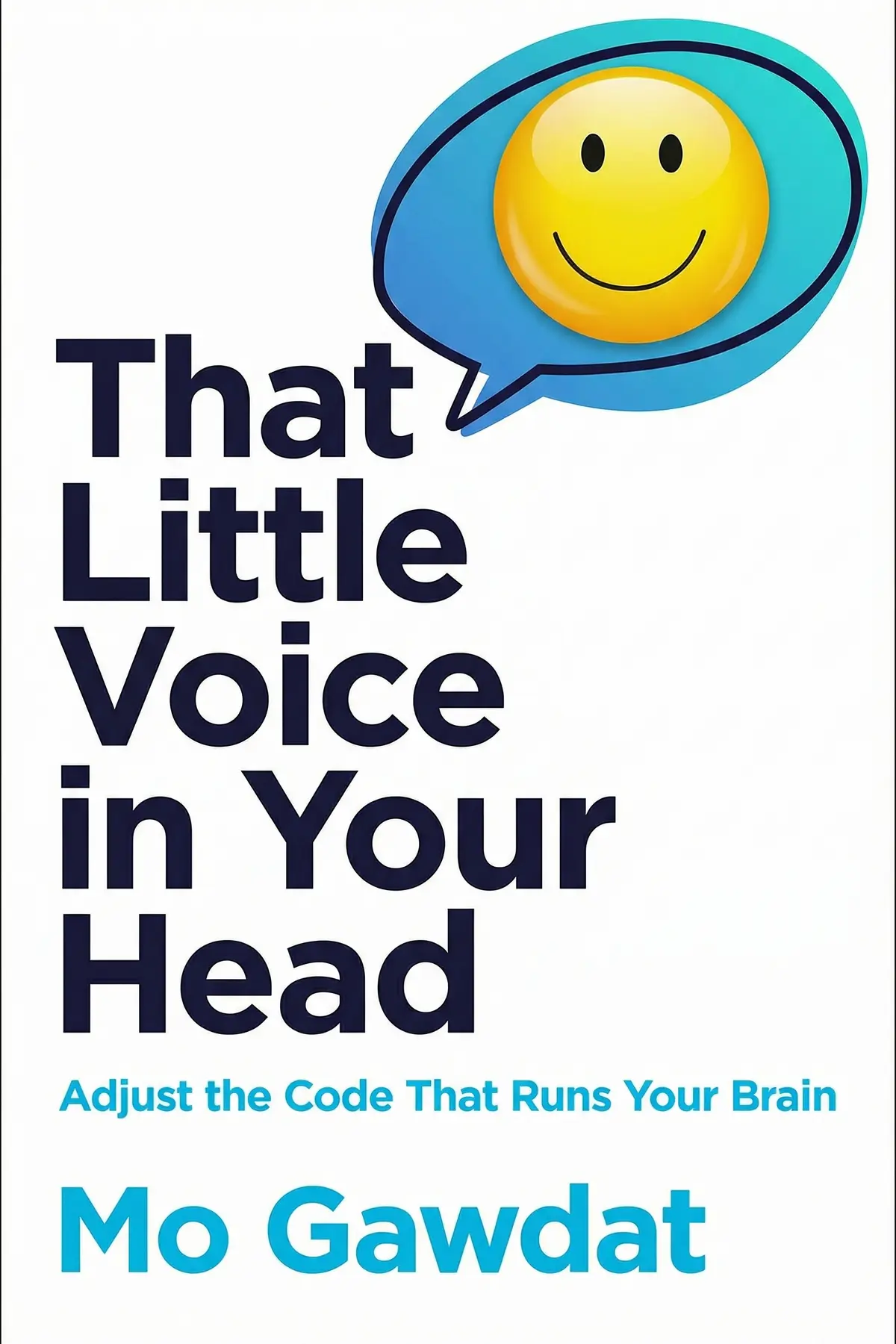
Table of Content
1. Introduction
1 min 39 sec
Think back to the earliest days of your life. Imagine yourself as a young child, perhaps playing in a park or simply watching the clouds. In that moment, you weren’t worrying about your mortgage, your career trajectory, or what a colleague meant by that subtle comment in a meeting. You were simply existing. This, according to Mo Gawdat, is our default setting. We were born to be happy, but somewhere along the way, we downloaded a lot of bad software and cluttered our systems with junk files.
Mo Gawdat brings a unique perspective to the search for inner peace. As the former chief business officer at Google’s elite research lab, Google X, he spent his career thinking about complex systems, algorithms, and technical optimization. When he faced the ultimate personal tragedy—the loss of his son, Ali—he applied this engineering mindset to the problem of human suffering. The result is a ‘user’s manual’ for the human brain. He treats the mind not as some mystical, untouchable force, but as a biological machine that runs on code. If the output of that machine is unhappiness, it simply means there is a bug in the system that needs to be fixed.
In this exploration, we are going to look at the mechanics of your mind. We’ll learn how to separate ‘you’ from the voice in your head, troubleshoot the primary causes of mental friction, and ultimately reprogram your daily thoughts to support a life of joy. This isn’t just about feeling better in the moment; it’s about a structural overhaul of how you process reality. By the time we’re finished, you’ll have the tools to look at your mental ‘operating system’ with the clarity of a computer scientist, ready to hit the reset button on negative patterns and return to that childhood state of effortless happiness.
2. Separating Your Identity from the Machine
2 min 11 sec
Discover why the voice in your head isn’t actually you and how treating your brain like a biological organ can liberate you from negative thoughts.
3. The 4-3-2-1 Troubleshooting Framework
2 min 45 sec
Learn a simple numerical system to identify the hidden causes of your unhappiness, from faulty inputs to survival instincts.
4. Practical Debugging Techniques
2 min 20 sec
Explore actionable habits to reprogram your brain, including the power of questioning and the surprising benefits of a media fast.
5. Balancing the Processors with 'Be, Learn, Do'
2 min 18 sec
Master the art of total awareness and intentional action to bring your logical and emotional selves into perfect alignment.
6. Optimizing for Peak Performance Through Useful Thinking
2 min 16 sec
Go beyond silence and discover how four specific types of thought can actually boost your happiness and impact.
7. Conclusion
1 min 28 sec
The journey to a happier life doesn’t require a miracle; it requires a bit of engineering. By viewing your brain as a sophisticated machine and your thoughts as its software, you gain a level of distance and control that can transform your daily experience. We’ve explored how to separate your true self from the internal chatter, how to use the 4-3-2-1 countdown to diagnose mental glitches, and how to replace rumination with ‘useful thinking’ like flow and giving.
Remember Mo Gawdat’s mission: One Billion Happy. This isn’t just a lofty goal; it’s a reminder that happiness is a collective responsibility that starts with the individual. When you take the time to ‘debug’ your own mind, you aren’t just helping yourself. You become a calmer, kinder, and more present person for everyone around you. You stop reacting to the world out of fear or old conditioning and start responding with clarity and purpose.
The next time that little voice in your head starts to pull you down, don’t argue with it and don’t ignore it. Simply acknowledge it as a byproduct of a complex system that needs a little maintenance. Ask yourself if the input is faulty, if a survival instinct is overreacting, or if you’re stuck in a loop. Then, consciously choose a new program. Switch to an experiential thought, tackle a problem, or find a way to give. Your default state is joy—the manual is in your hands, and you have everything you need to hit the reset button.
About this book
What is this book about?
Have you ever wondered why your mind seems to have a mind of its own? We often feel trapped by a constant stream of self-criticism, anxiety, and repetitive thoughts that seem impossible to silence. This summary explores the intersection of computer science and neuroscience to explain that your brain is essentially an operating system. Just as you would update software or troubleshoot a glitchy computer, you can identify the faulty inputs and processes that lead to unhappiness. The promise of this approach is a systematic return to our default state of joy. By understanding the evolutionary mechanisms behind our thoughts—including survival instincts and emotional attachments—we can begin to detach our identity from the 'noise' in our heads. Through practical techniques like questioning beliefs, media diets, and intentional thinking, you will learn how to optimize your mental hardware. It is not about reaching a state of constant perfection, but about mastering the tools to reset your system whenever life throws you off balance.
Book Information
About the Author
Mo Gawdat
Mo Gawdat is an entrepreneur and three-time best-selling author who formerly served as the chief business officer for Google X. After the tragic passing of his son, Ali, he dedicated his life to the mission of helping people find joy, founding the One Billion Happy movement. He is also the author of Solve for Happy and Scary Smart, and he hosts the popular podcast Slo Mo, where he explores the intersections of mental health, happiness, and technology.

Ratings & Reviews
Ratings at a glance
What people think
Listeners find Mo Gawdat’s *That Little Voice in Your Head* provides an authentic and often moving manual for mental management through the use of software-based metaphors. While some listeners suggest the content can feel repetitive or drawn out, many enjoy the functional daily routines aimed at improving personal happiness. They also prize the author's emphasis on decoupling identity from internal monologue, with one listener mentioning the book delivers "takeaways you can use in your everyday life." Additionally, listeners indicate the AI-related analogies are particularly insightful for those attempting to fix negative mental programming and feelings.
Top reviews
Kavya
The computer/AI analogies in this book are a total game changer for someone with a logical mind. Mo Gawdat breaks down the human brain into an operating system, making it so much easier to understand how we process negative inputs like conditioning and old beliefs. Truth is, I have always struggled with overthinking, but the specific exercises for troubleshooting hidden triggers actually work if you put in the effort. I loved the concept of separating your identity from the 'byproducts' of your brain; it creates a necessary distance from the constant chatter. While the book is a bit dense in parts, the software metaphors are incredibly eye-opening for a layperson. If you are willing to treat your happiness like a technical project, this manual will provide the exact code you need to rewrite your mental state. It is a genuine, inspiring guide that offers more than just vague platitudes.
Show moreKanokporn
Finally got around to finishing this, and the exercises at the end of each chapter are where the real magic happens. This isn't just a book you read; it is a manual you have to actively use to see any real-world results. Not gonna lie, I was skeptical about the AI-inspired metaphors initially, but they helped me visualize my anxiety as a 'bug' rather than a personality trait. The chapter on the four types of input—conditioning, old thoughts, emotions, and triggers—was particularly brilliant and gave me a framework to analyze my bad moods. I appreciate Mo’s vulnerability and his genuine desire to help others find the same peace he has worked so hard for. It is rare to find a self-help book that is both deeply emotional and rigorously logical at the same time. This is a must-read for anyone who feels like their own mind is working against them.
Show moreChamlong
Ever wonder why that internal narrator just won't shut up or stop being so incredibly mean to you? Mo Gawdat explains exactly why that happens and, more importantly, how to take the steering wheel back from your own biology. The path the author describes is both genuine and inspiring, rooted in his own experiences with grief and recovery. I found the section on the 'little voice' to be life-changing because it taught me how to observe my thoughts without immediately reacting to them. The computer allegories made the psychological concepts feel tangible and manageable rather than overwhelming. While some might find the repetition annoying, I think it helps solidify the practices in a way that most self-help books fail to do. This is a deeply human book written by someone who truly understands the mechanics of suffering and the architecture of joy.
Show morePisit
Wow, the way Mo breaks down the four types of input—conditioning, old thoughts, emotions, and triggers—is incredibly eye-opening for anyone feeling stuck. I have read plenty of books on mindfulness, but none of them explained the 'why' behind our mental chatter as clearly as this one does. The computer and AI allegories provide a perfect bridge for those of us who need a more technical or logical explanation for our feelings. It feels like Mo is right there with you, guiding you through a system restore of your own consciousness. Even though it is a bit long, every chapter contains at least one takeaway you can use in your everyday life immediately. This book genuinely changed how I talk to myself on a daily basis. It is an inspiring read that proves you don't have to be a victim of your own hardware.
Show moreWyatt
Mo Gawdat has this unique way of making complex neurobiology feel like a simple software update for your soul. Personally, I found the actionable daily practices to be the strongest part of the text, especially the sections on writing down your thoughts to debug your emotional responses. To be fair, the book does get quite repetitive in the middle sections, almost as if the author is trying to hammer the same point home through sheer brute force. I suspect this was intentional to help the new 'input' sink in, but it can be a bit of a slog for fast readers. I also recommend getting the physical copy over the audiobook because the graphs and illustrations are essential for visualizing the computer allegories. It is a solid 4-star read that offers a lot of practical takeaways for anyone looking to manage that pesky internal narrator more effectively.
Show moreSamroeng
As someone who spends all day coding, seeing the human mind described as an operating system was exactly the perspective I needed. The way Mo explores the concept of 'brain byproducts' allowed me to finally stop identifying so closely with my negative internal monologue. Frankly, the book could have been about fifty pages shorter without losing much of its core message, as it does tend to circle back to the same themes frequently. I also found the intro a bit slow, with too much time spent explaining what we *would* learn instead of just jumping into the meat of the instructions. Despite those minor gripes, the takeaway of troubleshooting your thoughts like software is incredibly effective. It provides a structured path toward happiness that feels achievable rather than mystical. Definitely a useful tool for those who prefer logic over 'woo-woo' spirituality.
Show moreSom
Picked this up on a whim after a rough month, and it provided some much-needed structure to my chaotic thoughts. The idea of writing down your thoughts about your thoughts sounds meta, but it is actually an incredible way to start troubleshooting your mental state. I particularly liked the breakdown of how conditioning from our past dictates our current reactions to stress. Gotta say, the author’s focus on actionable daily practices makes this feel much more like a workbook than a standard memoir or theory book. My only real complaint is that the writing style is a bit wordy, and I found myself skimming some of the more repetitive anecdotes. However, the core message about separating your identity from your brain’s output is a powerful tool that I have already started using. It’s a solid guide for anyone needing a mental reset.
Show moreSomboon
After hearing Mo speak on a podcast, I expected a lot from this book, and it mostly delivered on its promises. The focus on the 'little voice' in your head is something everyone can relate to, and the instructions for how to silence it are very clear. To be fair, listening to the audiobook version was a bit of a challenge because I kept wishing I had the physical charts to look at while he was talking. The AI-inspired metaphors are brilliant, though they do get repeated verbatim a few times throughout the chapters. If you can get past the slightly repetitive nature of the prose, the actual content is gold. It’s a very pragmatic approach to a subject that is usually treated with too much sentimentality. Mo’s logic-based framework for happiness is a breath of fresh air in the self-help genre.
Show moreLeah
To be fair, I really loved 'Solve for Happy', but this follow-up felt a bit more hit-or-miss for me. Some of the scientific claims, specifically the stuff about the 'lizard brain,' felt slightly outdated or oversimplified to fit the narrative. Look, the computer software metaphors are definitely interesting at first, but they eventually feel stretched a bit thin over 300+ pages. I also found the tone a little preachy at times, almost like a 'my way or the highway' approach to mental health that doesn't account for everyone's lived experience. However, there are still some very useful nuggets here regarding hidden triggers and how pent-up emotions wreak havoc on our daily peace. It is not a bad book by any means, but it lacked the fresh impact of his previous work. Beginners might find it revolutionary, but seasoned self-help readers may find it somewhat derivative and overly lengthy.
Show moreSavannah
Look, I understand the 'software' angle, but the author seems to completely ignore the reality of deep-seated generational trauma. Suggesting that we can just 'troubleshoot' our way out of clinical depression by thinking about our childhood as a time of zero responsibility felt incredibly tone-deaf to me. Not everyone had a happy, pressure-free childhood to look back on as a baseline for happiness. The book is also incredibly repetitive, saying the same thing in five different ways just to fill space, which made the reading experience feel like a chore. I felt like I was reading a lot of 'facts' that weren't actually supported by modern neurobiological research, especially regarding the lizard brain stuff. It might work for beginners who have never read a psychology book before, but for me, it felt arrogant and simplistic. I really wanted to like this, but it just didn't click.
Show moreReaders also enjoyed

A High-Performing Mind: Strengthen Your Mind and Live Your Best Life
Andrew D. Thompson

Alcoholics Anonymous
Alcoholics Anonymous World Services
Abundance: The Inner Path to Wealth
Deepak Chopra
A Liberated Mind: How to Pivot Toward What Matters
Steven C. Hayes

AUDIO SUMMARY AVAILABLE
Listen to That Little Voice in Your Head in 15 minutes
Get the key ideas from That Little Voice in Your Head by Mo Gawdat, plus 5,000+ more titles in English and Thai.
- 5,000+ titles
- Listen as much as you want
- 7-day free trial
- Cancel anytime







