
17 min 08 sec
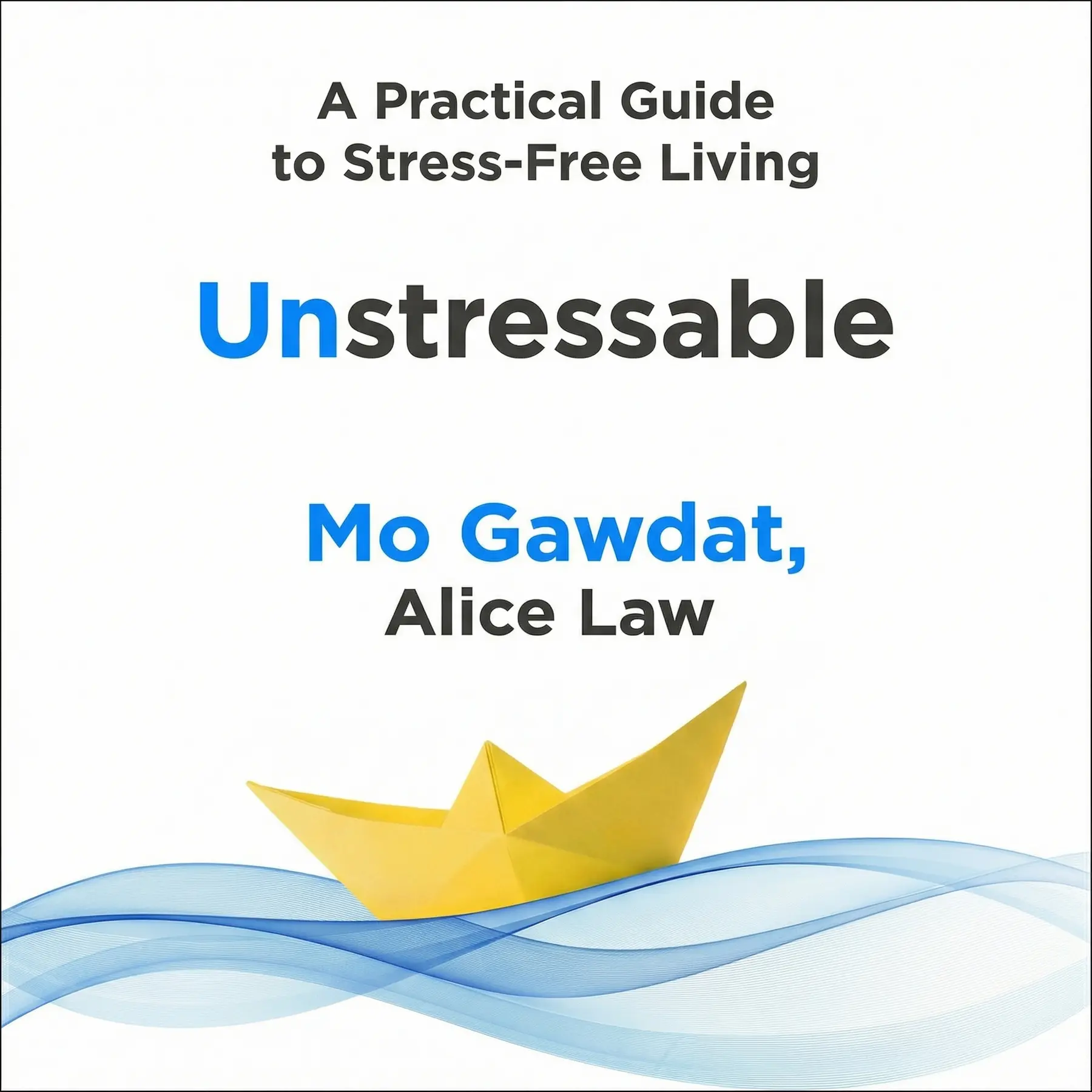
Unstressable: A Practical Guide to Stress-Free Living
Unstressable provides a comprehensive roadmap for transforming your relationship with stress by shifting from reactive panic to proactive resilience through biological understanding, mental reframing, and emotional intelligence.
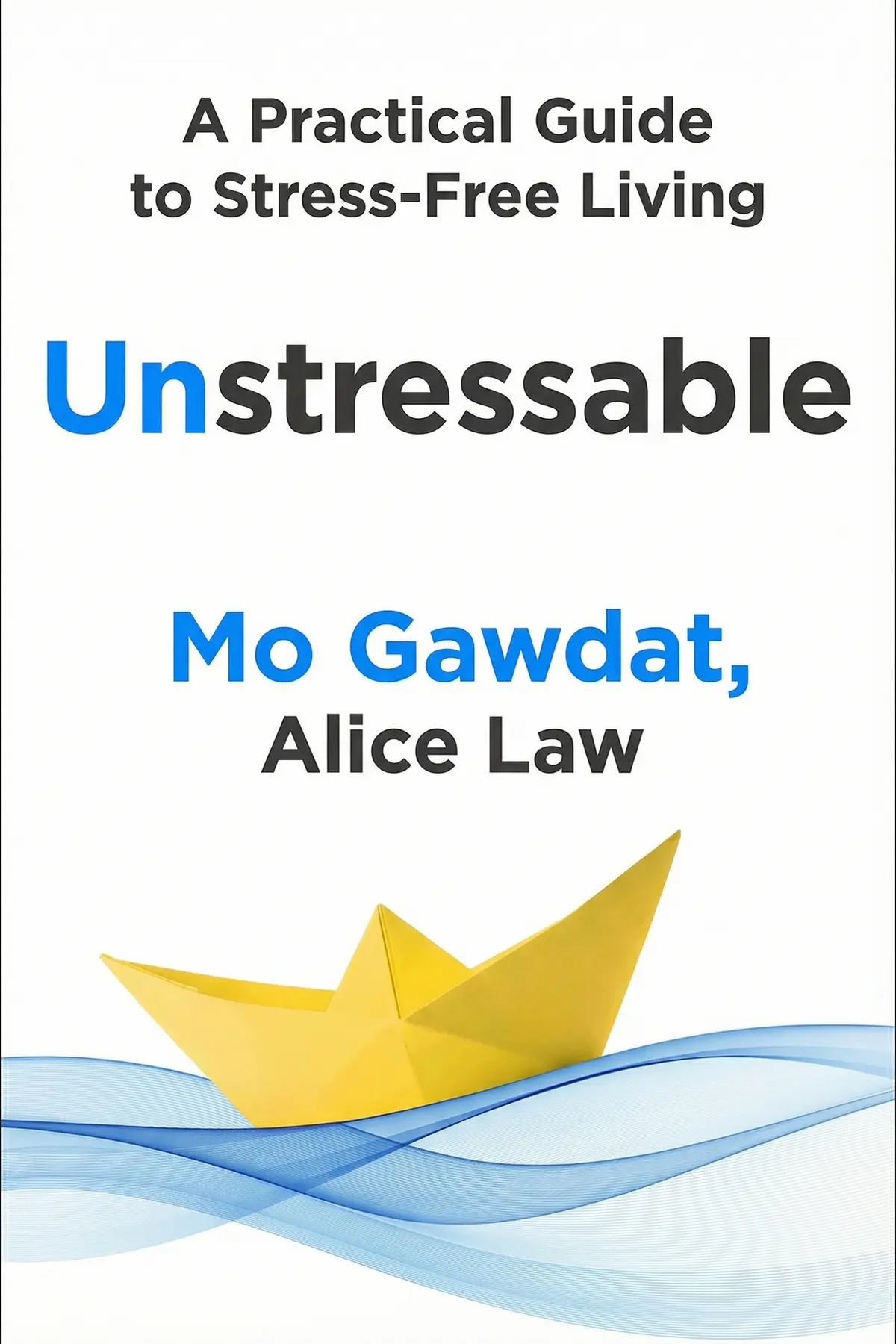
Table of Content
1. Introduction
1 min 35 sec
In our fast-paced modern world, stress is often viewed as a badge of honor—a sign that we are working hard, staying productive, and keeping up with the demands of a high-achieving society. We wear our busyness like armor, yet underneath that armor, many of us are struggling. Statistics suggest that a staggering majority of doctor’s visits are related to stress in some way, and roughly one in three individuals feels they are living in a state of extreme, persistent pressure. We have reached a point where chronic stress is no longer the exception; it is the epidemic of our era.
But what if we’ve been looking at the problem all wrong? What if the secret to a peaceful life isn’t about waiting for the world to stop being demanding, but about changing our internal operating system? This is the core premise of the ‘unstressable’ philosophy. It is the idea that we can develop a level of resilience so deep that we can navigate even the most turbulent waters without losing our inner center.
In this narration, we are going to explore a roadmap for moving beyond the fight-or-flight cycle. We’ll look at the biological mechanics that keep us stuck in panic mode and, more importantly, the practical tools we can use to break free. From categorizing the different types of stress we face to negotiating a new deal with our internal monologue, we will uncover how to stop reacting to life and start proactively shaping our experience of it. It’s time to move from surviving to truly thriving, regardless of what the world throws our way. Let’s begin this journey toward becoming truly unstressable.
2. Mastering the Biology of Stress and the Three L’s
2 min 59 sec
Understand the primal mechanics of your body’s alarm system and learn the three foundational pillars for regaining control over your daily pressures.
3. The Taxonomy of Stress: TONN
2 min 51 sec
Learn how to categorize your challenges into four distinct areas to demystify your anxiety and create targeted solutions.
4. Anchoring the Mind and the Power of 'The Deal'
2 min 58 sec
Discover a three-step method for testing the reality of your worries and a revolutionary way to reprogram your brain’s default settings.
5. Emotional Intelligence and the 90-Second Rule
2 min 33 sec
Unlock the secret to why we stay stuck in negative moods and learn how to let emotions flow through you instead of around you.
6. Building an Unstressable Lifestyle
2 min 41 sec
Learn how to transition from reactive living to a proactive, value-aligned existence that safeguards your inner peace.
7. Conclusion
1 min 31 sec
As we wrap up our exploration of the unstressable path, the most important takeaway is a message of empowerment. Stress is often presented to us as an external force—something that ‘happens’ to us because of our jobs, our families, or the state of the world. But as we have seen, the true source of stress lies in the gap between what is happening and how we interpret it. By narrowing that gap through self-awareness and intentional practice, we reclaim our power.
We’ve discussed the biological roots of our anxiety and how to use the Three L’s to limit, learn, and listen. We’ve explored the TONN framework to deconstruct our worries and the three anchors to keep our minds from drifting. We’ve learned about the 90-second rule for our emotions and the importance of making a ‘deal’ with our brain to prioritize what is useful and joyful. All of these tools are designed to help you build a life where tranquility is your natural state, rather than a rare luxury.
The journey to becoming unstressable doesn’t require a radical, overnight transformation of your external circumstances. Instead, it begins with small, deliberate shifts in your internal world. It starts with the next thought you choose to believe and the next boundary you choose to set. By consistently choosing resilience over reaction and peace over pressure, you will find that you are more than capable of handling whatever comes your way. You have everything you need to live a life that is centered, calm, and truly unstressable.
About this book
What is this book about?
We often treat stress as an unavoidable tax on modern life, a byproduct of success and a busy schedule. However, this guide argues that while external pressures are inevitable, the internal experience of stress is something we can learn to master. By understanding how our bodies respond to perceived threats and how our minds amplify those signals, we can move from a state of constant high alert to one of sustainable tranquility. The book introduces practical frameworks to categorize different types of stress, ranging from major traumas to the constant 'noise' of our inner critics. It offers a set of mental 'anchors' to keep us grounded when life feels chaotic and proposes a unique contract we can make with our own brains to prioritize thoughts that are either useful or joyful. Ultimately, it promises a way to live an 'unstressable' life, where resilience isn't just a recovery tool, but a default way of existing in a demanding world.
Book Information
About the Author
Mo Gawdat
Mo Gawdat is a prominent entrepreneur and the former chief business officer of Google [X]. He is the author of several bestsellers, including Solve for Happy, Scary Smart, and That Little Voice in Your Head, and has cofounded over twenty diverse businesses. Alice Law is a leading Stress Management Consultant, speaker, and the host of the podcast Unstressable with Alice Law. She works globally with both private clients and major organizations to implement strategies for stress prevention and management.
Ratings & Reviews
Ratings at a glance
What people think
Listeners report that while perspectives on spiritual topics like Reiki and energy work are divided, many value the authors' methodical, engineering-based strategy for pinpointing and regulating stress. They further highlight the useful neuroscientific details and concrete habits provided for changing negative internal dialogues. Furthermore, listeners find the categorization of stressors into organized systems helpful, with one listener remarking that the work provides a "unique way to look at stress" and how it impacts the body. Finally, the integration of science-backed tools and personal accounts of resilience enables many to create superior strategies for navigating the stresses of modern existence.
Top reviews
Chiw
Ever wonder why some people seem unbreakable even when life throws the worst at them? This collaboration between Mo and Alice is deeply rooted in their personal tragedies, which gives their advice a level of soul and authenticity that many self-help books lack. I found the sections on reframing our internal conversations especially powerful for my own day-to-day anxiety. The way they personify the brain helps you realize that you aren't your thoughts; you’re the person listening to them. Personally, I appreciated how they balanced the cold, hard science of the brain with the softer, more spiritual elements of healing. It’s a thick read, and some of the mnemonic devices are a bit much to memorize, but the overall message is life-changing. It’s not just about "destressing," but about becoming fundamentally unstressable by changing your input systems.
Show morePhimwan
Finally got around to reading this, and as a Type A personality, I found the engineering-led approach to be exactly what I needed. Most self-help books are too "airy-fairy" for me, but Mo’s perspective on stress as a system overload makes perfect sense. The authors don’t just tell you to relax; they show you how to identify the inputs that are causing the system to fail. Look, you might not agree with every single spiritual concept mentioned—I personally skipped over some of the energy work sections—but the practical habits for managing self-criticism and insomnia are gold. It’s a comprehensive guide that acknowledges that stress isn't just in your head, but manifests physically in your body. Truly a unique way to look at modern living.
Show moreOrathai
Not what I expected, but in a mostly good way! Instead of the usual platitudes, this book offers a structured system to tackle stress from four different angles: mind, emotion, body, and soul. Mo’s background at Google clearly shines through in the way the information is organized, making it feel like a manual for the human operating system. I’ve read a lot of books on mindfulness, but the way they link habits to the "language of de-stressing" felt fresh. Gotta say, the writing can be a bit repetitive, and the authors tend to overshare personal details that don't always relate back to the point. However, if you can filter through the fluff and the occasional "woo" elements, there are some brilliant strategies for increasing your energy and focus. It’s a 5-star concept that just requires a little bit of patience with the prose.
Show moreAkosua
The engineering logic applied to the soul in "Unstressable" is nothing short of brilliant. Mo and Alice have created a handbook for the modern age that recognizes stress is an addiction we need to break. I found the sections on the "math" of stress to be fascinating—seeing it as a predictable outcome of certain inputs makes it feel so much more controllable. The authors share their own experiences with tragic loss, which grounds the whole book in a sense of deep empathy and resilience. I particularly valued the advice on releasing self-criticism and lethargy; these are things I’ve struggled with for years without knowing why. It’s a long read, but it’s the kind of book you keep on your nightstand to refer back to whenever you feel the "hamster wheel" starting to spin. Highly recommended for anyone ready to take a systemic approach to their mental health.
Show moreManika
This book takes a refreshing, almost mechanical approach to the messy world of human anxiety. Mo Gawdat uses his engineering background to dismantle stress as if it were a glitchy piece of software, which really appealed to my logical side. By categorizing stressors into systems like the mind, body, and soul, the authors provide a roadmap that feels much more manageable than your typical "just breathe" advice. Truth is, while some of the spiritual sections on energy felt a bit out of place for a guide marketed on logic, the neuroscience-based explanations for our negative inner dialogues were eye-opening. The structure is solid, though it does get a bit wordy in the middle chapters. If you enjoy looking at your life through the lens of physics and math, this is probably the most practical stress manual you’ll find this year. It won’t solve every problem, but it definitely helps you predict the crashes before they happen.
Show moreThitiwan
Wow, the level of detail regarding the physics of the human body in this book is unlike anything else in the genre. Gawdat and Law break down stress into mathematical certainties, which sounds intimidating but actually makes the problem feel solvable. I particularly liked how they divided the book into mind, emotions, body, and soul, as it helped me identify exactly where my tension was coming from. Not gonna lie, some of the more "woo-woo" content like Reiki and energy work felt like a sharp left turn from the science-based chapters. However, I just took what worked for me and left the rest. The writing can be a bit dense with run-on sentences, but the practical tips for responding rather than reacting are worth the effort. It’s a solid handbook for anyone who feels like their brain is a hamster wheel they can’t stop.
Show moreNiramai
As someone who struggles with medically-diagnosed anxiety, I appreciated that the authors didn’t claim this book was a "cure," but rather a tool for management. The way they explain how stress is a by-product of how we handle events—rather than the events themselves—was a necessary reframe for me. Alice Law and Mo Gawdat bring two very different but complementary voices to the table, even if the switching between "I" and "I" got a little muddled at times. The book is packed with science-based solutions that help you move from a state of constant reaction to one of thoughtful response. I did feel like the middle section dragged on a bit, and some of the advice isn't super practical for people with chronic illness who can't always control their bodily responses. Still, the overall framework for classifying stressors is a game-changer for my daily routine.
Show moreNaomi
After hearing Mo on a podcast, I had high expectations, but this felt more like an extremely long blog post that desperately needed a more aggressive editor. One of my biggest frustrations was the constant use of "I" without clarifying which author was speaking, making the narrative flow feel disjointed and confusing. To be fair, there are some decent nuggets of wisdom regarding healthy habits, but they are buried under mountains of filler and repetitive sentences. The authors seem to have a lot of "do this, not that" advice that feels a bit insensitive to those dealing with chronic health issues or clinical conditions. I also wasn't a fan of the subtle pushes toward their online memberships; it started to feel a bit like an upsell by the halfway point. It’s a shame because the core engineering-meets-wellness concept is interesting, but the execution is bloated.
Show moreLily
The chapter on "predictable stress" started so strong, but the book eventually suffered from what felt like exponential decay. While I respect the authors’ intentions, I found the sheer number of acronyms and made-up terms to be more stressful than helpful. It’s hard to stay in the zone when you’re constantly flipping back to remember what a specific mnemonic device stands for. Frankly, I think this could have been 100 pages shorter without losing any of the main impact. There’s a lot of "pseudoscience" mixed in with the neuroscience, which might turn off readers who are looking for strictly evidence-based strategies. That said, the personal stories of resilience are genuinely moving and provide a good emotional anchor for the more technical sections. It’s an okay read if you have the patience for long-winded prose, but it didn't quite live up to the hype of "Solve for Happy."
Show moreZoe
I was hopeful for a scientific approach to anxiety, but I was deeply disappointed by the amount of pseudoscience packed into the later chapters. It’s incredibly jarring to go from a discussion about neuroscience and the physics of the brain to "energy work" and "evil eye" concepts. As a Christian, I found a lot of the semi-pagan ideas to be problematic and frankly, just not what I signed up for. Beyond the content, the writing style is quite difficult to follow, with long, rambling sentences that seem to go nowhere. It also felt like the authors spent more time talking about their own lives and promoting their brand than providing actual, universal tools. To be fair, they do mention seeking professional help for trauma, but that’s about the only useful takeaway I found. I wouldn't recommend this if you prefer your self-help to be grounded in reality.
Show moreReaders also enjoyed
A Liberated Mind: How to Pivot Toward What Matters
Steven C. Hayes
ADHD an A-Z: Figuring It Out Step by Step
Leanne Maskell
AUDIO SUMMARY AVAILABLE
Listen to Unstressable in 15 minutes
Get the key ideas from Unstressable by Mo Gawdat, plus 5,000+ more titles in English and Thai.
- 5,000+ titles
- Listen as much as you want
- 7-day free trial
- Cancel anytime







