
18 min 33 sec
Secondhand Time: The Last of the Soviets
Secondhand Time explores the profound psychological and social upheaval following the Soviet Union's collapse, using personal testimonies to reveal how ordinary people navigated the jarring transition from communism to a new reality.
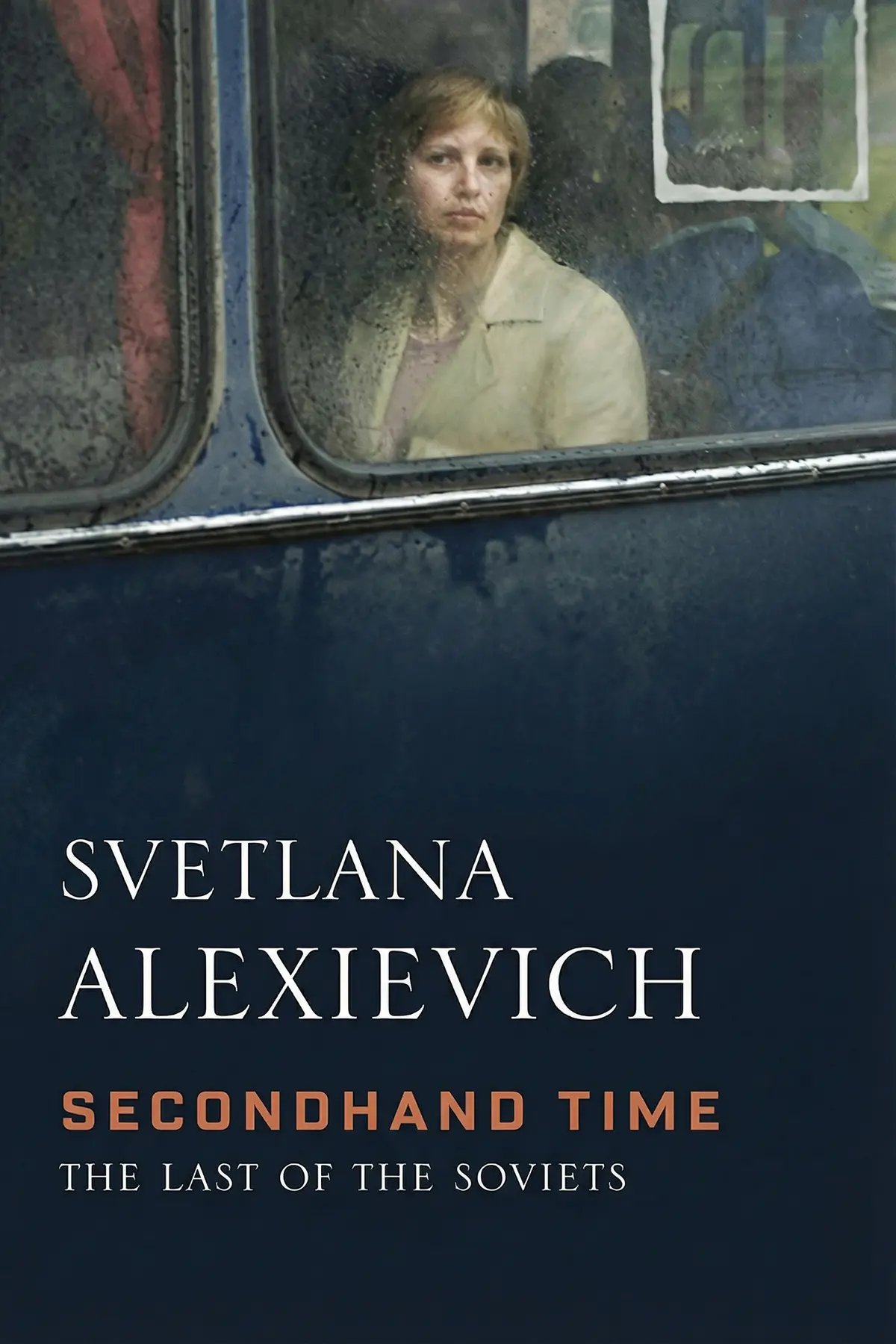
Table of Content
1. Introduction
1 min 47 sec
Imagine waking up one morning to find that the very ground beneath your feet—the ideology, the culture, and the country you called home—had simply vanished. For decades, the citizens of the Soviet Union lived within a rigid but predictable framework. It was a world where the state was the ultimate provider, the ultimate authority, and the source of all shared meaning. Then, in the blink of an historical eye, that entire structure dissolved, leaving millions of people to navigate a landscape they no longer recognized. This wasn’t just a political change; it was a psychological earthquake that shattered identities and forced a massive population to survive in the ruins of their own beliefs.
In this exploration of Svetlana Alexievich’s profound work, we aren’t looking at the cold statistics of history books or the grand strategies of politicians. Instead, we are stepping into the living rooms, the kitchens, and the memories of the people who actually lived through the end of the Soviet era. We are entering the realm of ‘secondhand time’—a period where the future felt recycled, the past felt betrayed, and the present was a confusing scramble for survival. Through these personal accounts, we get to the heart of what it means to lose a country and, perhaps more painfully, to lose the dreams that country represented.
Our journey will take us through the hopeful but chaotic days of reform, the dark despair that led some to take their own lives, and the baffling loyalty of those who suffered most under the old regime. We will see how neighbors became enemies overnight and how the ghosts of the past continue to haunt the Russian spirit. This is the story of the ‘Red Man,’ a person shaped by a specific utopian vision, suddenly cast out into a world where money became the new god. By listening to these voices, we gain a rare and intimate understanding of one of the most significant transformations of the twentieth century.
2. The Shattering of the Soviet Framework
2 min 10 sec
Witness the dramatic collapse of a superpower as a failed coup accelerates the end of communism, leaving a population unprepared for the sudden arrival of an alien capitalist world.
3. A Nation Divided by Memory and Money
2 min 10 sec
Explore the deep rift between those who mourn the lost dignity of the Soviet era and those who embrace the chaotic freedom of the new Russian reality.
4. The Fatal Weight of a Vanished Identity
2 min 12 sec
Discover the tragic reality of Soviet citizens who found the collapse of their world so unbearable that they chose to leave it entirely behind.
5. The Paradox of Loyalty Among the Oppressed
2 min 05 sec
Uncover the baffling devotion of those who suffered in the Gulags but continued to defend the system that imprisoned them.
6. Living with the Executioner Next Door
2 min 03 sec
Explore the unsettling legacy of a society built on informants, where victims and perpetrators were forced to coexist in the aftermath of empire.
7. When the Bonds of Brotherhood Frayed
2 min 02 sec
Witness the sudden explosion of ethnic violence that turned neighbors into enemies once the central Soviet authority was no longer there to hold them together.
8. The Immortal Ghost of Military Might
2 min 15 sec
Examine the enduring influence of Russia’s militaristic culture and how the tactics of the past continue to shape the present-day state.
9. Conclusion
1 min 49 sec
As we conclude our look into these voices from the former Soviet Union, we are left with a haunting portrait of a people suspended between a past they cannot return to and a future they don’t quite trust. Svetlana Alexievich has given us more than just a history; she has given us a record of the human soul under extreme pressure. We have seen how the ‘Red Man’ was forged in the fires of revolution and how that same person struggled to survive in the cold, transactional world of capitalism. We’ve witnessed the tragedy of those who felt their lives were erased by history, the resilience of those who endured the Gulags, and the confusion of those caught in the crossfire of ethnic wars.
The throughline of these stories is the search for meaning. In the Soviet era, meaning was provided from above, often at a terrible cost. In the post-Soviet era, meaning has to be found individually, in a landscape that can feel hollow and materialistic. This transition is not yet over. The nostalgia we see today, the return to authoritarian patterns, and the pride in military power are all symptoms of a society still trying to reconcile its identity with its history.
The ultimate lesson of these testimonies is a reminder of the fragility of our social structures. It shows us that when a country falls, it’s not just the buildings and borders that change—it’s the people’s sense of who they are. As you reflect on these stories, consider how much of your own identity is tied to the world around you, and how you might respond if that world were to disappear tomorrow. To move forward, we must listen to these ‘secondhand’ voices, for they hold the hard-won truths of what it truly means to survive the end of an era. The history of the Soviet Union is closed, but the story of its people continues to unfold in every kitchen and every street across the vast Eurasian landscape.
About this book
What is this book about?
This summary provides a deep dive into the collective soul of a vanished empire. It captures the raw, unfiltered voices of those who witnessed the death of the Soviet Union and the chaotic birth of modern Russia. Through a tapestry of interviews, it explores the devastating loss of identity, the rise of predatory capitalism, and the enduring nostalgia for a system that was both cruel and comforting. You will learn about the intense struggle to adapt when a lifelong worldview is suddenly declared obsolete. The narrative covers the tragic spikes in suicide, the persistence of loyalty among former political prisoners, and the ethnic conflicts that tore through neighboring communities once the central authority dissolved. Ultimately, it offers a poignant look at the human cost of historical change and the resilience—and trauma—of those left behind.
Book Information
About the Author
Svetlana Alexievich
Svetlana Alexievich is a Nobel Prize-winning author known for her unique and exciting oral histories. Before establishing herself as a prominent literary figure, she worked as a journalist, a background that informs her deep commitment to giving voice to ordinary people caught in the gears of tumultuous history. Her acclaimed body of work includes titles such as Voices from Chernobyl and The Last Witnesses, which continue her exploration of the human experience during times of extreme crisis.
Ratings & Reviews
Ratings at a glance
What people think
Listeners describe this work as both gripping and expertly authored, featuring a top-tier collection of first-hand accounts that offer remarkable perspective on life in the Soviet era. The author's technique merges personal interviews with analytical remarks, leaving listeners enthralled by the individual dialogues. Opinions vary on the speed of the narrative, with some considering it poignant while others deem it repetitive, though listeners generally view the material as both staggering and tragic.
Top reviews
Book
This isn't just a history book; it’s an autopsy of a collapsed civilization. Alexievich masterfully captures the voices of 'Homo sovieticus,' those left behind when the USSR vanished overnight. You hear from veterans, dreamers, and Stalinists who still mourn a world that largely abused them. The contrast between the old ideals of spiritual labor and the new 'salami and VCR' capitalism is jarring. It’s a heavy read, filled with suicides and broken lives, but absolutely essential for understanding modern Russia. The way she steps back and lets the people speak makes the tragedy feel incredibly intimate. Sometimes the repetition of misery is hard to stomach, but that's the point. It’s a monument to the suffering that defines the region’s identity.
Show moreEvelyn
Wow, I wasn't prepared for how much this would affect me. This book is a gut-punch of raw human emotion that reveals the internal scars of millions. We often hear about the political shift of 1991, but we rarely hear about the people who felt like their lives were 'second-hand' overnight. These testimonials are shocking, revealing a level of trauma that most Westerners would find impossible to fathom. Truth is, I had to take breaks because the stories of loss and the 'language of suffering' became so heavy. It’s not just about politics; it’s about the very soul of a people who were taught to value the collective over themselves. Alexievich has created something truly monumental here. If you want to understand why nostalgia for the old regime persists, you have to read this.
Show moreChai
After hearing so much about the Nobel win, I finally dived into this polyphonic masterpiece. It serves as a perfect companion to more traditional histories of Russia by focusing on 'history from below.' Alexievich avoids personal judgment, allowing the executioners and victims to share the same space on the page. The result is a jarring, dissonant look at the transition from Gorbachev’s promises to Putin’s stability. Look, it’s not an easy read, and the stories of suicide and poverty are frequent. Yet, there is a strange beauty in how these people discuss their lives in kitchens, clinging to books and old memories. It demystifies the Russian soul by showing it is forged in an endless cycle of utopian dreams and violent realities. Truly a brilliant piece of investigative journalism.
Show moreRome
In my experience, very few authors can capture the 'mysterious Russian soul' without falling into clichés, but Alexievich does it. By documenting the 'human flotsam' of the Soviet experiment, she reveals a deep-seated identity built on sacrifice. These people don't just talk; they confess, pouring out their anger toward a world that replaced their ideals with 'Prince's salami' and gangster capitalism. The contrast between the generations is particularly harrowing to witness. You have parents who lived for the state and children who only care about the next paycheck. It’s a brilliant exploration of how the 'Homo sovieticus' mindset persists even in a world of smartphones and global markets. The book is long, and the tone is relentlessly grim, but it offers a level of empathy you won't find anywhere else.
Show moreFang
As someone who grew up hearing hushed kitchen conversations about the party, this felt like reading a family secret. Alexievich captures that specific brand of Soviet nostalgia that seems so confusing to outsiders. It’s not that people miss the bread lines; they miss the feeling of belonging to a 'great nation' with high ideals. The book is a staggering achievement in empathy, giving a platform to those who felt silenced by the rush toward the future. Each interview is a miniature tragedy, a story of a life that no longer fits into the current category of 'haves' and 'have-nots.' Honestly, it’s the most important book on Russia I’ve read in years. It’s a monument to the courage of ordinary people who had to reinvent themselves in the ruins of a fallen empire.
Show moreSudarat
Not what I expected from a non-fiction book at all. Instead of a linear timeline, you get a flood of human experience that feels both chaotic and deeply structured. It’s a 'history of the soul,' as the author puts it, and that’s the most accurate description possible. You see the heartbreak of the 1990s, where freedom felt like a betrayal to those who had sacrificed everything for the Motherland. The accounts of the August Coup and the subsequent disillusionment are particularly gripping. I did find the repetition of certain themes a bit much by the end, but the emotional weight remains consistent throughout. It’s a haunting, essential read for anyone trying to understand the psychological landscape of Eastern Europe today. Alexievich has documented a world that is rapidly disappearing, yet its ghosts remain everywhere.
Show morePhichai
Ever wonder what happened to the 'old breed' of people after the Soviet Union imploded? This book offers a visceral, polyphonic answer that moves far beyond the dates and decrees found in typical history texts. I was fascinated by the oral history format, where Alexievich pieces together interviews into a haunting collage of post-Soviet life. Frankly, the sheer variety of perspectives—from the elite to the factory worker—paints a picture of a nation in a permanent state of mourning. One moment you're reading about the deep love for Pushkin, and the next, you're witnessing the brutal reality of the Chechen wars. It’s heartbreaking to see how freedom was often traded for a 'predatory capitalism' that many weren't prepared to navigate. While the pacing slows down in the middle, the individual stories are too compelling to ignore.
Show moreFrida
Picked this up on a whim and ended up staying up late reading about people crying over salami and old books. It’s a strange feeling to realize how much 'stuff' defines our sense of freedom. The interviews highlight a generation that felt more at home in the darkness of the Gulag era than in the bright lights of modern malls. Not gonna lie, some of the stories are genuinely terrifying, especially those involving the ethnic conflicts that sparked after the collapse. You see how quickly neighbors turned on each other when the old system fell apart. The writing style is immersive, making you feel like you're sitting at the table with these people, sharing their tea and their grief. It’s a powerful reminder that history isn't just made by leaders, but by the people who survive them.
Show morePaiboon
The transition from the romanticism of the revolution to the 'wild capitalism' of the 90s is captured perfectly through these snippets. Personally, I found the sections on the 'kitchen culture' of the Soviets to be the most enlightening part of the book. It’s where the real revolution happened—in whispers and shared volumes of banned poetry. But the aftermath is what stings. You see the humiliation of engineers selling trinkets on the street just to buy bread. This isn't a dry academic study; it's a collection of screams and whispers from a lost world. Some might find the lack of authorial commentary frustrating, but the voices are strong enough to carry the narrative on their own. It’s a shocking, beautiful, and deeply necessary account of a century of trauma.
Show moreChamlong
To be fair, the sheer volume of voices here can get overwhelming after the first few hundred pages. While the oral history approach is unique and provides incredible insight, it can feel a bit tedious and repetitive at times. Each person shares a similar trajectory of hope followed by crushing disappointment in the new capitalist reality. However, the specific details—like the woman reading Solzhenitsyn while her baby is sick—are incredibly moving and keep you grounded. It’s a fascinating look at how a superpower disintegrates, not just on a map, but in the minds of its citizens. I wish there was a bit more connective tissue from the author to guide the reader through the decades. Still, the raw honesty of the interviews makes it a worthwhile, if exhausting, read for history buffs.
Show moreReaders also enjoyed

A Year in the Life of William Shakespeare: 1599
James Shapiro
A Warning
Miles Taylor

Agent Sonya: The Spy Next Door
Ben Macintyre

1491: New Revelations of the Americas Before Columbus
Charles C. Mann

Alexander Hamilton
Ron Chernow
1929: Inside the Greatest Crash in Wall Street History--and How It
Andrew Ross Sorkin
Alexander the Great
Philip Freeman
AUDIO SUMMARY AVAILABLE
Listen to Secondhand Time in 15 minutes
Get the key ideas from Secondhand Time by Svetlana Alexievich, plus 5,000+ more titles in English and Thai.
- 5,000+ titles
- Listen as much as you want
- 7-day free trial
- Cancel anytime







