
19 min 25 sec
Slow Productivity: The Lost Art of Accomplishment Without Burnout
By Cal Newport
Slow Productivity introduces a transformative philosophy for the modern professional. Cal Newport argues that by doing less, working at a natural pace, and obsessing over quality, we can escape burnout and achieve greatness.
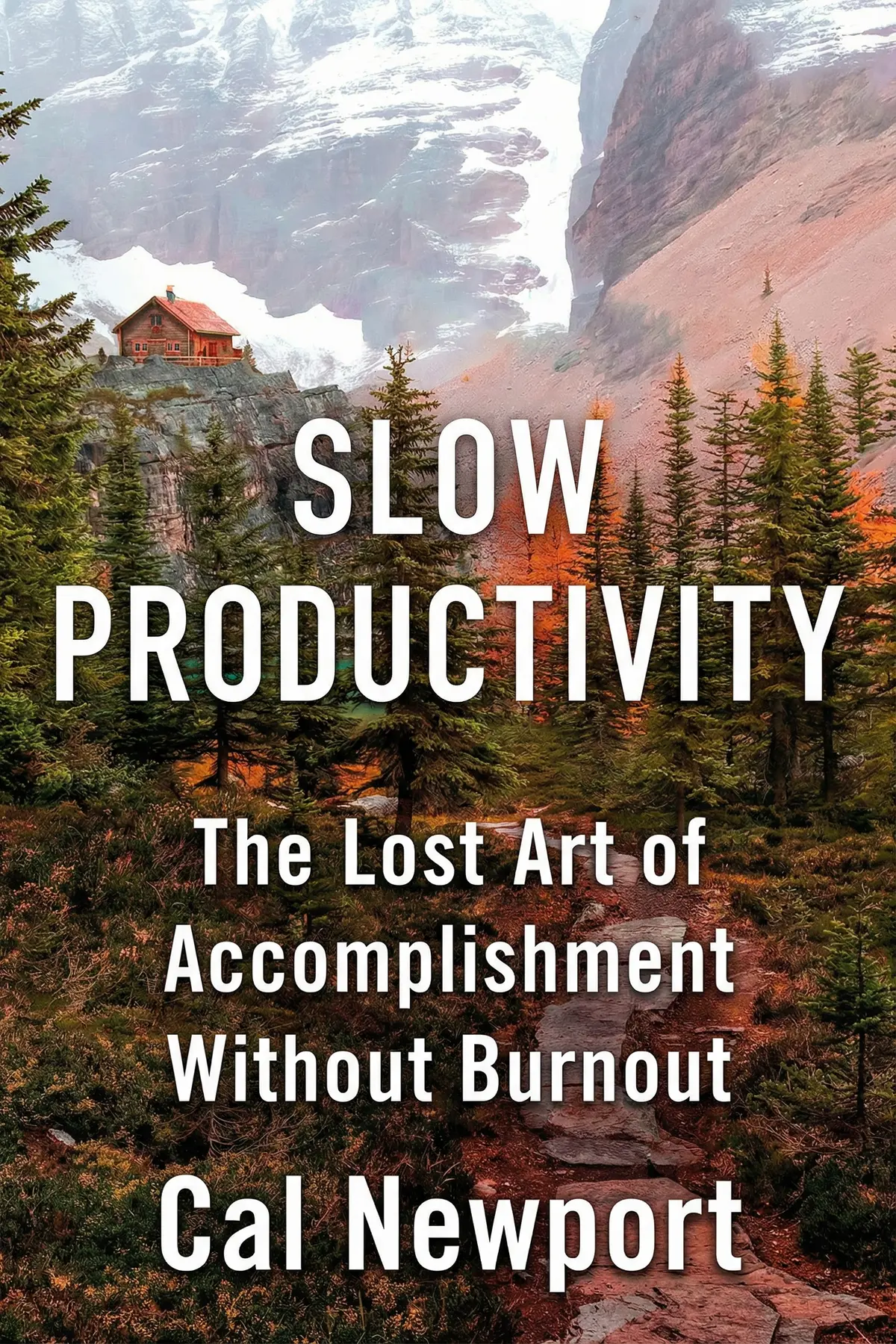
Table of Content
1. Introduction
1 min 36 sec
In our current era of constant connectivity, the concept of slow productivity might sound like a contradiction. We’ve been trained to believe that the faster we move and the more tasks we juggle, the more successful we’ll be. But if you stop and look around, you’ll see a workforce on the edge. Burnout has become a global epidemic, and the quality of our creative output is often sacrificed at the altar of the ‘now.’
What if the secret to achieving your most significant work isn’t moving faster, but deliberately slowing down? This summary explores a radical reframing of what it means to be productive. We are moving away from the frantic, visibility-driven work habits of the industrial age and toward a model specifically designed for the knowledge worker. This isn’t about laziness or doing the bare minimum. Instead, it’s about a deep, uncompromising focus on the things that actually matter.
In the following minutes, we will look at how the modern workplace fell into the trap of ‘pseudo-productivity’ and how we can use three core principles to climb back out. We’ll learn why doing less can actually lead to doing more, why your work pace should mimic the changing seasons, and why a commitment to craftsmanship is the ultimate shield against mediocrity. By the end, you’ll see productivity not as a race to be won, but as a craft to be mastered over a lifetime.
2. The Crisis of Busywork
1 min 35 sec
Explore why our modern obsession with visible activity is making us less effective and leading to a global surge in professional exhaustion.
3. The Mirage of Visible Activity
1 min 38 sec
Discover how the shift to digital tools has blurred the lines between work and life, creating a world where visibility matters more than value.
4. Lessons from the Slow Food Movement
1 min 39 sec
Learn how an Italian protest against fast food provides a blueprint for reclaiming a more intentional and high-quality way of living and working.
5. The Discipline of Doing Less
1 min 38 sec
Understand why narrowing your focus is the essential first step to producing work that actually makes a difference.
6. Escaping the Administrative Overhead Trap
1 min 32 sec
See the mathematical reality of why juggling multiple tasks effectively kills your ability to perform high-level creative work.
7. Reclaiming a Natural Pace of Work
1 min 33 sec
Reflect on how the greatest minds in history achieved their breakthroughs by working in rhythms that allowed for deep rest and reflection.
8. The Wisdom of Seasonal Intensity
1 min 30 sec
Discover how to structure your year and your days to account for the natural fluctuations in your energy and creativity.
9. Quality as the Ultimate Competitive Advantage
1 min 37 sec
See how a relentless focus on being ‘too good to be ignored’ can simplify your career choices and protect you from the churn of busywork.
10. Bridging the Gap Between Taste and Talent
1 min 42 sec
Understand the ‘taste gap’ that every creative professional faces and how to navigate the long journey toward mastery.
11. The Path to Sustainable Self-Investment
1 min 31 sec
Learn how to make strategic sacrifices in the short term to gain the autonomy and focus needed for long-term creative freedom.
12. Conclusion
1 min 54 sec
As we wrap up this look at the philosophy of slow productivity, it’s clear that we are at a turning point in the history of work. The old models of industrial efficiency are failing the modern knowledge worker. We can no longer afford to equate busyness with achievement or speed with success. The toll on our mental health and our creative potential is simply too high.
By adopting the principles we’ve discussed—doing fewer things, working at a natural pace, and obsessing over quality—you aren’t just changing your schedule; you’re changing your entire relationship with your craft. You’re giving yourself the permission to be human in a world that often expects you to be a machine. You are choosing the deep satisfaction of a job well done over the shallow hit of an emptied inbox.
The throughline here is intentionality. Slow productivity isn’t a set of rigid rules; it’s a mindset. It’s the constant practice of asking yourself: ‘Is this project worth my focus? Am I working in a way that I can sustain? Is the work I’m producing something I can be proud of?’ If you can answer yes to those questions, you are already well on your way.
So, as you step back into your professional life, try to find one small way to slow down today. Say no to an unnecessary meeting. Extend a deadline that’s causing you undue stress. Spend an extra hour refining a single paragraph or a line of code. These small acts of defiance against the rush are the building blocks of a more meaningful, productive, and burnout-free life. In the long run, the world won’t remember how fast you worked, but it will remember the quality of what you created.
About this book
What is this book about?
The modern world is obsessed with speed, often equating busyness with meaningful contribution. However, for those who work with their minds, this constant pressure frequently leads to exhaustion rather than excellence. This book offers a compelling alternative to the 'hustle culture' that currently dominates the knowledge economy. At its heart, the book is about reclaiming the rhythms of the human mind. It presents three foundational principles: doing fewer things, working at a pace that honors our biology and creativity, and focusing relentlessly on the quality of our output. By drawing on historical examples and modern strategy, it provides a roadmap for creating impactful work that endures, proving that slowing down is actually the most efficient path to long-term success.
Book Information
About the Author
Cal Newport
Cal Newport is a renowned author and an Associate Professor of Computer Science at Georgetown University. He is widely recognized for his work on the intersection of technology and culture, having written bestsellers such as Deep Work and Digital Minimalism. His research and writing focus on how we can cultivate focus and intentionality in an increasingly distracted digital world.
Ratings & Reviews
Ratings at a glance
What people think
Listeners find the book highly useful for its actionable tips and favor its emphasis on reducing speed and embracing a more natural work rhythm. They view it as an approachable read with engaging anecdotes, and one listener points out that it serves as an antidote to knowledge worker anxiety. Both the writing style and the caliber of the content receive varied feedback, as some consider it well-crafted while others critique a perceived lack of depth and rigor. The core concepts and storytelling also see split reactions, with some praising the collection of ideas while others feel the material is largely borrowed from Lean and Agile thinking.
Top reviews
Iff
As a long-time listener of Newport’s podcast, I was eager to see how he’d synthesize the "slow" philosophy into a coherent framework. This book serves as a vital antidote to the pervasive anxiety that plagues the modern knowledge worker. The truth is, we have been measuring productivity using industrial-era metrics that simply don't apply to cognitive effort. Newport’s three principles—do fewer things, work at a natural pace, and obsess over quality—are transformative. I especially loved the section on Jane Austen and how her periods of inactivity were actually essential to her creative output. Frankly, it’s a relief to be told that obsession with quality requires the space to breathe. While some might find the historical anecdotes a bit long-winded, I found them to be the anchor that makes his arguments feel timeless rather than trendy. It's a well-researched, validating reminder that the best work isn't rushed. This is the reset I needed to stop the frantic hustle and start focusing on what actually matters.
Show moreSatit
Wow. This book arrived at the perfect time for my career. I've been feeling the symptoms of burnout for months, and reading Newport's take on "natural pace" felt like a permission slip to finally slow down. The truth is, we aren't machines, and trying to act like one only leads to mediocre output and a miserable life. His advice on scaling back projects to focus on one big thing is something I’m implementing this quarter. I appreciate the research that went into this, even if some critics find the historical examples a bit much. For me, they provided a necessary context that shows our current speed-obsessed culture is a historical anomaly. The writing is clear, the advice is practical, and the message is incredibly timely. If you feel like you're drowning in administrative tasks and losing sight of your actual craft, you need to read this book. It’s a five-star read for me.
Show moreArjun
Picked this up during a particularly brutal week at the office when the "grind" felt like it was winning. Newport’s writing is as crisp as ever, and he offers a very helpful approach for anyone feeling burnt out by endless Slack notifications. The concept of the "pull-vs-push" system for managing tasks was a lightbulb moment for me. Look, we all know that looking busy isn't the same as being productive, but having a structured how-to guide to push back against that culture is incredibly valuable. I did feel like some of the suggestions were a bit privileged—not everyone can just "find an investor" or ignore their boss's emails for a week. However, the underlying philosophy of working at a natural pace is something I’m trying to implement immediately. It’s a quick read, very accessible, and provides a much-needed vocabulary for why our current work culture feels so broken. Definitely worth a read if you need permission to do less.
Show moreOrm
Finally, someone is talking about the absurdity of modern office culture where looking busy is more important than doing good work! This book is a refreshing change of pace from the typical "hustle harder" manuals that dominate the business shelf. I found the tips on scheduling focus blocks and saying no to be particularly actionable, even if they aren't entirely new concepts. Newport’s focus on the "artifact"—the actual thing you are producing—is a great way to reframe how we view our daily tasks. Gotta say, the writing style is very engaging, and I managed to finish it in just two sittings. While some of the ideas seem borrowed from Lean or Agile thinking, they are presented in a way that feels very relevant to individual contributors. It’s not perfect, and some parts feel a bit repetitive, but the validation it provides for wanting to work more humanely is worth the price of admission. It's a great reset.
Show morePatcharaporn
Not what I expected, but exactly what I needed. I thought this would be a manifesto on working less, but it’s actually about working better by being more intentional with your time. The section on "obsessing over quality" really resonated with me as a graphic designer. It’s so easy to fall into the trap of speed-art just to keep up with the algorithm, but Newport reminds us that true value takes time to build. In my experience, the most successful projects are the ones where I had the space to breathe and think. The book is well-written and the stories, like the one about Stephenie Meyer, were surprisingly entertaining. I do wish there was more emphasis on the execution side of things, as creativity is only half the battle. Still, it serves as a powerful antidote to the constant pressure to produce at an unsustainable rate. It’s a solid addition to the Newport canon, even if it’s not his absolute best work.
Show moreTern
After hearing so much buzz about this on LinkedIn, I decided to give it a go. It’s a very palatable read that manages to make a complex philosophical point feel quite simple. Newport argues that we need to move away from the assembly-line mentality and toward something more organic. I found the chapter on "doing fewer things" to be the most impactful, as I’m definitely guilty of over-committing. The stories are interesting—who knew Jane Austen was such a pro at managing her creative energy? While it does feel a bit repetitive if you're familiar with his blog, the consolidation of these ideas into one volume is helpful. My only gripe is that it feels a bit light on execution; knowing I should slow down is one thing, but actually doing it in a high-pressure corporate environment is another. Still, it’s a great book for starting a conversation about how we work.
Show moreGabriel
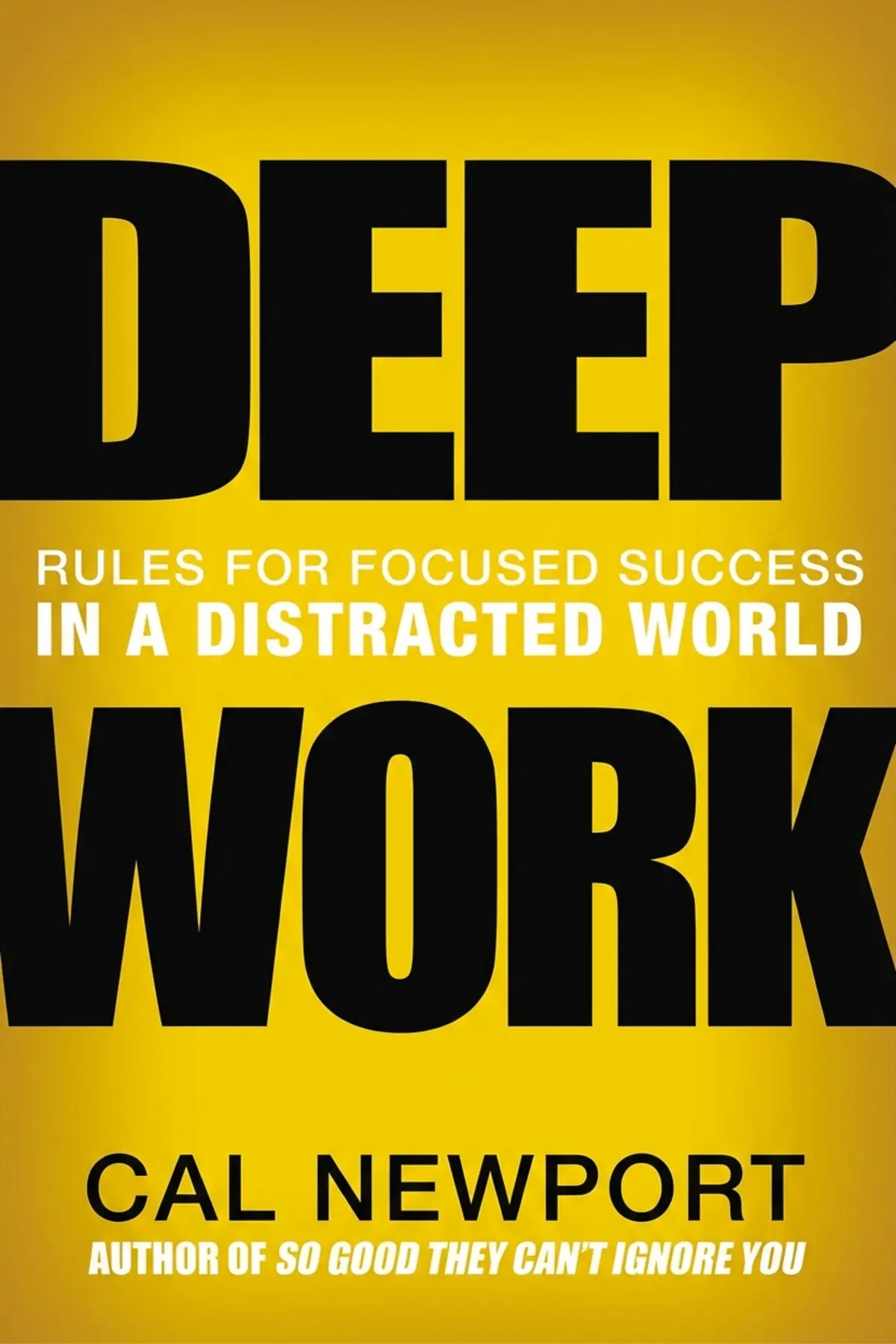
Is this just Deep Work 2.0 with a new coat of paint? To be fair, I appreciate the core message about escaping the trap of "pseudo-productivity," but I found myself skimming through large chunks of the celebrity biographies. Whether it's Jewel or Benjamin Franklin, the stories feel like they were selected specifically to fit a pre-conceived narrative rather than providing rigorous evidence. My experience with Newport's previous books was much more impactful because they felt fresh. Here, if I hear the term "knowledge worker" one more time, I might lose it. The advice is a bit contradictory at times too. He suggests scaling down expenses to buy time, but then encourages spending thousands on high-end tools and subscriptions to feel more professional. It’s a palatable read and a good reminder to slow down, but it lacks the depth of his earlier work. It probably could have been a long-form blog post instead of a full book.
Show moreWatcharin
Ever wonder why you're exhausted despite "getting things done" all day long? Newport attempts to answer this by defining pseudo-productivity, and while his analysis of the problem is spot on, the solutions feel a bit recycled. If you’ve read Deep Work, you’ve already encountered a lot of the useful content here. I personally would have preferred fewer stories about 18th-century scientists and more getting to the point. The book feels a bit like a collection of biographies with a thin layer of productivity advice spread over the top. That said, his perspective on the "knowledge worker"—there's that phrase again—and how technology has fractured our attention is still very relevant. Not gonna lie, I find his tone a bit irritating at times, almost as if he's preaching from an ivory tower. It’s a decent book for a PhD student or someone with a lot of autonomy, but for the rest of us, it’s just okay.
Show moreNim
Newport's writing is as crisp as ever, but I can't shake the feeling that this book is a bit of a stretch. He draws some very broad conclusions from the lives of famous figures that might not actually hold up under scrutiny. For example, using Marie Curie to justify a slow work pace ignores the intense, often frantic nature of scientific discovery during "crunch time." It feels like he had a thesis and then went looking for stories to support it, rather than the other way around. Personally, I found the "pull" approach to task management interesting, but much of the other advice felt like common sense dressed up in academic language. It’s a palatable read, certainly, and it might inspire some to better their work-life balance. However, if you're looking for a rigorous, data-driven guide to productivity, you might be disappointed. It’s a good set of ideas, just perhaps not a revolutionary one.
Show moreChanon
Deeply frustrated by the lack of applicability for anyone who isn't a tenured professor or a world-famous artist. Newport constantly conflates high-level creative work with the day-to-day reality of most knowledge workers, which is a fundamental error. Most of us don't have the luxury of "obsessing over quality" when we have rigid deadlines and a boss breathing down our necks. The survivorship bias in this book is deafening; just because Marie Curie or Steve Jobs could work at a certain pace doesn't mean a mid-level analyst can. Frankly, the advice felt superficial and often out of touch with the average person's professional constraints. I was expecting clear proposals for systemic change, but instead, I got a collection of stories about famous people that felt like they were pulled from Wikipedia. The self-help aspect feels tacked on to sell copies to people who are already exhausted. It’s a massive disappointment compared to his debut work.
Show more
Readers also enjoyed
AUDIO SUMMARY AVAILABLE
Listen to Slow Productivity in 15 minutes
Get the key ideas from Slow Productivity by Cal Newport, plus 5,000+ more titles in English and Thai.
- 5,000+ titles
- Listen as much as you want
- 7-day free trial
- Cancel anytime







