
16 min 01 sec
Deep Work: Rules for Focused Success in a Distracted World
By Cal Newport
Deep Work explores how to master intense concentration in an era of constant digital distraction. It provides a blueprint for achieving elite-level productivity by prioritizing cognitively demanding tasks over shallow, everyday interruptions.
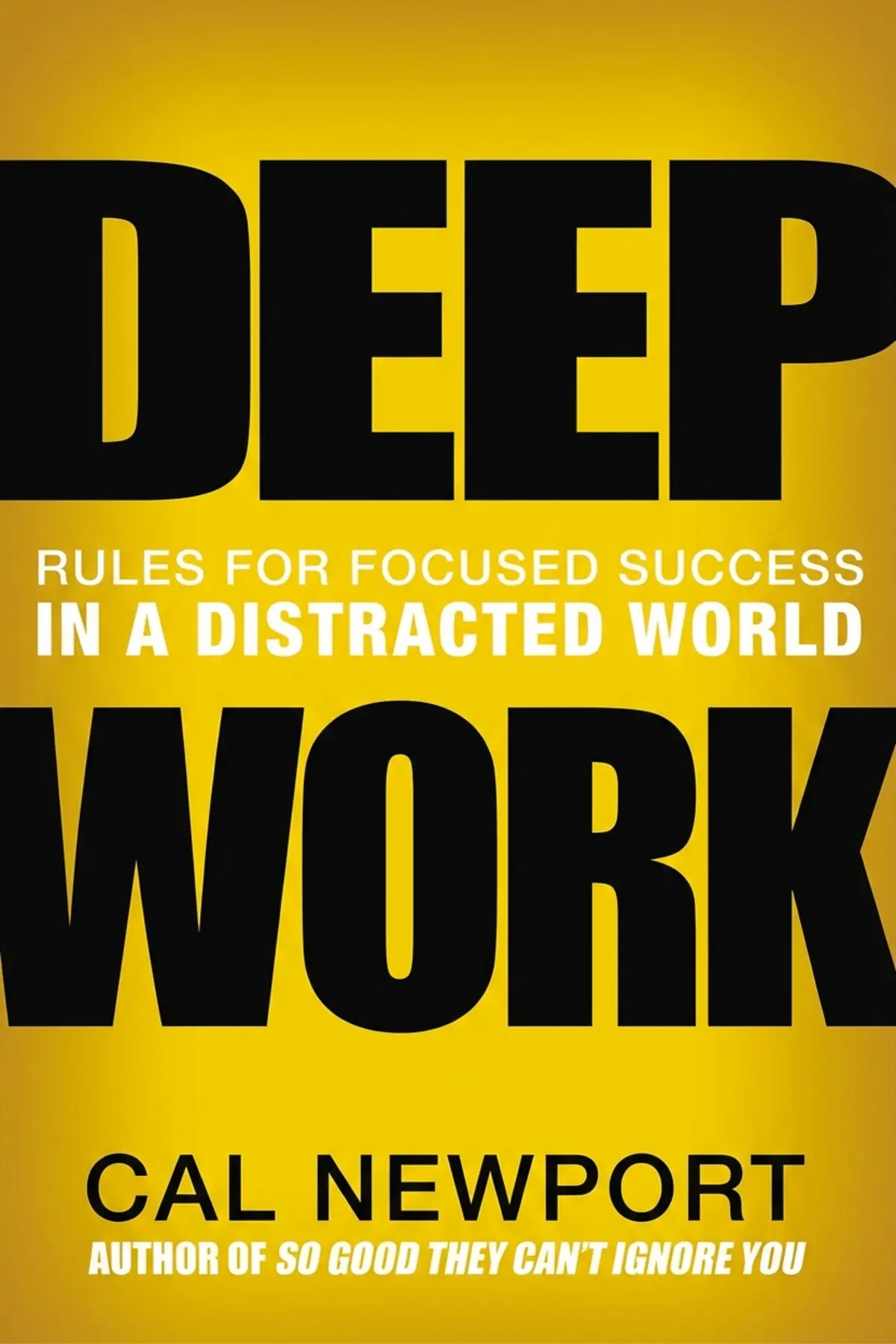
Table of Content
1. Introduction
1 min 45 sec
In our current era, we are living through a paradox of productivity. We have more tools than ever to help us communicate and organize our lives, yet many of us finish our workdays feeling like we haven’t actually accomplished anything of substance. We spend our hours responding to the ‘ping’ of notifications, clearing out inboxes, and bouncing between browser tabs. This fragmented way of living is the enemy of greatness. In this summary, we are going to explore the philosophy of Deep Work, a concept developed by Cal Newport that challenges the way we view modern labor.
Deep work is the ability to focus without distraction on a cognitively demanding task. It’s a skill that allows you to quickly master complicated information and produce better results in less time. The core argument here is that depth is becoming a superpower. Because so few people are willing or able to disconnect from the digital hive mind, those who can cultivate intense concentration will have a massive competitive advantage. Over the next few minutes, we will look at why our current habits are failing us and, more importantly, how we can systematically rebuild our capacity for deep, meaningful effort. We’ll move beyond the simple advice of ‘turning off your phone’ and look at the structural changes required to transform your output and your professional value. The goal is simple: to help you realize your full potential by teaching you how to stay focused in a world that is designed to keep you distracted.
2. The High Cost of Fragmented Attention
2 min 09 sec
Discover why multitasking is a myth and how even a brief glance at your inbox can cripple your brain’s performance for hours.
3. Choosing Your Strategy for Depth
2 min 23 sec
Not everyone can live like a monk. Learn the four distinct approaches to integrating deep work into your specific lifestyle and career.
4. The Power of Professional Rituals
2 min 06 sec
Willpower is a finite resource. Learn how to design an environment and a routine that make deep focus an automatic response.
5. Training the Distracted Mind
2 min 05 sec
Your brain has been wired to crave distraction. Discover how to use ‘productive meditation’ to rebuild your attention span.
6. A Disciplined Approach to Digital Tools
1 min 54 sec
Stop being a tool of your tools. Learn the ‘Craftsman Approach’ to selecting technology based on its real impact on your goals.
7. The Necessity of a Hard Shutdown
2 min 07 sec
Working more hours doesn’t mean producing more value. Learn why scheduling your ‘off’ time is just as important as your work hours.
8. Conclusion
1 min 32 sec
As we wrap up, it’s clear that deep work is more than just a productivity hack; it is a philosophy of living. We live in a world that is increasingly noisy, shallow, and distracted. By choosing the path of depth, you are not just becoming more efficient—you are becoming more human. You are choosing to use your mind to its fullest capacity rather than letting it be pulled apart by the whims of algorithms and notifications.
The transition won’t be easy. Your brain will crave the quick hits of dopamine, and you will feel the social pressure to be ‘always on.’ But the rewards are immense. People who master this skill are the ones who write the books, build the companies, and solve the problems that actually matter.
If you want to start today, try an ‘internet sabbath.’ Use a notepad to schedule specific blocks of time when you are allowed to be online. Outside of those blocks, the internet simply doesn’t exist for you. You’ll quickly see how much time you’ve been losing to mindless browsing. By being present when you are online and focused when you are offline, you’ll find your productivity and your sense of satisfaction skyrocketing. Deep work is the key to a successful, meaningful career in the twenty-first century. It’s time to turn off the noise and get to work.
About this book
What is this book about?
Deep Work addresses a growing crisis in the modern workforce: the erosion of our ability to focus. As technology makes it easier to stay perpetually connected, our capacity for the high-level, concentrated effort required to solve complex problems is dwindling. Cal Newport argues that this ability is becoming increasingly rare and, therefore, increasingly valuable in the modern economy. The book promises a path to reclaiming your attention. It differentiates between 'shallow work'—the logistical, non-demanding tasks like email and status meetings—and 'deep work,' which pushes your cognitive capabilities to their limit. By adopting specific strategies and rituals, readers can learn to produce better results in less time. This isn't just about time management; it’s about a fundamental shift in how we relate to technology and our own mental energy.
Book Information
About the Author
Cal Newport
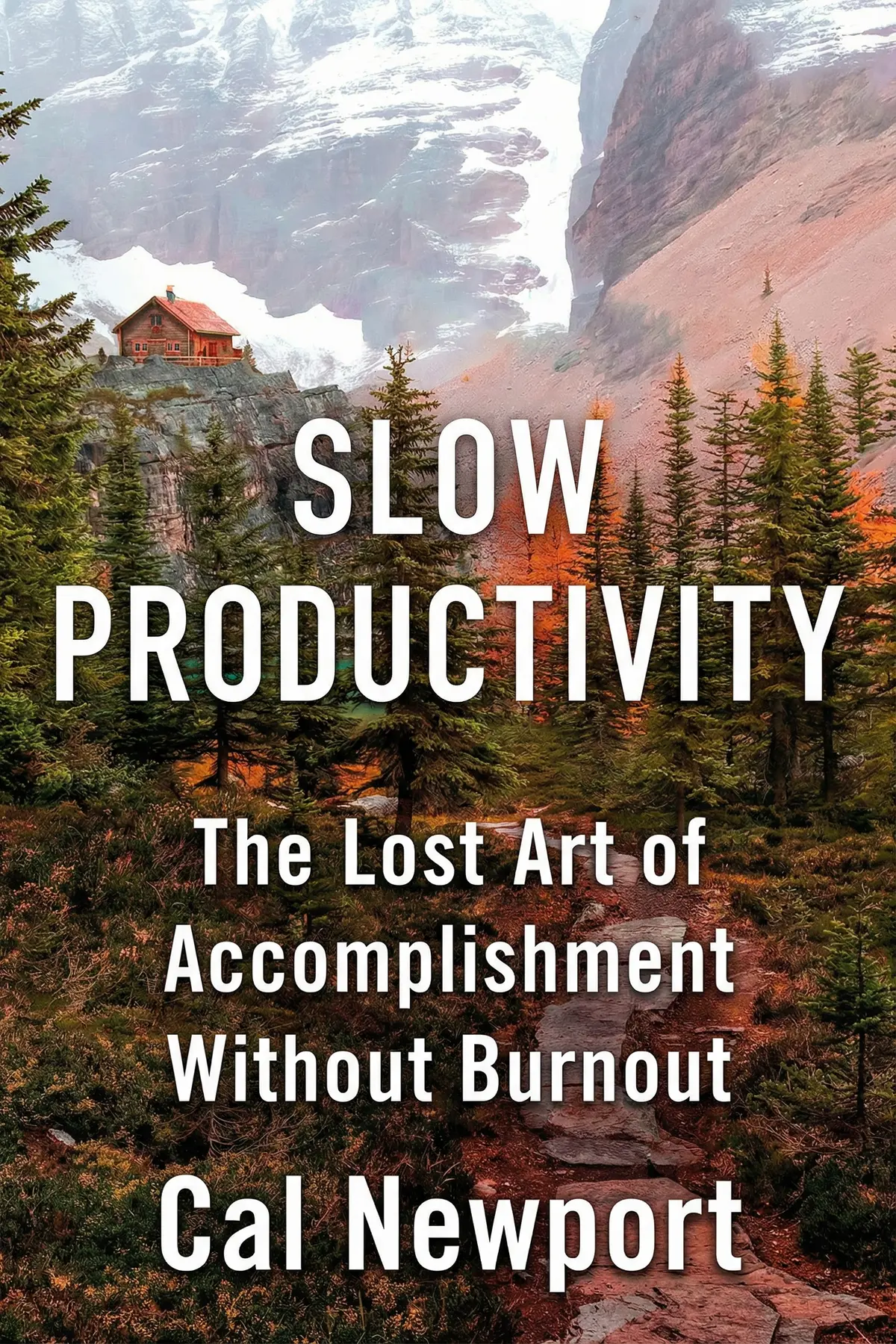
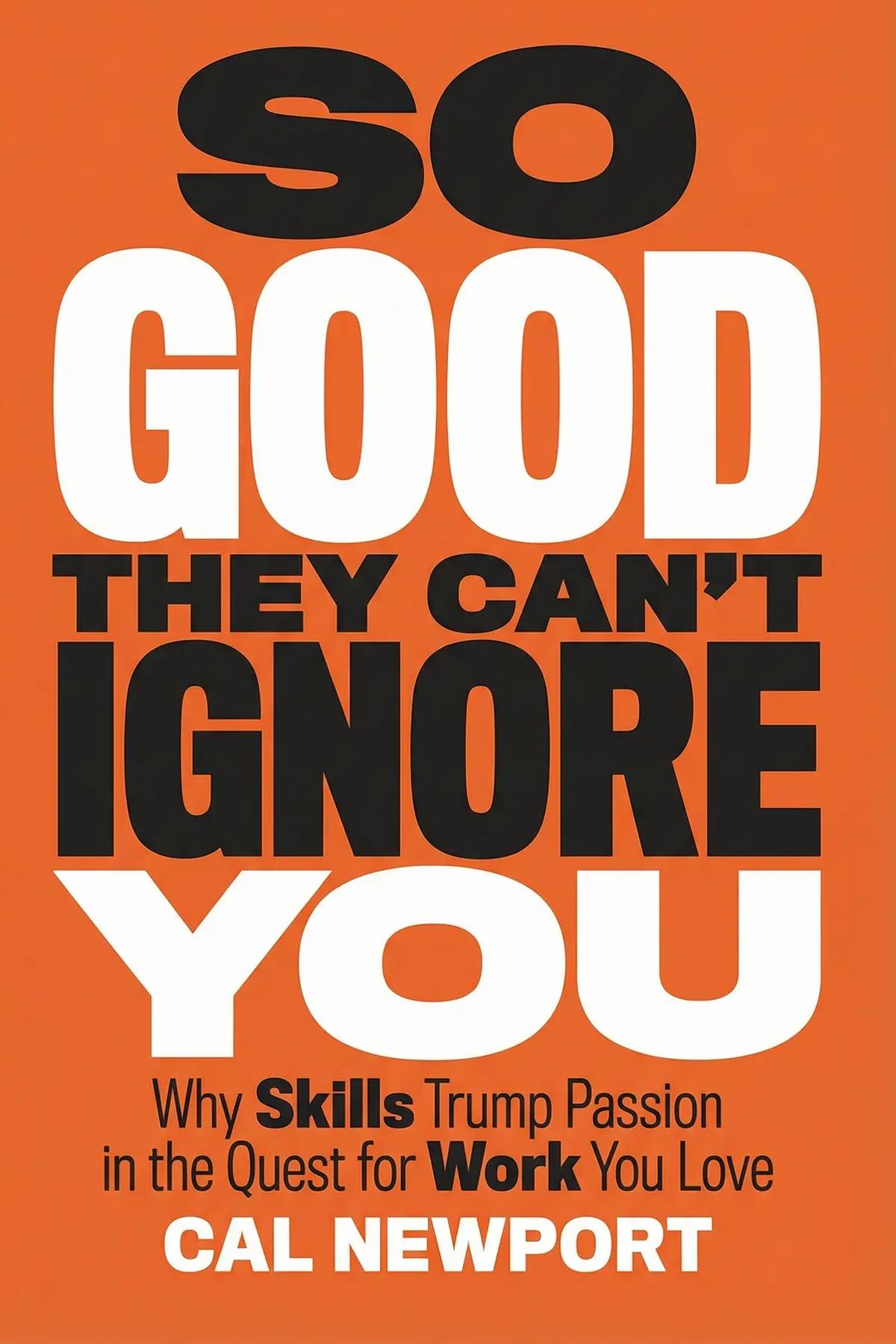
Cal Newport is an assistant professor of computer science at Georgetown University specializing in the theory of distributed algorithms. Several publications, including Inc. Magazine, The Globe and Mail and 800-CEO-Read, have featured his most recent book, So Good They Can’t Ignore You, on their lists for the best business book of the year.
Ratings & Reviews
Ratings at a glance
What people think
Listeners find this book accessible and very enlightening, with one listener calling it a captivating look into the concept of deep work. The text offers numerous techniques and tips, assisting listeners in increasing their productivity and reaching major goals. Furthermore, listeners value how it aids their understanding of concentration and time management, making it especially beneficial for students finishing dissertations. Additionally, listeners characterize the book as deeply impactful and transformative, mentioning that it encourages them to be more intentional regarding their professional routines.
Top reviews
Sakura
Picked this up while struggling with my final dissertation and it was exactly the kick in the pants I needed. I’ve been drowning in 'shallow' tasks like formatting and endless emailing, but Newport helped me realize that real progress only happens in that state of flow. It’s written in a way that’s very easy to read, yet the insights into how our brains atrophy from constant distraction are quite sobering. I’ve started implementing the 'productive meditation' while walking to campus, and it’s helping me solve complex problems I used to just stare at my screen over. Personally, it’s life-changing for students who need to produce high-quality work on a deadline. A must-read for anyone in academia who feels like they are on a treadmill.
Show moreChiw
Wow, I didn't expect a productivity book to feel this profound, but Newport hits on something deeper than just 'getting things done.' He treats focus as a superpower, which, in today’s economy, it probably is. The writing style is clear and engaging, making complex ideas about neurological plasticity accessible to anyone. I loved the stories about Bill Gates and Carl Jung—they really illustrate how isolation can spark genius. In my experience, some of the advice feels a bit out of reach for people in entry-level positions who don't have control over their schedules. However, the mindset shift alone is worth the price of the book. It makes you way more conscious of how you spend every minute of your day.
Show moreFord
To be fair, I was skeptical about the ‘no social media’ rule at first, but the results speak for themselves. After implementing the 4-hour deep work law, my output at the office has doubled while my stress levels have plummeted. It’s a life-changing approach for anyone who feels like they’re just treading water in a sea of notifications. Cal Newport writes with a sense of urgency that really hits home if you're worried about your career being replaced by automation. The strategies for 'batching' shallow tasks like email are simple but incredibly effective. I wish I had read this years ago. It’s easily one of the most insightful books on professional success I’ve ever encountered.
Show moreSing
In my experience, most self-help books are 90% fluff, but Deep Work actually delivers on its promise. It’s a profound look at how we’re losing our ability to concentrate and what we can do to win it back. I’ve already started using the 'sender filter' for my emails and it has saved me hours of mindless back-and-forth. The book is easy to read and the chapters are organized in a way that makes the advice actionable immediately. My favorite part was the discussion on 'attention residue'—it explains exactly why checking your phone for 'just a second' ruins your focus for twenty minutes. If you want to achieve significant results in your field, you need to read this.
Show moreGabriel
Finally got around to reading this after hearing everyone in my tech circle rave about it for years. It’s a fascinating exploration of why we’ve lost the ability to focus in a world obsessed with 'connectivity.' I really liked the practical suggestions for managing your schedule, like the idea of a 'shutdown ritual' to let your brain recharge. My only gripe is that it feels a little repetitive toward the middle, but the core message is vital for knowledge workers. I’ve actually deleted two social media apps since finishing it, and the mental clarity is noticeable. Not gonna lie, I was a bit of a skeptic, but Newport makes a compelling case for being ruthless with your time. High value here.
Show moreAisha
Ever wonder why you feel exhausted at 5 PM despite not actually finishing any major projects? This book answers that question by exposing the myth of multi-tasking and the danger of shallow work. Cal Newport provides a framework that is both profound and surprisingly easy to implement if you have the willpower. I particularly appreciated the distinction between 'knowing' a concept and actually *knowing* it through practice. The book feels like a manual for reclaiming your cognitive abilities in a distracted age. To be fair, the section on quitting social media was the most challenging but ultimately the most rewarding part of the experience. It’s not just about productivity; it’s about doing work that actually matters.
Show moreYui
As someone who thrives on multi-tasking, this was a hard pill to swallow. The truth is, I’ve been confusing being 'busy' with being 'productive' for most of my career. Newport’s argument that deep work is rare and valuable really resonated with me, even if his tone can be a bit smug at times. I found the section on 'productive meditation' particularly helpful for my morning commute. However, I do think the book relies a bit too heavily on anecdotes rather than rigorous new scientific studies. It feels a lot like a remix of Flow and Getting Things Done, but tailored for the digital age. It’s a solid 4-star read that will definitely make you rethink your relationship with your smartphone.
Show moreOrm
The chapter on the shutdown ritual changed my evening routine entirely. For years, I’ve been 'constantly on,' checking Slack at 9 PM and wondering why I felt so burnt out. Newport explains why your brain needs that definitive cutoff to truly recharge. While some of the academic examples he uses felt a bit repetitive, the overall message is incredibly powerful. It’s a fascinating exploration of why some people achieve so much more than others despite having the same amount of time. I’m currently recommending this to all my colleagues who complain about being 'too busy' to think. It’s not a magic trick, but it is a very effective roadmap for anyone willing to do the hard work.
Show moreKasemsan
Frankly, I found Newport’s focus on academic rigor slightly alienating for those of us in fast-paced corporate environments. While the concept of 'Deep Work' is fascinating, the book ignores the reality of managers who must be responsive to survive. It's easy for a professor with tenure to suggest abandoning email, but in the private sector, that’s a quick way to get fired. Truth is, the anecdotes about his own productivity felt a bit like bragging after a while. I appreciate the push toward meaningful concentration, yet I wish there was more for the 'shallow work' cadre who can't just go into isolation for weeks. Still, the strategies for scheduling blocks of time are useful if you can actually get your boss to respect them.
Show moreSuwit
While the central thesis is undeniably important, this entire book could have been a three-page PDF or a decent blog post. Newport spends way too much time padding the chapters with repetitive stories about famous figures and his own academic accolades. It’s ironic that a book about being efficient with your time wastes so much of the reader’s. Look, we all know that social media is a distraction and that focus is good. Do we really need 200+ pages of pseudo-scientific anecdotes to tell us to put our phones away? I found the tone a bit arrogant, especially when he dismisses the complexities of modern business roles. If you want real productivity advice, just read David Allen and skip the fluff here.
Show more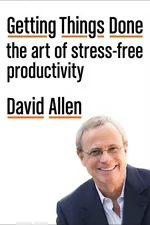
Readers also enjoyed
AUDIO SUMMARY AVAILABLE
Listen to Deep Work in 15 minutes
Get the key ideas from Deep Work by Cal Newport, plus 5,000+ more titles in English and Thai.
- 5,000+ titles
- Listen as much as you want
- 7-day free trial
- Cancel anytime







