
20 min 15 sec
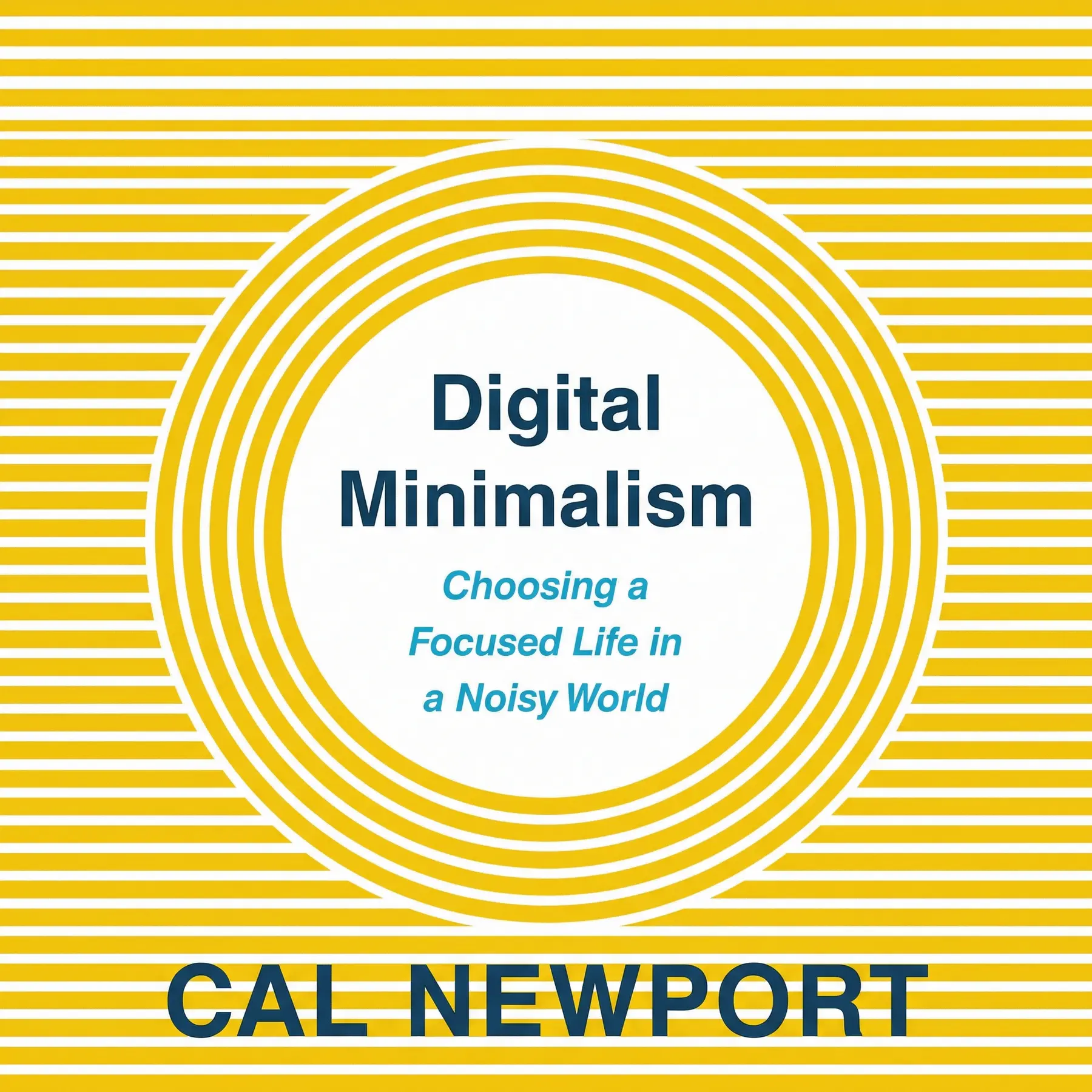
Digital Minimalism: Choosing a Focused Life in a Noisy World
By Cal Newport
Digital Minimalism provides a strategic framework for reevaluating our relationship with technology. Cal Newport argues for a value-based approach to digital tools, helping readers reclaim their attention and find fulfillment in the analog world.
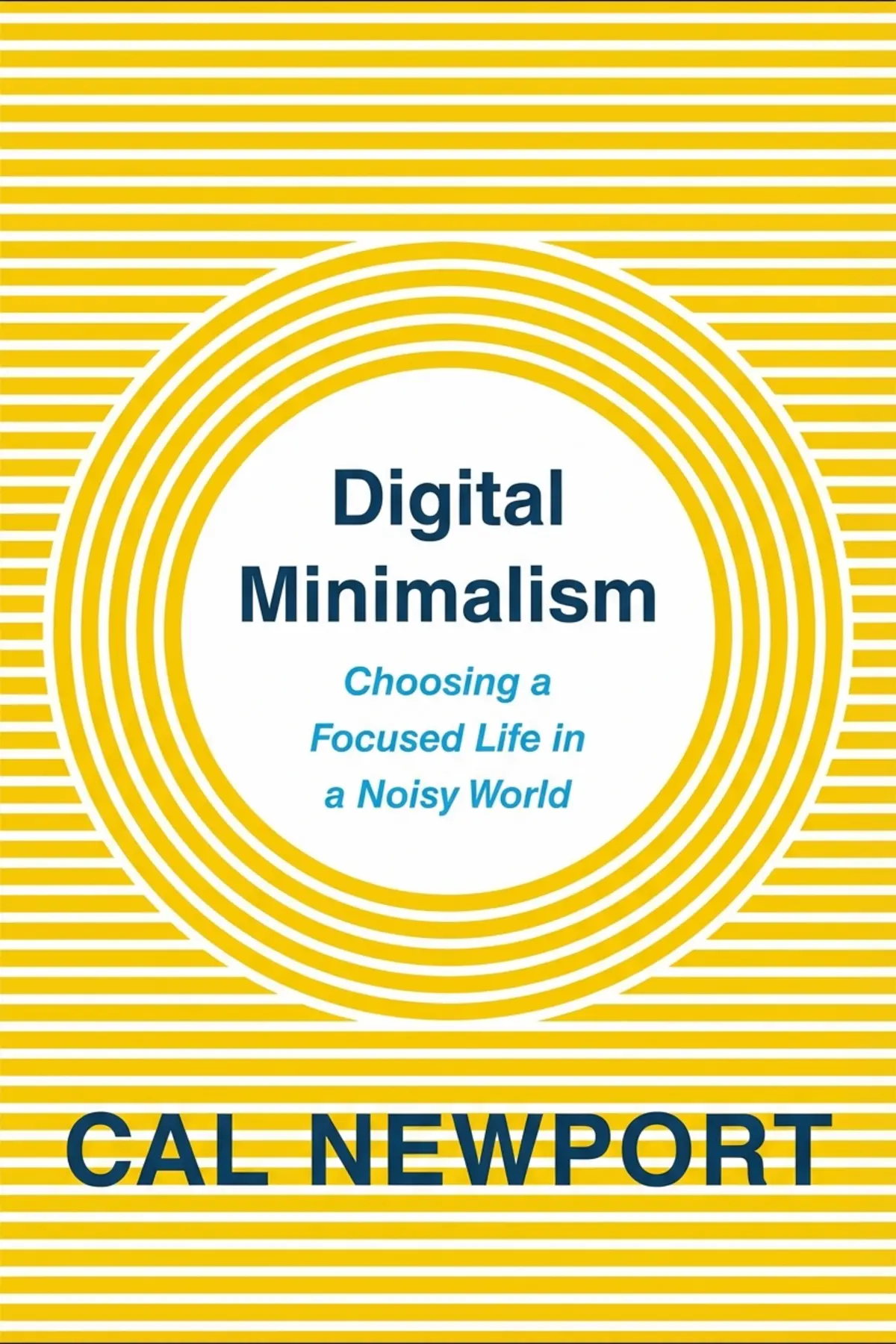
Table of Content
1. Introduction
1 min 34 sec
In the modern era, we often feel like our time is no longer our own. We reach for our phones in every quiet moment, flicking through feeds and clearing notifications without a second thought. But have you ever stopped to wonder how we got here? The throughline of this summary is the recognition that our digital exhaustion isn’t an accident—it’s a designed outcome.
Think back to 2007. This was the year the ‘Like’ button first appeared on a platform called FriendFeed. At the time, it seemed like a harmless, even helpful, way to show appreciation for a post. Yet, this simple mechanism became the foundation for a massive shift in how we interact with technology. It transformed social media from a static tool into an interactive slot machine, delivering dopamine hits in the form of social approval.
As we delve into these ideas, we’ll explore why people are increasingly feeling ‘broken’ by the constant noise of the digital world. You will learn about an experiment involving 1,600 volunteers who took a month-long break from technology, and how their findings led to a philosophy known as digital minimalism. This isn’t about becoming a luddite or throwing your phone into a river; it’s about becoming a savvy navigator of the attention economy.
We will examine why social media is often compared to big tobacco, what we can learn from the technology-testing methods of the Amish, and why your attention is currently considered more valuable than oil. By the end of this journey, you’ll have a roadmap for a thirty-day digital declutter and a new perspective on how to build a life that is focused, intentional, and deeply satisfying. Let’s start by looking at how our devices changed from helpful assistants into addictive masters.
2. The Accidental Addiction
2 min 17 sec
Discover how devices designed for simple tasks like making calls and playing music were intentionally transformed into tools that hijack our attention through psychological engineering.
3. Defining Digital Minimalism
1 min 58 sec
Explore a lifestyle philosophy that prioritizes value over quantity, asking us to optimize our digital tools to serve our deepest personal goals.
4. The Three Pillars of the Minimalist Mindset
2 min 23 sec
Learn the economic and cultural principles that underpin digital minimalism, including the hidden costs of clutter and the wisdom of selective technology use.
5. The Thirty-Day Digital Declutter
2 min 01 sec
Find out how a month-long break from non-essential technology can help you reset your habits and consciously choose which tools deserve a place in your life.
6. The Vital Importance of Solitude
2 min 10 sec
Explore why the loss of quiet, self-reflective moments is harming our mental health and why practicing intentional solitude is essential for a clear mind.
7. Reclaiming Real Human Connection
2 min 06 sec
Understand why digital interactions like ‘likes’ and comments are a poor substitute for real conversation and how to foster more satisfying social bonds.
8. Cultivating High-Quality Leisure
2 min 14 sec
Discover why strenuous, physical hobbies are more rewarding than passive digital consumption and how to build a lifestyle around ‘high-quality’ downtime.
9. Joining the Attention Resistance
2 min 01 sec
Learn about the growing movement of people who are opting out of the attention economy to regain their autonomy and focus.
10. Conclusion
1 min 31 sec
As we reach the end of our look at Digital Minimalism, it is clear that the way we currently live with technology is not inevitable. We have drifted into a state where our attention is fragmented and our sense of well-being is tied to digital approval. But as Cal Newport shows us, we have the power to change the throughline of our lives. By shifting from a mindset of constant connectivity to one of intentional minimalism, we can reclaim our time, our relationships, and our peace of mind.
The core message is simple: less can be significantly more. By conducting a thirty-day digital declutter, you give yourself the space to breathe and rediscover the analog joys that make life worth living. You move from being a passive consumer to an active participant in your own world. You begin to value real conversations over digital pings, and physical craftsmanship over virtual scrolling.
If you take away just one actionable step today, let it be this: delete social media apps from your phone. You don’t have to delete your accounts or vanish from the digital world. Simply commit to only accessing these platforms through a web browser on a computer. This small bit of friction is often enough to break the cycle of compulsive checking. When you stop carrying the entire noise of the internet in your pocket, you’ll find that you have more room for the quiet, meaningful moments that truly define a life well-lived. The attention economy may be powerful, but your will to live a focused life is stronger.
About this book
What is this book about?
Digital Minimalism addresses the modern sense of being overwhelmed by constant connectivity. It explores how major technology companies have engineered their platforms to exploit human psychology, creating addictive cycles of notifications and social validation. The book isn't just a critique of the digital age; it offers a practical philosophy for taking back control. At its core, the book promises a path toward a more focused and intentional life. Through the process of a thirty-day digital declutter, Newport shows how to identify which tools truly add value and which are merely distractions. By prioritizing solitude, real-world hobbies, and meaningful face-to-face communication, readers can move away from the noise of the attention economy and toward a more rewarding, human-centric existence.
Book Information
About the Author
Cal Newport
Cal Newport is a professor at Georgetown University, where he teaches Computer Science and frequently writes about the impact technology has on our daily lives. His previous books include Deep Work: Rules for Focused Success in a Distracted World (2016).
Ratings & Reviews
Ratings at a glance
What people think
Listeners find this work to be essential reading that provides deep perspective through its research and actionable advice. The writing is intelligent and captivating, and listeners value the stimulating material that promotes purposeful habits and authentic social bonds. They describe it as transformative, assisting in the restoration of quality of life, and express admiration for its carefully developed concepts.
Top reviews
Maja
Wow. This was exactly the wake-up call I needed to stop the endless scrolling. Newport provides a compelling argument for why our brains weren't built for the constant social validation of 'likes' and 'retweets.' It’s not just about deleting apps; it’s about a radical shift in how we value our limited attention. I found the concept of 'solitude deprivation' particularly haunting because I realized I haven't been alone with my thoughts in years. While the 30-day detox sounds intimidating, the practical suggestions for reclaiming leisure—like actually building things with your hands—felt incredibly grounded. This book helped me restore a level of focus I thought I’d lost forever in the digital noise. It’s smart, research-backed, and truly life-changing for anyone feeling burnt out by their phone.
Show moreDylan
After hearing several people rave about this on podcasts, I finally decided to give it a shot and I'm glad I did. The truth is, we are being manipulated by Silicon Valley designers who treat our attention like a slot machine. Newport doesn't just complain about technology; he offers a sophisticated framework for intentional living. I especially loved the section on 'reclaiming conversation' versus 'connection.' Sending a heart emoji isn't the same as a phone call, and this book reminded me why that distinction matters so much for our mental health. It’s a smart, engaging read that avoids being a Luddite manifesto while still challenging the status quo. If you feel like your phone has become an extra limb that you didn't ask for, buy this immediately. It provides the tools to build a genuine, focused life in an increasingly distracted world.
Show morePraepimon
Ever wonder why you feel so drained despite being 'connected' to everyone all the time? This book answers that question with brutal honesty and brilliant research. Cal Newport argues that we need a philosophy of technology use, not just a few tips and tricks, and I think he's absolutely right. The 30-day digital declutter he proposes is the most effective thing I've done for my mental health in a decade. I stopped mindlessly tapping icons and started actually engaging with my community and my hobbies again. It’s rare to find a book that offers both deep theoretical insight and a clear, step-by-step plan for action. This is a required read for the modern age, helping us move from being products of the attention economy to being intentional humans. My quality of life has improved drastically since finishing this.
Show moreNook
Finally got around to reading this and I'm genuinely impressed by the depth of research Newport provides. He goes way beyond the usual 'social media is bad' tropes to explain the neurology of addiction and the history of solitude. This isn't a book for Luddites; it's a book for people who want to use technology to serve their goals rather than the other way around. I loved the emphasis on demanding leisure activities over passive consumption. It’s much more satisfying to fix something in the house than it is to scroll through a feed for three hours. The book is well-structured and the advice is actually sustainable if you're willing to do the work. It really helped me reclaim my time and focus on what truly matters in my real, physical life. Highly recommended for every smartphone owner.
Show moreAdam
This book should be required reading for anyone born after 1990. We are living through a public health crisis of over-stimulation, and Newport is one of the few voices offering a real way out. His concept of 'digital minimalism' is about being a craftsman of your own life rather than a passive consumer of digital junk. I found the sections on the 'social-validation feedback loop' to be incredibly eye-opening regarding my own behavior. The strategy to turn your phone into a single-purpose tool is brilliant and has saved me hours of wasted time every single week. It’s a well-thought-out, smart, and engaging book that provides a clear path back to genuine human connection. If you want to take back control of your brain and your time, this is the manual you've been looking for.
Show moreTantipat
As someone who works in digital marketing, I found Newport's insights into the 'attention resistance' incredibly timely and necessary. He does a fantastic job of explaining the psychological hooks that keep us glued to our screens. Not gonna lie, some of the leisure suggestions felt a bit dated, but the underlying principle of 'high-quality leisure' is a game changer. I've already started implementing his 'conversation office hours' and it has significantly reduced my daily anxiety levels. The book is well-thought-out and provides a much-needed philosophical foundation for why we should care about our digital habits in the first place. I did feel that some chapters dragged on with unnecessary stories about rock-paper-scissors championships, but the core message remains powerful. It’s a smart, engaging guide for anyone looking to live more deliberately.
Show moreDiego
Picked this up during a particularly bad mental health slump where I felt trapped by my smartphone. Newport’s writing is very academic and precise, which I appreciated, even if it felt a bit dry in the middle sections. He makes a great case for why 'likes' are a cheap substitute for real human interaction. I did find the sections on 'handiness' a bit difficult to relate to as a renter with limited space, but the general idea of doing difficult things is solid. Personally, I think the advice on dumbing down your smartphone is the most practical part of the whole book. It’s a thought-provoking read that encourages you to question your relationship with every app you own. While some parts felt like fluff to fill the pages, the overall impact was very positive for me. I’m definitely living more intentionally now.
Show moreHana
Look, I appreciate the core philosophy here, but Newport definitely has some blind spots regarding his own privilege. The advice to just go out and learn welding or spend thousands on high-end hobby equipment felt totally out of touch for a regular person working a nine-to-five. Not everyone has the luxury to just take a long walk in the middle of a workday or leave their phone at home while raising kids. To be fair, his points about 'conversation office hours' and consolidating texts are actually useful and practical for a busy professional. However, the author’s tone can be quite smug, especially since he constantly reminds us he has never even used social media himself. It’s hard to take advice on digital addiction from someone who has never been in the trenches of a Twitter feed. It's a decent read with some okay tips, but it's bogged down by circular prose and elitist anecdotes.
Show moreSam
To be fair, the advice is solid, but the tone can feel a bit condescending at times. Newport is a computer scientist who has never had a social media account, which makes his 'solutions' feel a bit like a doctor telling a patient to 'just be healthy.' He doesn't seem to fully grasp the importance of digital spaces for marginalized groups or people with rare medical conditions who find their only community online. The chapter on Thoreau was a bit much, and the welding anecdote felt like it was plucked from a different century. However, I did get value out of the sections on scheduling low-quality leisure and the importance of single-purpose computers. It’s an okay book that could have been half the length. I'd recommend it for the practical tips, but be prepared to skim through the more pretentious philosophical tangents.
Show moreTippawan
The truth is, this whole book could have been a long-form essay or a simple Twitter thread. For a book about minimalism, Newport sure does waste a lot of time on pretentious musings and filler. I was particularly annoyed by his weird shilling for the Mouse Book Club, which felt like a total gimmick. Most of the 'groundbreaking' advice boils down to stuff we already know: go outside, read a book, and stop clicking 'like.' Frankly, the author comes off as incredibly out of touch when he uses Henry David Thoreau as his primary case study for modern digital habits. I struggled to finish this because the writing style is so repetitive and condescending toward anyone who actually finds value in online communities. If you want something practical, go read Atomic Habits instead; this is just a collection of anecdotes about wealthy people who have the time to build decks and take three-hour walks.
Show more
Readers also enjoyed
59 Seconds: Change Your Life in Under a Minute
Richard Wiseman
21 Lessons for the 21st Century
Yuval Noah Harari
AUDIO SUMMARY AVAILABLE
Listen to Digital Minimalism in 15 minutes
Get the key ideas from Digital Minimalism by Cal Newport, plus 5,000+ more titles in English and Thai.
- 5,000+ titles
- Listen as much as you want
- 7-day free trial
- Cancel anytime







