
22 min 16 sec
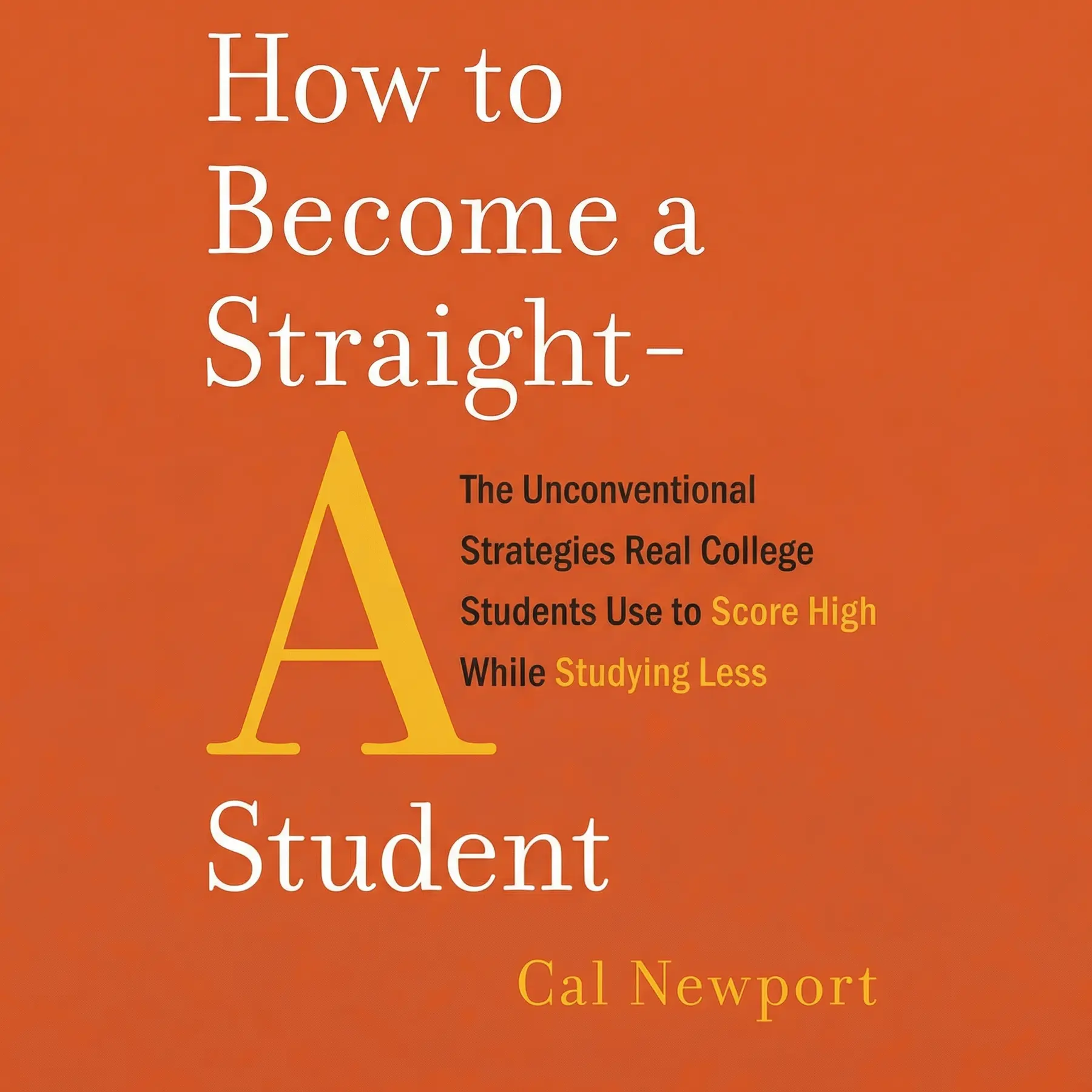
How to Become a Straight-A Student: The Unconventional Strategies Real College Students Use to Score High While Studying Less
By Cal Newport
Discover the unconventional methods top-tier students use to secure high grades without burning out. This guide explores efficient time management, targeted note-taking, and strategic exam preparation to achieve academic excellence through less effort.
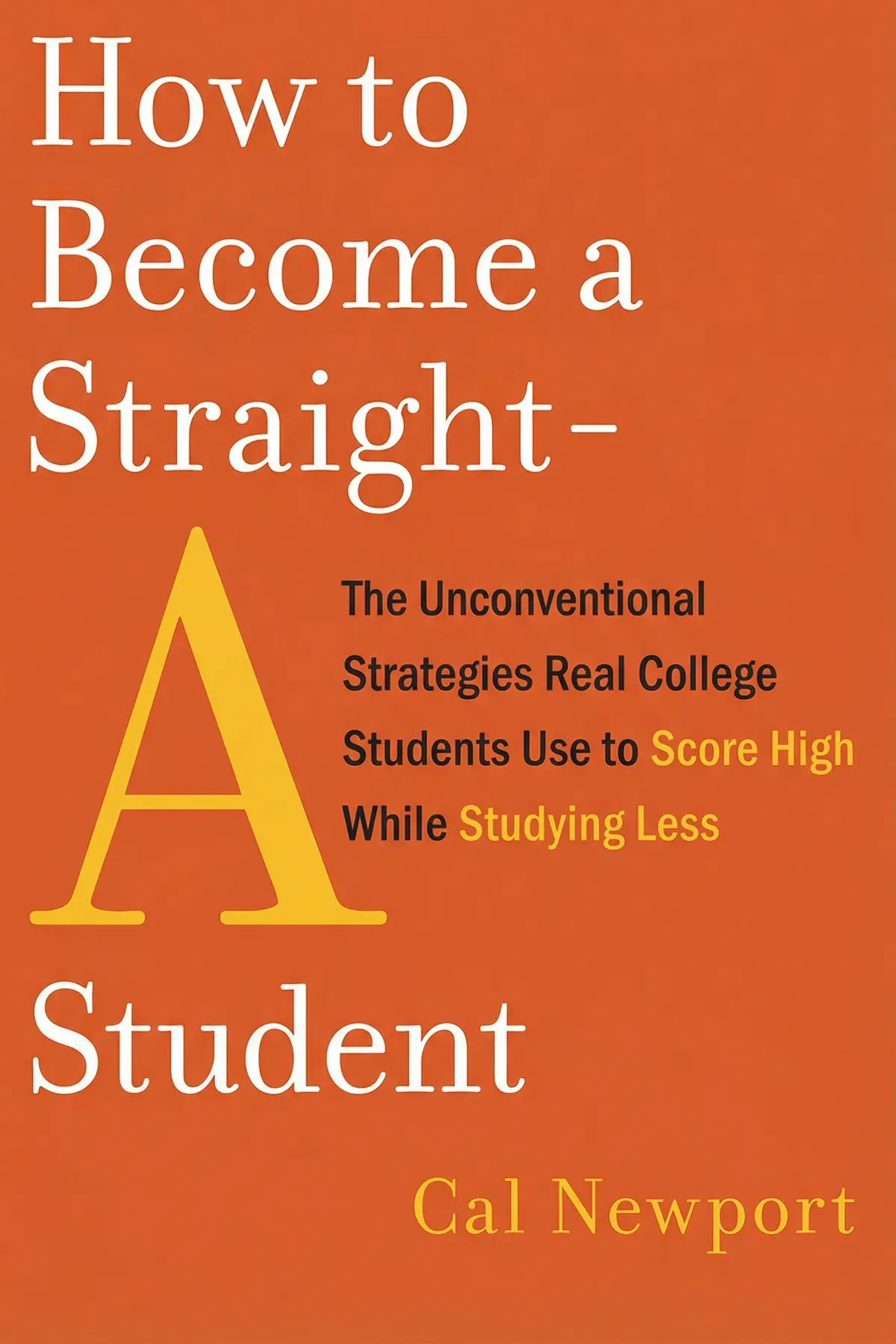
Table of Content
1. Introduction
1 min 47 sec
For most college students, the path to a high GPA feels like an exhausting marathon through a landscape of stress, caffeine-fueled all-nighters, and constant anxiety. We often assume that the smartest students in the room are the ones spending the most hours in the library, sacrificing their social lives and sleep at the altar of academic achievement. But what if that assumption is fundamentally flawed? What if the secret to becoming a top-tier student isn’t about working longer, but about changing the way you work entirely?
In our exploration of Cal Newport’s insights, we dive into a system derived from the actual habits of straight-A students. These aren’t theories dreamed up in an ivory tower; they are the battle-tested strategies used by real students who manage to excel in their classes while still having plenty of time for parties, sports, and relaxation. The central throughline of this summary is the idea of efficiency. We are going to deconstruct the myth of the ‘grind’ and replace it with a focused, high-intensity approach to learning.
Throughout this journey, we will cover the essential mechanics of student life. We’ll look at how to manage a schedule without becoming a slave to it, how to defeat the internal urge to procrastinate, and how to capture information in class so that your study sessions become a breeze. We will also tackle the high-stakes moments of the semester, providing you with a tactical framework for acing exams and writing papers that truly impress. The goal here is to give you a toolkit that reduces your total study time while simultaneously boosting your grades. By the end of this session, you’ll see that being a straight-A student isn’t a matter of innate genius—it’s a matter of technique. Let’s get started on transforming your academic career.
2. The Power of High-Intensity Bursts and Time Management
2 min 31 sec
Rethink your relationship with the clock by learning why four hours of focused effort can actually outperform ten hours of library time.
3. Conquering the Procrastination Troll
2 min 10 sec
Discover a psychological hack involving a work progress journal that makes it impossible to hide from your own excuses.
4. Optimizing Your Study Environment and Energy
2 min 20 sec
Learn how the right location and physical maintenance can serve as the ultimate fuel for your academic performance.
5. Mastering the Art of Smart Note-Taking
2 min 09 sec
Stop trying to transcribe every word your professor says and start using structured systems that do the heavy lifting for you.
6. Targeted Studying and Academic Disaster Insurance
2 min 17 sec
Avoid the overwhelm of trying to learn everything by identifying exactly what matters and filling the gaps in your knowledge.
7. The Strategy for Acing the Exam
2 min 33 sec
Turn exam day from a source of panic into a structured process using the three Ps: Planning, Proceeding, and Proofreading.
8. Crafting a Thesis and Conducting Efficient Research
2 min 02 sec
Stop getting lost in the library and start building your papers around topics that actually spark your curiosity.
9. The Structural Approach to Writing and Reviewing
2 min 16 sec
Master the transition from ideas to the final draft by focusing on logical structure and a rigorous three-pass editing system.
10. Conclusion
2 min 11 sec
As we reach the end of our journey through the strategies of the world’s most efficient students, it’s worth reflecting on the core philosophy that ties all these techniques together. Academic success is not a result of grueling, exhaustive labor. It is the result of a deliberate, focused system. We’ve seen that by replacing ‘pseudo-work’ with high-intensity bursts, you can achieve more in three hours than most people do in ten. We’ve learned that a simple calendar and a progress journal can turn the tide against procrastination, and that being strategic about where you study and how you take notes can fundamentally change your relationship with your coursework.
Whether you are preparing for a difficult exam or starting a major research paper, remember that the goal is always to maximize the impact of your efforts. Use the ‘Plan, Proceed, Proofread’ method for tests to ensure you don’t leave points on the table. When writing papers, start with a topic that excites you and build a solid skeleton before you begin the draft. These aren’t just tips for getting better grades; they are skills for managing your time and your mental energy that will serve you well long after you leave the classroom.
Now, here is your actionable takeaway for today: tomorrow morning, start your very first work progress journal. List your three most important tasks for the day. At the end of the evening, hold yourself accountable. If you didn’t finish something, write down the honest reason why. By doing this one small thing, you begin the process of taking control of your education. You are moving away from the stress of the ‘all-nighter’ and toward a life where you can achieve excellence while still having the time to enjoy everything else college has to offer. You have the tools; now it’s time to use them.
About this book
What is this book about?
For many, college feels like an endless cycle of late-night cramming and high-pressure deadlines. How to Become a Straight-A Student challenges the notion that academic success requires constant sacrifice. Instead of brute-force studying, this summary presents a system based on the real-world habits of high-achieving students across various disciplines. By focusing on the quality of work rather than the quantity of hours spent, you will learn how to master the three pillars of academic performance: time management, efficient study habits, and strategic writing. The promise of this approach is simple: by working smarter in short, high-intensity bursts, you can improve your GPA while actually increasing your free time. You will find practical advice on everything from taking notes that actually stick to navigating the pressures of exam day and crafting research papers that stand out to professors. This is a roadmap for any student who wants to reclaim their life without compromising their future.
Book Information
About the Author
Cal Newport
Cal Newport is a graduate of Dartmouth College with a PhD from MIT. He is a professor of computer science at Georgetown University and has also authored a number of books, including How to Be A High School Superstar, How to Win at College and So Good They Can’t Ignore You.
Ratings & Reviews
Ratings at a glance
What people think
Listeners find that this guide offers transparent directions for earning top marks in university while spending less time studying, including functional tips that assist in ending procrastination. Furthermore, the prose is accessible and engaging, with one listener highlighting that it is crafted specifically for students entering full-time college for the first time. Additionally, listeners value the direct methodology, techniques for managing time, and the overall return on investment.
Top reviews
Matteo
This book is a total game-changer for anyone entering college who feels overwhelmed by the sudden lack of structure. Newport breaks down the elusive "secret" of high achievers into manageable, bite-sized strategies that actually make sense. I particularly loved the section on "declaring war" on procrastination because it treats the issue as a tactical battle rather than a character flaw. While some of the advice about using a laptop for notes feels a bit dated in the era of constant digital distractions, the core logic remains solid. It’s not just about getting better grades, but about reclaiming your free time so you can actually have a social life without the constant guilt of unfinished assignments hanging over your head. If you follow the schedule-making tips, you'll find yourself finishing work by early evening while your peers are pulling all-nighters. It is straightforward, practical, and incredibly encouraging for students who want to excel without burning out.
Show moreAlice
As a parent, I’m always skeptical of "self-help" books for teens, but the proof is in the pudding with this one. I bought this for my son before his freshman year, and he actually sat down and read the whole thing during his summer break. He’s now halfway through his junior year with a GPA I could only dream of, and more importantly, he’s not a stressed-out wreck. He specifically mentioned that the "Quiz-and-Recall" method changed how he prepares for exams, moving him away from mindless re-reading to actual active learning. It’s written in a way that speaks to students without being condescending or overly "parental" in tone. Even though some of the tech advice is old, the strategy of treating school like a 9-to-5 job is timeless. It’s probably the most practical gift I’ve ever given him for his education.
Show moreValentina
Gotta say, the "Quiz-and-Recall" method is the single most effective study technique I’ve ever used. For years, I was just highlighting my textbooks and wondering why I couldn't remember anything during the actual test. This book explained why that doesn't work and gave me a better alternative that actually saves time. The advice on how to write a 10-page paper without the usual "writer's block" drama was also worth the price of the book alone. It breaks the process down into such small steps that it’s almost impossible to fail. Sure, it was written a while ago, but the psychology of how we learn and how we waste time hasn't changed that much. I’d recommend this to anyone who wants to stop being a "harried" student and start actually enjoying their college experience while maintaining a 4.0.
Show moreSkylar
Ever wonder why some people seem to ace every exam while barely spending any time in the library? This guide attempts to deconstruct those habits, and for the most part, it succeeds brilliantly. The Q/E/C (Question, Evidence, Conclusion) method for note-taking was a revelation for my humanities courses, though I'll admit it's harder to apply to my calculus homework. Newport’s writing style is refreshingly direct; he doesn’t waste time with academic jargon or fluff, preferring instead to give you the "cheat sheet" version of productivity. Some critics might say the advice is common sense, but common sense is surprisingly hard to implement when you're staring at a fifteen-page syllabus. To be fair, some of the specific technology recommendations haven't aged perfectly since the mid-2000s, but the mindset shift is what matters. It's a great investment for a first-year student looking to build a foundation.
Show moreRatchanee
Wow, I wish I had discovered these techniques during my first semester instead of my last. The book focuses heavily on efficiency—doing the maximum amount of high-quality work in the minimum amount of time. I appreciated the specific "Academic Disaster Insurance" section, which provides a safety net for those moments when you feel completely lost in a course. The tone is very "no-nonsense," which I found motivating, though the formatting can feel a bit cluttered with all the sidebars and case studies. Look, you probably won't use every single tip, and some of the laptop-usage advice is definitely controversial given how much we know about digital distraction now. However, if you even adopt 20% of what Newport suggests, you'll be more organized than 90% of your classmates. It’s a solid 4-star read for any student who feels like they’re drowning.
Show moreMikael
After hearing so many people rave about Cal Newport's later work, I decided to go back to where it started. This book provides a very clear roadmap for navigating the transition to university-level academics. The "Cheat Sheet" summaries at the end of each part are incredibly useful for quick reference when you're actually in the middle of a busy week. One minor criticism: I think the book underestimates how much the "digital world" has changed since it was written. Advising students to bring laptops to every class might have been revolutionary in 2007, but now it’s often a recipe for distraction. Still, the logic of "low-intensity" versus "high-intensity" studying is a concept that every student needs to understand. It transformed the way I look at my calendar and helped me stop feeling guilty about taking nights off.
Show moreWeera
Finally got around to reading this, and I’m struck by how simple yet effective the writing style is. Newport doesn't try to sound like a genius; he just presents the habits of successful people in a way that feels achievable for the rest of us. The focus on "Marshal Your Resources" was particularly helpful for me, as I usually just dive into studying without a plan. Having a structured way to organize material before an exam definitely lowered my stress levels this past month. My only real gripe is that the book contains a fair amount of "fluff" in the form of student testimonials that don't always add much value. You can skim those parts and still get the benefit. It's a great value for the money, especially if you're a first-time college student who wants to score high with less stress.
Show morePacharapol
Picked this up after loving Deep Work, but I have to say, it’s clearly an earlier, less polished version of Newport’s philosophy. The book is packed with anecdotes from "real straight-A students" that start to feel repetitive after the first fifty pages. While the time management strategies are helpful, they feel somewhat out of touch with the reality of 2024, where our distractions aren't just "renting a movie" but a constant stream of notifications. Frankly, the advice to skip certain readings felt a bit risky for my particular major, where every detail seems to end up on the midterm. I also found the section on essay writing to be a bit too formulaic for upper-level university work. It’s a decent starting point if you have zero organizational skills, but if you’ve already been through a few semesters of rigorous study, you might find much of this to be stuff you've already figured out the hard way.
Show moreMattanee
The chapter on technical courses felt like a bit of an afterthought compared to the extensive sections on writing papers. As an engineering student, I was hoping for more specific insights into problem-set heavy workloads, but Newport seems much more at home discussing history or philosophy. Don’t get me wrong, the "Study Basics" section on time management is universally applicable and quite helpful for avoiding the procrastination trap. But once the book moves into specific exam prep, the advice feels a bit lopsided toward liberal arts majors. I also found myself rolling my eyes at the suggestion that creating flashcards is a "mindless" activity; in my experience, if you aren't thinking hard while making them, they won't help you on the exam. It’s a helpful book if you’re a humanities student, but STEM majors might find better specialized resources elsewhere.
Show moreMai
Not what I expected given the author's current reputation for "Digital Minimalism." In this book, he actually encourages laptop use in class, which I found to be terrible advice for my own focus. I've found that taking notes by hand forces me to process the information much better than just transcribing the professor's words on a screen. Additionally, the book’s attitude that studying is just a hurdle to get over so you can go party feels a bit cynical. I’m at university because I actually want to master my field, not just find the fastest way to get an A and forget everything. That said, the procrastination-busting tips are genuinely useful, and the layout makes it easy to digest in a single afternoon. It’s okay, but it lacks the depth and nuance of his later books like Deep Work.
Show moreFeatured in
Readers also enjoyed
AUDIO SUMMARY AVAILABLE
Listen to How to Become a Straight-A Student in 15 minutes
Get the key ideas from How to Become a Straight-A Student by Cal Newport, plus 5,000+ more titles in English and Thai.
- 5,000+ titles
- Listen as much as you want
- 7-day free trial
- Cancel anytime







