
31 min 21 sec
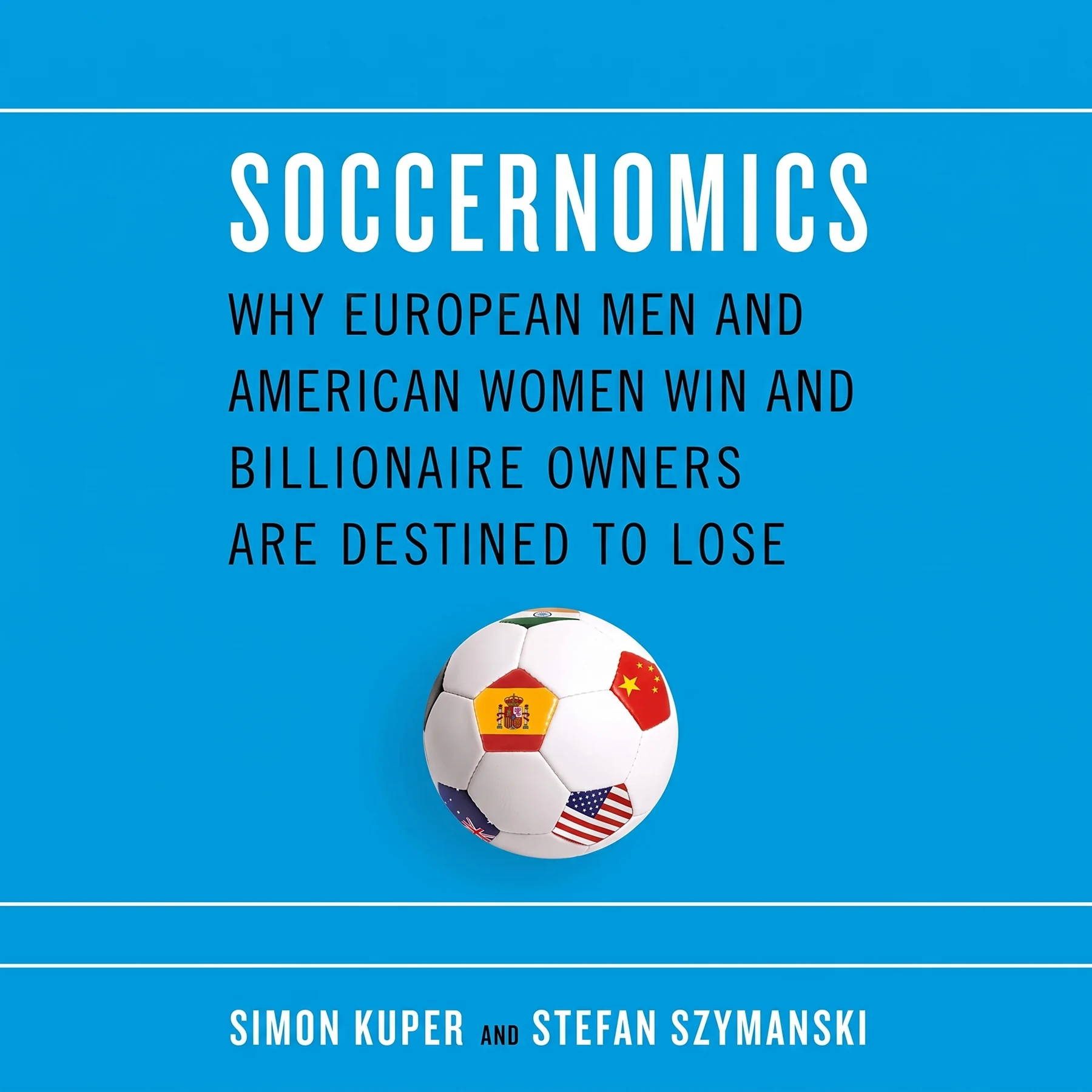
Soccernomics: Why European Men and American Women Win and Billionaire Owners Are Destined to Lose
Soccernomics applies rigorous economic and statistical analysis to soccer, debunking common myths about managerial impact, transfer spending, and national success while predicting the future of the world’s most popular sport.
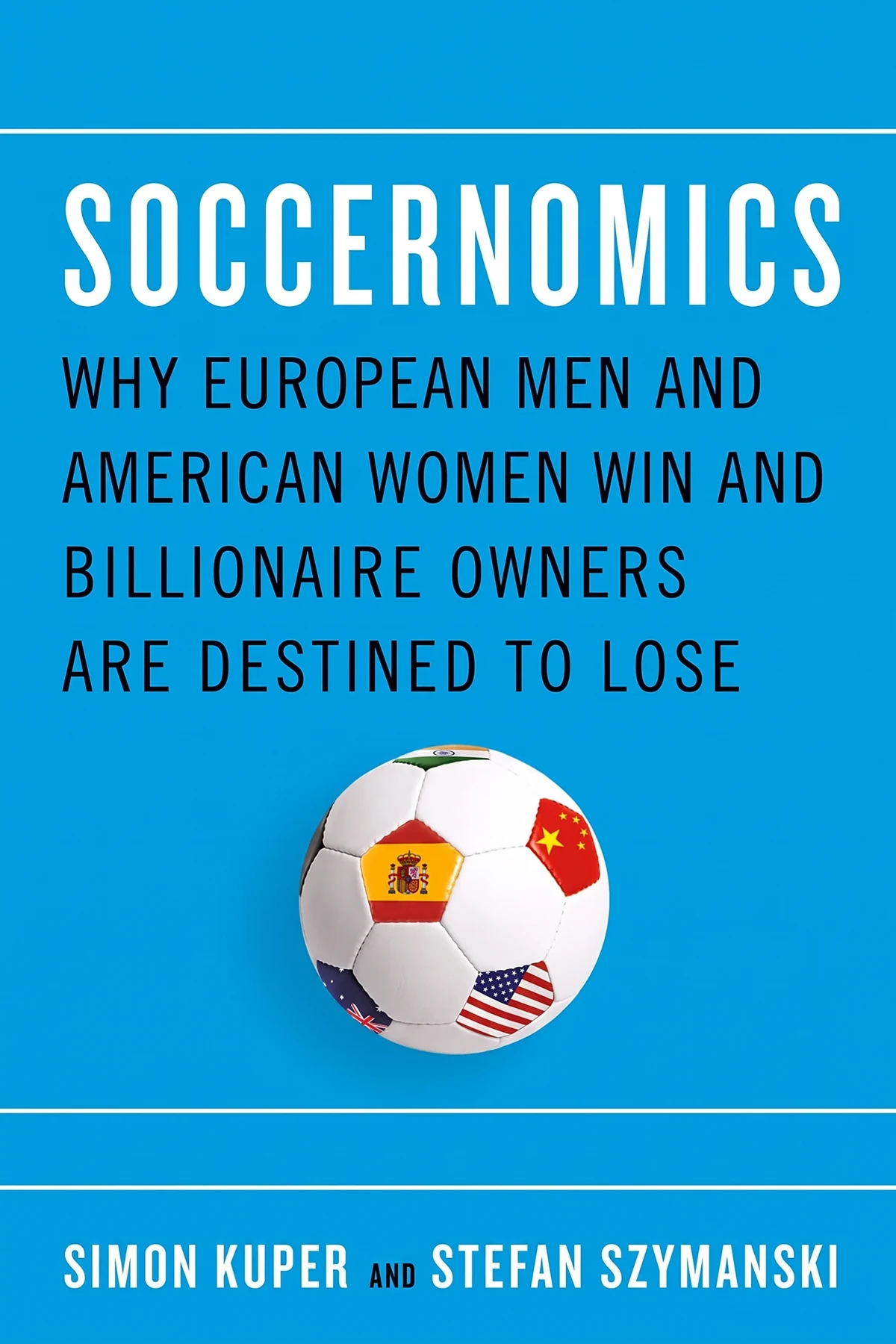
Table of Content
1. Introduction
1 min 50 sec
Step into any sports bar or scroll through social media on a match day, and you’ll hear the same refrains. Fans shout about how their team needs to spend fifty million on a new striker to save their season. Pundits argue that a change in management is the only way to spark a ‘winning mentality.’ We talk about the ‘big business’ of the sport as if it were an unstoppable corporate juggernaut that has swallowed the game’s soul. But how much of this is actually true? When we stop looking at the game through the lens of passion and start looking at it through the cold, objective lens of data and economics, a completely different picture emerges.
This is the world of soccer analysis where intuition is often the enemy of the truth. Most of what we think we know about the sport is based on tradition, clichés, and a fundamental misunderstanding of how the market really works. If you want to truly understand why some teams win and others lose—and why the global hierarchy of soccer is about to be turned upside down—you have to look past the highlight reels. You have to look at the numbers.
In the following discussion, we are going to explore a revolutionary way of thinking about the world’s most popular sport. We will uncover why most soccer clubs are actually tiny businesses compared to your local department store. We will see why your team’s wage bill is a much better predictor of their success than any flashy transfer fee paid over the summer. We’ll even look at the surprising way international tournaments affect the mental health of entire nations. By the end of this journey, you’ll have a new throughline: soccer isn’t just a game of heart; it’s an economic system that follows very specific, often hidden, rules. Let’s dive into the data-driven reality of the beautiful game.
2. The Economic Scale of Global Soccer
2 min 40 sec
Think your favorite club is a global corporate giant? You might be surprised to find they are financially smaller than a single neighborhood supermarket branch.
3. The Illusion of Managerial Impact
2 min 27 sec
We love to credit coaches for a team’s turnaround, but data suggests that most managerial success is simply a statistical return to normalcy.
4. The High Cost of Transfer Market Fashion
2 min 29 sec
Clubs spend billions every year on new players, yet much of this investment is wasted on overvalued stars and temporary trends.
5. Wages as the Ultimate Predictor
2 min 20 sec
Forget the transfer fees; if you want to know where a team will finish in the league, just look at their payroll.
6. The Quiet Revolution of Data Analytics
2 min 33 sec
The era of ‘gut feeling’ is ending as clubs use millions of data points to optimize everything from throw-ins to player fatigue.
7. Politics, History, and the Geography of Glory
2 min 47 sec
Why did industrial towns dominate for decades while capital cities struggled? The answer lies in the intersection of dictatorships and the Industrial Revolution.
8. The Paradox of National Wealth and Individual Talent
2 min 32 sec
Rich countries have better teams, but the best individual players often come from the most modest backgrounds. Here is why poverty can be a training ground.
9. The Social Impact: Soccer as a Life-Saver
2 min 23 sec
Beyond the entertainment, major soccer tournaments have a measurable, positive impact on a nation’s mental health, even reducing suicide rates.
10. The Root of the English Struggle
2 min 34 sec
England’s failure to win trophies isn’t about a lack of talent or too many foreign players; it is a story of cultural insularity and bad luck.
11. The Strength of the European Network
2 min 31 sec
Western Europe dominates the sport not just because of money, but because it is the world’s most efficient laboratory for soccer ideas.
12. The Global Future: A New Hierarchy
2 min 34 sec
The European era of dominance may be coming to an end as giants like China and the United States apply their vast resources to the game.
13. Conclusion
1 min 41 sec
As we have seen throughout this journey, soccer is far more than a game of passion and grit. It is a complex system influenced by economics, geography, and data. We have debunked the idea that managers are miracle workers, showing instead that most success is a return to the statistical mean. We’ve discovered that if you want to know which team will win, you should look at the payroll rather than the transfer headlines. We’ve also seen how the sport serves as a powerful social anchor, even improving the mental health of entire nations during major tournaments.
The throughline is clear: the more we apply rational analysis to soccer, the more we see that it follows predictable rules. Whether it’s the network effect that keeps Western Europe at the top or the 10,000-hour rule that explains why some neighborhoods produce more stars than others, the ‘secrets’ of the game are hidden in plain sight within the data. Moving forward, the most successful teams and the most informed fans will be those who can strip away the clichés and see the sport for what it really is.
If you want to take action based on these insights, start by changing the way you watch the game. The next time your team is in a penalty shootout, pay attention to the coin toss. Statistics show that the team that kicks first wins sixty percent of the time because the pressure on the second team is so much higher. Small, data-driven insights like this can change your entire perspective. Stop listening to the pundits who talk about ‘spirit’ and start looking for the efficiencies and patterns that truly drive victory. The future of the sport belongs to the rational, and by looking at the numbers, you’re already one step ahead.
About this book
What is this book about?
Soccernomics challenges everything you think you know about the world’s most popular sport. Using the cold, hard tools of economic analysis and data science, it strips away the myths that dominate pub conversations and media headlines. Why does a team like England consistently underperform? Is the transfer market just a high-stakes fashion show? Why are some of the biggest clubs in the world actually smaller than a single local supermarket? This exploration goes beyond the pitch to reveal how geography, politics, and social psychology shape the game. It explains why managerial changes are often an illusion and why the size of a player’s paycheck is the most reliable predictor of where a team will finish in the league. By the end, you will understand the hidden forces that make champions and why the global balance of soccer power is about to shift toward unexpected nations like China and the United States. It is a promise of a more rational, insightful way to watch the beautiful game.
Book Information
About the Author
Simon Kuper
Simon Kuper is a renowned soccer writer who contributes to the Financial Times and has won the William Hill prize for sports book of the year. Stefan Szymanski is a professor of sport management at the University of Michigan.
Ratings & Reviews
Ratings at a glance
What people think
Listeners find this data-intensive exploration of world soccer to be a stimulating piece that successfully deconstructs several of the sport’s most established misconceptions. Although views differ on the validity of specific statistical frameworks, people enjoy the intriguing perspectives on national team results and the economic realities of managing a club. Furthermore, they value the approachable prose, with one listener identifying the deep dive into the Super Euro League as a particularly compelling chapter. Finally, they mention that the newest editions give a current perspective on how the authors’ theories have matured along with the contemporary game.
Top reviews
Hunter
Picked this up after the 2022 World Cup and found the updated edition to be an absolute revelation for modern fans. The authors do a fantastic job of revising their previous predictions about countries like Iraq or Turkey, showing a level of intellectual honesty you rarely see in sports writing. It provides a rigorous, data-driven tour through the sport's most contentious debates, proving that Western European dominance isn't just luck but the result of massive knowledge networks. I particularly enjoyed the section on why the American women’s team thrives while the men struggle to break into the elite tier. While some of the statistical models are dense, the prose remains accessible and engaging throughout. This is a total riot for any fan who wants to see past the highlights and understand the engine room of global football.
Show moreJoe
This is basically Freakonomics for the pitch, and it delivers on that promise with every single chapter. I loved the section on how hosting a World Cup is actually a terrible financial investment but a massive win for national happiness. It’s fascinating to see statistics used to disprove the prevailing social mindset on how the transfer market functions. The authors explain why the 'monogamist' fan is a myth and why the business of soccer is actually remarkably stable compared to other industries. My husband and I ended up in a huge debate over their findings on England’s international performance, which just goes to show how provocative this book can be. If you like sports and data, you will absolutely love this.
Show moreOmar
To be fair, I didn't expect to learn that the British actually invented the word 'soccer' and used it for a century before making fun of Americans for it! This book is full of little historical nuggets like that which keep the pages turning. Beyond the trivia, the financial analysis of why it is almost impossible for an established club to die is incredibly comforting. It turns out that soccer clubs are more like essential utilities than traditional businesses. The authors write with a wit and clarity that makes even the most boring accounting principles feel relevant to a Saturday afternoon match. If you want to sound smarter at the pub, this is the book you need to read before the next season starts.
Show moreArt
Why do countries keep bankrupting themselves to host the World Cup if the economic return is nil? This book answers that question by looking at the emotional impact and the spikes in national happiness that occur during these events. It changed how I view the 'business' of the sport entirely, shifting the focus from profit margins to social capital. The authors have clearly done their homework, and the updated sections show they aren't afraid to admit when their older models missed the mark. It is a must-read for fans of the sport who want to understand the global forces at play. Highest possible recommendation for anyone who values data over dugout clichés.
Show moreValentina
Ever wonder why your local club is a financial black hole while billionaires keep buying them anyway? Soccernomics tackles the financial realities of club management with a refreshing lack of sentimentality that most fans will find eye-opening. The book effectively challenges many of the sport's long-standing myths, specifically the idea that a manager is the most important person at a club. In reality, the data suggests that wage bills are a much better predictor of success than who is standing in the technical area. The writing style is quite accessible, making complex economic theories easy to digest for the average reader. While some of the international performance metrics felt a bit stretched, the overall analysis of the European league system is top-notch.
Show moreArthit
The chapter discussing the potential Super Euro League is worth the price of admission alone as it perfectly anticipates the greed currently ruining the game. Kuper and Szymanski provide a great overview that attacks the status quo and the hopeful future envisioned by various billionaires. Truth is, the book makes you realize how inefficient most soccer clubs were run for the better part of a century. I appreciated the updated insights in this edition, especially regarding how data analytics has moved from the fringes to the mainstream. It’s a worthwhile read for anyone interested in the intersection of sports and economics. Just be prepared for some of your favorite legends to be reduced to mere data points.
Show moreTim
After hearing so much about it on various podcasts, I finally dove into this data-driven deep dive into the world’s most popular sport. The analysis of why England actually overperforms relative to its history was a tough pill to swallow but the numbers are hard to argue with. I especially liked the breakdown of why international stars in the Premier League actually help domestic players improve rather than holding them back. It is a fascinating use of statistics to disprove the loud, nativist arguments you hear on sports talk radio. To be fair, some sections on the 'next big soccer nation' felt like they were trying too hard to be prophetic. Still, it’s a very easy and enjoyable read for any serious student of the game.
Show moreYok
As someone who appreciates a good spreadsheet, I found the first half of this book regarding club finances genuinely revelatory. However, parts II and III, which focus on national teams and fan demographics, left me feeling pretty underwhelmed. The authors use simple regressions to try to explain why certain countries overachieve, but using just GDP and population feels like a massive reach. It glosses over huge chunks of cultural history and the actual infrastructure of youth academies. I was expecting a more holistic view of the game, but it often felt like a series of disconnected anecdotes rather than a cohesive argument. It is a decent read for a flight, but don't expect it to change your entire worldview on the sport.
Show morePhichai
The attempt to force a 'Moneyball' narrative onto the beautiful game falls flat for me because the sports are fundamentally different. It feels like the authors cherry-picked specific facts and wrapped them in basic statistics to make their theories sound like indisputable laws of physics. Frankly, most of their conclusions don't stand up to serious scrutiny if you actually watch the matches week in and week out. I was relieved when I finally hit the index because the smug tone of the writing was becoming unbearable. The chapter on Lyon’s transfer strategy was somewhat interesting, but even that felt like an oversimplification of complex scouting networks. If you want actual tactical analysis or deep scouting insights, you are better off looking elsewhere.
Show moreSophia
Not what I expected from a book claiming to use rigorous data analysis, as it is riddled with massive conceptual errors. The authors try to explain Lyon’s success using the 'wisdom of crowds' because they had a committee of five people making decisions. Anyone with a basic understanding of social science knows that five experts in a room is a committee, not a crowd! This kind of trendy, fluffy-pop-sci writing is exactly what makes books like this dangerous for casual readers who don't know the source material. They overstate points to the level of absurdity and ignore information cascades that lead to market bubbles. It felt like they skimmed a few Wired articles and decided they were experts on complex network phenomena. Truly disappointing and amateurish research.
Show moreReaders also enjoyed

Ali: A Life
Jonathan Eig
1929: Inside the Greatest Crash in Wall Street History--and How It
Andrew Ross Sorkin

23 Things They Don’t Tell You About Capitalism
Ha-Joon Chang

A Little History of Economics
Niall Kishtainy

A Splendid Exchange: How Trade Shaped the World
William J. Bernstein

AUDIO SUMMARY AVAILABLE
Listen to Soccernomics in 15 minutes
Get the key ideas from Soccernomics by Simon Kuper, plus 5,000+ more titles in English and Thai.
- 5,000+ titles
- Listen as much as you want
- 7-day free trial
- Cancel anytime







