
Welcome to the Universe: An Astrophysical Tour
Neil deGrasse Tyson
Astrophysicist Neil deGrasse Tyson invites us to view our earthly conflicts through the lens of the cosmos, suggesting that a scientific perspective can foster unity, empathy, and a deeper appreciation for life.
1 min 49 sec
In our modern era, we seem to be reaching a breaking point in how we communicate. Perhaps you’ve noticed it in your daily interactions or on your social media feeds. There is a growing sentiment that gut instincts and emotional reactions should take precedence over evidence and expert analysis. This shift has led to an era of intense division, where every topic becomes a battlefield for culture wars and partisan shouting matches. When we disagree, we often stop listening, retreating instead into our respective corners and assuming that our perspective is the only one that matters.
But what if there was a way to step outside of this cycle? What if the solution to our localized, human-centered problems wasn’t to look closer at the details, but to look further away? This is the core invitation of Neil deGrasse Tyson in his exploration of the cosmic perspective. He isn’t suggesting that science should replace politics or that rationalists should simply take over all decision-making. Instead, he argues that the tools of scientific inquiry and the vast context of the universe can help us reframe our conversations.
The cosmic perspective isn’t just about facts and figures; it’s about a shift in vision. It is the view of life on Earth that emerges when we place our small-scale problems against the backdrop of billions of years and trillions of miles. In this summary, we will explore how this expansive way of thinking helps us understand everything from our environment to our identities. By zooming out, we can often see patterns and truths that are invisible when we are standing right in the middle of a conflict. It’s a journey that takes us from the depths of ancient history to the far reaches of the Moon, only to bring us back to our own planet with a sense of wonder and unity that our current discourse so desperately lacks.
2 min 52 sec
Discover how the ancient urge to explore beyond the safety of our immediate surroundings has always been the key to solving the most difficult problems at home.
3 min 35 sec
Learn how the famous Earthrise photograph from the Apollo 8 mission transformed our understanding of the environment and shifted us from local to global thinking.
3 min 12 sec
Explore why the rigid categories we use to describe the world often fail when tested by the laws of physics and the vastness of the universe.
3 min 10 sec
Investigate the social constructs of gender and identity by looking at how human traits are distributed across a continuous biological spectrum.
2 min 57 sec
Understand the staggering mathematical odds against your birth and why our existence makes us the ultimate winners of a cosmic lottery.
1 min 45 sec
As we conclude this journey through the cosmic perspective, the throughline becomes clear: our understanding of ourselves is transformed when we look beyond ourselves. We began by seeing how the ancient urge to explore allowed our ancestors to solve the problems of the cave by venturing into the unknown. We saw how a single photograph of Earth from the Moon could spark a global movement to protect our planetary home, proving that distance can bring clarity. We explored the way nature resists the neat categories we try to impose on it, from the states of matter to the spectrum of human identity. Finally, we looked at the staggering mathematical odds that make our very existence a miracle.
The message Neil deGrasse Tyson leaves us with is one of profound hope and responsibility. In an age where we are often told to trust our guts and cling to our tribes, the cosmic perspective offers a more stable and inclusive foundation. It doesn’t ask us to abandon our values, but it does ask us to hold them with a bit more humility and a lot more wonder.
The next time you find yourself embroiled in a heated debate or feeling overwhelmed by the divisions in our society, take a moment to look up. Remember that we are all residents of a small, fragile world in a vast, indifferent universe. We are the lucky ones who get to experience this brief moment of consciousness together. By adopting this starry-eyed view, we can begin to build a civilization that is not defined by its boundaries, but by its shared curiosity and its common humanity. The universe is calling us to be better than our smallest instincts, and the cosmic perspective is the map that can lead us there.
In a world increasingly divided by political vitriol and cultural silos, Starry Messenger offers a refreshing and expansive alternative: the cosmic perspective. This approach encourages us to step back from our immediate tribal identities and view the human condition from the vastness of space and time. By doing so, many of our most heated disagreements—from the boundaries of gender to the urgency of environmental protection—take on a new, more nuanced light. The book promises to transform how you engage with modern debates. Rather than providing a list of rigid answers, it provides a mental framework. It uses the tools of science—astronomy, physics, and biology—to illustrate that the world is rarely as binary or simple as we imagine. By the end, the author suggests that seeing ourselves as lucky winners in a cosmic lottery can shift our focus from what divides us to the miracle of our shared existence.
Neil deGrasse Tyson is an astrophysicist and best-selling author. He is the director of the Hayden Planetarium at the American Museum of Natural History and the host of the Emmy-nominated podcast StarTalk. Tyson is the recipient of numerous awards, including the Public Welfare Medal from the National Academy of Sciences and the Distinguished Public Service Medal from NASA. His previous books included Astrophysics for People in a Hurry.
Neil deGrasse Tyson
Listeners find the work deeply insightful and stimulating, with one listener noting it contains hundreds of pearls of wisdom and knowledge. Furthermore, the writing is skillfully composed and accessible, creating an enjoyable experience that reflects listeners' philosophies on life. They also appreciate the entertainment factor, as one review points out how the author makes science fun, while providing a cosmic perspective on civilization and social awareness.
This book is essentially a blueprint for a more rational world, and I found it deeply comforting to read during such a polarized time. Tyson uses his 'cosmic perspective' to zoom out from our petty earthly squabbles, reminding us that we’re all just inhabitants of a tiny blue marble. The way he breaks down 'objective truth' versus 'personal truth' is genuinely insightful. Look, he can be a bit of a know-it-all at times, but the pearls of wisdom here are worth the occasional eye-roll. It’s written in a way that is incredibly easy to understand, even when he’s diving into complex ideas about law or identity. If you need a reason to feel optimistic about humanity's future, this is it. He makes science fun without stripping away the gravitas of our place in the universe. A must-read for those who feel exhausted by the current cultural divide.
Show moreWow. Tyson really hit it out of the park with his ability to make the massive scale of the universe feel deeply personal and relevant. This isn't just a science book; it’s a guide for how to think more clearly. I loved the 'cosmic backyard' concept—imagining a future where we don't fight over resources because the universe is so vast. The writing is snappy and accessible. Each chapter is packed with hundreds of little facts that make you want to highlight every other page. It’s rare to find a book that is both entertaining and intellectually stimulating at this level. Personally, I found the section on the history of the moon and our shifting perspectives on exploration to be the highlight. It reminds us that we are all more alike than different. This is the kind of book we should be handing out in schools.
Show moreFinally got around to reading this, and it’s a masterclass in science communication that everyone needs. Tyson manages to weave together pop culture, history, and astrophysics into a narrative that is both fun and profoundly thought-provoking. I’ve been a fan of StarTalk for years, and this book feels like the best of that show distilled into prose. The way he handles sensitive topics like race and gender identity with a purely rational, evidence-based lens is courageous and enlightening. It captures a philosophy on life that is both grounded in reality and soaring in its aspirations. Some might find his style a bit too simplistic, but I think that’s the point—he’s building bridges, not ivory towers. Each page contains pearls of wisdom that challenge you to be a better, more thoughtful citizen of Earth. I couldn't put it down.
Show moreNeil deGrasse Tyson has this incredible gift for making you feel tiny and significant at the same time, and Starry Messenger is his best example of that yet. This book is a celebration of what we can achieve when we prioritize rational thinking over ego and tribalism. I loved his breakdown of how scientific knowledge has progressed in 30-year chunks—it really puts our modern 'problems' into perspective. The writing is insightful and full of the enthusiasm he is known for. Not gonna lie, I was worried it would be too political, but he plays a fair devil's advocate on many polarizing issues. It’s a delightful read that really captures the 'awe' of existence. If you’re looking for a book that blends science with a deep awareness of social issues, look no further. It truly provides a cosmic perspective that our world is sorely lacking.
Show moreEver wonder how an astrophysicist looks at the evening news? Starry Messenger answers that by applying scientific rigor to topics like race, gender, and politics. Tyson’s writing is well-crafted and his narrative style is captivating, almost like he's narrating one of his documentaries right in your ear. I particularly liked the section on the search for beauty in science. However, I’ve gotta say, he sometimes ignores the nuances of human emotion in favor of cold statistics. His examples, like the one about Santa’s reindeer, can feel a bit juvenile for an adult audience. Despite that, the book is a delightful read that captures a unique philosophy on life. It forces you to rethink your biases by looking at the world from several light-years away. It’s a fast read that stays with you long after you finish the Coda.
Show morePicked this up looking for physics, but got a philosophy lesson instead, and I’m surprisingly okay with that. Tyson’s main argument is that a scientific approach can reduce human strife, which is a noble, if slightly idealistic, goal. The chapter on 'Conflict & Resolution' was particularly eye-opening for me. Truth is, his tone can occasionally border on condescending, like that guy at a party who won't stop sharing 'fun facts' while you're just trying to eat. But if you can move past the mild tone-deafness, the core message is vital. He uses the tools of science to dismantle prejudice in a way that feels very fresh. It’s not as dense as some of his other books, making it a great entry point for people who aren't usually into science. The formatting is also great, mirroring the quick-hit style of 'Astrophysics for People in a Hurry.'
Show moreAs someone who struggles with the constant noise of the current political divide, this book offered a refreshing breath of air. Tyson’s focus on the difference between personal truths and objective truths is a lesson our society desperately needs right now. The book is well-crafted, and his ability to relate complex scientific milestones to our daily lives is unmatched. I did find some of his examples, like the reindeer antler bit, to be a little unnecessary and distracting from the larger point. Still, the awareness of social issues through a cosmic lens is a fascinating approach. It’s the kind of book that makes you feel both tiny and incredibly significant at the same time. Not quite on the level of Sagan’s 'Demon-Haunted World,' but it’s a worthy successor for the modern era. Definitely worth the read for the perspective shift alone.
Show moreAfter hearing so much hype, I found the actual content to be a bit hit-or-miss compared to his previous work. There is no denying that Tyson is a brilliant educator, but here he often comes across as a 'Zealous Scientist' who lacks a bit of humility. The book is structured like a series of long-form Twitter posts, which makes it easy to digest but occasionally feels shallow. His forays into political science and dietary choices felt particularly pedestrian. For instance, his vendetta against vegetarian logic used some pretty poor analogies that didn't quite land for me. To be fair, his insights on the history of scientific discovery are still top-notch. I just wish he had stuck more to the stars and less to his personal grievances with society. It’s a decent collection of thoughts, but maybe not his best work.
Show moreThe chapter on meatarians versus vegetarians really showcases Tyson’s tendency toward some pretty tortured logic. While he is undoubtedly a smart guy, his disdain for any worldview that doesn't fit into a narrow Enlightenment-era box can be grating. The book has some dramatic insights, particularly about our place in the galaxy, but they are often buried under pedestrian observations about everyday life. In my experience, he's at his best when he's just telling stories about the stars. When he tries to 'fix' societal flaws using science, it comes off as a bit simplistic. To be fair, the writing is easy to follow and he does make science accessible to the masses. It just felt a bit too much like a collection of his social media musings rather than a deeply researched book. It’s okay, but I’ve definitely read better from him.
Show moreFrankly, I expected more from a scientist of his caliber than middle-school level political observations. While the premise of a cosmic perspective sounds noble, Tyson frequently drifts into a tone that feels both dismissive and oddly condescending toward anything outside his specific brand of rationalism. His analogies—particularly regarding the choice to be vegetarian—rely on some truly tortured logic that undermines his scientific credibility. It felt less like a cohesive book and more like a collection of his more controversial tweets stitched together with some filler. To be fair, he’s a gifted communicator, and there are flashes of brilliance when he sticks to astrophysics. However, his foray into social commentary misses the mark by ignoring centuries of philosophical nuance in favor of easy 'gotcha' moments. Disappointing, especially given how much I enjoyed his previous titles.
Show more
Lisa Kaltenegger

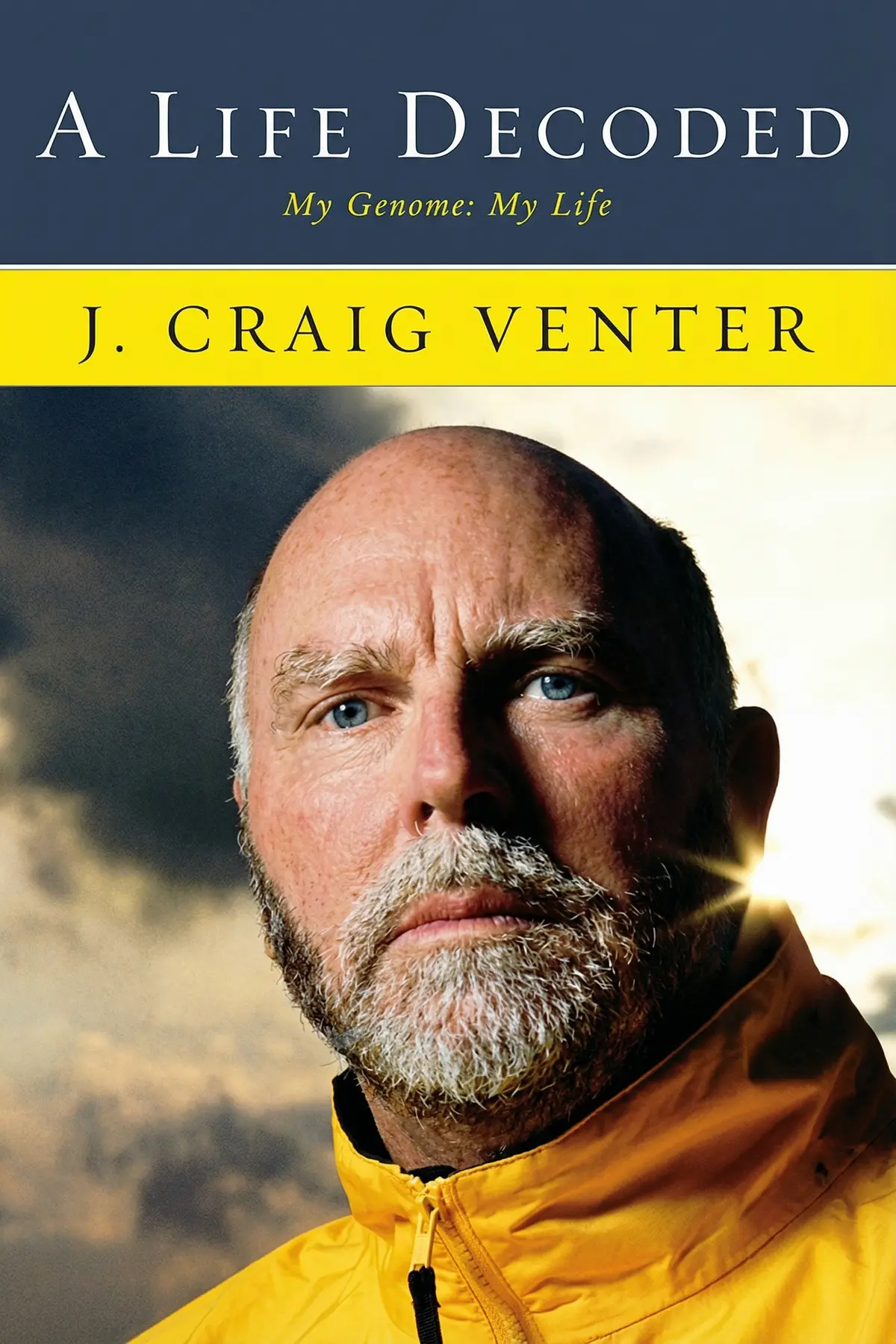
J. Craig Venter
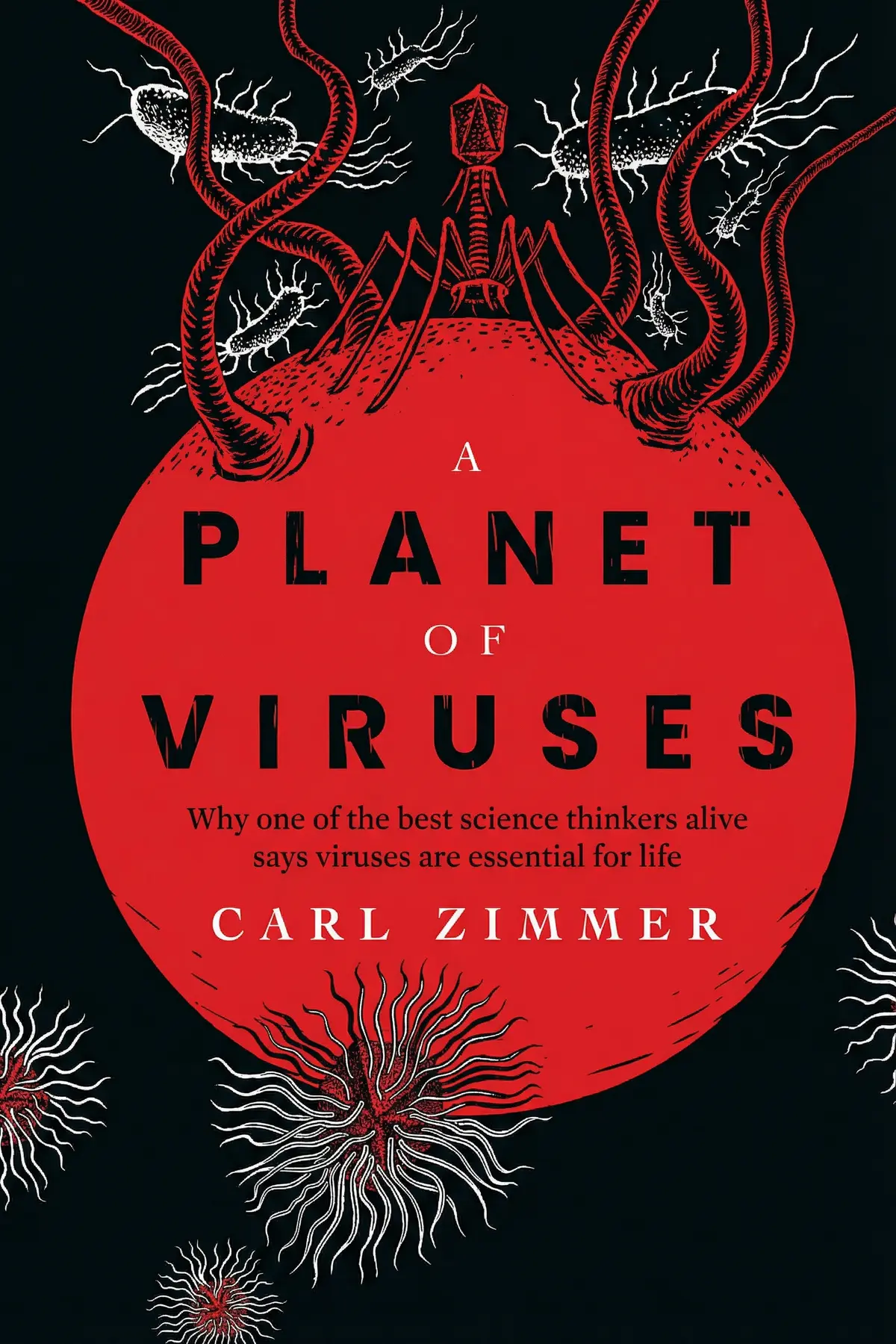
Carl Zimmer
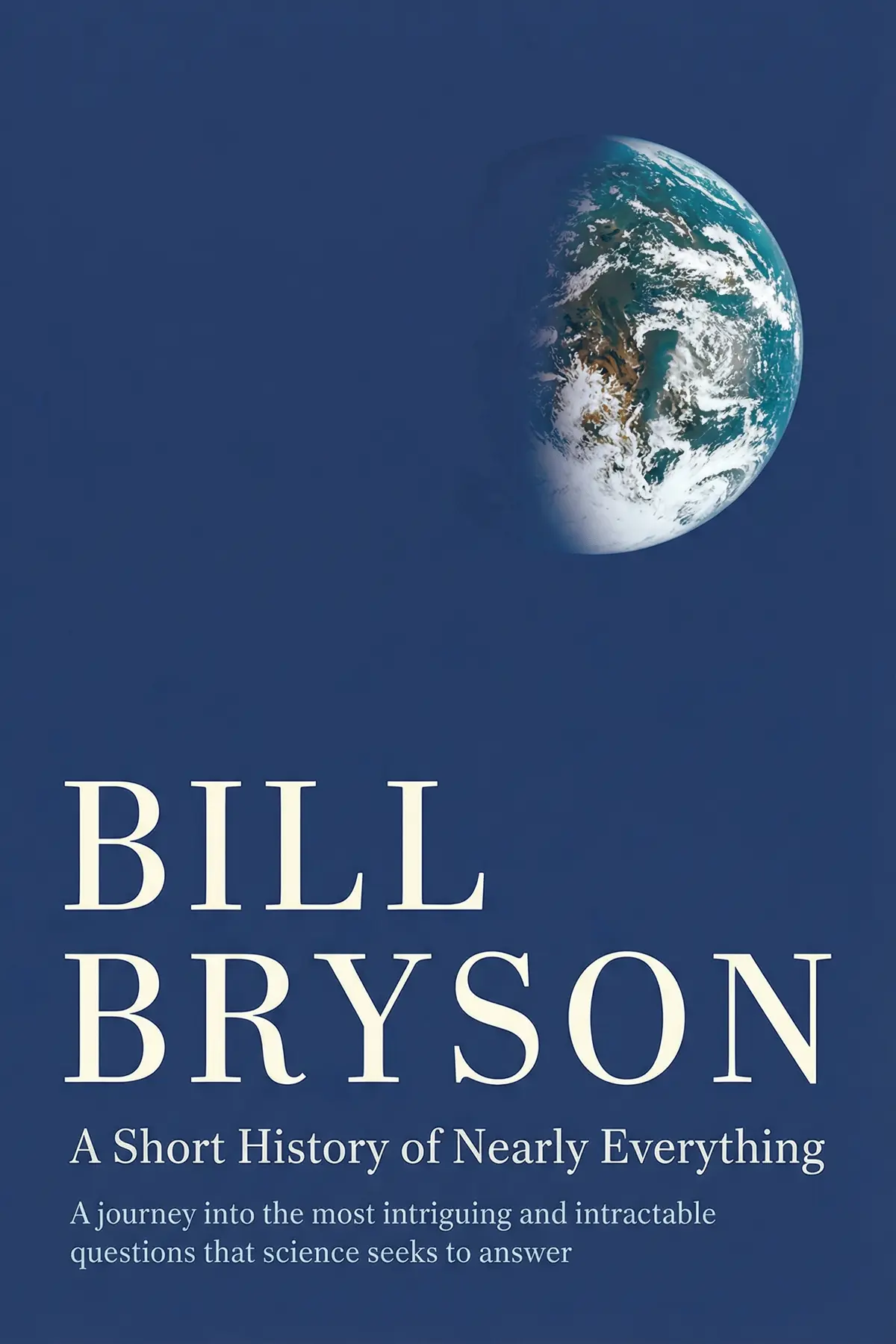
Bill Bryson
AUDIO SUMMARY AVAILABLE
Get the key ideas from Starry Messenger by Neil deGrasse Tyson, plus 5,000+ more titles in English and Thai.







