
16 min 30 sec
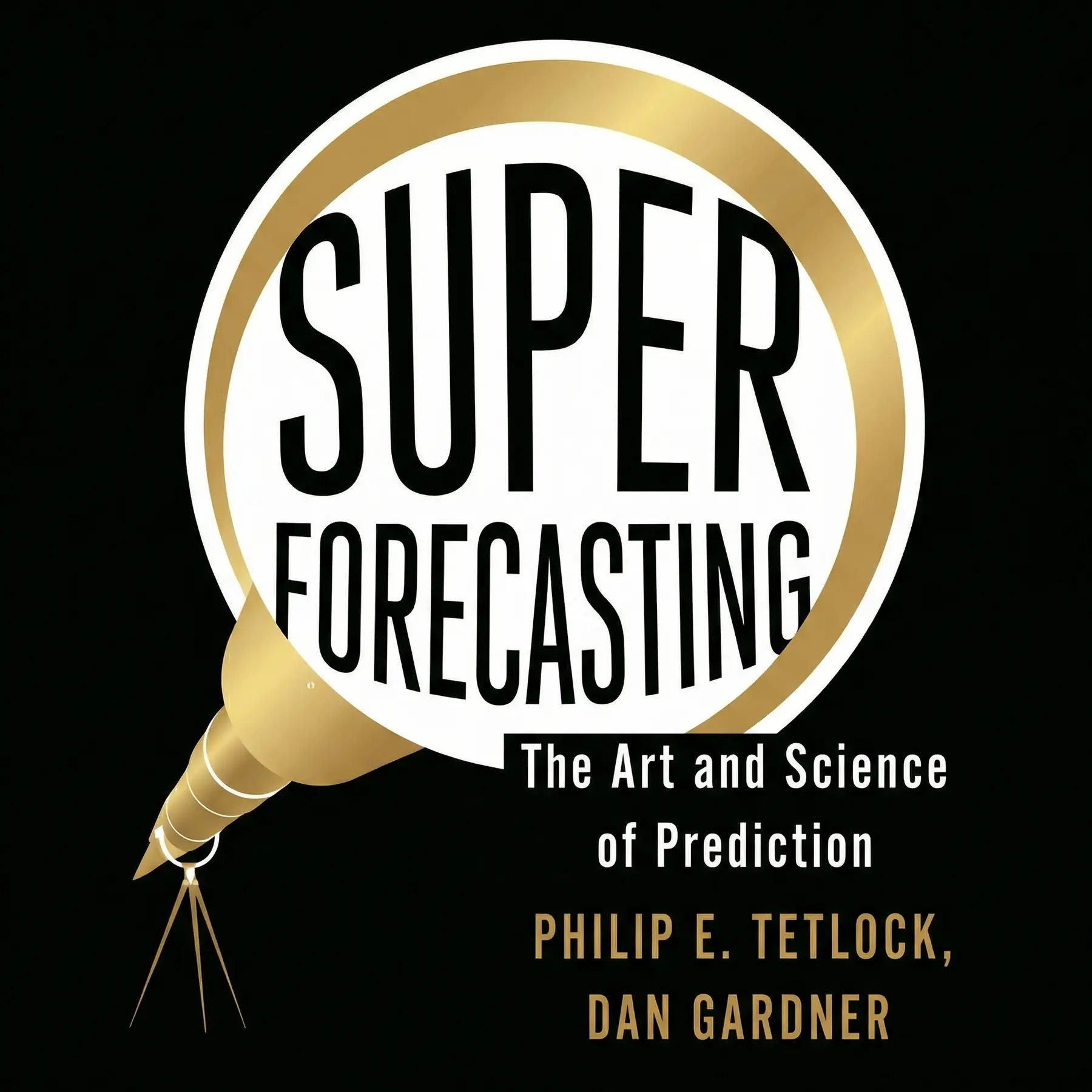
Superforecasting: The Art and Science of Prediction
Superforecasting reveals how regular people can develop extraordinary predictive skills by adopting a rigorous, evidence-based mindset, challenging the notion that effective forecasting is reserved for elite experts or genius-level thinkers.
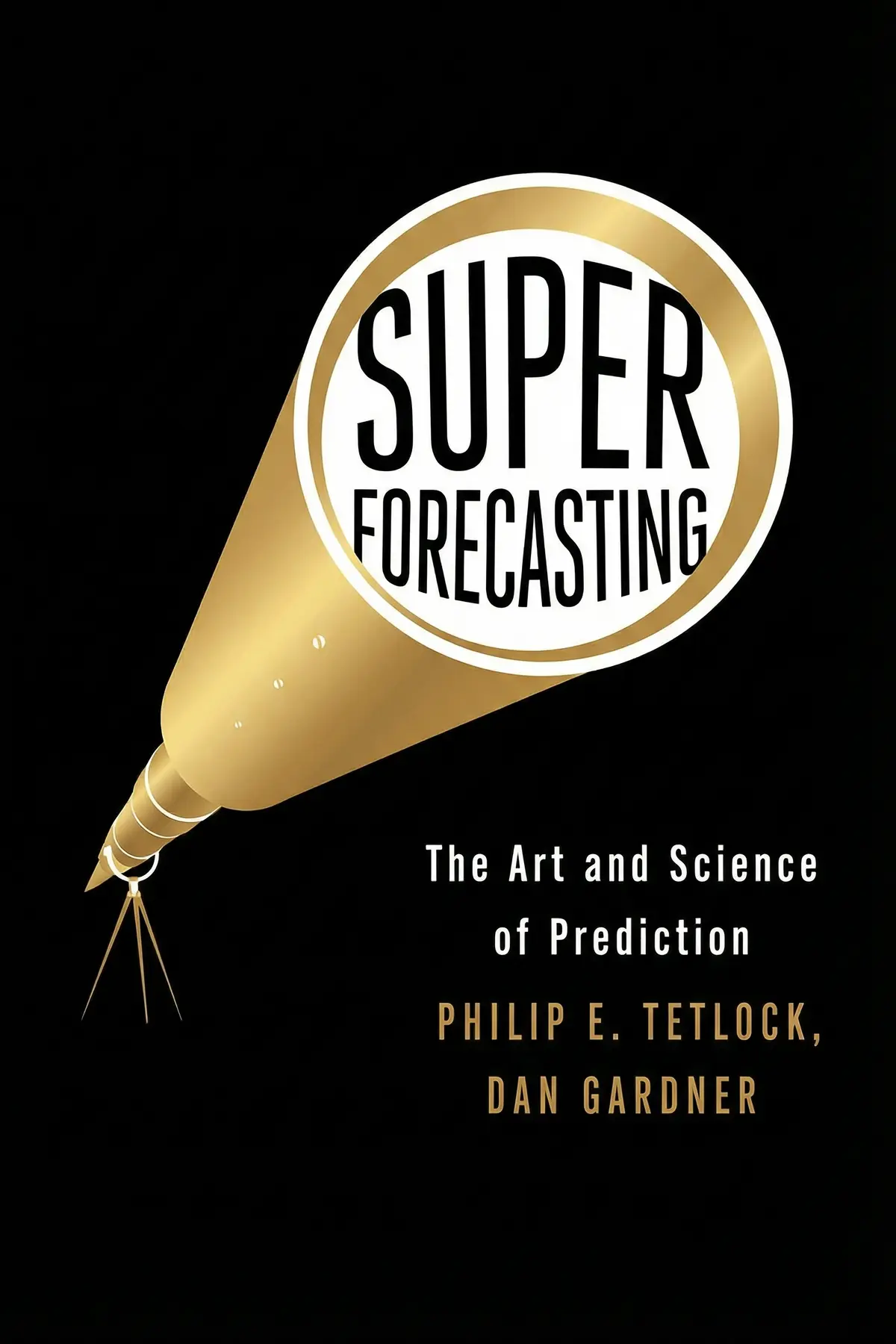
Table of Content
1. Introduction
1 min 31 sec
We are all, in one way or another, in the business of predicting the future. Every time you decide to invest in a new venture, choose a career path, or even plan a weekend trip, you are essentially making a forecast. You are looking at the available data, weighing the possibilities, and placing a bet on what the world will look like tomorrow. However, most of us are surprisingly bad at it. Even the most decorated experts—the pundits we see on television and the analysts in high-level think tanks—often perform no better than a dart-throwing chimpanzee when it comes to long-term accuracy.
But there is a silver lining. Research has shown that a small group of people exists who are truly exceptional at this craft. They aren’t necessarily household names or world-class geniuses; they are retirees, hobbyists, and curious individuals who have learned how to think differently. These are the superforecasters. They don’t have crystal balls, but they do have a method. This summary explores the fascinating findings of the Good Judgment Project, a massive study that identified these individuals and decoded their secrets.
Over the course of this audio experience, we will look at why these individuals are sixty percent more accurate than the average person. We will explore the throughline of their success: it isn’t about who you are, but about how you think. You’ll learn how to move away from gut feelings and toward a disciplined, evidence-based approach to uncertainty. By the end, you’ll see that forecasting is a skill that can be practiced, refined, and mastered by anyone willing to put in the effort.
2. The Rise of the Amateur Expert
2 min 09 sec
Discover how a group of ordinary volunteers managed to outperform professional intelligence agencies using nothing more than curiosity and a disciplined approach.
3. Deconstructing the Impossible
2 min 15 sec
Learn the vital technique of breaking down complex, intimidating questions into smaller, manageable pieces to uncover the truth.
4. The Trap of Binary Thinking
2 min 14 sec
Explore why the human brain loves simple ‘yes or no’ answers and how superforecasters use the power of granular probability to escape this flaw.
5. The Art of the Incremental Update
2 min 07 sec
See how the best forecasters treat their beliefs as working hypotheses that must be constantly tweaked as new information arrives.
6. Cultivating the Perpetual Beta Mindset
2 min 22 sec
Understand why your personality and your approach to learning matter more than your raw intelligence when it comes to predicting the future.
7. Balancing the Outside and Inside Views
2 min 06 sec
Discover the secret to avoiding over-optimism by looking at historical base rates before diving into the specific details of a situation.
8. Conclusion
1 min 46 sec
As we reach the end of this exploration into the world of superforecasting, the most important takeaway is a message of empowerment. The future is not a locked vault, and foresight is not a divine gift granted only to a chosen few. Instead, the ability to navigate uncertainty is a craft. It is a discipline built on the foundation of active open-mindedness, probabilistic thinking, and the humility to constantly update your beliefs.
We have seen that the secret to accuracy lies in the process. It’s about breaking down huge problems into small, digestible bites. It’s about resisting the urge to see the world in simple black-and-white terms and instead embracing the vast spectrum of gray. It involves balancing the general lessons of history with the specific details of the present. Most importantly, it requires a ‘growth mindset’—the understanding that your current level of skill is just a starting point. By keeping a record of your predictions and being honest about your mistakes, you can turn every failure into a lesson that sharpens your next judgment.
In an era where the world seems increasingly volatile and unpredictable, these skills are more valuable than ever. Superforecasting teaches us that while we may never have perfect certainty, we can always strive for better clarity. It invites us to live in a state of ‘perpetual beta,’ always learning, always adjusting, and always looking for a slightly better way to see around the corner. So, the next time you face a major decision or a complex question about the future, don’t just trust your gut. Take a breath, break it down, look for the base rate, and start your own journey toward becoming a superforecaster. The future is waiting for you to find it.
About this book
What is this book about?
Have you ever wondered why some predictions about the future are so wildly off, while others seem to hit the mark with uncanny precision? In Superforecasting, Philip E. Tetlock and Dan Gardner peel back the curtain on the world of high-stakes prediction. They introduce us to a unique group of individuals known as superforecasters—people from ordinary backgrounds who consistently outperform professional intelligence analysts and seasoned experts. The book’s core promise is that the ability to foresee future events isn't a mystical gift or a byproduct of a massive IQ. Instead, it is a set of learnable skills. Through the lens of the Good Judgment Project, the authors demonstrate how anyone can improve their decision-making and forecasting accuracy. By breaking down complex problems, balancing various perspectives, and maintaining a state of 'perpetual beta' or constant learning, you can navigate an uncertain world with far greater clarity. This summary explores the specific techniques, mental habits, and philosophical shifts required to transform from a casual guesser into a disciplined forecaster.
Book Information
About the Author
Philip E. Tetlock
Philip E. Tetlock is the Annenberg University Professor at the University of Pennsylvania and a renowned scholar of psychology and political science. He co-leads the Good Judgment Project and has authored influential works like Expert Political Judgment. With over 200 peer-reviewed articles, his work has been recognized by the National Academy of Sciences. Dan Gardner is a New York Times best-selling author and former journalist known for his expertise in psychology and decision-making. His books are published globally in 25 countries, and he frequently lectures on risk and forecasting.
Ratings & Reviews
Ratings at a glance
What people think
Listeners find the book exceptionally clear and articulate, commending its deep analysis and stimulating material regarding decision-making and critical thinking. Furthermore, the book earns praise for its precision in forecasting, as one listener highlights its solid conclusions based on probability analysis. Listeners also value the engaging anecdotes, fascinating ideas, and the practical utility offered to decision-makers, with one listener noting it is essential reading for leaders.
Top reviews
Maksim
Ever wonder why the 'experts' on TV are almost always wrong? Tetlock explores the world of the Good Judgment Project to show that being a great forecaster isn't about having a high IQ or a fancy degree. It’s actually about having a specific mindset—one that values intellectual humility and constant, incremental updates to beliefs. I found the section on Bayesian methodology particularly enlightening because it offers a practical way to refine our own decision-making processes. The writing is surprisingly fluid for a book about data, and Gardner does a great job making the social science feel like a gripping narrative. If you’re a leader who needs to make high-stakes calls, this is absolutely essential reading. It transforms abstract probability into a tangible tool for everyday life.
Show morePacharapol
As someone who deals with risk management, I found this analysis of the IARPA project incredibly thought-provoking. The authors do a fantastic job of breaking down how 'superforecasters' outperform intelligence analysts by using logic instead of just gut feeling. Look, the book isn't perfect; it sometimes meanders into US foreign policy territory that feels a bit disconnected from the core statistical theory. However, the insights into cognitive biases and the 'fox vs. hedgehog' distinction are pure gold. To be fair, it’s much more readable than most academic texts on probability. It forces you to look at the 'really big pile of evidence' from the Iraq War through a much more skeptical, rigorous lens. A masterpiece of evidence-based thought.
Show moreFort
Wow. This completely changed how I think about my own certainties and the way I process new information daily. The concept of 'unpacking' a question into its component parts—Fermi-style—is a game-changer for anyone trying to navigate an uncertain future. Tetlock explains that these elite forecasters aren't psychic; they are just better at spotting their own biases and adjusting their estimates as new data rolls in. The stories about ordinary people—like the one about the fictional vs. real Leon Panetta—add a human element that keeps the pages turning. It’s a compelling argument for why we should stop listening to confident gurus and start trusting those who are willing to say 'I don't know yet.' Highly recommended for anyone wanting to sharpen their mind.
Show moreEleni
Finally got around to reading this and it’s a masterclass in understanding how the human mind handles uncertainty. The authors argue that forecasting is a skill that can be cultivated through practice, feedback, and a rigorous commitment to the truth. Unlike many business books that rely on 'gut feeling' success stories, this is backed by years of actual data from the Good Judgment Project. It’s fascinating to see how ordinary citizens could outperform professional analysts just by following a few core principles of logic. If you enjoyed 'The Signal and the Noise' by Nate Silver, you will find this to be a perfect companion piece. This should be mandatory reading for anyone in a leadership position today. Truly insightful stuff.
Show moreJoseph
To be fair, I didn't think a book about statistical prediction would be this engaging, but the storytelling is top-notch. The way Tetlock explains the difference between 'hedgehogs' who know one big thing and 'foxes' who know many small things is incredibly useful. It highlights why we often fall for charismatic leaders who offer simple answers to complex problems when we should be looking for nuance instead. The emphasis on tracking your own track record is a simple but revolutionary idea for most of us. This isn't just a book about politics or the CIA; it’s a guide on how to live a more examined, logical life in an increasingly chaotic world. It’s the kind of book you’ll want to highlight on every page.
Show moreYongyut
Picked this up after seeing it on several 'must-read' lists for entrepreneurs, and I’m glad I finally did. The writing style is very accessible, which is a relief given how dry the subject of probability can usually be. I appreciated the emphasis on 'intellectual humility'—the idea that we need to be willing to admit when our initial assumptions are wrong. My only gripe is that it feels a bit repetitive in the middle sections where it goes over the same IARPA results multiple times. Still, the practical value for decision-makers is undeniable, and the case studies are genuinely interesting. It’s a solid 4-star read that encourages you to think more like a 'fox' than a 'hedgehog.' It definitely makes you question your first instincts.
Show moreRungrat
After hearing so much hype about 'superforecasting,' I was skeptical, but the book largely delivers on its promise of improving critical thinking. Tetlock and Gardner show that the key to predicting the future isn't a crystal ball but a willingness to break down complex problems into smaller, manageable pieces. I loved the section on how 'teams' can either succumb to groupthink or become more than the sum of their parts through healthy debate. Truth is, we all have blind spots, and this book provides a toolkit for identifying them before they lead to disastrous conclusions. It bridges the gap between the abstract concepts of behavioral economics and the real-world application of those theories in high-pressure environments. A very solid conclusion to his years of research.
Show moreFatima
Not what I expected when I picked this up. I was looking for a technical manual on forecasting models, but instead, I got a lot of political commentary and anecdotes about the CIA. While the discussion on Archie Cochrane and evidence-based medicine was a strong start, the book eventually gets bogged down in subjective certitude disguised as probability. Frankly, calling a personal hunch a 'percentage' doesn't make it science, and the author's defense of certain intelligence failures felt a bit too polite. It’s a decent summary of themes found in 'Thinking, Fast and Slow,' but it lacks the same level of rigorous depth. Good for a casual reader, but maybe too watered down for a stats nerd who wants hard equations over stories.
Show moreManee
This book starts off incredibly strong but loses its way somewhere in the second half. The initial discussions on cognitive biases and the failures of 'expert' talking heads were brilliant and kept me hooked for the first hundred pages. However, once the focus shifts entirely to the US government's IARPA experiments, it starts to feel a bit like a long-winded report. The repetition of the central message—revise your predictions, use numbers, avoid bias—becomes a bit tedious after a while. I was hoping for more diverse examples outside of US foreign policy and intelligence. It’s worth reading for the first half alone, but be prepared for some dry sections later on. It's interesting but ultimately a bit overlong.
Show moreRin
The chapter on political theory ruined what could have been a great book on statistics. I wanted a cut-and-dry analysis of predictive modeling, but what I got was a lot of propaganda and critique of US intelligence programs that felt out of place. Personally, I found the comparisons to the Iraq War fiasco to be missing the point entirely regarding how evidence-based practice should actually function. If a doctor gives you poison and monitors the results, that isn't science—it’s just bad practice. This book tries to combine too many disparate ideas and ends up feeling superficial in its attempt to bridge the gap between data and history. Pass on this if you want real math. It's too focused on subjective degrees of certitude.
Show moreFeatured in
Readers also enjoyed
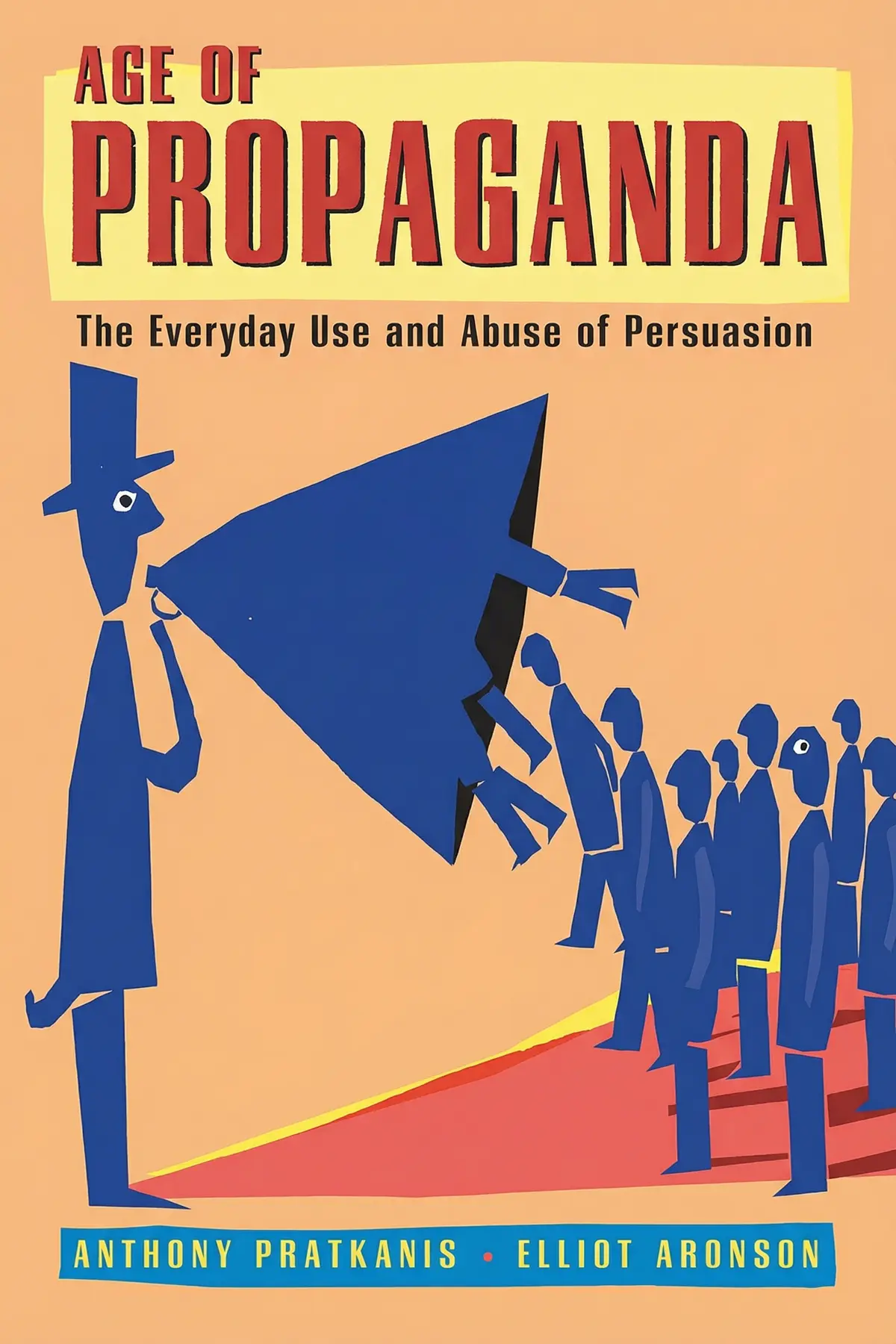
Age of Propaganda: The Everyday Use and Abuse of Persuasion
Anthony Pratkanis
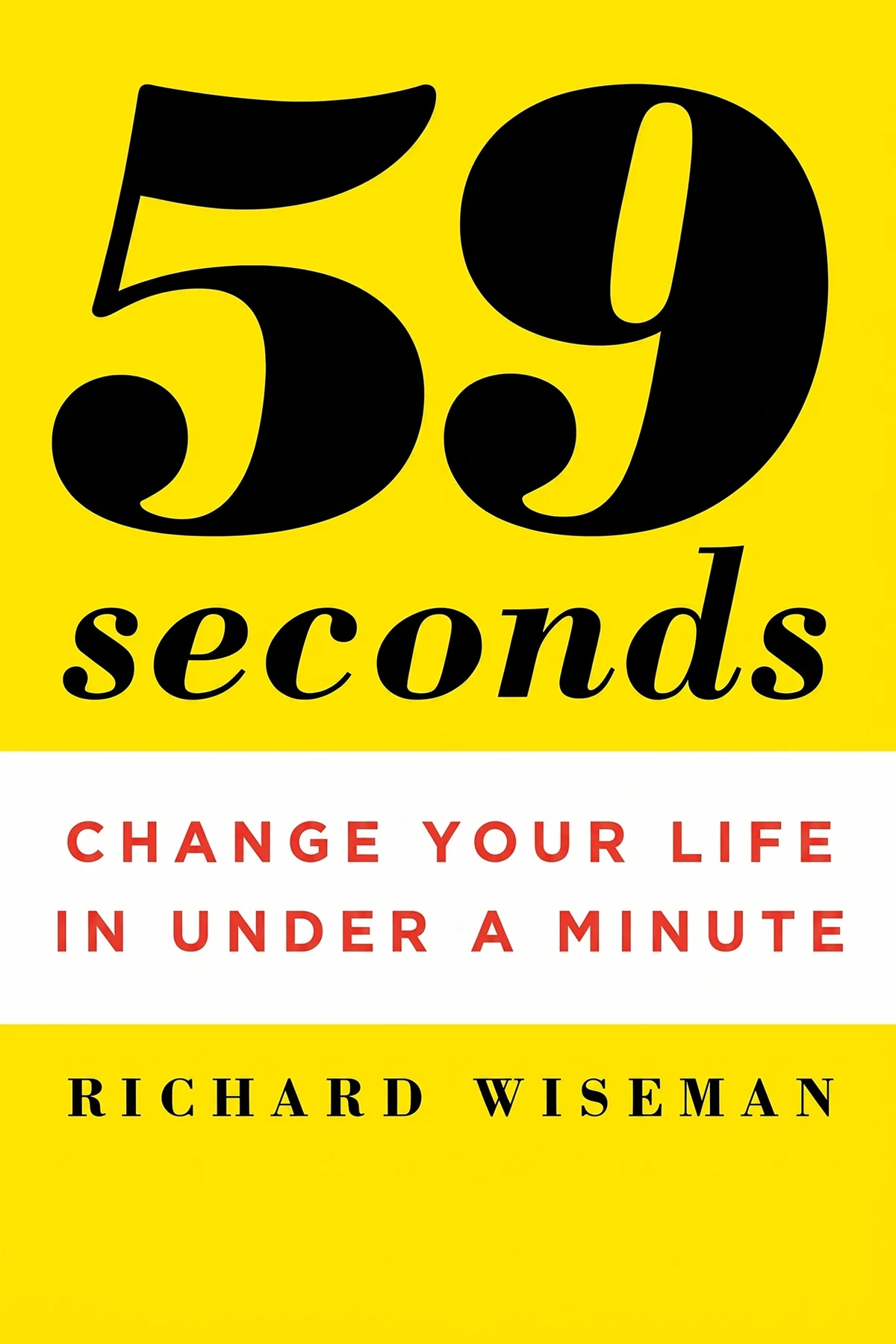
59 Seconds: Change Your Life in Under a Minute
Richard Wiseman
A Liberated Mind: How to Pivot Toward What Matters
Steven C. Hayes
AUDIO SUMMARY AVAILABLE
Listen to Superforecasting in 15 minutes
Get the key ideas from Superforecasting by Philip E. Tetlock, plus 5,000+ more titles in English and Thai.
- 5,000+ titles
- Listen as much as you want
- 7-day free trial
- Cancel anytime







