
23 min 01 sec
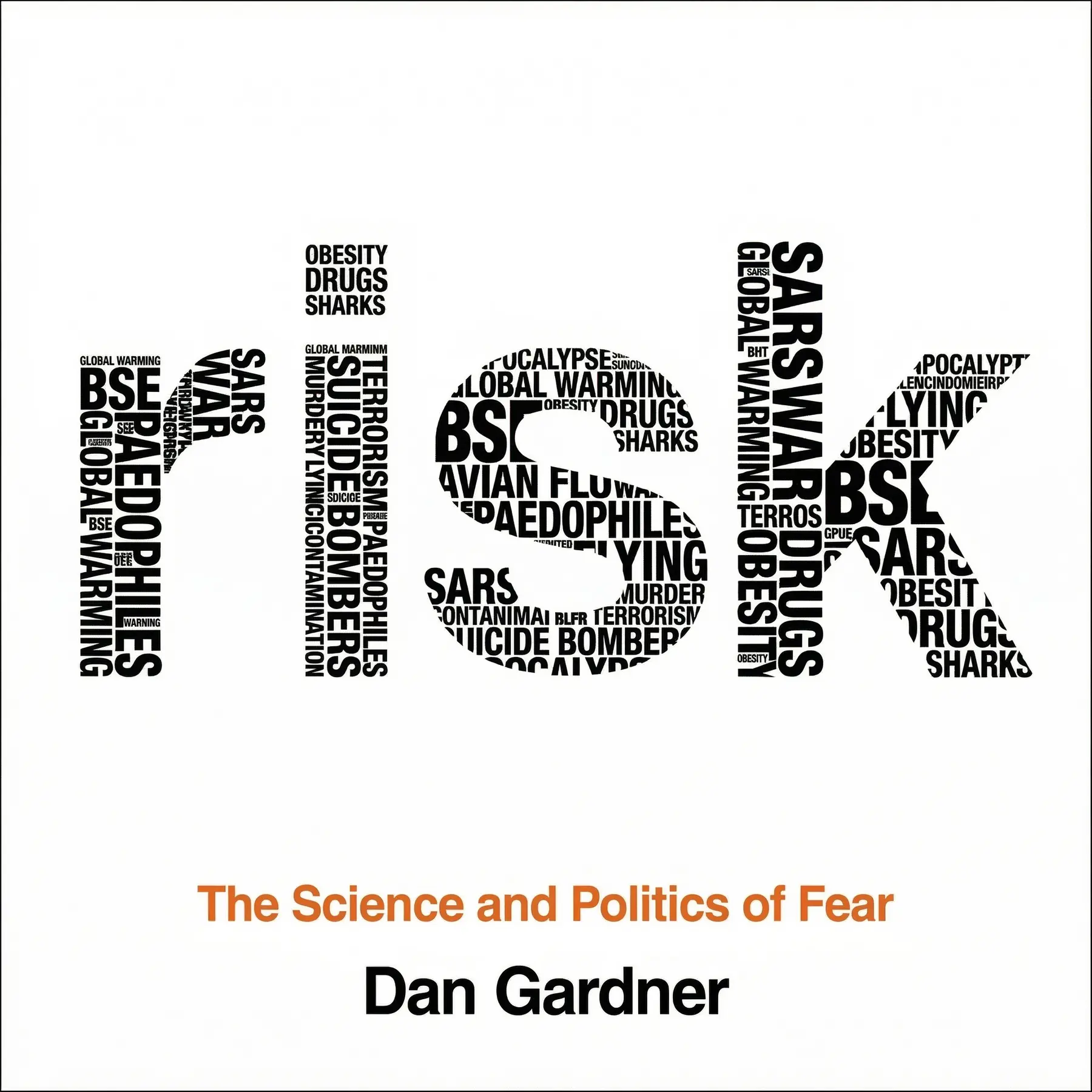
Risk: The Science and Politics of Fear
By Dan Gardner
Risk examines why our primal instincts struggle to navigate modern dangers, revealing how psychological biases and external manipulation distort our perception of safety in an increasingly secure world.
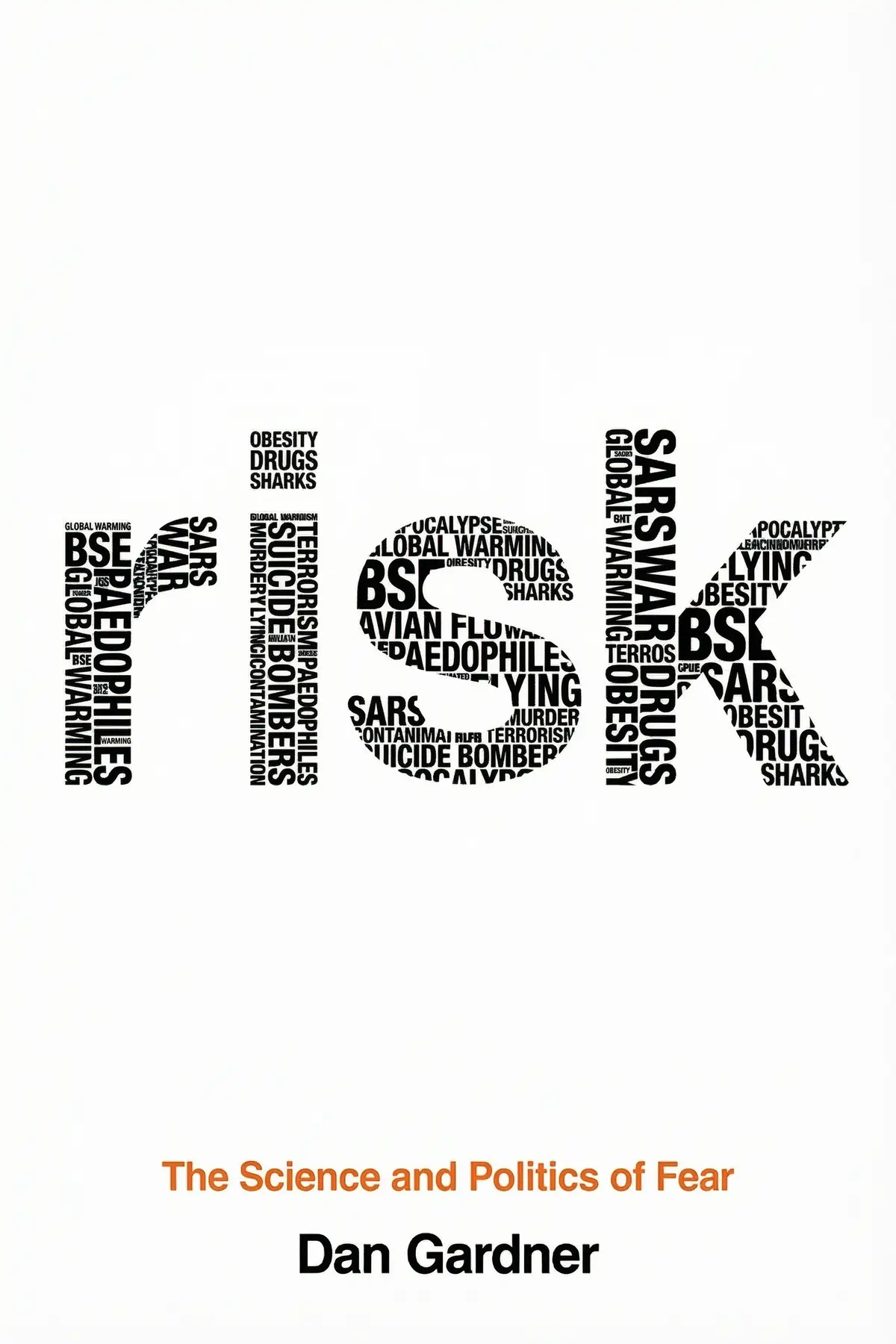
Table of Content
1. Introduction
1 min 43 sec
Have you ever found yourself lying awake at night, worrying about a rare disease or a sudden catastrophe, even though you know the odds of it happening are practically zero? It is a strange paradox of our time: we are arguably the safest, healthiest, and longest-lived generation in the history of our species, yet we feel more vulnerable than ever. This persistent sense of dread isn’t a sign that the world is falling apart; rather, it’s a sign that our ancient brains are struggling to keep up with the modern world. In this exploration of fear, we are going to look at why we often get risk completely wrong and how our own biological makeup can be used against us.
The throughline of our discussion today is simple but profound: humans are equipped with an evolutionary toolkit for survival that is increasingly out of sync with the realities of the twenty-first century. We live in a society hyper-focused on risk, where every news cycle brings a fresh reason to panic. But by understanding the internal mechanics of how we perceive danger—and the external forces that benefit from our anxiety—we can start to filter out the noise. We will see that our feelings are not always facts, and that by leaning into rationality and statistics, we can replace fear with a sense of informed relief.
Over the next several sections, we’ll uncover the secrets of our ‘two-system’ brain, learn why stories are more persuasive to us than cold data, and see how industries from medicine to politics thrive on keeping us on edge. Most importantly, we’ll realize that the true risk isn’t the headline of the day; it’s the way our fear prevents us from appreciating the remarkable era we actually live in. Let’s begin by looking at why our modern environment feels so uniquely dangerous, even when the data suggests otherwise.
2. The Rise of the Risk-Obsessed Society
2 min 01 sec
Discover why modern civilizations are more anxious than their ancestors despite enjoying better health, longer lives, and superior technology.
3. Stone Age Hardware in a High-Tech World
1 min 59 sec
Your brain is still running Stone Age software—and it’s making you fear the wrong things. Discover why snakes terrify you more than cars, and how ancient mental shortcuts sabotage your modern decisions.
4. The Duel Between Gut and Head
2 min 06 sec
Learn about the two distinct cognitive systems that fight for control over your decisions and why your ‘gut’ often wins even when it’s wrong.
5. The Heuristics that Cloud Our Judgment
2 min 09 sec
Explore the mental shortcuts our brains use to make sense of the world and how they lead us to miscalculate the likelihood of disasters.
6. Why Stories Trump Statistics
2 min 11 sec
Discover why a single compelling anecdote can outweigh a mountain of scientific evidence in the eyes of the public.
7. The Commercialization of Anxiety
2 min 17 sec
Peek behind the curtain of the pharmaceutical and political industries to see how fear is manufactured for profit and power.
8. Media Distortion and the Perception of Crime
2 min 11 sec
Understand how the media’s obsession with rare and sensational events creates a distorted ‘mean world’ syndrome.
9. The Terrorism Trap
2 min 04 sec
Examine the statistical reality of global terrorism and why our outsized reaction to it may be more dangerous than the threat itself.
10. The Golden Age of Human Prosperity
2 min 15 sec
End on a high note by looking at the data that proves we are currently living in the healthiest and most successful era in history.
11. Conclusion
2 min 05 sec
In our journey through the science and politics of fear, we have seen that our modern anxieties are largely the result of an evolutionary mismatch. We carry the instincts of the savannah into the supermarket, and our ‘Gut’ feelings—while once essential for survival—often lead us astray in a world dominated by complex data and subtle manipulation. We’ve learned how our brains use shortcuts like the availability heuristic and the rule of typicality to turn rare events into constant terrors, and how media and industry players capitalize on these biases to influence our wallets and our votes.
The throughline remains clear: the safest era in human history is being experienced by the most anxious population. But this doesn’t have to be our permanent state. The antidote to fear is a commitment to System 2 thinking—the slow, rational, and evidence-based part of our minds. By forcing ourselves to look past the sensational headlines and the emotional anecdotes, we can begin to see the world as it truly is: a place where the risks are manageable and the progress is undeniable.
As you move forward, keep a skeptical eye on the fear being sold to you. When you encounter a frightening story, ask yourself: Is this a common threat, or is it just a vivid one? Does the data back up the dread? By making it a habit to seek out statistics over stories, you can recalibrate your internal alarm system. Don’t let insurance agents or politicians use the ‘Example Rule’ to push you into decisions based on panic. Instead, take a breath, look at the long-term trends, and realize that you are living in a time of incredible prosperity and safety. The most actionable advice is to simply stop listening to the hype and start trusting the science. By choosing logic over instinct, you reclaim your peace of mind and gain the clarity needed to focus on the real, manageable challenges of our time. The world is less frightening than your brain wants you to believe; it’s time to let your ‘Head’ lead the way.
About this book
What is this book about?
Risk dives deep into the fascinating disconnect between our biological hardware and the complexities of the twenty-first century. It explores why humans, despite living in the most prosperous and safe era in history, are plagued by constant anxiety regarding terrorism, disease, and environmental collapse. By examining the cognitive systems that govern our reactions, the book illustrates how we are often led astray by 'Gut' feelings that were designed for survival on the prehistoric savannah rather than for interpreting statistical data. The narrative also exposes how institutional forces, from pharmaceutical giants to political campaigns, capitalize on these inherent mental flaws to influence our behavior and consumer choices. Readers are promised a journey through the mechanics of fear, uncovering the heuristics that cloud our judgment and the media sensationalism that amplifies rare threats while obscuring common hazards. Ultimately, the book offers a roadmap for reclaiming rationality, encouraging a shift toward evidence-based thinking that fosters gratitude for our current era of unprecedented human achievement.
Book Information
About the Author
Dan Gardner
Dan Gardner previously served as a senior policy advisor and established himself as a prominent writer for the Ottawa Citizen. Throughout his career, his insightful analysis and writing have been recognized with various honors, most notably the Amnesty International Media Award, which highlights his commitment to impactful journalism.
Ratings & Reviews
Ratings at a glance
What people think
Listeners find that this book clarifies the mental rift between "gut" intuition and "head" logic, shedding light on why humans frequently misjudge actual dangers. They are particularly struck by the analysis of how the press and political leaders exploit public fear, with one listener remarking that the text helps "pull the curtain back on these manipulators" and the methods they employ. Furthermore, the content is lauded for offering a grounded, evidence-based look at modern-day anxieties like terrorism and medical scares. While some listeners mention that the discussion of evolutionary psychology can feel dry or redundant, most believe the book provides a helpful and motivating structure for approaching life's choices more rationally.
Top reviews
Orathai
Ever wonder why we freak out over rare shark attacks but ignore the cheeseburger that is actually killing us? Dan Gardner does a masterful job explaining the tug-of-war between our primitive 'Gut' and our rational 'Head.' It’s fascinating to see how our prehistoric brains are basically hard-wired for a dangerous world that doesn’t exist anymore. While the sections on evolutionary psychology can get a bit dense, the payoff is worth the effort. I found the analysis of how media outlets exploit our primal fears to be particularly chilling and enlightening. This book changed the way I look at the evening news and political campaigns. It is an incredibly empowering read that gives you the tools to stop being a victim of modern fear-mongering.
Show moreSuthida
Wow, this was exactly the perspective shift I needed to help manage my world-view. Gardner pulls back the curtain on the 'fear industry' to show how companies and journalists profit from keeping us in a state of constant alarm. The most eye-opening part for me was the statistics on air travel versus driving after the events of 9/11. It’s tragic to realize how our 'Gut' instincts can actually lead us into more danger by making us avoid the wrong things. I loved the way the author balanced heavy data with relatable stories, like his own experience in Lagos. It’s a call to let our 'Head' take the wheel more often. Frankly, I think this should be required reading for everyone.
Show moreFon
After hearing so much about the 'culture of fear,' I finally got around to reading Gardner's take on it. He does a fantastic job of illustrating how our 'inner caveman' is still running the show in a world of complex technology and global media. The way he explains numeracy—or our lack of it—is both hilarious and deeply frustrating. We are so easily swayed by a single emotional story that we completely ignore the mountain of data proving we're okay. This book empowered me to look at 'threat of the moment' scenarios with a much more critical eye. It’s well-intentioned and provides a valuable service by exposing the manipulators who profit from our panic.
Show moreValentina
Finally, a book that uses logic to fight back against the constant barrage of scary headlines. Gardner’s metaphor of the bored teenager and the caveman is perfect for describing how we make decisions. It explains so much about why we obsess over things like terrorism while refusing to exercise or eat better. I found the section on the 1,595 extra road deaths after 9/11 to be incredibly moving and illustrative. This book is a much-needed antidote to the anxiety of the modern age. It teaches you how to stop staying afraid and start using your will power to overcome biological features. It’s brilliant, insightful, and honestly quite life-affirming for a person like me.
Show moreNatchaya
This book provides a much-needed reality check for our modern, high-anxiety society. Gardner explores why we are the safest generation in history yet feel the most threatened by everything from terrorism to pesticides. The distinction between 'System One' and 'System Two' thinking is explained clearly, though I’ll admit the narrative drags a bit in the middle. At times, it felt like the author was hitting the same note about statistics over and over again. However, the chapter on how politicians use fear as a weapon made the whole thing worth reading. It isn't exactly a light summer read, but it is deeply important for anyone trying to navigate today's sensationalist media landscape without losing their mind.
Show moreYothaka
Picked this up after a friend recommended it for my anxiety, and it’s actually quite comforting. The core message is that the world is far safer than the headlines suggest, which is a relief to hear. Gardner’s breakdown of why we fear spectacular, rare events while ignoring common killers like heart disease is brilliant. My only gripe is that the book is a bit dated in its specific examples, though the underlying psychology remains totally relevant. Some of the talk about chemicals and cancer was a bit hand-wavy, but the logic holds up. It’s a solid, analytical look at how we process information. It definitely helped me understand my own irrational reactions to the 24-hour news cycles.
Show moreNarongrit
As someone who tends toward pessimism, this book gave me a very bumpy but necessary ride. It’s essentially an argument for why we should be a lot less worried than we are on a daily basis. The writing can be a bit 'math-heavy' at points, which might turn some people off, but it's essential for the points Gardner is making. I appreciated the specific deep dives into things like West Nile Virus and nuclear power. It’s a great companion piece to books like 'The Field Guide to Lies.' I’m taking a star off because the title feels a bit like the 'click-bait' the author claims to dislike. Still, it’s a very smart, very necessary read for the twenty-first century.
Show moreTum
Not what I expected based on the dramatic title and the provocative cover art. I thought this was going to be a deep dive into the 'science' of fear, but it’s mostly just an application of basic cognitive biases to news stories. Look, some of the points about media manipulation are valid, but I felt like I already knew most of this information. Yes, the news is sensationalist, and yes, politicians use fear to get votes—tell me something new. The writing style is a bit dry and clinical, which makes the book feel longer than it actually is. It’s a decent primer for people who haven't thought about these issues, but it lacked the punch I was looking for.
Show moreGai
The truth is, I have mixed feelings about this one after finishing it last night. On one hand, the information regarding how our brains evaluate risk incorrectly is fascinating and definitely well-researched. On the other hand, the book itself feels like it’s doing the very thing it complains about. The subtitle is clearly designed to provoke the same irrational fear instincts Gardner claims to be deconstructing. I also found the constant return to evolutionary psychology to be a bit reductive. It’s not a bad book by any means, but it felt like an overextended essay rather than a truly comprehensive study. It’s useful for understanding 'hot buttons,' but don’t expect a life-changing scientific breakthrough.
Show moreWanida
DNF at about 15% because I just couldn't stay awake through the endless droning about evolutionary biology. I picked this up expecting a fast-paced look at modern risks, but it felt more like a dry university lecture. To be fair, the premise is interesting, but the execution is incredibly repetitive. If you’ve already read 'Thinking, Fast and Slow,' you’ve basically heard these arguments before, and Gardner doesn't add much new to the conversation. Every time he started a new anecdote about cavemen on the savannah, I found myself checking how many pages were left. It’s well-researched, sure, but the 'fear' mentioned in the title was mostly just me fearing I’d never finish this boring book.
Show moreReaders also enjoyed

A Liberated Mind: How to Pivot Toward What Matters
Steven C. Hayes
Acting with Power: Why We Are More Powerful Than We Believe
Deborah Gruenfeld
Age of Propaganda: The Everyday Use and Abuse of Persuasion
Anthony Pratkanis
AUDIO SUMMARY AVAILABLE
Listen to Risk in 15 minutes
Get the key ideas from Risk by Dan Gardner, plus 5,000+ more titles in English and Thai.
- 5,000+ titles
- Listen as much as you want
- 7-day free trial
- Cancel anytime







