
Leadership: Six Studies in World Strategy
Henry Kissinger
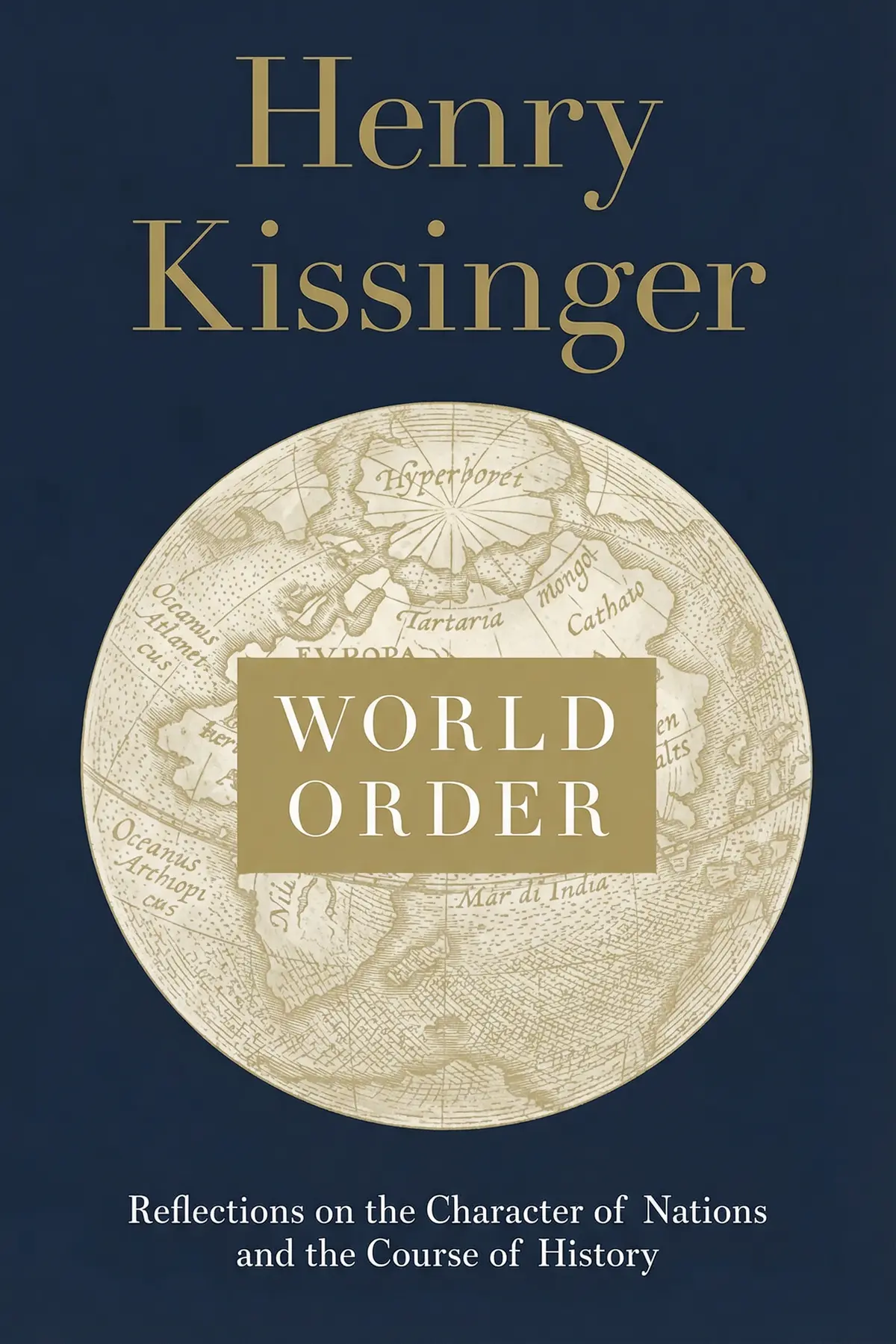
World Order explores the historical frameworks that shape international relations, examining how different civilizations view power, sovereignty, and diplomacy to understand why global conflicts persist and how stability is precariously maintained.
1 min 57 sec
When we turn on the news today, the world often looks like a chaotic jigsaw puzzle where the pieces simply refuse to fit together. We see endless negotiations that lead nowhere, peace talks that fall apart before they even begin, and conflicts that seem to stretch across generations without any hope of resolution. It’s easy to feel overwhelmed and assume that global politics is just a series of random, unfortunate events. But what if there was a deeper logic behind this friction? What if the reason nations can’t agree isn’t just about resources or borders, but about a fundamental disagreement on the very nature of reality?
This is the core premise of our exploration today. We are diving into the strategic mind of Henry Kissinger to understand his perspective on the character of nations and the course of history. The central theme here is the concept of “World Order.” It’s a term we hear frequently, but rarely do we stop to define it. As we will see, a world order isn’t just a set of laws or a collection of treaties; it is a shared vision of how the world should be organized and who should hold the ultimate authority within it.
In the following minutes, we are going to trace the history of these competing visions. We’ll look at why a brutal, thirty-year religious war in Europe actually paved the way for the most successful diplomatic system in history. We’ll examine why the childhood experiences of a single statesman can alter the fate of millions, and why the geographical position of a country like Germany has dictated the peace or destruction of an entire continent. Most importantly, we’ll discover why some world orders are so fundamentally different that they are almost destined to clash.
By the time we finish, you’ll have a new lens through which to view international affairs. You’ll understand that the current crises in the Middle East or the tension between global superpowers aren’t just modern problems—they are the latest chapters in a story that began centuries ago. Let’s begin by looking at the very foundation of how a nation decides to interact with the rest of the planet.
1 min 59 sec
Discover how the hidden beliefs and cultural blueprints of a civilization dictate every move it makes on the global stage, turning abstract ideas into concrete foreign policy.
1 min 57 sec
Learn why a perfect stalemate can sometimes be the safest outcome for humanity, as seen through the lens of the Cold War’s terrifying nuclear balance.
2 min 01 sec
Explore the bloody origins of modern diplomacy and how a seventeenth-century treaty created the rules of sovereignty that still govern our world today.
2 min 06 sec
See how the shifting loyalties of European nations prevented any one leader from conquering the continent, and how rigid pacts eventually led to disaster.
1 min 53 sec
Uncover why a fragmented Germany was the key to European peace, and how its unification in 1871 set the stage for two world wars.
2 min 00 sec
Witness how the ghosts of past invasions and the personal backgrounds of diplomats continue to dictate the modern strategies of major powers.
1 min 54 sec
Analyze the inherent danger of universal ideologies and why conflicts like the Cold War were about much more than just land or resources.
1 min 49 sec
Examine the fundamental friction between the modern state system and radical religious world orders that do not recognize traditional borders.
1 min 53 sec
Observe how America transitioned from an isolated nation to the primary defender of the global order, using power to keep its rivals in check.
2 min 03 sec
As we reach the end of this journey through the history and logic of world order, we are left with a much clearer picture of why the world looks the way it does. We have seen that the tension we witness today isn’t just a modern phenomenon; it is the result of deep-seated, centuries-old beliefs about how power should be organized. From the fields of Westphalia to the halls of modern Washington, the struggle has always been about finding a balance between power and legitimacy.
Henry Kissinger’s exploration reminds us that world order is a fragile thing. It is not something that is just “there”; it is something that must be constantly built, tended, and defended. We’ve learned that a balance of power can keep the peace, but that flexibility is the key to making that balance last. We’ve also seen the danger that arises when a nation’s sense of its own universal truth blinds it to the legitimate interests of others. History teaches us that when we stop respecting the sovereign boundaries and cultural identities of our neighbors, we invite the very chaos we seek to avoid.
The most important takeaway for us today is the value of perspective. When we engage in debates, whether they are about global politics or even personal disagreements, we should remember the lesson of the Westphalian settlement. Showing respect to those we disagree with isn’t just about being polite; it’s a strategic necessity. If we can acknowledge that others have their own “mental maps” and their own historical reasons for believing what they do, we open the door to genuine diplomacy.
In your own life, try to apply this by seeking to understand the “world order” of the person across from you. What is their history? What are their fears? By recognizing the internal logic of others, we don’t just become better debaters; we become better architects of peace in our own circles. The quest for a stable world order begins with the realization that while we may never agree on one single truth, we can always agree on the rules that allow us to live together in a world of many truths. Thank you for listening to this exploration of the forces that shape our history and our future.
World Order provides a deep dive into the evolution of global politics, tracing the origins of how nations interact. From the blood-soaked fields of seventeenth-century Europe to the complexities of the modern era, it argues that international friction arises when nations operate from fundamentally different mental maps of how the world should be organized. The promise of the book is to give listeners a masterclass in strategic thinking, helping them look past daily headlines to see the tectonic plates of history shifting beneath the surface. It covers the rise of the Westphalian system, the unique role of a unified Germany, and the ongoing tension between secular states and religiously driven ideologies. By the end, you will understand the delicate balance of power that prevents total global collapse and why the lessons of the past are the only true guide for the future of diplomacy. It is an essential roadmap for anyone trying to make sense of a world that often feels like it is spinning out of control.
Henry Kissinger was a prominent American diplomat who was born in Germany. He is best known for serving as the United States Secretary of State for four years, during which time he heavily influenced twentieth-century foreign policy. Kissinger was the recipient of the Nobel Peace Prize in 1973 and has authored more than twelve books focused on international relations and history.
Henry Kissinger
Henry Kissinger
Listeners describe this work as exceptionally perceptive and skillfully composed, delivering an extensive survey of global history and political dynamics. It provides a robust basis for grasping contemporary global affairs through a deep examination of how various countries and cultures interact and view the world. Listeners value the text's evidence-based style and clear prose, considering it essential for anyone fascinated by international relations and political science.
This book is a master class in statecraft that only someone with Kissinger's unique resume could produce. He takes the complex concept of the Westphalian system and makes it feel like a living, breathing blueprint for how the world currently functions. I was particularly struck by how he connects 17th-century European treaties to modern-day frictions in Asia and the Middle East. While some might find his prose a bit dense, the sheer depth of knowledge on display is staggering and deeply rewarding for any history buff. Frankly, it provides a much-needed foundation for anyone trying to make sense of the chaotic headlines we see every day. It’s an essential read for those who want to look past the surface-level noise of international relations.
Show moreFinally got around to finishing this massive tome, and I must say it was worth every hour spent. Kissinger has a remarkable ability to distill centuries of geopolitical evolution into a coherent and surprisingly readable story. The chapter on the Iran nuclear deal and the nuances of Islamic governance was especially eye-opening for me. Gotta say, I appreciated how he didn't just focus on the West but gave significant space to how other civilizations view the concept of world order. It’s a factual and comprehensive overview that feels incredibly timely despite being published a few years ago. You don't have to agree with his politics to appreciate the brilliance of his strategic mind. This is definitely a foundational text for anyone interested in the future of global stability.
Show moreWow. This is easily one of the most comprehensive books I've ever read on the nature of international relations. Kissinger doesn't just look back; he looks forward at how the cyber world and rapid technological changes are undermining traditional borders. He raises some truly terrifying questions about how we can maintain order when a single laptop can disable a nation's infrastructure. The way he weaves together the philosophy of the past with the challenges of the future is nothing short of brilliant. In my experience, most political books date very quickly, but this one feels like it will remain relevant for decades. It’s a sobering reminder that order is not a natural state but a fragile human achievement that requires constant work.
Show moreThe chapter on the Peace of Westphalia alone is worth the price of admission. Kissinger illustrates how a group of exhausted diplomats managed to build a system that lasted for centuries out of the rubble of the Thirty Years' War. It’s a powerful testament to the importance of statesmanship and the need for a shared framework of rules. I loved the way he describes the various historical figures as if he were discussing old colleagues. It gives the narrative a personal touch that you don’t often get in books on diplomacy. Frankly, the world needs more of this kind of long-term strategic thinking right now. It is a dense read, but if you take your time with it, you’ll come away with a much clearer picture of how global power works.
Show moreEver wonder why certain nations seem to play by different rules on the global stage? Kissinger’s analysis of Japan, China, and India provides a brilliant framework for understanding these diverging perspectives on sovereignty and power. He writes with a level of eloquence that is rare in political science texts, turning a dry subject into a compelling narrative. To be fair, he does gloss over some of the more controversial aspects of his own legacy, focusing instead on the abstract mechanics of order. Some readers might find his take on American exceptionalism a bit too idealistic given the historical reality of US interventions. However, the insights into how cultural history shapes current foreign policy are far too valuable to ignore.
Show morePicked this up on a recommendation from a friend, and it's quite the deep dive into how nations interact. Kissinger traces the concept of world order from the Peace of Westphalia all the way to the digital age. His breakdown of the interplay between legitimacy and power is profound and helps explain why the Middle East remains such a volatile region. I found the sections on China's historical view of itself as the center of the world particularly helpful for understanding current tensions. Personally, I think he’s a bit too soft on modern presidents, which robs the analysis of some much-needed bite. Still, the breadth of the research makes it a solid choice for anyone seeking a more sophisticated understanding of global affairs.
Show moreNot what I expected, but in a good way. I thought this would be a dry, academic slog, but Kissinger’s prose is actually quite accessible and engaging. He provides a solid foundation for understanding the current world scene without drowning the reader in too much jargon. The section on the Middle East and the clash between Westphalian principles and religious fundamentalism was particularly insightful. Truth is, it’s rare to find a book that manages to be both this broad in scope and this detailed in execution. I did feel that his sections on Israel were a bit lacking in depth compared to his treatment of other regions. Nonetheless, it’s a great starting point for anyone who wants to move beyond the talking points on cable news.
Show moreAfter hearing so much about Kissinger's 'realpolitik' approach, I wanted to see how he justified it in writing. He makes a compelling case for the balance of power, even if his vision of American exceptionalism feels a bit dated in the current political climate. The book is incredibly well-written and offers a thorough analysis of international interactions across different cultures. I appreciated his focus on how the internet and social media are changing the way we define truth and engage with one another. Not gonna lie, some of his conclusions are a bit bleak, but they are grounded in a deep understanding of history. It’s a thought-provoking read that challenged my perspectives on how peace is actually maintained between rival powers.
Show moreAs someone who enjoys a good history book, I had mixed feelings about this one. On one hand, Kissinger’s grasp of European history and the development of the nation-state is genuinely impressive. On the other hand, his analysis of more recent events feels somewhat treacly and defensive. He seems almost pathologically unwilling to say a negative word about the leaders who once sought his counsel. This lack of critical edge makes some chapters feel more like a diplomatic memo than a rigorous academic study. Look, the information is there, and his writing style is undeniably elegant, but you have to wade through a lot of self-justification. It’s a good resource for the historical basics, but don’t expect any radical honesty regarding recent US foreign policy failures.
Show moreIt is impossible to read these 'high-minded' theories without thinking about the actual human cost of the author's real-world decisions. Kissinger speaks of the Westphalian system and 'acting for all mankind' while ignoring the ghosts of Cambodia and Vietnam that haunt his career. The truth is, the book feels like a calculated attempt to sanitize a bloody legacy through academic jargon and sweeping historical analogies. He treats the world like a giant chessboard where people are merely pawns in a grand balance of power. While the history of the Thirty Years' War is well-written, the hypocrisy regarding 'international peace' is a bit much to stomach. If you’re looking for a factual history of diplomacy, look elsewhere, or at least read this with a very critical eye.
Show more
Andrew Ross Sorkin
Philip Freeman
Tracy Rosenthal

Fay Bound Alberti
Jessica Valenti
Yanis Varoufakis
Yuval Noah Harari
AUDIO SUMMARY AVAILABLE
Get the key ideas from World Order by Henry Kissinger, plus 5,000+ more titles in English and Thai.







