
28 min 33 sec
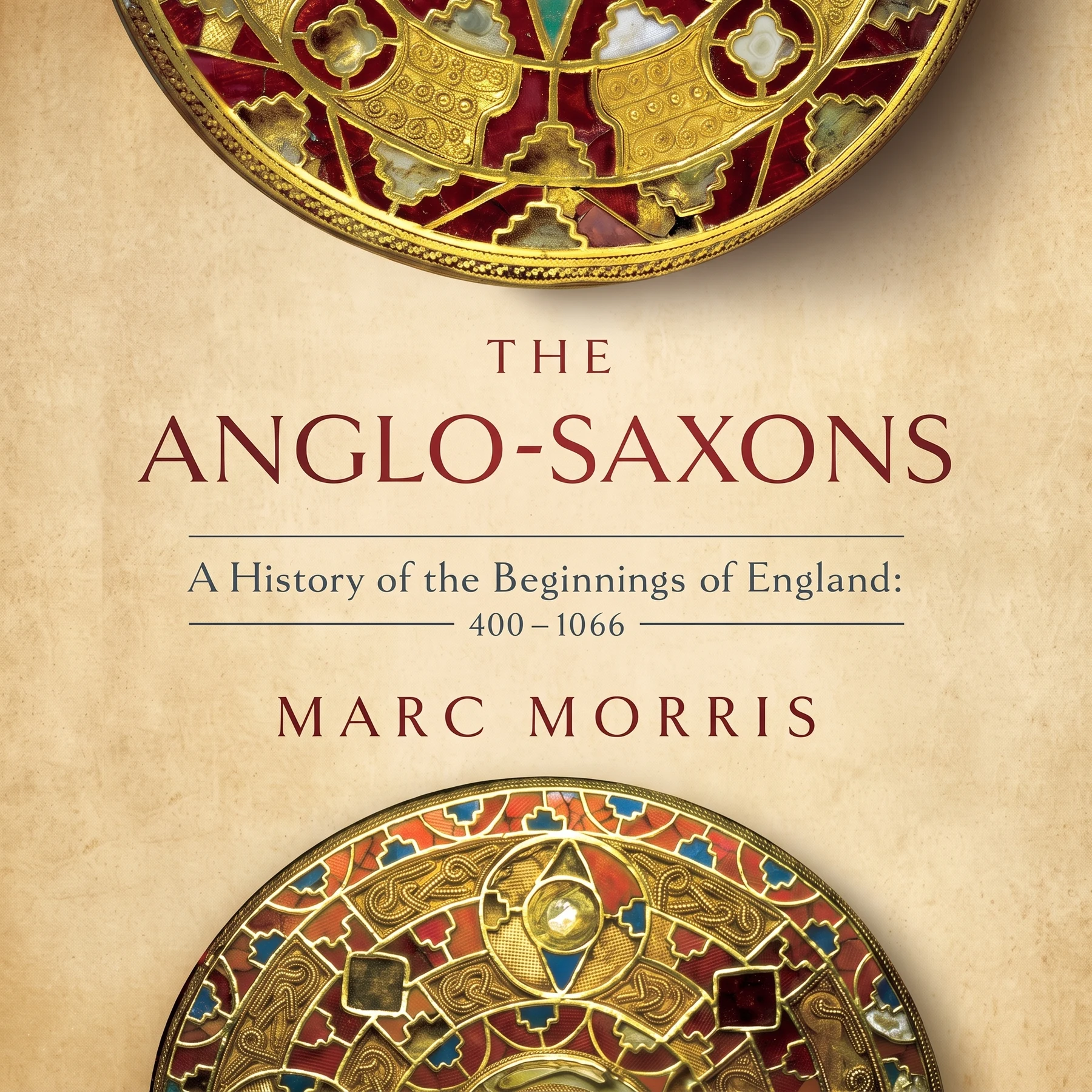
The Anglo-Saxons: A History of the Beginnings of England: 400 – 1066
By Marc Morris
Discover the transformative seven-century saga that turned a post-Roman wilderness into the nation of England, tracing the rise of kings, the impact of Viking raids, and the origins of English culture.
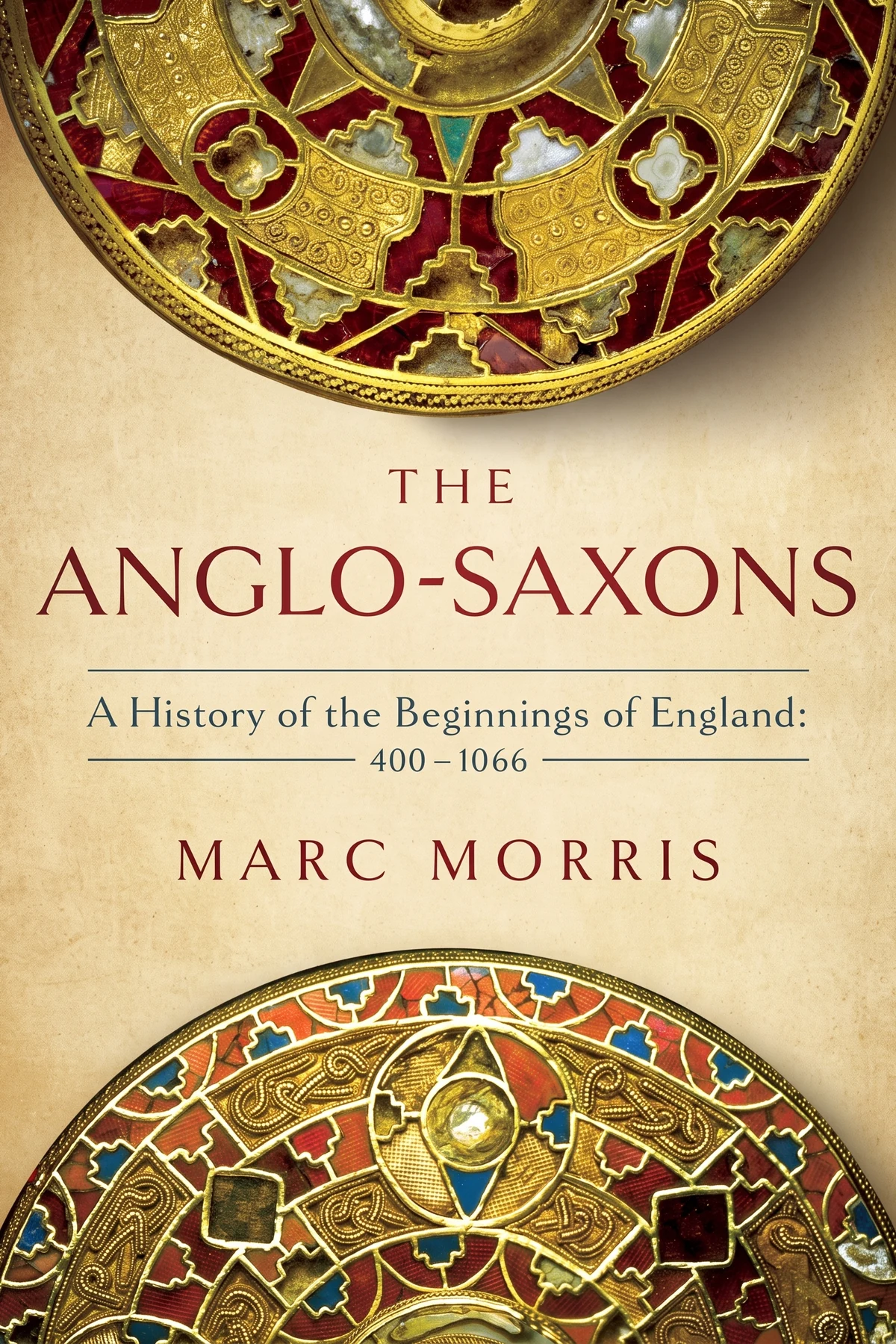
Table of Content
1. Introduction
1 min 56 sec
If you were to look at a map of Europe in the year 400 AD, you would notice a glaring omission: there is no England. In the territory we now recognize by that name, you wouldn’t find a single person who identified as English, nor would you hear a word of the English language. Instead, you’d find a landscape defined by the rigid remnants of Roman administration. The laws were Roman, the major roads were straight Roman thoroughfares, and the locals spoke a blend of Latin and Celtic dialects. The culture was one of bathhouses, villas, and imperial bureaucracy. However, by the time the bells tolled for the Norman Conquest in 1066, the entire character of the island had been fundamentally transformed. The straight lines of the Romans had given way to winding lanes, the country was divided into administrative shires overseen by sheriffs, and a new, distinct language had taken root.
This dramatic metamorphosis was the work of the Anglo-Saxons. For over six hundred years, these Germanic settlers and their descendants built a nation from the ashes of a collapsed empire. It is a story often shrouded in myth and labeled as the Dark Ages, but as we will see, it was actually a period of intense light, struggle, and sophisticated state-building. This summary traces that journey—from the chaotic arrival of sea-borne pioneers to the creation of a unified kingdom that could survive even the shock of the Norman invasion. We will explore how the Roman order dissolved, how a pagan warrior culture eventually embraced Christianity, and how the foundations of modern Western culture were laid during this tumultuous era. This is not just a history of a distant time; it is an investigation into the very DNA of England. By looking at the throughline of the Anglo-Saxon period, we can understand the origins of the laws, language, and institutions that continue to shape the English-speaking world today. Let’s begin by looking at the moment the old world fell apart, making way for the new.
2. The Disintegration of Roman Britain
2 min 35 sec
As the Roman sun set over Britain, a once-prosperous province spiraled into a crisis of abandoned villas and economic collapse.
3. The Arrival of the Newcomers
2 min 37 sec
The mysterious arrival of the Angles, Saxons, and Jutes sparked a debate that has lasted centuries: were they invaders or invited guests?
4. The Warrior Code and the Heroic Age
2 min 20 sec
In a world without written laws, reputation was everything, and the path to power was paved with gold, mead, and the swing of a sword.
5. The Majesty of Sutton Hoo
2 min 01 sec
A ghostly ship buried in the Suffolk mud revealed that the Anglo-Saxons were far more connected to the wider world than we ever imagined.
6. The Spiritual Transformation
2 min 21 sec
A battle for the English soul was fought not with swords, but with sermons, as missionaries from Rome and Ireland vied for influence.
7. The Rebirth of the City
2 min 15 sec
From the ashes of abandoned Roman ruins, a new kind of urban life emerged: the ‘wic,’ or the specialized trading town.
8. The Mercian Supremacy and the Shadow of Rome
1 min 54 sec
Offa of Mercia didn’t just want to be a warrior-king; he wanted to be an emperor, using the Roman past to build a modern state.
9. The Fury of the Northmen
2 min 07 sec
The sudden appearance of Viking longships at Lindisfarne marked the beginning of a terrifying new era of total war.
10. Alfred the Great: The Architect of England
2 min 16 sec
Facing total defeat, King Alfred didn’t just fight back with a sword; he used education and urban planning to save his kingdom.
11. The Mature Anglo-Saxon State
2 min 22 sec
Before the Normans arrived, England was already one of the most sophisticated and heavily taxed states in all of Europe.
12. The Legacy of the Roots
2 min 10 sec
The Norman Conquest changed the rulers, but it couldn’t erase the deep Anglo-Saxon foundations of the English people.
13. Conclusion
1 min 39 sec
The story of the Anglo-Saxons is ultimately a story of resilience and creation. It began with the total disintegration of one of the world’s greatest empires and ended with the birth of a nation that would go on to shape the globe. Over seven centuries, these Germanic tribesmen evolved from sea-borne raiders into sophisticated administrators, scholars, and kings. They navigated the challenges of pagan-Christian tension, survived the existential threat of the Viking Age, and built an economic and legal system that was far ahead of its time.
The throughline of this history is the gradual forging of a national identity. Through the efforts of leaders like Alfred the Great and Offa of Mercia, the disparate people of Britain began to see themselves as part of a single story—the English story. Even the trauma of the Norman Conquest in 1066 could not erase what had been built. Instead, the Norman elite eventually became absorbed into the very English culture they had initially conquered. The Anglo-Saxons gave England its name, its language, and its institutional DNA.
Today, we see their handiwork every time we look at a map of the English counties or listen to the cadence of the English language. They remind us that the ‘Dark Ages’ were actually a period of profound transformation, where the foundations of the modern world were laid in the mud of Suffolk, the halls of Mercia, and the burhs of Wessex. As we reflect on this era, the most important lesson is that culture is not static; it is something that is built through struggle, adaptation, and the persistent desire to create order out of chaos. The Anglo-Saxons did exactly that, and the modern world is their enduring legacy.
About this book
What is this book about?
The Anglo-Saxons provides a comprehensive exploration of the period between the departure of the Roman legions and the arrival of the Norman conquerors. It reframes the so-called Dark Ages as a time of profound creativity and political evolution, showing how a fractured landscape of warring tribes eventually coalesced into a unified kingdom with a distinct language, legal system, and national identity. Readers will follow the trajectory of iconic figures like Alfred the Great and Offa of Mercia, while also uncovering the lives of ordinary settlers. The book promises to explain why England looks and speaks the way it does today, mapping the roots of the shire system, the English language, and the unique blend of Germanic and Roman influences that define the British Isles.
Book Information
About the Author
Marc Morris
Marc Morris is a historian of the Middle Ages and a fellow of the Royal Historical Society. A well-known broadcaster, Morris presented Castle, an acclaimed TV series shown on Channel 4. His previous books include The Norman Conquest, a history of the French duke who conquered England, and A Great and Terrible King, a study of Edward I.
Ratings & Reviews
Ratings at a glance
What people think
Listeners find this historical work to be thoroughly researched and highly readable, featuring an engaging storyline filled with many fascinating anecdotes. The text is comprehensive yet easy to follow, with one listener noting it acts as a perfect gateway to more in-depth study of England. Although listeners value the included color photographs, one listener reports that they fail to render correctly on Kindle devices.
Top reviews
Chaiwat
This book provides an incredibly vivid reconstruction of a world that often feels lost to the fog of myth and legend. Marc Morris has a rare talent for taking fragmented archaeological evidence and turning it into a narrative that actually flows like a novel. I was particularly struck by the sections on the Danish Conquest and how the Vikings essentially reshaped the map of England before the Normans even arrived. To be fair, the naming conventions—so many people named AEthelwulf or AEthelred—can get a bit dizzying, but Morris manages to keep the distinct personalities front and center. While the digital version had some minor issues with image formatting, the prose itself is top-tier. It is the perfect bridge for anyone who wants more depth than a basic overview but isn’t ready for a dry university textbook.
Show moreAisha
Picked this up on a whim after finishing a series on the Vikings and was completely blown away by the level of detail. Morris doesn’t just list dates; he builds an atmospheric world where you can almost smell the smoke of the mead halls and feel the chill of the Roman ruins. The chapter on Alfred the Great was a particular highlight for me because it humanized a figure who is usually just a cold statue. Look, history can be dry, but this felt like a high-stakes political thriller with more betrayals than an episode of a prestige TV drama. My only real gripe is that I wanted even more on the lives of everyday women, who seem to disappear into the background too often. Still, it’s a brilliant stepping stone for anyone serious about British history.
Show moreMax
Wow, this was exactly the kind of deep dive I needed to fill the gaps in my knowledge of the early Middle Ages. Morris does a stellar job of explaining how the arrival of Christianity wasn’t just a spiritual shift but a massive political upheaval that redefined the concept of kingship. I loved the extra context regarding the transition to the Norman Conquest, which made the events of 1066 feel like the inevitable conclusion of centuries of tension. The prose is elegant and the storytelling is sharp enough to keep you turning pages late into the night. Frankly, it’s rare to find a historian who can balance rigorous source analysis with such a compelling and readable narrative style. Highly recommended for any history buff's collection.
Show moreMikael
Finally, a history book that doesn't feel like a chore to get through! Morris writes with a certain flair that makes the dusty annals of the Anglo-Saxon Chronicle feel relevant and exciting. I was especially hooked by the details on the formation of London and how trade began to consolidate under the larger tracts of land. The storytelling is vivid, the research is clearly exhaustive, and the pacing is generally excellent for a book of this size. It's a fantastic introduction that manages to be both detailed and accessible to a wide audience. Definitely a five-star read for me, as it manages to turn a confusing era into a very clear and engaging story.
Show moreOm
This book is a masterclass in how to synthesize a difficult, source-poor era into a gripping historical narrative. Morris expertly navigates the transition from the fall of Rome to the arrival of the Normans, making sense of the various warring kingdoms and the endless 'AEthelsomething' names. I found the analysis of Alfred the Great’s defensive strategies to be particularly insightful and well-presented. The book is physically beautiful with its color photos, though the Kindle version needs some technical polish to match the quality of the print. In my experience, this is the most comprehensive and readable account of the Anglo-Saxons available for the general public today. It’s an essential read for anyone fascinated by the origins of the English nation.
Show moreOrm
Ever wonder how a collection of warring tribes eventually became the unified nation of England? Morris does a fantastic job answering that by focusing on the power struggles, religious shifts, and the sheer brutality of the era. Truth is, I wasn’t expecting such a frank look at the role of slavery in Anglo-Saxon society, which many other histories tend to gloss over in favor of heroic battles. The author’s writing style is punchy and accessible, though it does occasionally veer into dense genealogical territory that required a second read. I appreciated the color plates, even if they looked a bit wonky on my older Kindle device. It’s an extensively researched piece of work that makes the 600-year span feel surprisingly cohesive for the modern reader.
Show moreWanida
The chapter on St. Wilfrid and his clashes with the pagan world was worth the price of admission alone. Morris has a gift for finding these specific, colorful vignettes that breathe life into a period that often lacks documented primary sources. While the book is quite long and covers six centuries, it never felt like it was just skimming the surface, at least not until the very end. Personally, I found the discussion of the dystopian nature of post-Roman Britain to be the most compelling part of the entire narrative. I did notice that the formatting of the photos on my e-reader was a bit frustrating, which is a shame because the images themselves are beautiful. It’s a dense read, but one that rewards the patient reader with a much richer understanding of England’s foundations.
Show moreNam
After hearing so much hype about this book in history circles, I finally sat down to tackle it over my vacation. It is a massive undertaking, but Morris makes the complex web of tribal alliances and religious conversion feel remarkably easy to follow. I appreciated how he challenged the glorified version of the era by highlighting the brutal, often fanatical nature of rule during this time. To be fair, there are moments where the sheer number of names and dates can feel like a barrage of information. A few more maps or genealogical charts would have gone a long way in helping me keep the various kingdoms straight in my head. Despite that, it remains a well-written and essential piece for anyone's history shelf.
Show moreCarlos
As someone who enjoys a casual weekend history read, I found myself oscillating between fascination and total exhaustion with this volume. Morris is clearly a master of his craft, and his research into the post-Roman dystopia of Britain is genuinely enlightening. However, the sheer density of the middle chapters regarding the various minor kings of Mercia and Northumbria felt like a slog. Not gonna lie, I found myself flipping back through pages trying to remember which 'AEthel' was which, and the academic tone occasionally felt a bit heavy-handed. It’s a solid reference, but it lacks the narrative drive I was hoping for based on the glowing recommendations. If you’re a scholar, you’ll love it; if you’re a novice, you might find it a bit like navigating a hedge maze in the dark.
Show moreNarong
Not what I expected at all, and unfortunately, it was a major disappointment. While I can see that Morris is a brilliant researcher, the writing style was so dry and academic that I struggled to stay awake during the middle sections. It felt like I was back in a lecture hall being pelted with endless facts without any sense of the persona behind the historical figures. The role of women was barely a footnote, and the whole thing felt very superficial despite the massive page count. I wanted a vivid painting of the era, but instead, I got a list of minor kings and dates that blurred together. If you aren't already an expert on this time period, this might not be the engaging entry point you're looking for.
Show moreReaders also enjoyed
Alexander the Great
Philip Freeman
A History of Iran: Empire of the Mind
Michael Axworthy
A History of the World in 6 Glasses
Tom Standage

A Long Way Gone: Memoirs of a Boy Soldier
Ishmael Beah
A Splendid Exchange: How Trade Shaped the World
William J. Bernstein
AUDIO SUMMARY AVAILABLE
Listen to The Anglo-Saxons in 15 minutes
Get the key ideas from The Anglo-Saxons by Marc Morris, plus 5,000+ more titles in English and Thai.
- 5,000+ titles
- Listen as much as you want
- 7-day free trial
- Cancel anytime







