
22 min 31 sec
The Art of Negotiation: How to Improvise Agreement in a Chaotic World
In The Art of Negotiation, Michael Wheeler demonstrates that successful deal-making requires improvisation rather than rigid scripts. Learn to navigate uncertainty by combining deep preparation with the flexibility of a jazz musician.
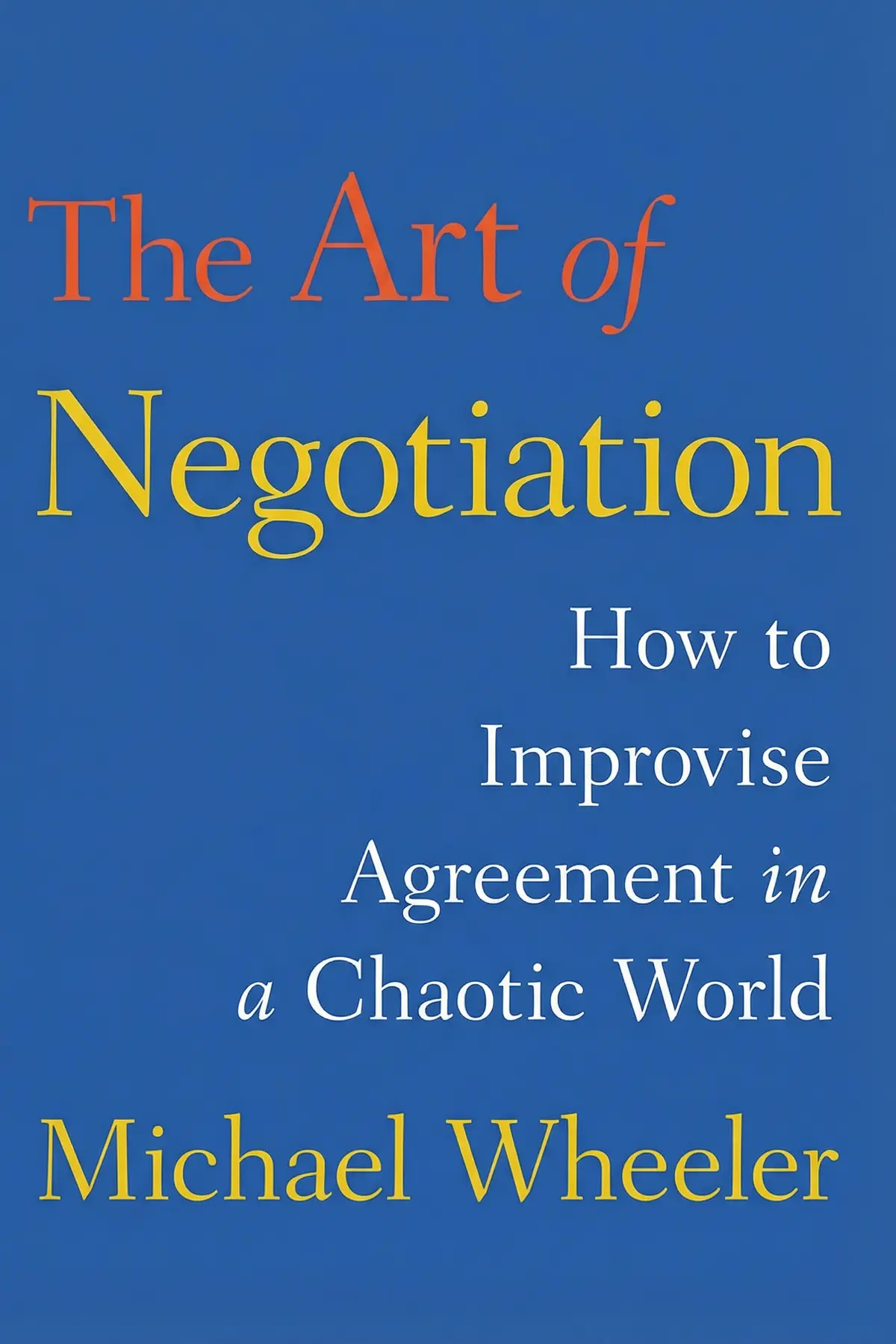
Table of Content
1. Introduction
1 min 43 sec
Think about the last time you had to ask for something. Maybe you were sitting across from a boss discussing your compensation, or perhaps you were standing in a car dealership trying to shave a few hundred dollars off a sticker price. Most of us enter these situations with a rigid plan. We have a number in our head, a few rehearsed lines, and a hope that the other person just says ‘yes.’ But what happens when they say ‘no’? What happens when they throw a curveball you didn’t expect?
In our daily lives, negotiation is almost constant. It’s not just for high-powered lawyers or Wall Street bankers; it’s for anyone trying to buy a house, resolve a conflict with a neighbor, or even decide where the family goes on vacation. The problem is that we often view negotiation as a script to be followed. If the other person goes off-script, we panic.
This is where the wisdom of Michael Wheeler comes in. In The Art of Negotiation, he argues that the world is far too chaotic for rigid scripts. Instead of acting like a programmed computer, a great negotiator must act more like a jazz musician or an improvisational actor. They need to be prepared, certainly, but they also need the agility to respond to the music as it changes.
In this summary, we are going to explore a new way of thinking about deal-making. We will look at why a ‘wrong’ map can actually be more useful than no map at all, how to master your emotional responses under pressure, and why the first few minutes of a conversation often determine the final outcome. We’ll see how creativity can turn a ‘zero-sum’ battle into a win-win scenario. By the time we’re finished, you’ll have a toolkit for navigating the unpredictability of human interaction, turning chaos into an opportunity for agreement.
2. The Dynamic Map Strategy
2 min 24 sec
Discover why entering a negotiation with a single fixed goal is a recipe for failure and how the right kind of preparation provides the confidence to pivot.
3. Timing, Feasibility, and the Pivot
2 min 08 sec
Learn to evaluate the hidden variables of a deal before you even start talking and why having a ‘Plan B’ is your greatest leverage.
4. Maintaining Your Internal Compass
2 min 16 sec
Negotiation is as much an internal battle as an external one; discover how to stay calm, alert, and avoid the trap of ‘autopilot.’
5. The Improviser’s Mindset
2 min 28 sec
Why ‘never saying no’ and thinking like a jazz musician can unlock breakthrough agreements in even the most stalled discussions.
6. Pattern Recognition and Strategic Foresight
2 min 11 sec
Uncover how experts use pattern recognition to navigate complex choices and why anticipating every possibility is actually impossible.
7. The Power of First Impressions and Rapport
2 min 48 sec
The first few minutes of a meeting can set the tone for the entire deal. Learn the ‘yes-no-yes’ technique to maintain relationships while holding your ground.
8. Expanding the Pie with Creative Reframing
2 min 22 sec
Break through deadlocks by looking beyond the numbers and using psychological distance to find hidden value in every transaction.
9. The Integrity of the Final Handshake
2 min 22 sec
Closing a deal is about more than just a signature; it’s about building a reputation and applying the ‘reversal test’ to your ethics.
10. Conclusion
1 min 49 sec
As we wrap up our journey through Michael Wheeler’s approach to negotiation, the most important takeaway is that agreement isn’t a destination you reach by following a rigid set of instructions. It’s a process of constant movement, adaptation, and discovery. The world is far too complex and people are far too unpredictable for any ‘one-size-fits-all’ strategy.
We’ve seen that the best negotiators are those who prepare deeply but remain light on their feet. They use maps to find their way through the fog of uncertainty, but they aren’t afraid to discard those maps when the terrain changes. They master their own emotions so they can stay present in the room, and they use the principles of jazz and improv to turn even the most difficult conversations into creative collaborations. They recognize that a ‘no’ is often just the beginning of a different kind of ‘yes.’
If you want to start applying these ideas today, begin with your internal state. The next time you find yourself in a tense situation—whether it’s at work or at home—take a moment to check your ‘internal compass.’ Are you on autopilot? Are you being reactive? One actionable step you can take tonight is to spend ten or fifteen minutes in quiet reflection or meditation. Studies have shown that these practices improve the very skills essential for negotiation: problem-solving, emotional regulation, and presence.
Negotiation isn’t a battle to be won; it’s a dance to be mastered. By staying curious, remaining flexible, and treating every counterpart with integrity, you turn the chaotic world into a place of endless possibility. You stop seeing obstacles and start seeing the many paths toward agreement. That is the art of negotiation, and it is a skill that will serve you in every area of your life.
About this book
What is this book about?
Negotiation is often taught as a series of calculated moves and static strategies, but the real world is far more chaotic. The Art of Negotiation challenges the traditional view of bargaining as a fixed game. Instead, it argues that the best negotiators are those who can adapt in real-time to changing circumstances and shifting emotions. Drawing on diverse fields like improvisational theater, jazz music, and military history, this summary explores how to stay agile when things don't go according to plan. You will learn how to prepare 'maps' rather than 'tracks,' allowing you to find multiple paths to an agreement. The book provides tools for managing your own emotional state, reading the subtle cues of your counterparts, and using creativity to break through deadlocks. Whether you are haggling over a salary, closing a major corporate merger, or resolving a personal dispute, the promise of this work is a more resilient and effective approach to finding common ground. By the end, you will understand how to balance your own interests with the need for cooperation, ensuring that even the most complex discussions lead to lasting, mutually beneficial results.
Book Information
About the Author
Michael Wheeler
Michael Wheeler is a distinguished professor at Harvard Business School, where he has instructed thousands of students in the complexities of negotiation. He also serves as the editor of the Negotiation Journal, a prestigious publication hosted by Harvard Law School. Wheeler currently resides in Gloucester, Massachusetts.
Ratings & Reviews
Ratings at a glance
What people think
Listeners find this negotiation guide accessible and compelling, noting that its amusing anecdotes offer a functional strategy for the bargaining process. They also value its significant impact on the genre, with one listener highlighting that the work is rooted in academic research. Furthermore, the book is praised for the high level of expertise it covers; one review even draws parallels between the techniques and jazz or improvisational acting.
Top reviews
Chatri
The chapter on improvisation really changed my perspective on how to handle high-stakes conversations. Wheeler argues that negotiation isn't a fixed script but more like a jazz performance where you have to react in real-time. I loved how he grounded the advice in academic research while keeping the prose incredibly light and accessible. Truth is, most business books are a total slog, but this one actually kept me engaged through the very last page. It perfectly balances the need for a rigorous plan with the necessity of being flexible when things inevitably go sideways. If you want to move beyond basic "win-win" clichés, this is the deep dive you actually need to read.
Show moreNarongrit
Wow, Wheeler really nailed the psychological aspect of why we get stuck during difficult conversations. The Art of Negotiation isn't just a business manual; it’s a deep dive into personal development and emotional intelligence. I particularly loved the focus on balancing opposing emotions—staying calm while remaining alert, and being firm while staying open to new ideas. The stories are brilliant and diverse, ranging from historical events to simple everyday interactions. Not gonna lie, I plan to rethink my entire approach to how I talk to my boss and even my partner after reading this. This is essential reading for anyone who wants to improve their social dynamics and professional agility.
Show moreElan
Picked this up during a career pivot, and it’s easily one of the most useful professional development books I’ve ever read. It takes the best ideas from classic negotiation texts and adds a brilliant twist by showing how those theories actually play out in messy, unpredictable reality. The comparison between negotiation and warfare was surprisingly apt, highlighting the need for strategic foresight and tactical agility. I’m not a professional negotiator by trade, but this book made me realize how often I’m actually in those situations without even knowing it. It’s smart, engaging, and provides a wealth of specific ideas that I started using almost immediately. I highly recommend it to everyone regardless of their job title.
Show moreAria
Ever wonder why your carefully prepared negotiation plans always seem to fall apart five minutes into a meeting? This book explains that rigid preparation is actually a trap if you aren't ready to pivot based on the other party’s moves. Michael Wheeler offers a refreshing take by focusing on the "ebb and flow" of human interaction rather than just rigid tactical maneuvers. I found the anecdotes about warfare and acting particularly enlightening because they illustrate how mindset matters as much as the numbers on the table. Gotta say, it’s a very readable guide that treats negotiation as a dynamic process of discovery rather than a static battle. My only minor gripe is that some sections felt a bit repetitive towards the end.
Show moreAir
Finally got around to finishing this, and I’m genuinely impressed by how Wheeler bridges the gap between scholarly theory and boots-on-the-ground reality. He moves away from the idea of "winning" at all costs and instead frames negotiation as a tool for mutual growth and sustainable relationships. This isn't just for corporate CEOs or international diplomats; the principles here apply to anyone trying to navigate personal disagreements or house purchases. The writing style is polished and professional, though it occasionally veers into territory that feels a bit too abstract for a quick fix. Still, the core message about emotional balance and staying present is a game-changer for my daily workflow and interactions.
Show morePetch
As someone who deals with clients daily, I appreciated that this book emphasizes treating others with respect rather than just looking for an advantage. Wheeler makes a compelling case that the goal of any interaction should be to foster long-term growth for both sides involved. The step-by-step breakdown of commercial negotiations was insightful, though I found the sections on international diplomacy a bit outside my usual scope. It is remarkably easy to read, and I often found myself forgetting that I was supposed to be "studying" for work because the anecdotes were so engaging. It’s a great reminder that being a good person and a good negotiator aren't mutually exclusive goals.
Show moreLevi
After hearing several friends recommend this, I was skeptical that there was anything new to say about negotiation, but I was pleasantly surprised. The "Art" in the title is perfectly chosen because Wheeler treats the process like a creative endeavor rather than a mathematical equation. It’s grounded in real academic research, which gives the advice a level of credibility that many "pop psychology" books lack. I caught myself reflecting on past failures and realizing exactly where I’d become too rigid in my thinking. While it’s quite entertaining and the prose flows well, you do have to be willing to do the internal work of changing your mindset to actually see results in your life.
Show moreAroon
To be fair, the stories in this book are genuinely entertaining and provide a great glimpse into how high-level negotiators think. Wheeler has a talent for storytelling, making the concepts of "flow" and "agility" easy to grasp in theory. However, I’m not entirely sure how to translate these broad improvisational metaphors into my specific, mundane office politics. In my experience, the book works better as a philosophical overview than a step-by-step manual for someone looking for immediate scripts. It’s a useful starting point for thinking differently, but don't expect a list of "magic words" to close every deal. It’s a solid three-star read that offers more inspiration than concrete instruction.
Show moreBua
Look, this is a solid contribution to the field, but it might be a bit over-hyped for the casual reader. The central premise—that you need to be flexible and improvise—is definitely true, but it’s repeated so often that the middle chapters start to blur together. I liked the practical examples of how principles change during the actual "ebb and flow" of a live conversation. However, I found myself wanting more specific exercises to practice these skills rather than just reading about how other people did it. It’s a very readable book, and the writing quality is high, but it didn't quite deliver the "profound" breakthrough I was hoping for when I bought it.
Show moreBae
Not what I expected at all, especially given the rave reviews I’ve seen elsewhere. While the writing is clear enough, I found the constant comparisons to jazz and improvisational acting to be more distracting than helpful. I was looking for a more structured, tactical approach to closing deals, but instead, I got a lot of talk about "entering a state of flow." Frankly, the advice felt a bit too "soft" and academic for someone who needs to negotiate hard contracts in a competitive industry. If you want something grounded in hard tactics and leverage, you might find this a bit too focused on the psychological and philosophical side of things.
Show moreReaders also enjoyed


AUDIO SUMMARY AVAILABLE
Listen to The Art of Negotiation in 15 minutes
Get the key ideas from The Art of Negotiation by Michael Wheeler, plus 5,000+ more titles in English and Thai.
- 5,000+ titles
- Listen as much as you want
- 7-day free trial
- Cancel anytime







