
20 min 47 sec
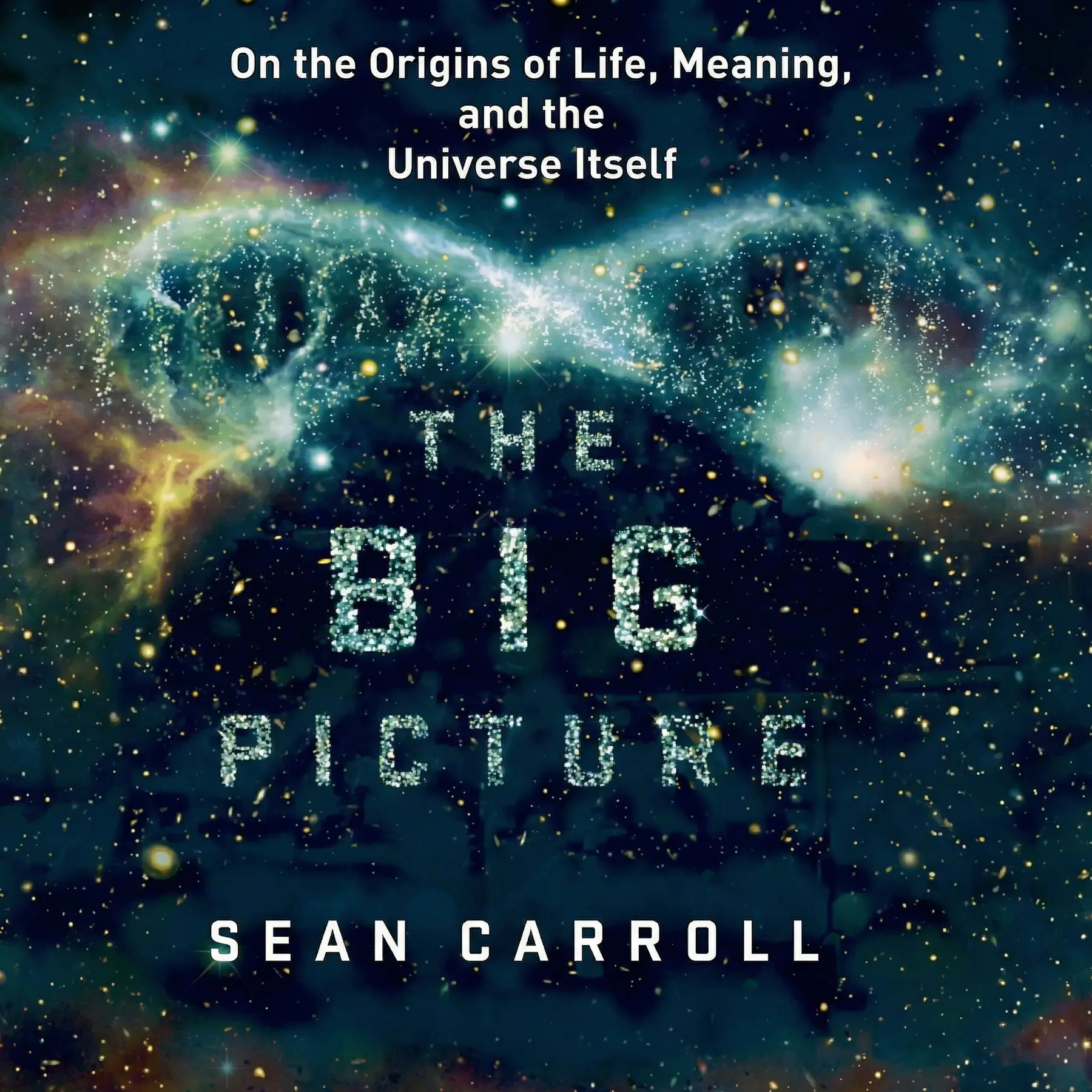
The Big Picture: On the Origins of Life, Meaning and the Universe Itself
By Sean Carroll
Explore the profound intersections of physics, philosophy, and biology as Sean Carroll maps the universe from subatomic particles to the emergence of human consciousness and the search for objective meaning.
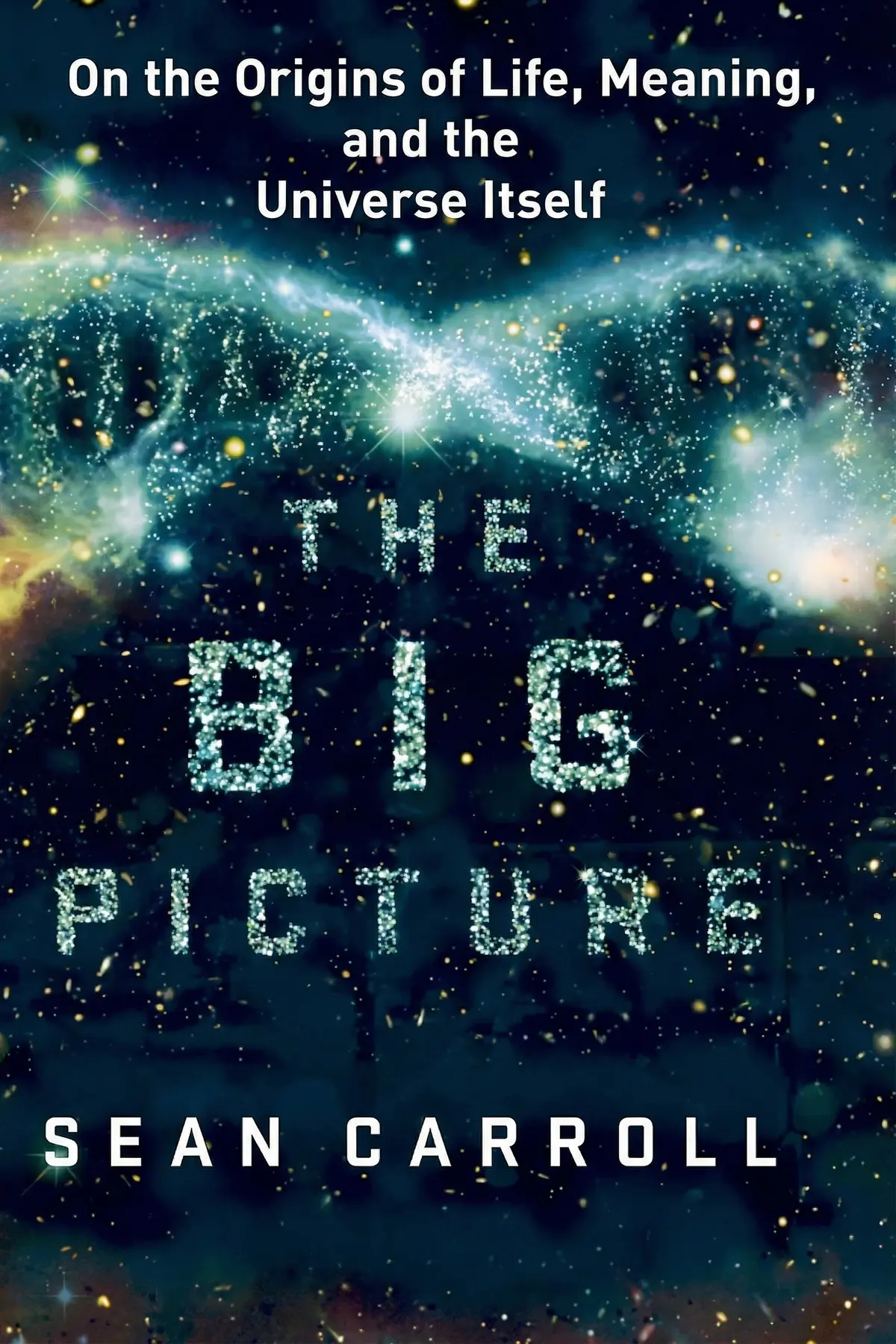
Table of Content
1. Introduction
1 min 51 sec
For as long as humans have possessed the capacity for reflection, we have been haunted by the same set of profound questions. Why does something exist rather than nothing? What is our place in this vast, often silent cosmos? For centuries, these inquiries were the exclusive domain of theologians and philosophers, but in the modern era, science has begun to provide a different kind of framework. In Sean Carroll’s The Big Picture, we are invited to look at the universe through a lens that combines the rigor of physics with the curiosity of philosophy.
This isn’t just a book about atoms or galaxies; it’s a book about how those things come together to create a world where meaning and purpose can exist. We often feel a disconnect between the ‘scientific’ world of equations and the ‘human’ world of feelings and choices. Carroll’s throughline is that these are not two separate realities, but different ways of describing the same underlying natural world.
In the following sections, we are going to embark on a journey that starts at the smallest possible scale—the subatomic particles that make up your body—and expands outward to the very edge of time and space. We will explore why certain ‘supernatural’ ideas simply cannot fit into the laws of physics as we know them. We’ll look at why time flows like an arrow and how the tendency of the universe to become more chaotic is actually the very thing that allowed life to begin. By looking at the ‘big picture,’ we can start to see that the universe is not a collection of miracles, but a grand, coherent story written in the language of natural laws. Let’s begin by looking at the foundation of that story: the rules that govern every single thing we see.
2. The Foundation of the Physical World
2 min 46 sec
Explore why the fundamental laws of physics are so well-understood that they can actually rule out the existence of the supernatural.
3. The Illusion of Causality
2 min 18 sec
Challenge your intuition about cause and effect and discover why modern physics views the universe as a series of patterns rather than a chain of pushes.
4. One World, Many Descriptions
2 min 38 sec
Learn how the concept of emergence allows us to talk about the world in different ways without sacrificing scientific truth.
5. The Unidirectional Arrow of Time
2 min 08 sec
Discover why we remember the past but not the future, and how a concept called entropy creates the flow of time.
6. The Complexity Sweet Spot
2 min 18 sec
Uncover the surprising truth that life and complexity are not the opposite of disorder, but a temporary byproduct of it.
7. Life as a Driver of Entropy
2 min 26 sec
Reframe your understanding of biology by seeing life as a natural mechanism the Earth uses to dissipate energy.
8. The Dawn of Consciousness
2 min 38 sec
Discover how the move from sea to land may have triggered the evolution of the mind and why the brain is the sole source of our ‘self.’
9. Conclusion
1 min 44 sec
As we come to the end of our exploration of The Big Picture, the throughline becomes clear: we live in a universe that is vast, ancient, and governed by impersonal laws, yet it is a universe that has managed to produce us. We have moved from the rigid certainties of the Core Theory to the swirling complexity of the ‘milk in the coffee,’ and finally to the dawn of a mind that can reflect on the whole process.
The most important takeaway is that understanding the world scientifically does not mean stripping it of meaning. This is what Carroll calls ‘poetic naturalism.’ We are natural because we are part of the physical world, and we are poetic because we use different vocabularies to describe the things that matter to us—love, justice, beauty, and purpose. These things are not ‘fictions’ just because they aren’t fundamental particles; they are real, emergent truths of the human experience.
What this means for you is that the meaning of life isn’t something that is handed down from a higher power or written in the stars. Instead, meaning is something we create. We are the ones who tell the stories. We are the ones who decide what is valuable. In a universe without a pre-written script, we are the authors.
As you move forward, carry with you the realization that you are a part of a 14-billion-year narrative. You are a way for the universe to know itself. By embracing the ‘Big Picture,’ you can find a sense of awe not in the supernatural, but in the spectacular reality of the natural world. The laws of physics provide the stage, but you provide the performance. Make it a meaningful one.
About this book
What is this book about?
The Big Picture offers an expansive look at the nature of reality through the lens of what Sean Carroll calls poetic naturalism. The book bridges the gap between the cold, hard facts of particle physics and the warm, complex reality of human experience. It explains how the universe operates according to fundamental laws, why time only moves in one direction, and how life and consciousness could emerge from a world made entirely of matter. By the end of this summary, you will understand how the Core Theory defines our physical limits and why the increase of entropy is actually responsible for the existence of complex life. It is a journey that moves from the Big Bang to the evolution of the human mind, promising a unified view of our place in the cosmos.
Book Information
About the Author
Sean Carroll
Sean Carroll is a highly regarded theoretical physicist based at the California Institute of Technology. His contributions to science have been recognized by prestigious institutions including NASA, the National Science Foundation, and the Royal Society of London. A recipient of a Guggenheim Fellowship, Carroll is also a prolific author known for making complex topics accessible, with titles like From Eternity to Here and The Particle at the End of the Universe.
Ratings & Reviews
Ratings at a glance
What people think
Listeners find the work to be thoroughly researched and accessible, highlighting the author's talent for clarifying intricate topics. They value the deep insights that provide a sense of purpose, while one listener points out the holistic link between consciousness and psychology. The book offers expert insights into theoretical physics alongside persuasive findings, with one listener characterizing it as an intriguing scientific narrative about the cosmos. Listeners appreciate the captivating prose, with one mentioning how it made their brain spin with delight.
Top reviews
Nora
"The Big Picture" is a masterclass in synthesis, bridging the gap between cold equations and the warmth of human experience. Carroll introduces "poetic naturalism" as a way to acknowledge the underlying physics without stripping away the beauty of our everyday stories. I found the section on the Core Theory particularly enlightening because it sets a definitive boundary for what we know about the world at our scale. It’s rare to find a physicist who treats ethics and meaning with as much intellectual rigor as they do quantum field theory. While the book is long, the short chapters keep the momentum going, making even the densest parts feel accessible. If you've ever felt that science and soul were at odds, this book provides a satisfying, logical reconciliation. It’s not just a physics book; it’s a manual for thinking clearly about our place in a vast, indifferent, yet magnificent cosmos.
Show moreCarlos
Wow, my brain is actually spinning after finishing this. I’ve always been intimidated by quantum mechanics, but Carroll’s conversational tone made me feel like I was having a beer with the smartest guy in the room. He takes you from the infinitesimal world of particles to the grand scale of the cosmos without ever losing the human thread. I particularly loved the discussion on how the purpose of life might simply be to "hydrogenate carbon" in the service of entropy. It sounds cynical at first, but Carroll turns it into something oddly poetic and empowering. The book is well-researched and holistically connects psychology to the fundamental laws of nature in a way I hadn't seen before. This isn't just a science book; it’s a profound exploration of what it means to be alive in a physical world.
Show moreLucia
Picked this up because I wanted to understand the "fine-tuning" argument better, and I wasn't disappointed. Carroll’s use of Bayesian techniques to evaluate the existence of God was both fair and devastatingly logical. He doesn't just mock believers; he treats the questions with the respect they deserve before showing why naturalism provides a more parsimonious explanation. The section on the "Past Condition" and why our universe started in such a low-entropy state was the highlight for me. It’s rare to find such high-level theoretical physics explained with this much clarity and wit. The book feels like a complete map of modern human knowledge, spanning from the quantum level to the cosmic level. If you're looking for a book that creates a sense of meaning without relying on myths, this is the one.
Show moreHazel
As someone who has followed Carroll’s work for years, I found this to be his most ambitious and successful work yet. He manages to synthesize the disparate fields of cosmology, biology, and moral philosophy into a single, elegant worldview. The chapter on "Crossing Symmetry" was a revelation, demonstrating how we can be certain that no new forces will be found that affect our everyday lives. This "completeness" of the physics of our world is a bold claim, but Carroll backs it up with rigorous exposition. I especially appreciated how he integrated the work of other researchers like Mike Russell to explain the origins of life. It’s a knowledgeable, well-researched journey that leaves you with a much clearer understanding of the universe.
Show moreSomrutai
Ever wonder how a universe governed by mindless laws can produce something as complex as a human brain? Sean Carroll tackles this head-on, weaving together entropy, Bayesian reasoning, and evolutionary biology into a coherent narrative. The way he explains the arrow of time as a consequence of the low-entropy state at the Big Bang is nothing short of brilliant. However, I’ll admit the mid-section on the philosophy of consciousness felt a bit like a slog compared to the high-energy physics chapters. He spends a lot of time debunking dualism, which might feel repetitive if you're already familiar with the "hard problem." Still, his "Planet of Belief" metaphor is a fantastic tool for anyone looking to audit their own worldview. It’s a dense read that demands your full attention, but the payoff for your brain is well worth the effort.
Show moreWit
Finally got around to this one, and it’s definitely one of the more thought-provoking books on my shelf. Carroll has a real gift for taking complex subjects—like Feynman diagrams and the Principle of Sufficient Reason—and making them understandable for a layman. I liked how he used the "mousetrap" analogy to counter irreducible complexity arguments; it was a clear, logical takedown that wasn't condescending. The chapters are bite-sized, which helped because there is a lot of philosophy to chew on between the physics lessons. My only gripe is that the book occasionally meanders into "logic-chopping" that feels a bit removed from the main point. To be fair, though, trying to explain the entire universe in 400 pages is an ambitious goal, and he mostly succeeds. It’s a fascinating scientific story that makes you rethink your entire existence.
Show moreCha
This book is a deep dive into the "stories" we tell ourselves about reality, and how those stories map onto the underlying physics. Carroll’s concept of poetic naturalism is the standout here, providing a framework for understanding emergent phenomena without needing supernatural explanations. I was fascinated by the connection he drew between the second law of thermodynamics and the way we remember the past but not the future. The writing is engaging and light, though some of the historical anecdotes felt a bit like filler between the bigger ideas. Truth is, you won't find many books that can transition so smoothly from the Big Bang to the nuances of transgender rights and social ethics. It’s an ambitious, holistic view of reality that forces you to confront the lack of a "transcendent" meaning while offering something better in its place.
Show moreNum
After hearing so much hype, I finally dived in and found a compelling set of conclusions about our place in the cosmos. Carroll’s "Planet of Belief" analogy really stuck with me; it’s a great way to visualize how we protect our core convictions from conflicting evidence. The book is brilliantly written, balancing complex subjects with personal asides that keep the tone from becoming too "stodgy." I did find some of the earlier chapters on the nature of "cause and effect" to be a bit dry, but the momentum picks up once he gets into complexity and thinking. To be fair, it’s a lot of ground to cover, and his ability to link the quantum level to human ethics is impressive. It’s a thought-provoking read that definitely deserves a spot on the shelf of any curious mind.
Show moreDavid
Look, Sean Carroll is an amazing physicist, and his passion for the subject is undeniable throughout this massive volume. However, "The Big Picture" suffers from what I call "the science writer’s midlife crisis," where the author tries to solve every mystery of the human condition at once. While the physics sections are top-tier and lucidly explained, the foray into ethics and "caring" felt a bit thin to me. He dismisses complex philosophical problems a little too easily by labeling them as different "ways of talking" about the same thing. I also found the constant reliance on Bayesian probability to be a bit repetitive after a while. It’s a good book if you want a broad overview of naturalism, but it lacks the depth of his more focused works like "From Eternity to Here."
Show moreAmy
Frankly, I have mixed feelings about this one. On one hand, Carroll is a brilliant explainer and I learned more about quantum fields in three chapters than I did in all of high school. On the other hand, the book is incredibly long and frequently wanders off into philosophical weeds that didn't feel necessary. He spends an enormous amount of time on "poetic naturalism," which often just feels like a fancy way of saying "science is true, but we like stories." The pacing is a bit uneven, with the biology sections feeling rushed compared to the pages and pages of logic-chopping. It’s certainly a fascinating read, but I think it could have been about 100 pages shorter without losing much of its impact.
Show moreReaders also enjoyed
Alien Earths: The New Science of Planet Hunting in the Cosmos
Lisa Kaltenegger
A Guide to the Good Life: The Ancient Art of Stoic Joy
William B. Irvine
A Life Decoded: My Genome: My Life
J. Craig Venter
AUDIO SUMMARY AVAILABLE
Listen to The Big Picture in 15 minutes
Get the key ideas from The Big Picture by Sean Carroll, plus 5,000+ more titles in English and Thai.
- 5,000+ titles
- Listen as much as you want
- 7-day free trial
- Cancel anytime







