
23 min 29 sec
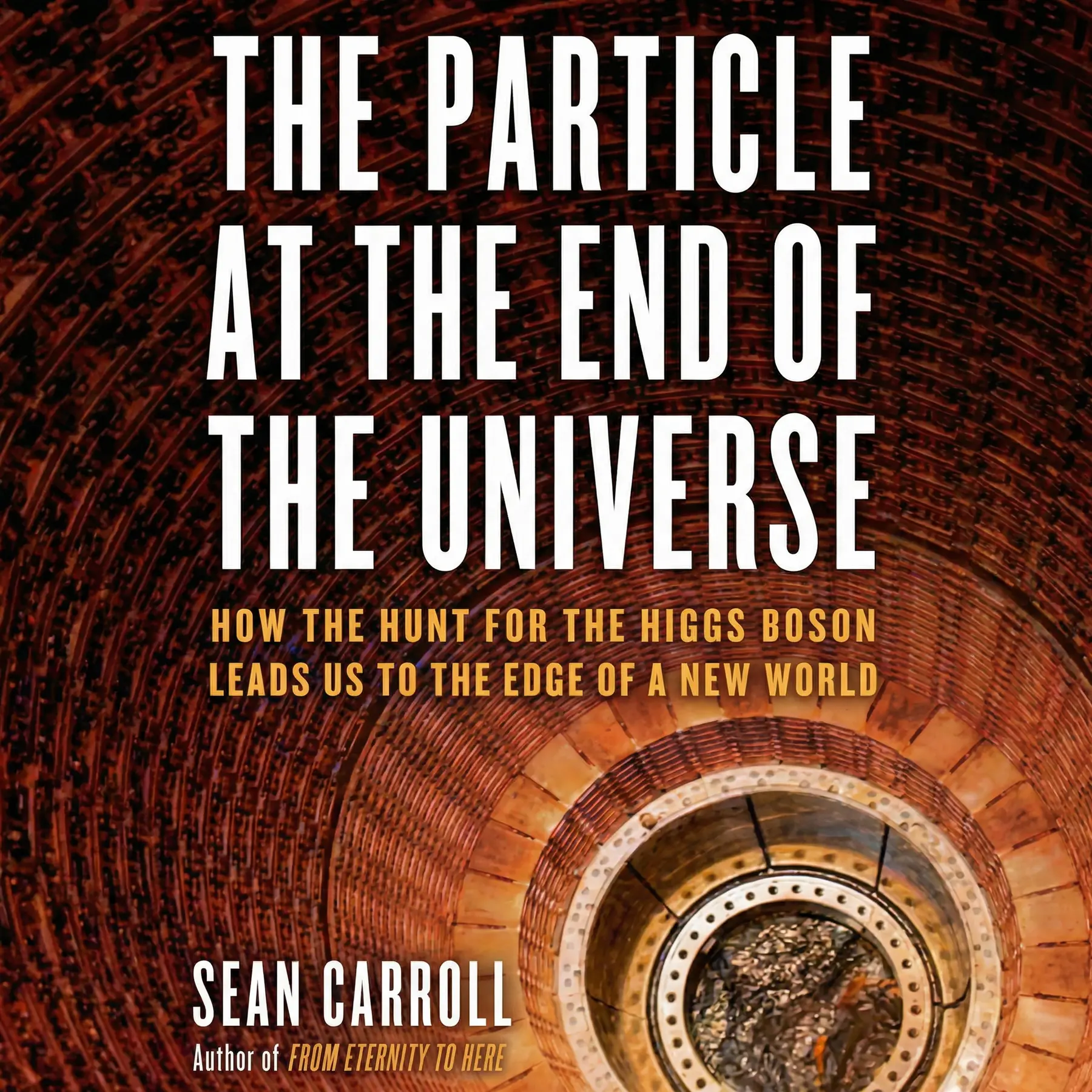
The Particle at the End of the Universe: How the Hunt for the Higgs Boson Leads Us to the Edge of a New World
By Sean Carroll
Explore the monumental scientific quest to identify the Higgs boson. This summary breaks down complex particle physics, the inner workings of the Large Hadron Collider, and why this discovery changes everything.
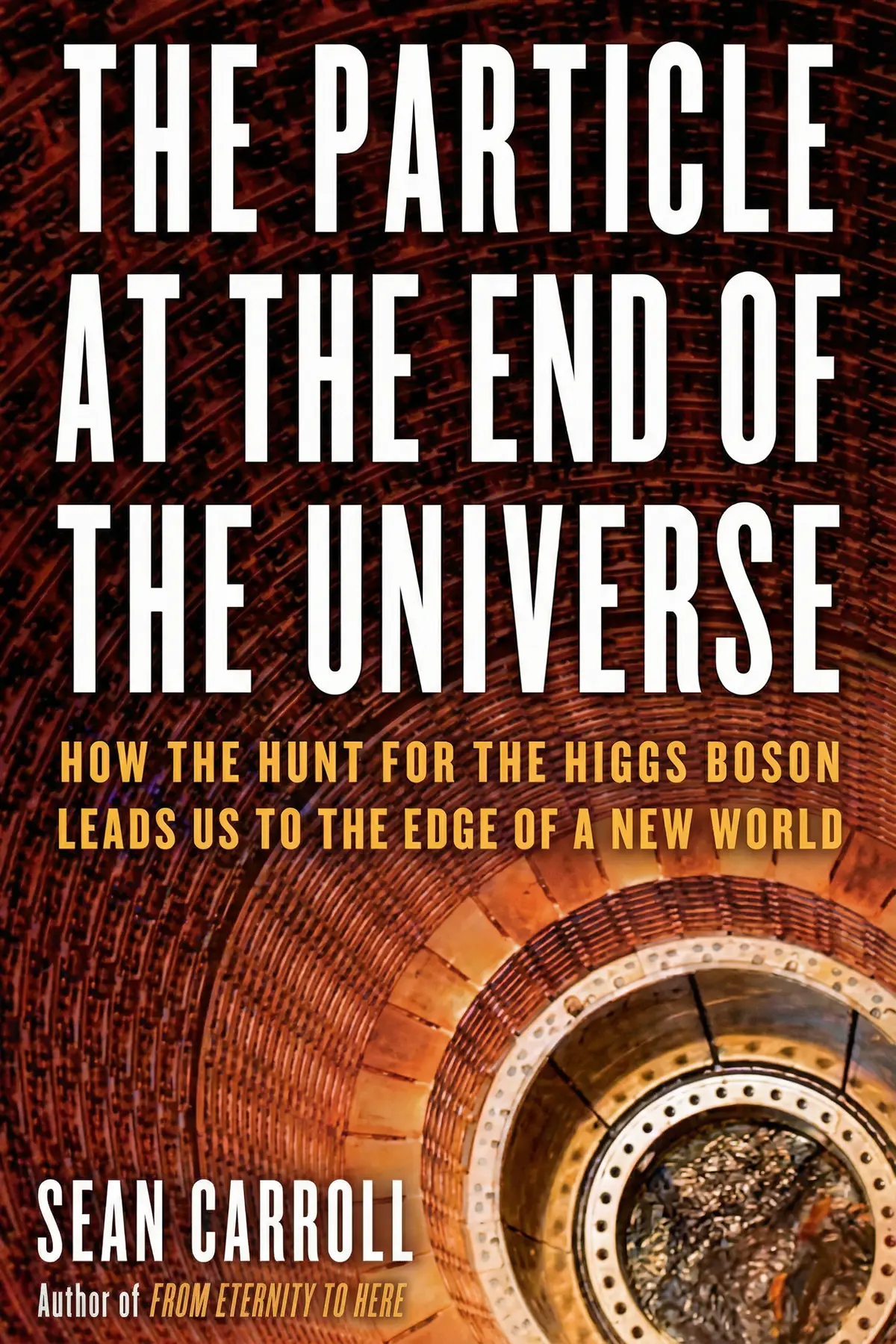
Table of Content
1. Introduction
1 min 50 sec
For years, a massive circular tunnel beneath the border of France and Switzerland captured the world’s imagination. This facility, the Large Hadron Collider, represented the pinnacle of human engineering and scientific ambition. But for many people outside the specialized world of physics, the purpose of this multi-billion-dollar project remained a bit of a mystery. We heard whispers about the ‘God Particle’ and the hunt for a hidden field that holds the universe together, but what does that actually mean for our daily lives?
To understand the significance of this hunt, we have to look past the giant magnets and the high-speed collisions. We have to peer into the very fabric of reality itself. We live in a world made of stuff—chairs, stars, oceans, and people—but for a long time, science struggled to explain why that stuff has substance. Why do things have weight? Why isn’t the universe just a collection of particles zipping around at the speed of light, never clumping together to form anything meaningful?
The answer lies in the Higgs boson, the titular particle at the end of the universe. In this journey, we will explore the fundamental components of our world, from the basic anatomy of an atom to the bizarre behavior of quarks and leptons. We will see how four invisible forces act as the architects of existence and how a pervasive field, similar to an invisible ocean, gives everything its mass. Most importantly, we will follow the researchers at CERN as they successfully tracked down a particle that had eluded detection for half a century, finally completing a map of the subatomic world that helps us understand where we came from and where the laws of physics might take us next. This is the story of how we found the missing piece of the cosmic puzzle.
2. The Fundamental Architecture of the Atom
2 min 16 sec
Delve into the microscopic structure of our world, exploring how protons, neutrons, and electrons define the unique identity of every element in existence.
3. The Secret World of Leptons and Quarks
2 min 29 sec
Go beyond the proton and electron to discover the diverse family of subatomic particles that make up the hidden layers of matter.
4. The Four Forces That Govern the Cosmos
2 min 26 sec
Understand the invisible powers of gravity, electromagnetism, and nuclear interactions that dictate how every particle in the universe behaves.
5. The Invisible Ocean of the Higgs Field
2 min 19 sec
Discover why mass isn’t an inherent property of matter, but rather the result of a hidden field that permeates all of space.
6. Making Sense of Mass Through Interaction
2 min 16 sec
Use vivid analogies to grasp the abstract concept of the Higgs field and how it differentiates the ‘weight’ of various particles.
7. The Engineering Feat of the Large Hadron Collider
2 min 05 sec
Step inside the world’s most powerful machine to see how scientists recreate the conditions of the early universe to find hidden particles.
8. Detecting the Invisible in a Maze of Data
2 min 09 sec
Explore the sophisticated detectors that act as giant digital cameras, capturing the fleeting remnants of high-energy particle crashes.
9. The Logic of Discovery and Falsification
1 min 58 sec
Learn about the rigorous scientific standards and the ‘Black Swan’ logic required to confirm a discovery that had been theorized for 50 years.
10. Beyond the Higgs: Dark Matter and Future Frontiers
2 min 15 sec
Examine what the discovery of the Higgs boson means for the future of technology and our quest to understand the 95% of the universe that remains hidden.
11. Conclusion
1 min 26 sec
The discovery of the Higgs boson is more than just a footnote in a physics textbook; it is a testament to the power of human curiosity and the effectiveness of the scientific method. By successfully identifying the particle that gives mass to the universe, we have confirmed that our theoretical understanding of reality is on the right track. We have moved from guessing how the world works to having a verified map of its most fundamental components.
As we look forward, the significance of this milestone will only grow. The Large Hadron Collider continues to probe the frontiers of energy, looking for answers to the mysteries of dark matter and the origins of the cosmos. The throughline of this journey—from the early models of the atom to the high-energy crashes in Geneva—is a reminder that even the most complex structures in the universe are built from a few simple rules and particles.
The lesson to take away is that the universe is not a collection of random objects, but a deeply interconnected system governed by invisible fields and forces. By understanding the Higgs boson, we understand the very reason we have weight, form, and substance. It is an invitation to keep asking big questions, to keep building ambitious machines, and to never stop looking for the next ‘particle’ that might be hiding just beyond the edge of our current world. The hunt for the Higgs has concluded, but the exploration of the world it revealed has only just begun.
About this book
What is this book about?
The Particle at the End of the Universe is an exploration of the hunt for the elusive Higgs boson, often referred to as the particle that provides mass to the universe. Theoretical physicist Sean Carroll guides listeners through the fundamental building blocks of reality, from the smallest subatomic particles like quarks and leptons to the massive engineering feat of the Large Hadron Collider. The book promises to demystify the Standard Model of physics and explain why a tiny particle, theorized decades before it was found, is the key to understanding why anything exists at all. It bridges the gap between high-level laboratory experiments and the philosophical questions about the origin and fabric of our cosmos, making the complex world of quantum fields accessible to everyone.
Book Information
About the Author
Sean Carroll
Sean Carroll is a theoretical physicist with a Ph.D. from Harvard University and works at Johns Hopkins University. In addition to his research, Carroll also wrote the critically acclaimed book From Eternity to Here, a scientific exploration of the nature of time.
Ratings & Reviews
Ratings at a glance
What people think
Listeners find the work highly accessible and straightforward, especially noting how it clarifies complex scientific concepts without relying on dense mathematics. Furthermore, the narrative is skillfully written with a personal feel, and listeners value the intellectually stimulating themes, with one listener emphasizing the perspective provided on how "Big Science" actually functions. The book also earns praise for its momentum as a superb contemporary overview of physics, and listeners find the experience genuinely entertaining.
Top reviews
Anucha
Ever wonder why the universe isn’t just a soup of massless particles flying around at the speed of light? Carroll takes this incredibly abstract concept of the Higgs field and makes it feel tangible through brilliant metaphors. I loved the way he describes the world being made of fields rather than solid little balls, shifting my perspective on reality entirely. The pacing is fantastic, moving from the theoretical foundations of the 1960s to the high-stakes engineering of the LHC in Geneva. It’s not just about the physics; it’s about the sheer audacity of building a seventeen-mile-long machine to find a vibration in a field. Frankly, it’s inspiring to see what happens when the global community collaborates on something so fundamental. Even when the technical details got dense, Carroll’s conversational tone kept me turning the pages. This book makes you feel smarter for having read it.
Show moreChatri
This is exactly what popular science should be—challenging, enlightening, and deeply human. I was worried that a book about the Higgs Boson would be dry, but Carroll focuses on the passion and the personalities that made the discovery possible. He describes the rivalry and cooperation between different labs with the kind of tension you’d expect from a thriller. The way he breaks down quantum field theory without using a single scary equation is a feat of literary magic. Personally, I found the explanation of how the Higgs field gives mass to other particles to be a total 'aha!' moment. It’s not just about the destination; the journey through the history of particle accelerators is equally fascinating. Every chapter leaves you with something to ponder about the nature of reality. Truly a brilliant piece of science communication.
Show moreSukit
Wow, what a journey through the smallest parts of our reality. Sean Carroll captures the sheer excitement of the scientific process, showing that physics isn't just about cold facts but about curiosity and perseverance. I loved the way he detailed the building of the LHC, making the engineering sound just as poetic as the theory. The metaphors, like the one about Angelina Jolie moving through a crowd, are genuinely helpful for visualizing how fields interact. It’s a book that respects the reader's intelligence while guiding them through some of the most difficult concepts in modern science. Not gonna lie, I got a bit emotional reading about Peter Higgs and the announcement of the discovery in 2012. It’s a testament to what humans can achieve when we work together across borders. This should be required reading.
Show moreBunyarit
After hearing Carroll on several podcasts, I knew his writing would be engaging, but I wasn't prepared for how much I’d enjoy the historical aspects. He spends a good amount of time on the evolution of our understanding, from the early days of quantum mechanics to the contemporary Standard Model. The book does a fantastic job of explaining why the Higgs was the missing piece of the puzzle. It’s fascinating to see how a theoretical prediction from the 60s took decades and billions of dollars to finally prove. Personally, I found the appendices at the back to be a nice touch for those who want a slightly deeper dive without needing a PhD. It’s a fast-paced, insightful, and ultimately optimistic look at our ability to decode the secrets of the universe. A must-read for any science enthusiast.
Show moreSupaporn
Sean Carroll has a remarkable gift for translating the esoteric language of particle physics into something the rest of us can actually chew on. He doesn't just explain the Higgs Boson; he weaves a narrative about the thousands of people at CERN working toward a single, invisible goal. The history of the Large Hadron Collider is surprisingly dramatic, filled with political hurdles and technical nightmares that make the 2012 discovery feel like a hard-won victory for humanity. I particularly liked how he humanized the 'Biggest Scientists' without making them feel like unreachable deities. Some of the sections on quantum fields still made my brain melt a little, but the analogies—like the one about the party guests—kept me grounded. It’s a rare science book that feels both profoundly educational and genuinely entertaining. If you want to understand the Standard Model without doing a single equation, this is your starting point.
Show moreDuangjai
Picked this up after hearing about the 'God Particle' for years and wanting to know what the fuss was actually about. Carroll’s writing is crisp, professional, and surprisingly witty, which helps when you’re dealing with things like top quarks and W bosons. He manages to explain the Standard Model in a way that feels like a detective story rather than a lecture. I found the section on the search for the Higgs especially gripping, as it highlights how scientists must rule out every other possibility before claiming victory. It’s a masterclass in how modern physics operates on a massive, global scale. My only minor gripe is that the book feels slightly dated now that we’re moving into even newer territory, but as an update on the 2012 breakthrough, it’s unbeatable. It’s a thoughtful look at how we ask 'why' at the most fundamental level.
Show moreSomboon
The chapter on symmetry breaking was a revelation for me, even if I had to read a few paragraphs twice to really grasp the implications. Carroll uses a clever analogy involving an inverted pendulum to explain the energy states of the Higgs field, which made the concept stick in a way my high school physics teacher never could. Truth is, particle physics is notoriously counter-intuitive, but this book bridges the gap between the layman’s imagination and the scientist’s data. I enjoyed the behind-the-scenes look at CERN and the massive detectors like ATLAS and CMS. It really puts into perspective the scale of effort required to confirm these theories. There were moments where the narrative slowed down during the historical recaps, but the payoff at the end is worth it. It’s a rewarding read for anyone curious about the building blocks of existence.
Show moreChokdee
As someone who hasn't touched a physics textbook in a decade, I found this remarkably approachable. Carroll avoids the 'God Particle' hype and sticks to the actual science, which is far more interesting than any religious metaphor could be. The pacing is spot-on, balancing the technical explanations with stories about the people behind the math. I particularly appreciated the insight into Big Science and why it costs billions of dollars just to smash atoms together. It’s not just curiosity; it’s about the technological spin-offs, like the World Wide Web, that come from these massive projects. I did find the discussion on spin and degrees of freedom a bit tedious toward the end, but the overall experience was very positive. It’s a great way to catch up on what’s been happening at the frontiers of knowledge.
Show moreMatteo
While I appreciate the effort to make Big Science accessible, I found myself skimming through several chapters that focused heavily on the bureaucratic and political side of the LHC. I understand that funding and international cooperation are part of the story, but I was here for the mind-bending physics. To be fair, when he does get into the science, his explanations of symmetry and mass are much clearer than anything I’ve read before. However, the sheer number of names and dates occasionally felt more like a history textbook than a journey into the cosmos. I also struggled with some of the more abstract appendices; they were supposed to simplify things, but they ended up confusing me further. It’s a solid read if you want the full context of the discovery, but casual readers might find it a bit bogged down in the administrative details.
Show moreFon
Look, I really wanted to love this, but even with the 'human touch,' most of the science still went way over my head. I kept waiting for the metaphors to click, but I think my brain just isn't wired for quantum fields and virtual particles. To be fair, the author writes with a lot of enthusiasm, and I did enjoy the parts about the scientists’ personal lives and the drama of the Nobel Prize. But the middle sections felt like a relentless barrage of particle names—muons, taus, gluons—that I couldn't keep straight. I finished it feeling more confused than when I started, which is frustrating given how much people praise its readability. If you don’t already have a basic grasp of the Standard Model, you might find yourself treading water. It’s probably a great book for science buffs, but it wasn't the easy entry point I was hoping for.
Show moreReaders also enjoyed
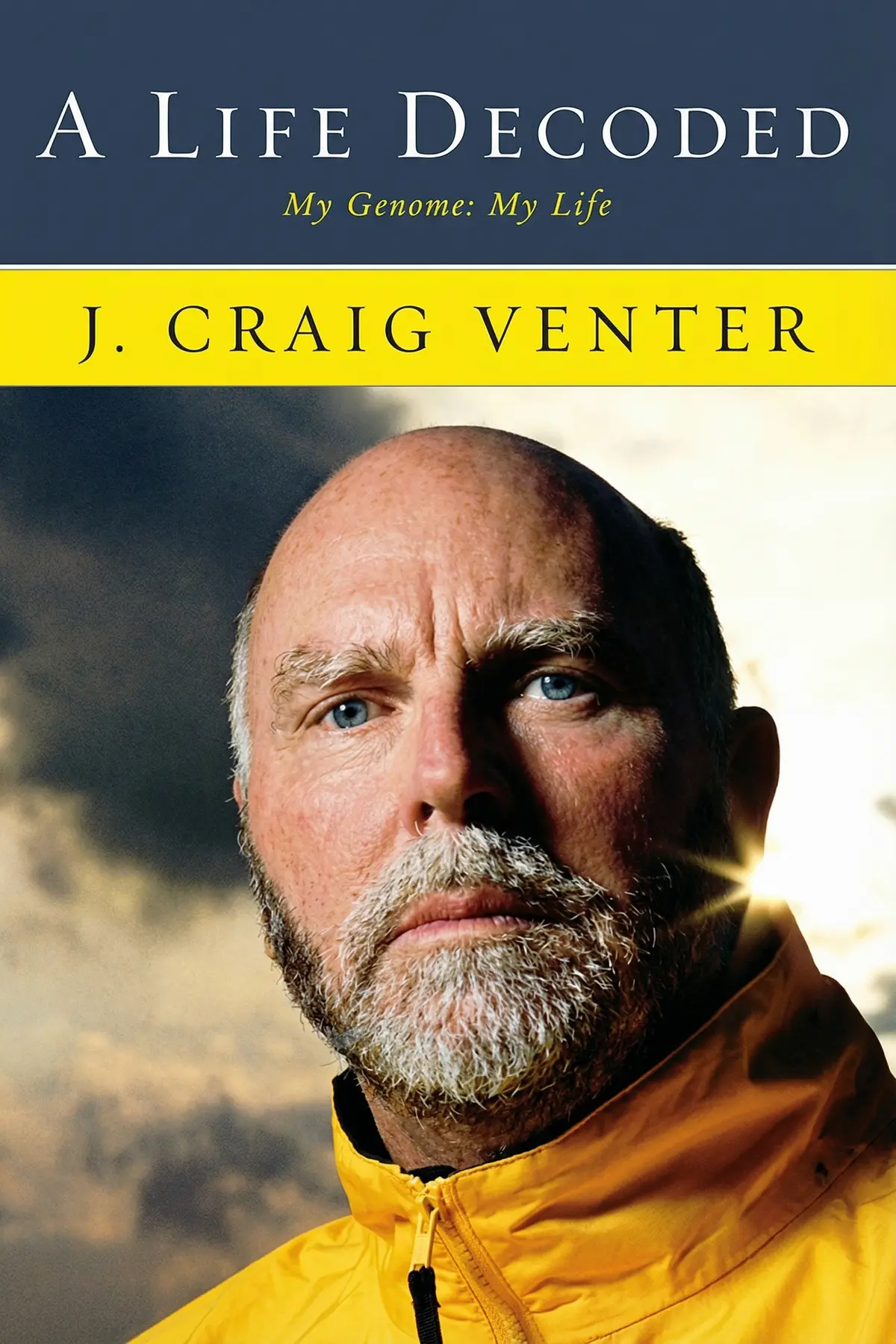
A Life Decoded: My Genome: My Life
J. Craig Venter
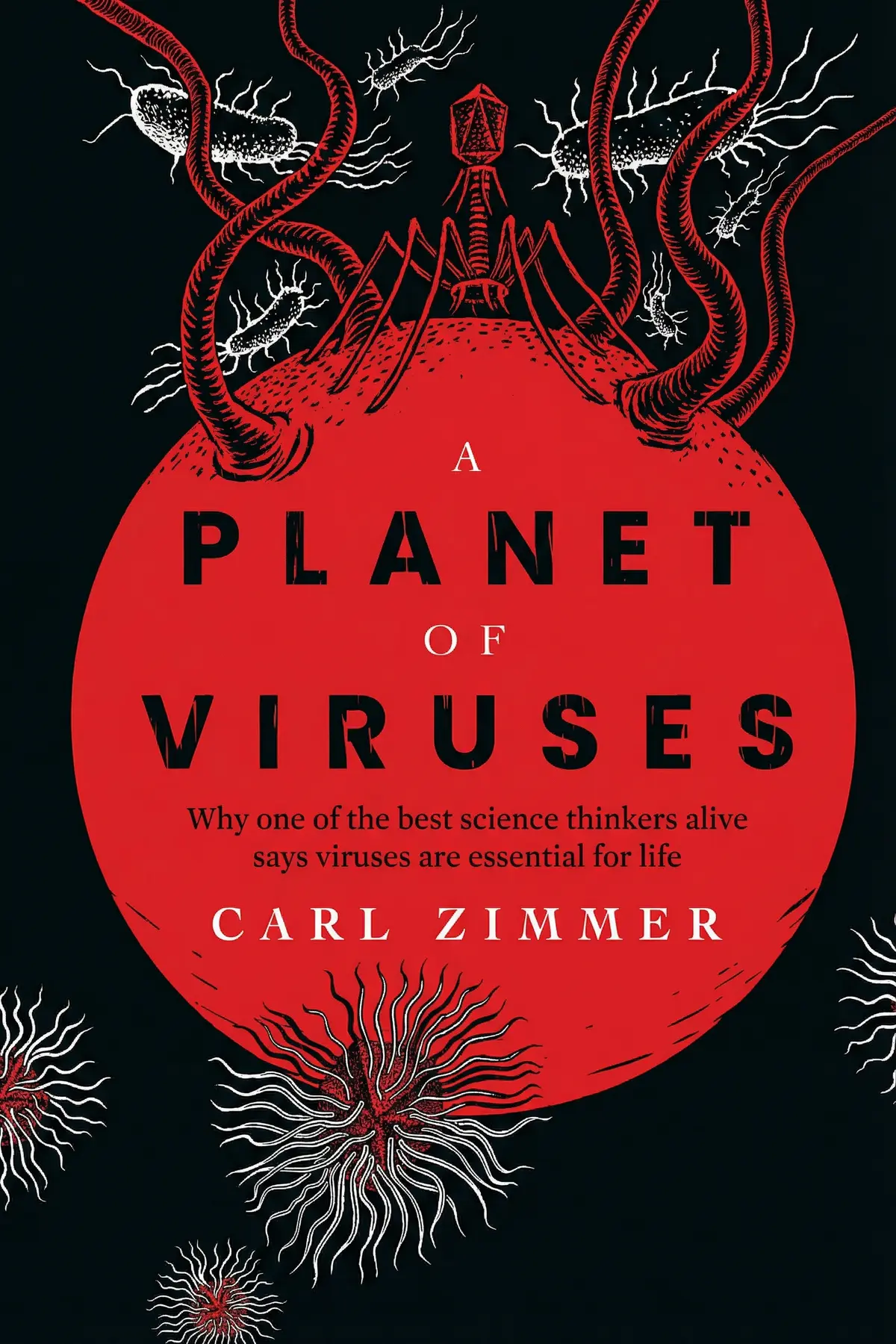
A Planet of Viruses
Carl Zimmer
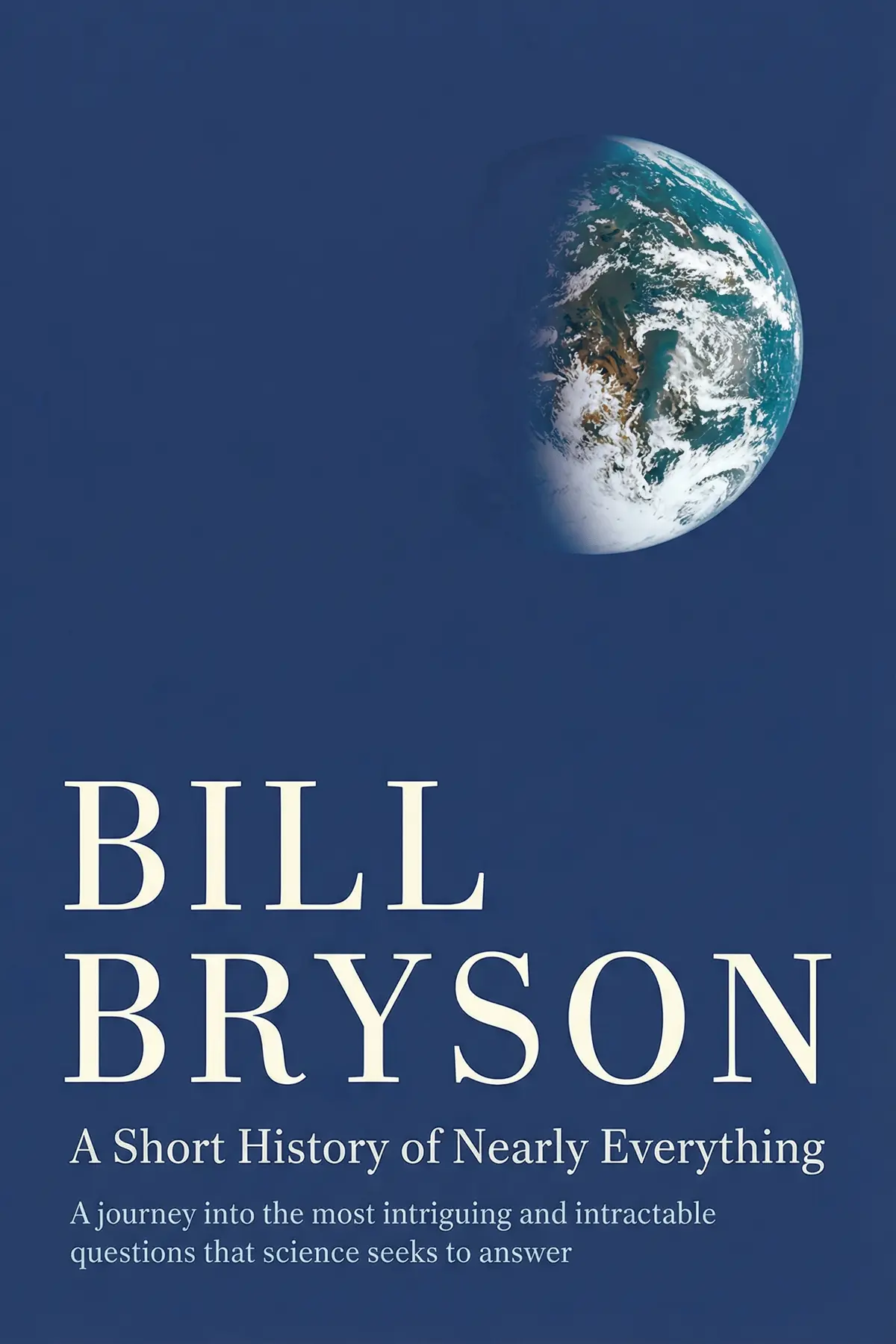
A Short History of Nearly Everything
Bill Bryson
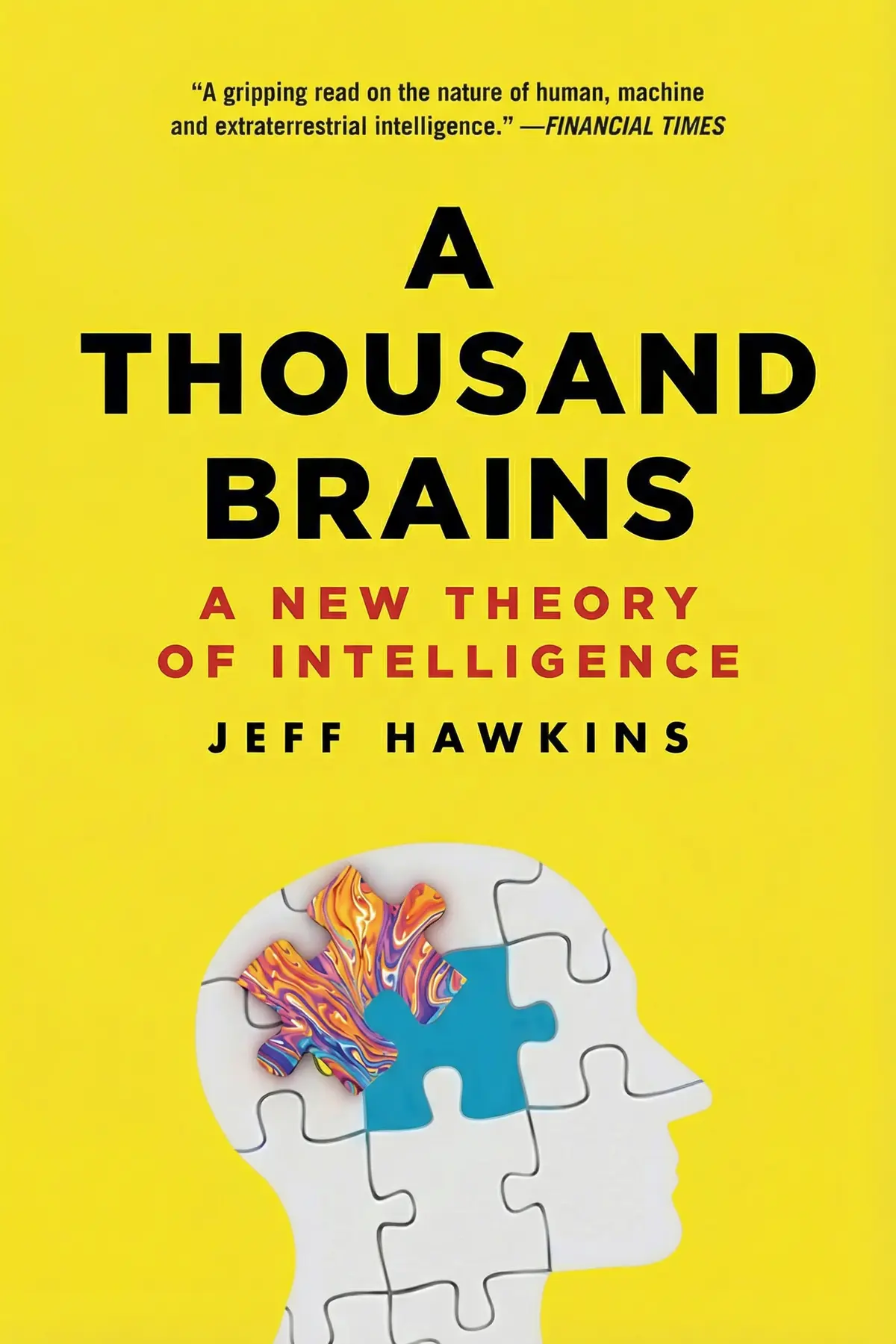
A Thousand Brains: A New Theory of Intelligence
Jeff Hawkins
AUDIO SUMMARY AVAILABLE
Listen to The Particle at the End of the Universe in 15 minutes
Get the key ideas from The Particle at the End of the Universe by Sean Carroll, plus 5,000+ more titles in English and Thai.
- 5,000+ titles
- Listen as much as you want
- 7-day free trial
- Cancel anytime







