
14 min 46 sec
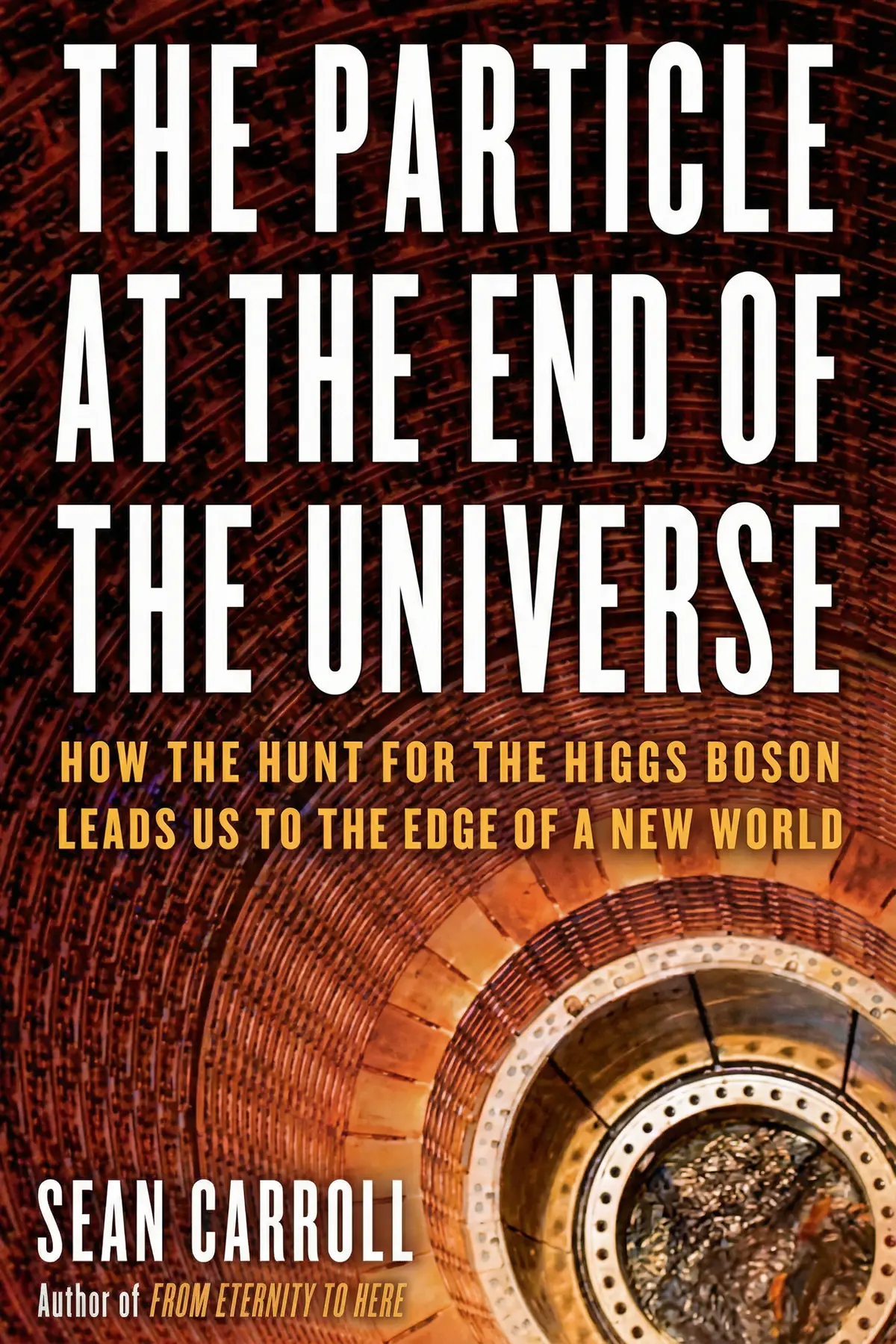
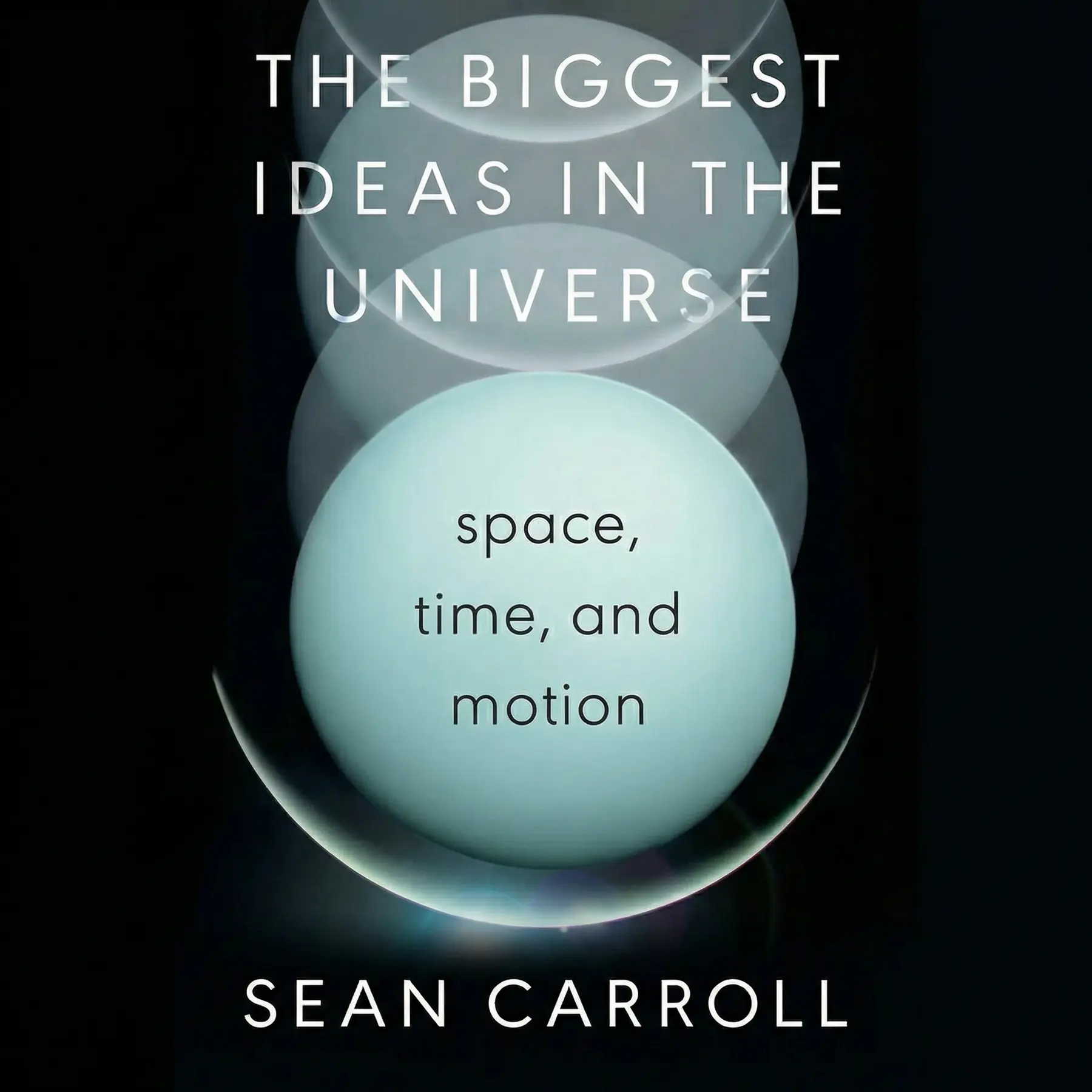
The Biggest Ideas in the Universe: Space, Time, and Motion
By Sean Carroll
An deep dive into the fundamental architecture of our world, Sean Carroll’s work demystifies the profound physics behind space, time, and motion, moving beyond simple equations to reveal the true nature of reality.
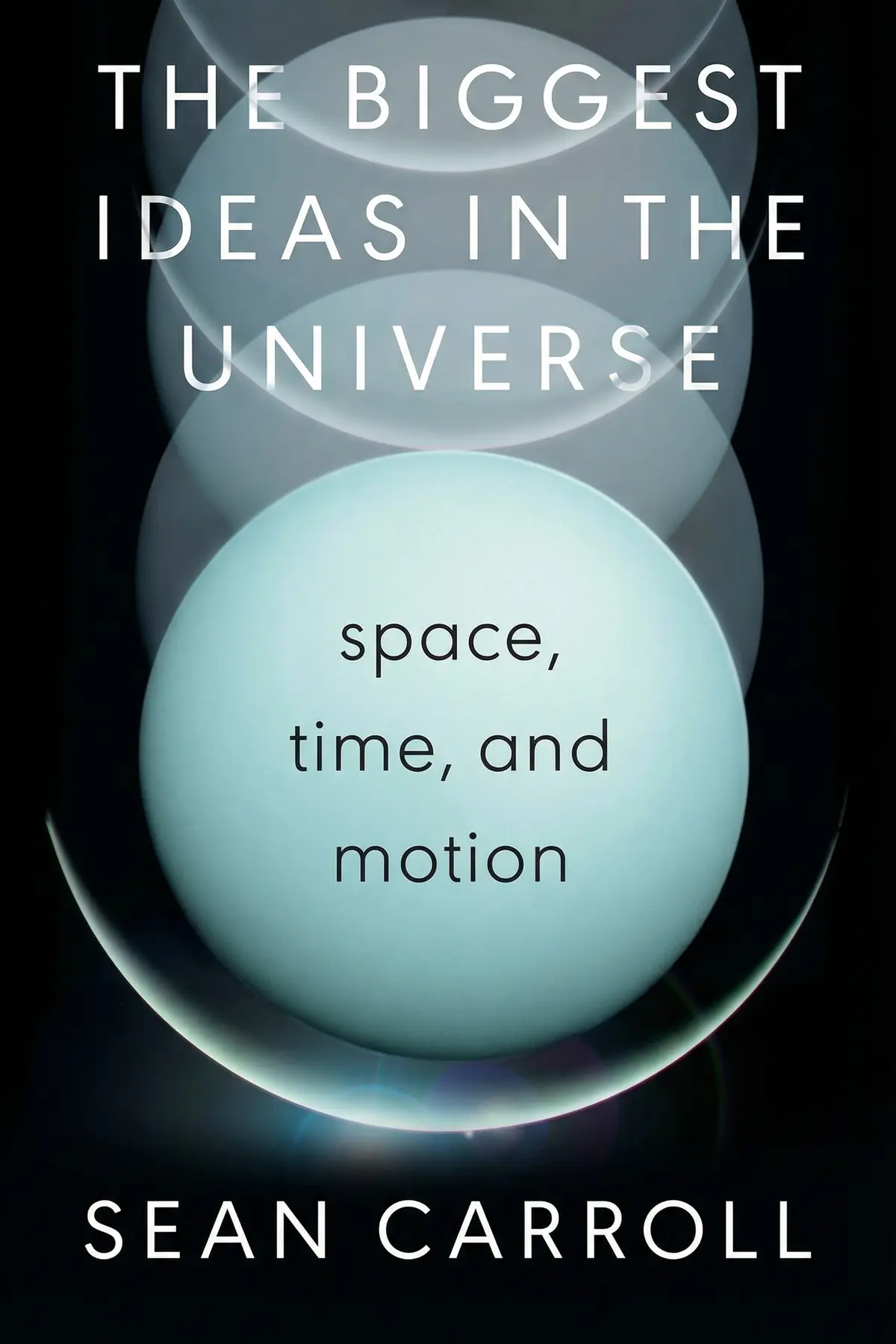
Table of Content
1. Introduction
2 min 05 sec
Imagine walking down the street and overhearing a group of people debating the nuances of inflationary cosmology or the latest developments in superstring theory. For most of us, that sounds like a scene from a science fiction novel. We are used to discussing the economy, the latest political shifts, or even the local sports scores, but physics? That usually feels reserved for the elite, the academics, and the people with a dozen letters after their names. Sean Carroll, however, wants to change that. He believes that the most profound ideas in the universe shouldn’t be locked away in ivory towers. Instead, they should be part of our collective conversation, accessible to anyone with a spark of curiosity.
In this exploration, we are diving into the heart of modern physics to tackle the building blocks of reality. We often hear about Einstein’s famous equation, E=mc², and we think we’ve reached the summit of physical understanding. But as Carroll points out, that’s just a starting point—almost a footnote compared to the grander field equations that describe how the universe actually moves and bends. We aren’t here to get bogged down in dense mathematics or to solve complex variables on a chalkboard. Our goal is to grasp the ‘why’ and the ‘how’ behind the concepts of space, time, and their ultimate union: spacetime.
What does it mean for space to be a ‘thing’ rather than just an empty void? Why does time feel like an arrow shot from a bow, never to return? And how can two people experience the passage of years differently just by moving at different speeds? These are the questions that define our place in the cosmos. By looking at the history of these ideas and the breakthroughs that changed our perspective, we can begin to see the universe through the eyes of a physicist. This isn’t just about learning facts; it’s about shifting your entire worldview to match the elegant, mathematical reality of the world we inhabit.
2. The Substance of the Void
3 min 49 sec
Is space merely a stage for events, or is it a physical entity itself? Explore the ancient rivalry that shaped our modern understanding of the vacuum.
3. The Flow and Philosophy of Moments
3 min 25 sec
Time is more than just a ticking clock; it is the fundamental driver of change. Discover the competing theories on whether the past and future truly exist.
4. The Geometry of Reality
3 min 54 sec
What happens when space and time merge? Uncover the counterintuitive truth about why moving faster changes the way you age.
5. Conclusion
1 min 33 sec
As we wrap up our journey through the fundamental ideas of the universe, it’s worth reflecting on how much our perspective has shifted. We started by looking at space not as a hollow vacuum, but as a physical ‘thing’ with its own properties and dimensions. We explored the deep philosophical roots of time, debating whether the past is gone or if every moment is etched into a permanent block of reality. Finally, we saw how Einstein and Minkowski merged these concepts into the four-dimensional landscape of spacetime, where gravity is simply the curvature of the world itself.
What Sean Carroll reminds us is that while the equations of physics—like the field equations of general relativity—might look intimidating, the concepts they represent are grounded in logic and geometry. We live in a universe that follows rules, even if those rules often defy our common sense. The ‘twin paradox’ isn’t really a paradox; it’s just a sign that our intuition hasn’t yet caught up to the reality of high-speed travel. By thinking like an amateur physicist, you start to see that the world isn’t just a collection of random events. It is a structured, elegant system where space, time, and motion are all parts of a grander whole. Whether you’re looking at a sunset or thinking about the orbits of distant stars, you now have a deeper understanding of the invisible architecture that makes it all possible. The universe is big, but its biggest ideas are finally within your reach.
About this book
What is this book about?
Have you ever wondered what the universe is actually made of, or why time only seems to move in one direction? This summary explores the foundational concepts that govern our physical world, shifting from the historical debates of the 1700s to the mind-bending revelations of modern relativity. It bridges the gap between casual curiosity and professional physics by explaining the core theories that define our existence. Readers will learn about the shifting definitions of space, the philosophical interpretations of time, and the revolutionary unification of the two into a single, four-dimensional fabric. The promise here is clarity: by the end, the seemingly impossible concepts of curved spacetime and time dilation become intuitive. This is an invitation to view the cosmos not as a collection of mysterious numbers, but as a coherent, elegant system that anyone can begin to understand.
Book Information
About the Author
Sean Carroll
Sean Carroll is the Homewood Professor of Natural Philosophy at Johns Hopkins University. He is a leading expert in the fields of cosmology, gravitation, and field theory. Beyond his academic research, Carroll is a prolific author of several acclaimed books, including Something Deeply Hidden, Spacetime and Geometry, and The Big Picture. He also engages with a broad audience as the host of the popular Mindscape podcast, where he facilitates deep conversations about science, philosophy, culture, and the arts.
Ratings & Reviews
Ratings at a glance
What people think
Listeners appreciate the book's ability to translate intricate physics themes into plain speech while delivering a thorough look at mathematical foundations. They consider the material educational and approachable for novices, with one listener highlighting how historical narratives are woven into the scientific theories. The prose is highly regarded, and listeners see the author as an adept instructor. While some find the content engaging, others argue it is extremely tough to digest, and the mathematical portions draw divided opinions, with several listeners noting the technical details were hard to keep up with.
Top reviews
Jack
This book is the bridge I didn’t know I needed between fluffy popular science and intimidating academic textbooks. Sean Carroll attempts something incredibly bold here by actually showing the math instead of hiding it behind vague metaphors. Most authors treat equations like something that will scare readers away, but Carroll argues that you can't truly grasp the universe without them. I appreciated the deep dives into Hamiltonians and Lagrangians, concepts usually reserved for upper-level physics students. While the introduction claims you only need high school algebra, the truth is that you’ll need some serious mental stamina to keep up once the calculus starts flowing. It is refreshing to see a physicist trust his audience enough to explain how a metric tensor actually works. If you are tired of being coddled by analogies about rubber sheets and want to see the real machinery of General Relativity, this is the perfect starting point.
Show moreMarco
Sean Carroll has a gift for making the most abstract concepts feel tangible and exciting. I felt like a sixteen-year-old version of myself again, discovering the 'Deep Magic' that makes the world run. The way he explains Hilbert spaces and manifolds is far more intuitive than any classroom lecture I’ve ever sat through. I loved the little footnotes, especially the one about his contribution to the Thor movie—it added a human touch to a very technical subject. The book doesn't treat you like a child; it treats you like a curious adult who is willing to put in the work. It is a big gulp of information, and I will likely need a second read to fully digest the math. This is a must-have for anyone who feels unsatisfied by typical 'pop' physics that avoids the technical details.
Show moreDao
Wow, what a ride through the fabric of reality. I have always been physics-curious, but most books either talk down to you or are completely impenetrable. Carroll finds the sweet spot. He explains the 'Biggest Ideas' with a clarity that only a true master of the subject could manage. I particularly enjoyed learning about the history of conservation laws and how they evolved into our modern understanding of the universe. Not gonna lie, the math is challenging, and I had to put the book down several times just to process a single page. But when that 'aha' moment finally hits, it is incredibly rewarding. It’s educational, bold, and surprisingly funny at times. If you are willing to look at an equation and actually think, this book will open up a whole new world for you.
Show moreMoo
As someone who has always been 'physics-curious,' I’m tired of being coddled by analogies. I want to see what the equations actually look like, and this book finally delivers on that front. Carroll is a skilled teacher who knows how to break down complex vectors and time-reversal invariance into pieces that a dedicated amateur can handle. The book is a nice guided tour through the essentials of classical physics and relativity. I liked how he didn't just dump the math on the page; he explained the logic behind the symbols. It is definitely not for everyone, but for those of us who want a bit more 'meat' on the bones of popular science, it is a triumph. I am already looking forward to the next two books in the trilogy to see where he takes us next.
Show moreAom
After hearing Sean Carroll on a podcast, I decided to dive into this ambitious project. It is clearly the first part of a larger trilogy, and the scope is impressive. The way he intermingles the history of scientific discovery with the actual concepts makes the physics feel like a living, breathing story. I particularly enjoyed the sections on conservation laws and Noether’s theorem, even if the math got a bit hairy toward the middle. Frankly, some of the transitions between 'this is simple algebra' and 'here is a complex tensor' felt a bit abrupt. You might find yourself reaching for a pencil and paper to follow along. However, the clarity of his prose helps bridge those gaps. It is a guided tour of the universe's internal logic that doesn't shy away from the difficult parts. Definitely worth the effort for those who want a deeper look.
Show moreLucia
Finally got around to reading this, and as someone who hasn't looked at a physics equation in twenty years, it was quite a workout. Carroll’s 'One Weird Trick'—the idea that you can understand equations without necessarily needing to solve them—actually works to some degree. I felt like I was being initiated into the secret language of the universe. The chapter on special relativity was a highlight for me, as it finally made the concept of spacetime intervals feel concrete. Look, it’s not exactly a beach read. You have to be willing to sit and think deeply about what each symbol represents. My only minor gripe is that he occasionally glosses over certain assumptions that would help a layman understand the 'why' behind the 'how.' Still, as a refresh on the essentials of physics, it is leagues ahead of most popular science books.
Show moreLaor
Comparing this to Susskind’s 'Theoretical Minimum' is inevitable, and Carroll holds his own quite well. While Susskind’s work feels like a transcribed lecture series, this feels like a carefully crafted narrative of ideas. The writing quality is exceptional, and Carroll’s voice is that of a patient, brilliant mentor. I found the explanation of how gravity pulls you into black holes to be one of the most lucid I've ever read. However, the difficulty curve is very steep. You start with basic momentum and suddenly you’re staring at partial differentials. I appreciate that he doesn't use the 'everything is a trampoline' analogy for gravity, but some of the mathematical explanations still feel a bit rushed. It is a magnificent attempt to democratize physics, even if it doesn't quite reach every reader. For the science-oriented, it’s a goldmine.
Show moreChatri
Ever wonder if a book can be too smart for its own good? I am a well-educated person, yet I struggled immensely with the explanations of vector addition early on. The author says it is easy to just imagine placing the end of one vector at the start of another, but the diagrams and text simply didn't click for me. I spent hours re-reading pages 11 through 15 and still felt lost. To be fair, my math background is a bit rusty, but the introduction promised that high school algebra would suffice. It doesn't. Once we moved into partial differentials and more complex dynamics, I felt like I was drowning in notation. There are some interesting historical nuggets and Carroll is a gifted writer, but the technical barrier is much higher than advertised. It is a dense read that requires a level of mathematical intuition I simply don't possess.
Show moreWitthaya
Who exactly was this book written for? At times, the author explains that 'momenta' is the plural of momentum, which feels very basic. Then, two pages later, he is manipulating metrics and tensors as if I do this every day. The tonal shifts are jarring. I do feel like I understand spacetime and black holes marginally better now, but I’m not sure the equations were the reason why. The prose is much better at explaining the concepts than the math is. Gotta say, I felt more glimmers of understanding during the historical anecdotes than during the technical derivations. It’s a very dense book that might be too hard to be a satisfying read for a true layman. If you aren't prepared to study the diagrams like a student, you might find yourself skipping half the content.
Show moreCharlotte
To be fair, the ambition here is admirable, but the execution fails to serve its supposed audience. Who is this book actually for? Professional physicists will find the 'half-truths' and simplified expressions frustratingly imprecise, while the average reader will be baffled by the sudden appearance of tensors and metrics. I found the section on the energy-momentum tensor particularly problematic, as it skips over the energy problem in general relativity entirely. The author claims this is for people with only algebra skills, but then he dives into calculus almost immediately. It feels like a textbook that forgot to include the practice problems. If you want a descriptive book, go elsewhere; if you want a technical one, buy Taylor and Wheeler. This middle ground ends up being a confusing no-man's-land that left me more frustrated than enlightened by the time I finished the final chapter.
Show moreReaders also enjoyed


A Life Decoded: My Genome: My Life
J. Craig Venter

A Planet of Viruses
Carl Zimmer
A Short History of Nearly Everything
Bill Bryson
A Thousand Brains: A New Theory of Intelligence
Jeff Hawkins
AUDIO SUMMARY AVAILABLE
Listen to The Biggest Ideas in the Universe in 15 minutes
Get the key ideas from The Biggest Ideas in the Universe by Sean Carroll, plus 5,000+ more titles in English and Thai.
- 5,000+ titles
- Listen as much as you want
- 7-day free trial
- Cancel anytime







