
16 min 52 sec
The Biology of Trauma: How the Body Holds Fear, Pain, and Overwhelm, and How to Heal It
Explore how trauma isn't just in the mind, but deeply embedded in our physiology. This summary details how stress shapes our biology and offers a roadmap for healing through the nervous system.
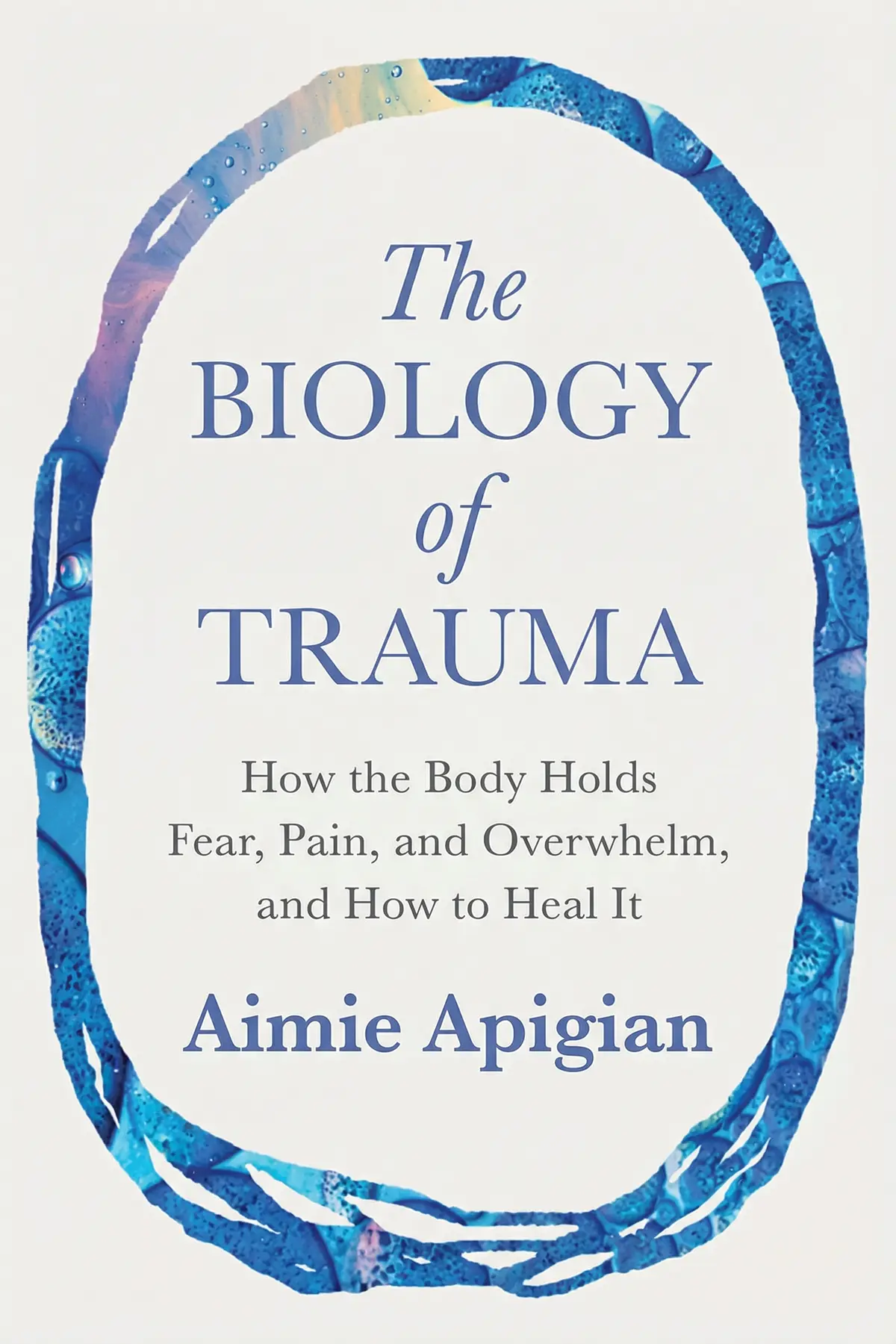
Table of Content
1. Introduction
1 min 50 sec
When we talk about trauma, we almost always talk about the mind. We think of memories that won’t fade, thoughts that keep us up at night, or the emotional weight of a past we can’t seem to leave behind. We’ve been conditioned to believe that if we can just talk through our problems or change our perspectives, we will eventually find peace. But what if the mind is only the tip of the iceberg? What if the reason we feel stuck, exhausted, or overwhelmed isn’t because we haven’t thought about our past enough, but because our bodies are literally holding onto the experience?
This is the core premise of The Biology of Trauma. It challenges the conventional wisdom that trauma is a purely psychological event. Instead, it invites us to look deeper, into the very cells and systems that make up our physical being. It suggests that trauma is a biological event that leaves a lasting imprint on our physiology. When we experience something overwhelming, our body doesn’t just register the event; it adapts to it. It changes the way our nervous system responds, the way our immune system functions, and even how our metabolism processes energy.
Through the course of this summary, we are going to explore why your body might be stuck in a state of survival and why ‘just thinking’ your way out of it often fails. We will look at the connection between stress and our physical health, the role of inflammation and the immune system in mental well-being, and how nutritional factors can either hinder or help our recovery. By the end, you’ll have a new framework for understanding your own health—a framework that bridges the gap between the mind and the body, offering a more complete path toward true, lasting healing. The goal isn’t just to manage symptoms, but to address the biological roots of our overwhelm so that the body can finally return to a state of safety.
2. The Biological Reality of Stored Experience
2 min 19 sec
Discover why trauma is far more than a memory, existing instead as a physical state within the body’s tissues and nervous system that keeps us in a cycle of survival.
3. The Nervous System's Survival Hierarchy
2 min 22 sec
Explore the different states of the nervous system and how the body moves from active fight-or-flight into the deep, protective state of biological overwhelm.
4. Neuro-Autoimmunity and the Inflammatory Response
2 min 06 sec
Learn about the surprising link between chronic stress and the immune system, where the body’s defense mechanisms can turn inward, affecting brain health and mood.
5. The Role of Nutrition in Mental Resilience
2 min 00 sec
Examine how our metabolic health and nutritional status provide the necessary fuel for the nervous system to process stress and maintain emotional stability.
6. Somatic Tools: Communicating with the Body
2 min 16 sec
Understand how somatic practices bridge the gap between mind and body, allowing us to release stored fear by speaking the ‘language’ of the nervous system.
7. Moving Beyond Survival into Thriving
2 min 09 sec
Reflect on the long-term journey of biological healing, shifting from a life defined by reactive stress to one characterized by expansion and true vitality.
8. Conclusion
1 min 50 sec
The journey through the biology of trauma is one of profound rediscovery. It asks us to look at our struggles not as failures of character, but as natural, physiological responses to overwhelming stress. We have seen how trauma anchors itself in our tissues, how it dictates the states of our nervous system, and how it can even trigger a cascade of inflammation and immune responses that cloud our minds. We’ve also explored the vital role of nutrition and the power of somatic tools to communicate safety to the body when words alone are not enough.
The throughline of this exploration is simple yet transformative: to heal the mind, we must support the body. By moving away from the narrow view that trauma is only ‘in our heads,’ we empower ourselves with a much larger toolkit for recovery. We stop fighting against our symptoms and start listening to what they are telling us about our internal state. We learn to provide our nervous system with the cues of safety and the biological resources it needs to finally step out of survival mode.
As you move forward, consider this: what is one way you can signal safety to your body today? Perhaps it’s a few minutes of somatic grounding, a choice to support your nutritional health, or simply the act of acknowledging that your overwhelm has a biological basis. Healing is a cumulative process. By consistently addressing the physical roots of your experience, you aren’t just managing a condition; you are reclaiming your life. The biology of trauma may explain where you’ve been, but it doesn’t have to dictate where you’re going. With the right support and a deep understanding of your own physiology, you can move toward a future defined by resilience, vitality, and true health.
About this book
What is this book about?
The Biology of Trauma moves the conversation about healing away from purely psychological approaches and into the realm of our physical bodies. For too long, we have treated the aftermath of overwhelming experiences as a set of thoughts to be managed or a history to be discussed. However, this work argues that the true roots of our suffering often lie in our biology—specifically in how our nervous system, our immune response, and our nutritional health have been reshaped by chronic stress. By understanding the intricate connection between our physiology and our emotional state, we can begin to see why traditional talk therapy sometimes falls short. The promise of this approach is a more comprehensive path to recovery, one that utilizes somatic tools and medical insights to address stored fear at its source. Readers will learn how the body enters states of overwhelm and how to provide the biological support necessary to move back into a state of safety and resilience.
Book Information
About the Author
Aimie Apigian
Aimie Apigian is a physician specializing in preventive and addiction medicine, with advanced training in neuro-autoimmunity, trauma physiology, and nutritional approaches to mental health. She is the founder of the Mind-Body-Biology Institute, where she leads a growing movement of practitioners trained in her Biology of Trauma framework. Her work combines medical insight with somatic tools to help people heal the stored fear and overwhelm that traditional therapy often overlooks. The Biology of Trauma is her bestselling debut publication.
Ratings & Reviews
Ratings at a glance
What people think
Listeners find this book a superb, all-encompassing manual that clearly details trauma’s physical impact while mapping out a recovery journey. The content is approachable and simple to digest, as one listener notes the direct way its principles are applied. They also value the scientific perspective, with one listener highlighting how relatable the research feels, and the empathetic advice that supports both experts and private individuals.
Top reviews
Rotjanee
This book changed how I view my own body. For the longest time, I thought my physical symptoms were just 'stress,' but this book helped me connect the dots between my past experiences and my current health struggles. Dr. Apigian’s compassionate guidance makes the science feel relatable rather than cold or clinical. She provides a clear, comprehensive path to healing that acknowledges the body’s need for safety before any psychological work can even begin. I found the sections on mitochondrial dysfunction and the immune system’s role in trauma to be absolutely fascinating. It’s a dense read, but if you take your time with the worksheets and the frameworks, it’s incredibly rewarding. I finally feel like I have a map for my recovery. If you’ve ever felt like your body was betraying you, please read this. It’s a life-changing perspective on resilience and repair.
Show morePriya
Ever wonder why you can't just 'think' your way out of anxiety? This book gives you the answer. It’s an exemplar guide that treats the human body as a whole orchestra where everything from digestion to hormones is affected by our past. I had so many 'aha!' moments while reading about how 'overwhelm' manifests as physical illness. Dr. Apigian narrates the audiobook herself, and she has a wonderful teacher-like vibe that makes the technical bits much easier to digest. The focus on the freeze response was especially validating for me, as I’ve always blamed myself for being 'lazy' when I was actually just biologically dysregulated. It’s a practical and empowering read that doesn't just offer inspiration—it offers an actual biological roadmap. While some might find the supplement talk a bit much, the overall message of reclaiming bodily autonomy is powerful. Highly recommend for anyone ready to do the deep work.
Show moreCharlotte
Finally, we have a resource that treats trauma as a whole-body event rather than just a mental state. This book is a wealth of knowledge for anyone dealing with chronic illness or unexplained physical pain. Dr. Apigian explains how our bodies 'hold' fear in our tissues and how that leads to inflammation and exhaustion. What I loved most was the practical application of these concepts. It’s not just theory; there are actual frameworks to help you recognize when your nervous system is shifting into a survival state. Personally, the chapter on the 'freeze' response changed my life. It gave me permission to stop pushing myself so hard and start focusing on regulation. It’s a compassionate, science-backed guide that provides a real path forward. Thank you to the publisher for the advanced copy; this is going to be a staple in the trauma-informed community for years.
Show moreLena
After hearing Dr. Apigian on a podcast, I knew I needed to read her full perspective. This book is a radical affirmation of the body's wisdom. It dismantles the idea that we are 'broken' and instead shows how our symptoms are actually survival strategies that just got stuck. The way she connects cellular health to emotional regulation is groundbreaking. I appreciated her honesty regarding her own journey, which added a layer of warmth to the hard science. It’s a straightforward application of complex concepts that empowers the reader to take charge of their own healing. I’ve already started implementing some of the somatic practices she suggests, and I can already feel a shift in my baseline stress levels. It’s a rare book that manages to be both intellectually stimulating and deeply moving. A must-read for anyone seeking to reclaim their power from their past.
Show moreDavid
Dr. Apigian bridges the gap between the mind and the body in a way that feels scientifically grounded yet accessible. As someone who has spent years in talk therapy with limited results, hearing that trauma is stored in my tissues and metabolism was a lightbulb moment. The focus on the nervous system—specifically the freeze response—explained so much about my chronic fatigue and brain fog. I particularly appreciated the analogies she used, like comparing the body's energy to a car's engine, which made the complex cellular biology easier to grasp. Truth be told, it can get a bit technical at times, and the prose is occasionally dry, but the core message is vital. It’s not just in your head; it’s in your biology. This is a solid resource for anyone who feels stuck in their recovery journey and needs a more physiological approach to healing.
Show moreMuk
As a mental health professional, I appreciate how this text brings a biomedical lens to the trauma conversation. We often focus so much on the 'narrative' of what happened that we neglect the physiological state of the patient sitting in front of us. Dr. Apigian’s emphasis on the sequence of healing—prioritizing biological safety—is a necessary correction to the field. However, I did find the tone slightly dismissive of traditional clinical therapies at points. Many of my clients have made huge strides through talk therapy, and suggesting that it's 'partial' without her specific biological protocols felt a bit heavy-handed. Also, the frequent mentions of her 'certification' programs might be off-putting to some. Still, the science regarding oxidative stress and the freeze response is top-notch. It’s an excellent, albeit specialized, addition to any clinician’s library, even if it lacks some intersectional nuance regarding systemic trauma.
Show moreWararat
The deep dive into mitochondria and oxidative stress in this book is unlike anything else I’ve read in the trauma space. Most authors stay in the realm of psychology, but Dr. Apigian stays in the cells. It’s a technical read, and at times it feels a bit mechanistic, almost reducing the human experience to a series of chemical reactions. That said, that’s exactly what I was looking for. I wanted to understand the 'why' behind my physical responses. The analogies help keep it from becoming a textbook, though the repetition of certain phrases like 'biological safety' gets a little tiring by the halfway mark. I also wish there was more acknowledgement of the privilege required to follow some of these protocols—not everyone can afford expensive medical tests or specific supplements. Regardless, the core science is compelling and offers a much-needed bridge between the ICU and the therapist’s office.
Show moreAir
While I found the repetition a bit much at times, the insights provided in 'The Biology of Trauma' are too important to ignore. Dr. Apigian does a great job of explaining how overwhelming experiences can shift our bodily functions into a state of permanent dysregulation. I did have some concerns about the lack of focus on complex or continuous trauma, such as that experienced by people in war zones or those facing systemic oppression. The book feels very geared toward a middle-class audience with access to stable healthcare. However, the information on how the immune system interacts with the nervous system is brilliant. It’s a dense book that requires focus, and you might want to have a notebook handy. Not a 'breezy' self-help read by any means, but if you want to understand the actual architecture of your trauma, this is the book to get.
Show moreSienna
Is this a book or an elaborate sales funnel for a website? I went in expecting a deep dive into the biological mechanisms of fear, but instead, I found myself drowning in a sea of constant redirects to the author’s paid programs and 'certification' workshops. About 90 percent of the content is just Dr. Apigian repeating the same three points about cellular safety without ever getting to the 'how.' When the practical advice finally arrives at the end, it’s shockingly basic. Sleep more, eat better, and take some supplements. You don't need an MD to tell you that. The technical jargon about mitochondria and oxidative stress feels like it's there to add 'credentialism' to advice you could find on any wellness blog. It’s frustrating to see such a serious topic used as a buzzword to push journaling notebooks and expensive courses. Truly a disappointment for anyone seeking real, actionable somatic tools.
Show moreWanida
The controversy surrounding this author’s personal history makes it nearly impossible to trust her as a source of healing. While she positions herself as a trauma expert using her adopted son’s story as a case study, learning that she terminated her parental rights just as he was supposed to be recovering is deeply unsettling. It feels like a massive omission that calls her entire 'expertise' into question. Beyond the ethics, the book itself is a repetitive loop of '®' branded concepts and 'overwhelm' definitions that feel designed more for capitalism than actual clinical support. She conflates everyday stress with deep-seated trauma to sell more certification programs. Frankly, it’s a glossy marketing brochure disguised as a medical text. Seeing Gabor Maté’s name on the introduction was the only reason I picked it up, but even that couldn't save this for me. If you want real science, stick to Van der Kolk.
Show moreFeatured in
Readers also enjoyed
Alcoholics Anonymous
Alcoholics Anonymous World Services
A Liberated Mind: How to Pivot Toward What Matters
Steven C. Hayes
AUDIO SUMMARY AVAILABLE
Listen to The Biology of Trauma in 15 minutes
Get the key ideas from The Biology of Trauma by Aimie Apigian, plus 5,000+ more titles in English and Thai.
- 5,000+ titles
- Listen as much as you want
- 7-day free trial
- Cancel anytime







