The Way of Zen
Alan Watts
Explore the profound connection between human consciousness and the universe. This summary dismantles the illusion of the separate self, drawing on Eastern philosophy to reveal our true, infinite identity as part of a unified energy field.
1 min 44 sec
Have you ever felt like a stranger on your own planet? It’s a common sensation in the modern age—the feeling that you are a small, fragile consciousness peering out at a cold, indifferent world. We often talk about the digital distractions and the fast pace of life that keep us from being present, but Alan Watts suggested that the problem goes much deeper than our smartphones or our busy schedules. Even back in the 1960s, long before the internet age, Watts observed a fundamental breakdown in how we connect with one another and our environment. He believed we were suffering from a collective case of mistaken identity.
This summary takes us into the heart of Watts’s most influential message: the idea that the boundary between the ‘self’ and the ‘rest of the world’ is a complete fiction. We aren’t separate actors who just happened to show up on this stage; we are the stage itself. We are the actors, the audience, and the very theater in which the play of life unfolds. Watts calls this the ‘taboo against knowing who you are’ because society actually depends on us maintaining the illusion of being separate, competitive individuals.
Throughout this journey, we will explore why our language reinforces this isolation and how ancient Eastern wisdom can help us reclaim a sense of belonging. We will look at why we fear death, why we misunderstand the concept of God, and how our selective attention prevents us from seeing the big picture. By the end, the goal is to see the world not as something we are ‘in,’ but as something we are ‘doing.’ It’s a shift from being a lonely traveler to realizing you are the entire journey. Let’s dive into this refreshing philosophy and see what it means to truly be at home in the universe.
2 min 25 sec
While society has gradually discarded many old restrictions around sex and social conduct, one fundamental truth remains hidden: the reality of our shared human identity and connection.
2 min 28 sec
Our intellect often fails to perceive the unity of existence because it is designed to analyze parts rather than wholes, creating a persistent sense of isolation.
2 min 15 sec
Exploring the ancient Hindu philosophy of Vedanta reveals a vision of God that is not a distant ruler, but the very essence residing within all things.
2 min 15 sec
Our obsession with linear causality traps us in a reactive way of living. By shifting our focus, we can see the world as a simultaneous, interconnected whole.
2 min 24 sec
The words we use and the things we choose to notice shape our reality, often creating false divisions in what is actually a seamless experience.
2 min 06 sec
By letting go of the ego’s fear of the end, we can view death not as a tragedy, but as a necessary transition and a release into our true nature.
2 min 17 sec
As our world becomes more technologically interconnected, we face the risk of losing our individuality to a collective system, yet the divine nature of change ensures the journey remains a playful one.
2 min 01 sec
The ultimate realization is that you are not a victim of the universe, but the universe itself playing a game of being ‘you.’
1 min 49 sec
As we wrap up our exploration of Alan Watts’s philosophy, the central message remains clear: the greatest barrier to your happiness is the illusion of the separate ego. Most of us spend our lives trying to protect a ‘self’ that doesn’t actually exist in the way we think it does. We worry about our legacy, we fear our end, and we feel disconnected from the people and nature around us. But as we have seen, these are simply errors in perception—the result of looking through a narrow slit in the fence rather than seeing the whole cat.
By embracing the wisdom of the Vedanta and the insights of modern philosophy, we can start to see that we are all expressions of the same infinite energy. We are the ocean waving. This realization brings a profound sense of relief. It turns life from a grim struggle for survival into a magnificent game of hide-and-seek.
So, what can you do with this information today? The most actionable advice Watts offers is simple: don’t take things too seriously. This doesn’t mean being irresponsible; it means approaching your life with a sense of humor and lightheartedness. Remember that the world is a game of cosmic play. When you feel stressed or isolated, remind yourself that the ‘I’ you are so worried about is just one mask the universe is wearing.
If you can learn to laugh at yourself and the absurdity of the human drama, you are already halfway to enlightenment. All things pass, and all things appear again in new forms. Your true identity is ancient, infinite, and safe. You were never born into this world, and you will never truly leave it. You are the world. Take a deep breath, lighten up, and enjoy the dance.
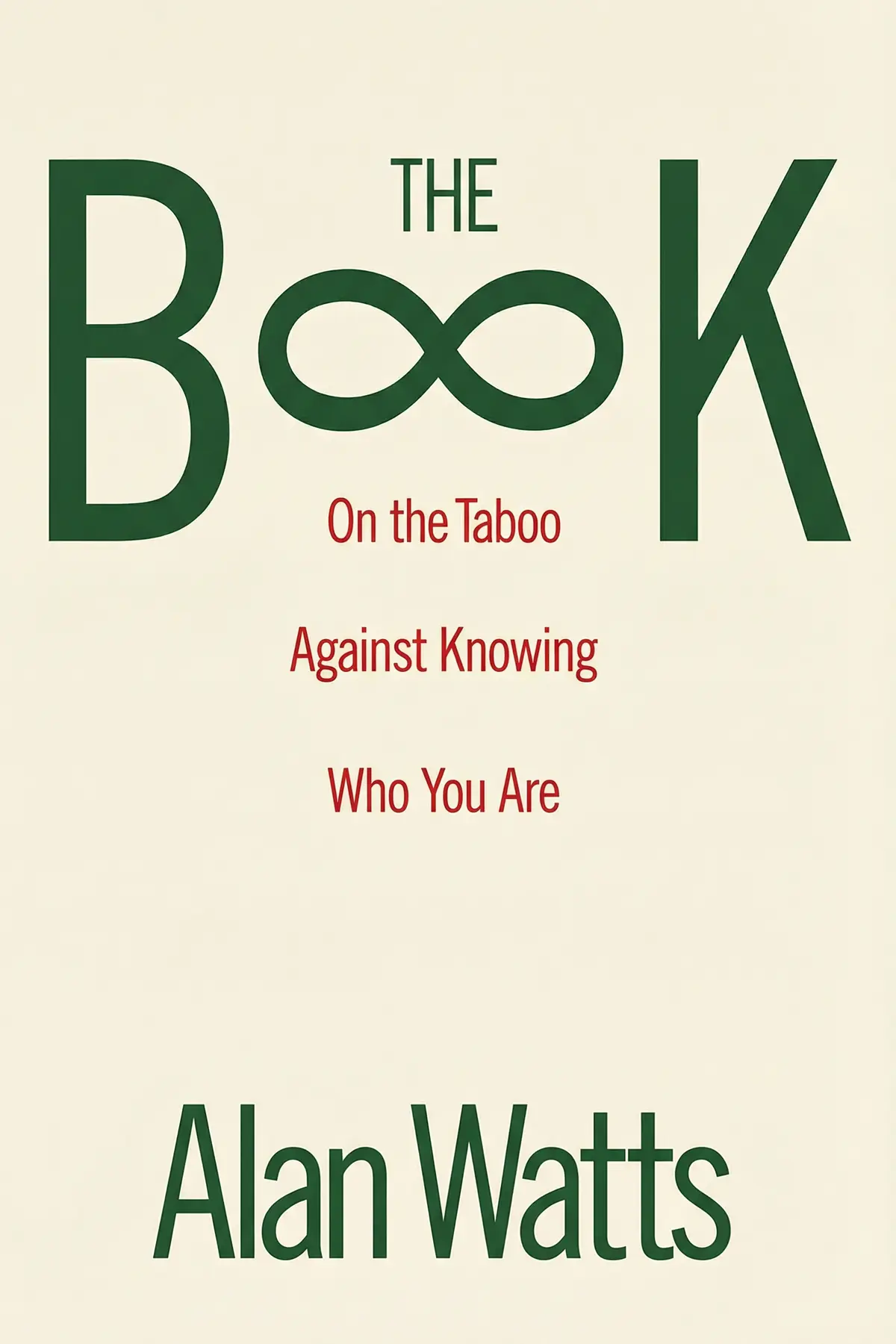
The Book explores the most persistent taboo in modern civilization: the deep-seated misunderstanding of who we actually are. Most people move through life under the impression that they are an isolated ego, a brief spark of consciousness trapped inside a bag of skin, forced to navigate a world that is fundamentally separate from them. Alan Watts argues that this sense of alienation is not only a psychological burden but a total biological and philosophical illusion. Drawing heavily from the ancient Indian traditions of Vedanta and the Upanishads, the text invites readers to recognize that the human individual is not an interloper in the universe but an expression of it. By breaking down Western misconceptions regarding cause and effect, life and death, and the nature of God, the book promises a transformative shift in perspective. It offers a way to move beyond the anxiety of the isolated self toward a sense of unity with all of existence, suggesting that our true identity is the very energy that powers the stars and the seasons.
Alan Watts was an alternative theologian and new-age philosopher who passed away in 1973. He established himself as a prominent specialist in Zen Buddhism as well as other Eastern religions and philosophical traditions. His extensive body of work includes influential publications such as The Way of Zen, The Joyous Cosmology, and The Wisdom of Insecurity.
Alan Watts
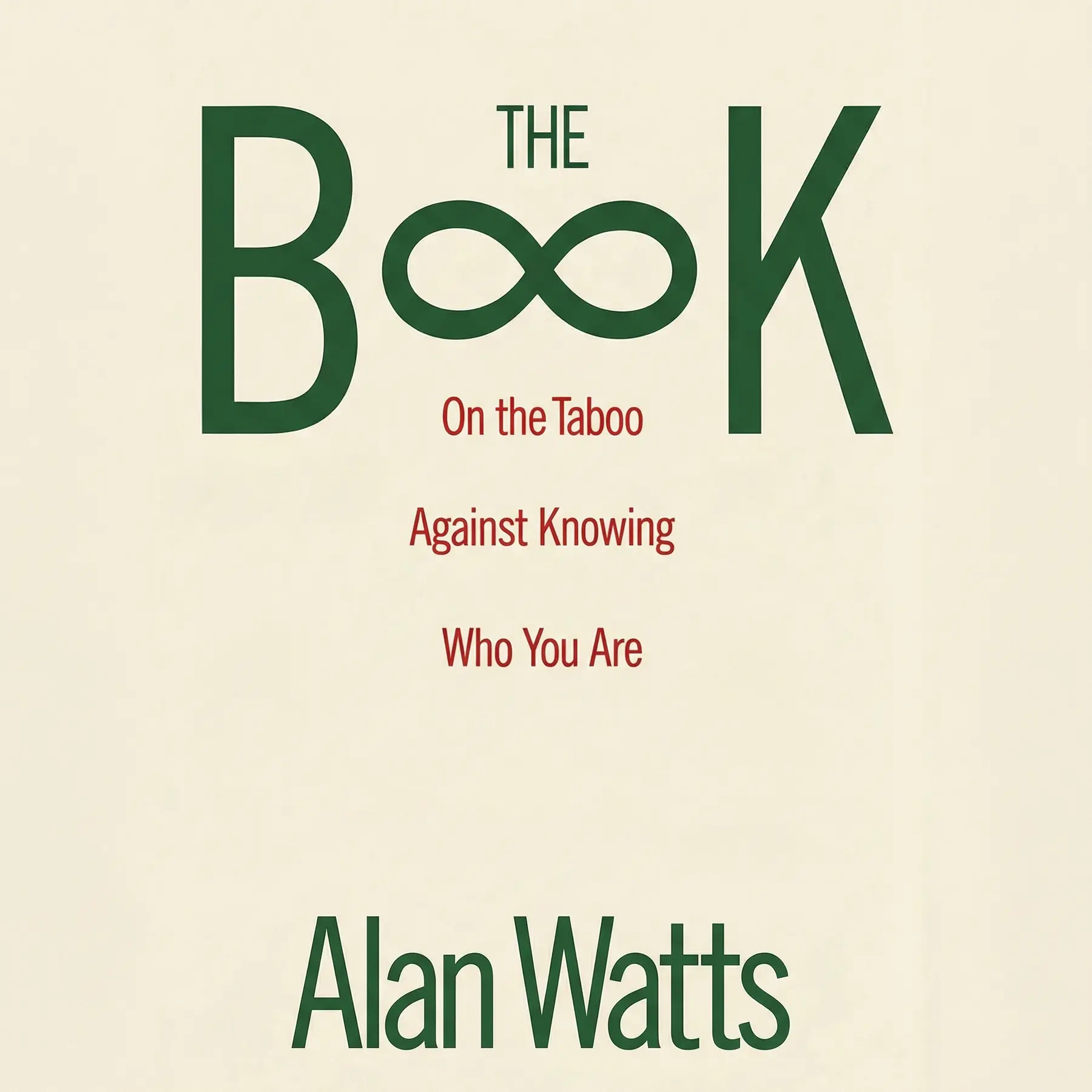
Listeners find this work both profound and indispensable for spiritual seekers, written in a clear style that pushes people to broaden their worldview. The book is frequently called life-changing for the way it shifts perspectives, and one listener mentions its particular value for navigating the challenges of today’s world. However, listeners are divided on its accessibility; while some describe the message as simple and direct, others find the material difficult to follow.
This book acts as a sledgehammer to the ego, and I mean that in the best way possible. Watts has this incredible ability to dismantle the 'separate ego in a bag of skin' myth without relying on heavy religious dogma. To be fair, some of the 1960s cultural references feel a bit dated now, but the core metaphysics are timeless. I found myself putting the book down every few pages just to stare at a tree or my own hands, realizing I’m not just an observer of the universe, but an actual expression of it. It’s a short read, but the implications are massive if you let them sink in. Frankly, it’s essential for anyone feeling disconnected from the world. It won't give you a 'how-to' list for life, but it changes the 'who' that is living it.
Show moreFinally got around to reading Watts, and I feel like I've been asleep for thirty years. This isn't just a book about philosophy; it's a fundamental shift in how you perceive your own existence. The way he explains how we are 'it'—the whole works—is both terrifying and liberating. Personally, I think this is the perfect antidote to the anxiety of the modern world. We spend so much time trying to survive and protect our little egos that we forget we are the very thing we’re afraid of losing. The writing is surprisingly clear for such a heavy topic, though I can see why some might find his conversational style a bit 'loose.' If you are a spiritual seeker who is tired of the same old platitudes, this is the one. It really opens your eyes to the taboo of our own identity.
Show moreEver wonder why society feels like everyone is walking on eggshells or trapped in a game they didn't agree to play? Watts hits the nail on the head here. He explores the 'unwritten taboo' against knowing who we truly are—not the personas we wear for work or family, but the underlying reality of our being. This book is a powerful attack against the 'separate ego' and it totally changed my perspective on death and birth. He describes it as a game of hide and seek that the universe plays with itself, which is such a beautiful and humorous way to look at life. It’s a very readable book, though it does require you to be open-minded. Not everyone will appreciate being told their 'self' is a myth, but for me, it was pure grace.
Show moreThe chapter on 'The Game of Black and White' is worth the price of admission alone. It perfectly illustrates how we can't have light without shadow, or self without other. Watts has a gift for taking complex Eastern thought and making it accessible, even if his style is a bit wordy at times. I’ve read a lot of self-help, but this feels different—it’s not about fixing yourself, but about realizing that the 'you' who needs fixing is a social construct. Some might find it difficult to follow his logic because it doesn't move in a straight line, but that's part of the point. Life isn't a straight line. Essential for seekers.
Show moreNot what I expected from a book written in the sixties; it feels incredibly relevant to our current digital isolation. Watts explains that we aren't just 'thrown' into this world, but that we come out of it, like leaves from a tree. This perspective is so much more comforting than the traditional view of being a lonely soul trapped in a body. I found the writing to be clear and direct, though it definitely challenges your worldview. It’s one of those rare books that makes you feel more awake after you finish a chapter. It addresses the 'taboo' of our identity with such wit and grace that it’s hard not to be moved. If you’re feeling lost in the chaos of modern life, this book offers a profound sense of connection. It’s not just a read; it’s an experience. To be fair, you have to be willing to let go of your traditional Western upbringing to really enjoy it, but the payoff is immense. You'll never look at a sunset—or yourself—the same way again.
Show moreAs someone who usually sticks to Western philosophy, the jump into Eastern metaphysics was surprisingly smooth here. Watts acts as a brilliant bridge, though I must say, many of these ideas aren't exactly 'new' if you've read Hegel or even some of the Neoplatonists like Plotinus. He focuses heavily on the idea that an individual doesn't really exist in isolation, which is a powerful concept to grapple with. However, the book does occasionally feel a bit shallow in its rigor. He tends to gloss over practical realities like self-preservation in favor of a flowing, almost stream-of-consciousness narrative. It’s a delightful read, filled with humor and wit, but don't expect a dense academic treatise. It’s more of a poetic invitation to see the world as a unified field of play rather than a battlefield of separate things.
Show morePicked this up during a particularly stressful month, and it helped ground me in a way I didn't expect. Alan Watts does a fine job of breaking through that narcissistic wall we all build around ourselves. He challenges the idea that we are just observers in a world that is 'outside' of us. The book is essentially an updated take on Vedanta, but written for a Western audience that is obsessed with technology and 'getting ahead.' I did find my eyes glazing over a bit in the middle sections, as the prose can get quite dense and repetitive. Some of the talk about 'cosmic milk' and being part of the 'Whole Everything' can feel a bit 'woo-woo' if you aren't in the right mood. Still, it’s a vital read if you want to stop feeling like a stranger in your own life.
Show moreLook, Alan Watts is a master of the metaphor, but you have to be in the right headspace to really 'get' his flow. He writes with a sense of humor and humanness that is often missing from spiritual texts. I particularly enjoyed his commentary on the 'schizophrenic' nature of Western morality—how we try to be idealistic while being unscrupulously competitive. It’s a sharp critique of society that still feels incredibly relevant today. On the downside, some of his arguments feel like they belong in a 1960s campus coffee shop, and the 'no ego' concept can be a bit much to swallow if you’re looking for practical life advice. It’s more of a metaphysical exploration than a guide for living.
Show moreTruth is, I found the core message here a bit repetitive despite the beautiful prose. The main theme is that there is no ego and we are all part of a singular cosmic process. Okay, I get it. But after the third chapter, I felt like Watts was just finding flowery ways to say the same thing. It started to feel a bit like a lecture from a charming professor who refuses to get to the point. While I appreciate the sentiment of mindfulness, the book lacks a certain groundedness. If a dog bites your leg, you are very much an individual in that moment. It’s an interesting intellectual exercise, but I struggled to find the useful context Watts promised.
Show moreWow, what a bizarre, unfocused experience this turned out to be. I picked this up because of the brilliant quotes I’d seen online, but reading the full text was a different story entirely. To be fair, there are grains of wisdom here, but they are buried under tons of chaff. The flowing nature of the writing makes it hard to stay engaged, and at times, it honestly feels like a stoned hippy unloading a stream of consciousness onto the page. He takes a whole book to state the obvious: that opposites can't exist without each other. He ignores basic human instincts like self-preservation, which makes the whole 'you don't exist' argument feel like a parlor trick. My recommendation? Stick to the highlight reels and save yourself the time. There are much more practical works out there for self-improvement.
Show more
Pico Iyer
Alcoholics Anonymous World Services
William B. Irvine
Daniel Goleman
Nigel Warburton
John Rawls
AUDIO SUMMARY AVAILABLE
Get the key ideas from The Book by Alan Watts, plus 5,000+ more titles in English and Thai.