
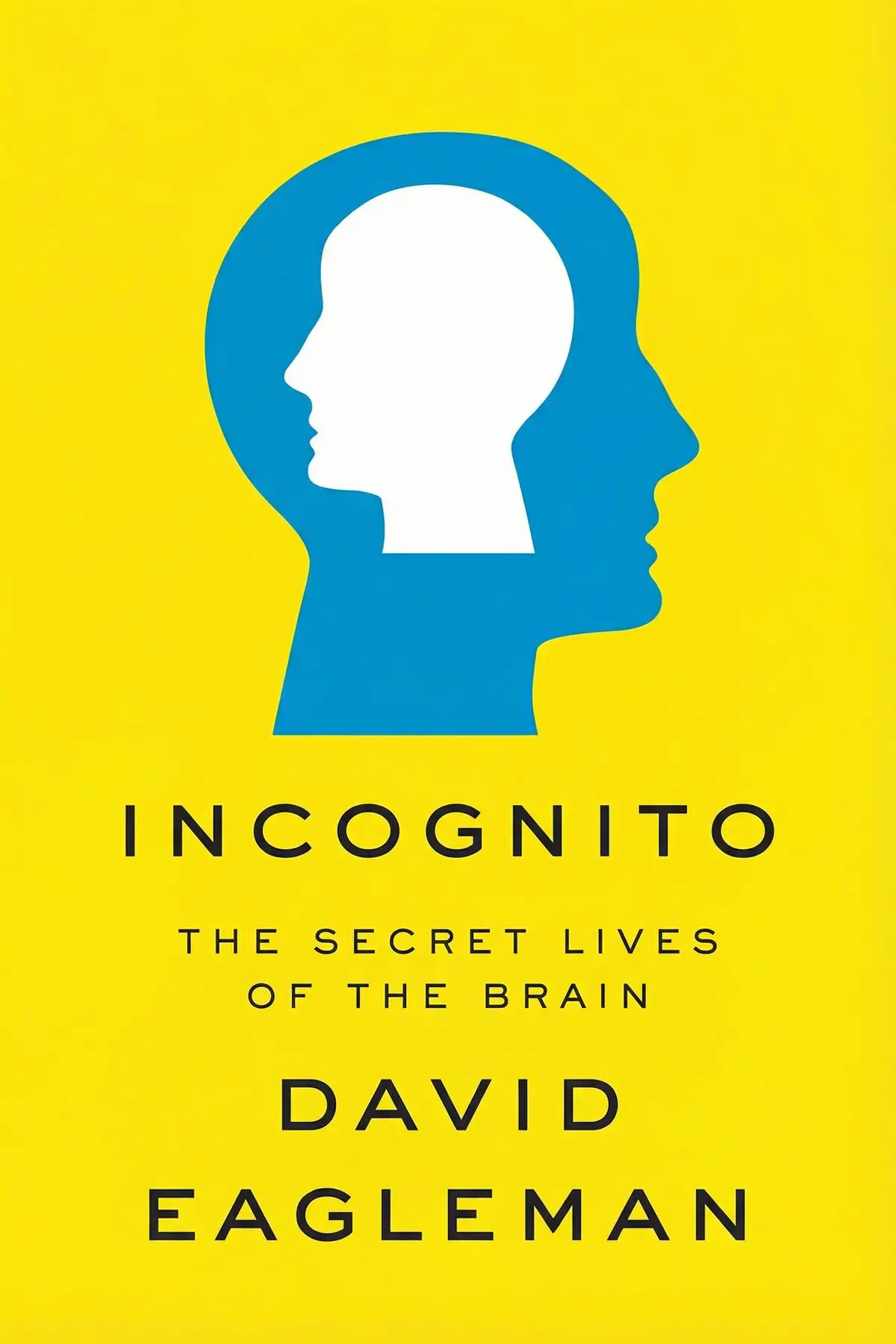
Incognito: The Secret Lives of the Brain
David Eagleman
Explore the three-pound organ that defines your reality. This guide dives into neuroscience to reveal how your brain constructs the world, makes unconscious decisions, and shapes your unique identity and future.
1 min 40 sec
Inside the quiet, dark chamber of your skull sits a three-pound mass of jelly-like tissue that somehow manages to generate everything you have ever experienced. It is the architect of your reality, the keeper of your memories, and the driver of your every desire. Yet, for most of us, this incredible organ remains a complete mystery. We go about our lives assuming that we see the world exactly as it is, that we make our choices with full awareness, and that our ‘self’ is a solid, unchanging entity. But modern neuroscience is beginning to tell a very different story.
In this exploration of the mind, we are going to peel back the layers of our biological programming to see what is actually happening behind the scenes. We will look at how the brain is constantly remodeling itself, how it translates a series of electrical pulses into the vibrant world of color and sound we enjoy, and how it manages the vast majority of our lives without us ever having to think about it. This isn’t just a look at biology; it is a journey into the throughline of your identity.
The central theme we will follow is that the brain is not a finished product. It is a dynamic, live-wired system that is in a state of constant flux, shaped by every interaction and every moment of your life. By understanding the inner workings of this complex system, we can begin to answer some of the deepest questions about consciousness, free will, and what the future might hold for the human species. So, let’s begin by looking at how your brain prepares itself for the world from the very moment you are born.
2 min 32 sec
Discover why humans are born with ‘unfinished’ brains and how this biological vulnerability is actually our greatest strength, allowing us to adapt to any environment on Earth.
2 min 20 sec
Explore the surprising truth that the world you see, hear, and feel is an internal construction rather than a direct reflection of the outside world.
2 min 28 sec
Peel back the curtain on the vast majority of your brain’s activity that happens without your permission or awareness.
2 min 18 sec
Learn why we often feel conflicted when making choices and how the brain functions as a boardroom of competing interests rather than a single unified voice.
2 min 20 sec
Discover why our brains are fundamentally wired for social interaction and how our biological survival depends on our ability to understand others.
2 min 20 sec
Peek into the coming era where we may transcend our biological limits through sensory substitution, brain-machine interfaces, and digital consciousness.
1 min 56 sec
As we conclude this journey through the three-pound universe inside your head, the throughline becomes clear: your brain is a dynamic, living system that is far more flexible and complex than we ever imagined. We have seen that we are born unfinished, with brains that are uniquely designed to be sculpted by the world around us. We have discovered that the reality we experience every day is a brilliant internal construction, a narrative woven from electrical signals and interpreted through our own personal history.
We’ve also pulled back the veil on the hidden unconscious, revealing the vast machinery that handles our skills and drives our instincts without us ever having to think about it. We’ve explored the internal boardroom where our decisions are fought over by competing neural networks, and we’ve recognized that we are fundamentally wired for social connection, with brains that are built to resonate with the experiences of others. Finally, we’ve looked toward a future where technology might allow us to break free from our biological constraints and redefine what it means to be human.
The most important takeaway is the realization that you are not a fixed, finished product. Your brain is changing in response to this very moment. By understanding how your brain works, you gain a new perspective on your own thoughts, emotions, and behaviors. You can begin to see yourself as a work in progress, with a capacity for growth and adaptation that is literally built into your biology. The mystery of the brain is, ultimately, the mystery of ourselves. And while there is still so much we don’t know, every new discovery brings us one step closer to understanding the incredible miracle that is the human mind. Take this knowledge with you and remember: every experience you have, every person you meet, and every idea you entertain is a part of the ongoing process of building your brain.
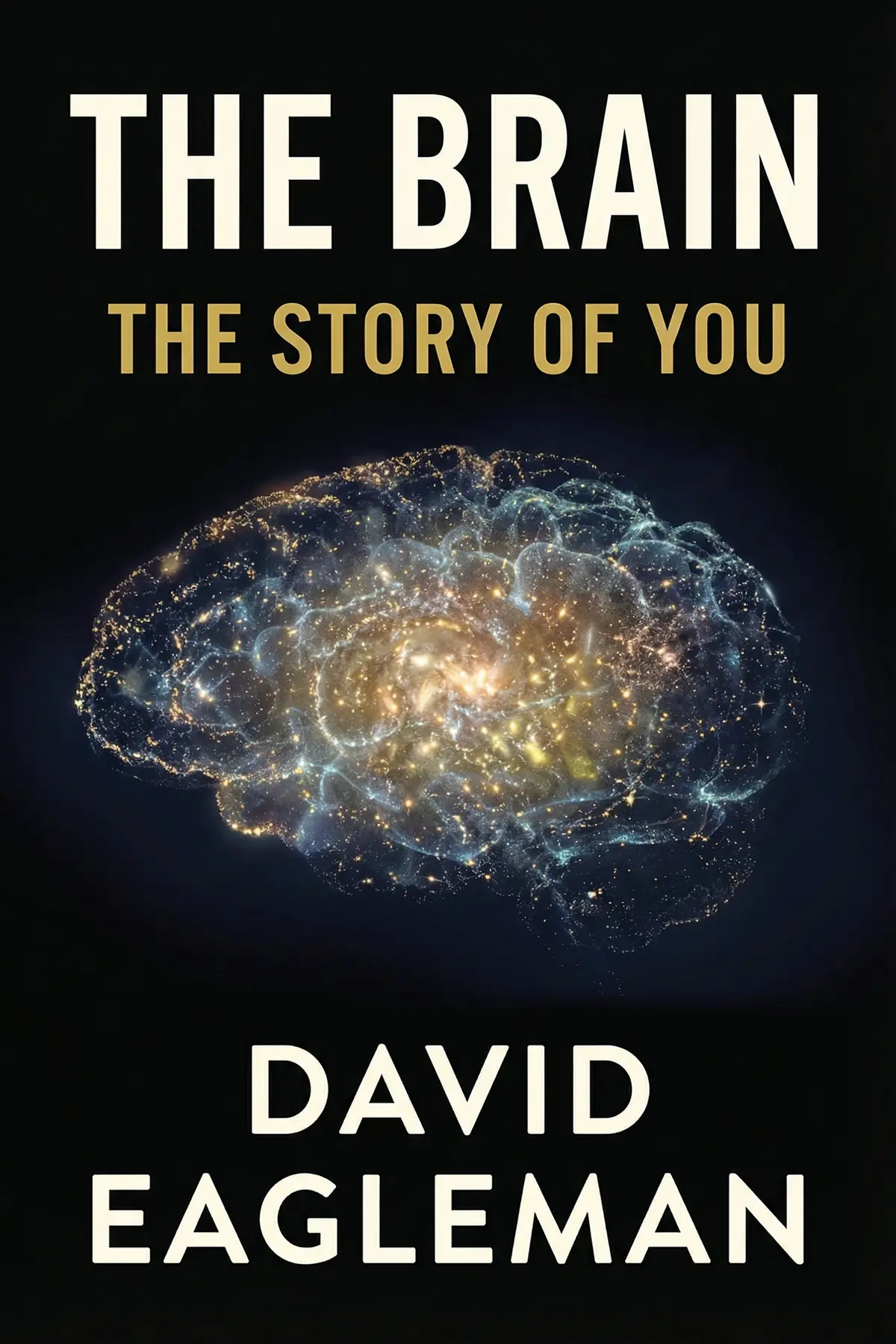
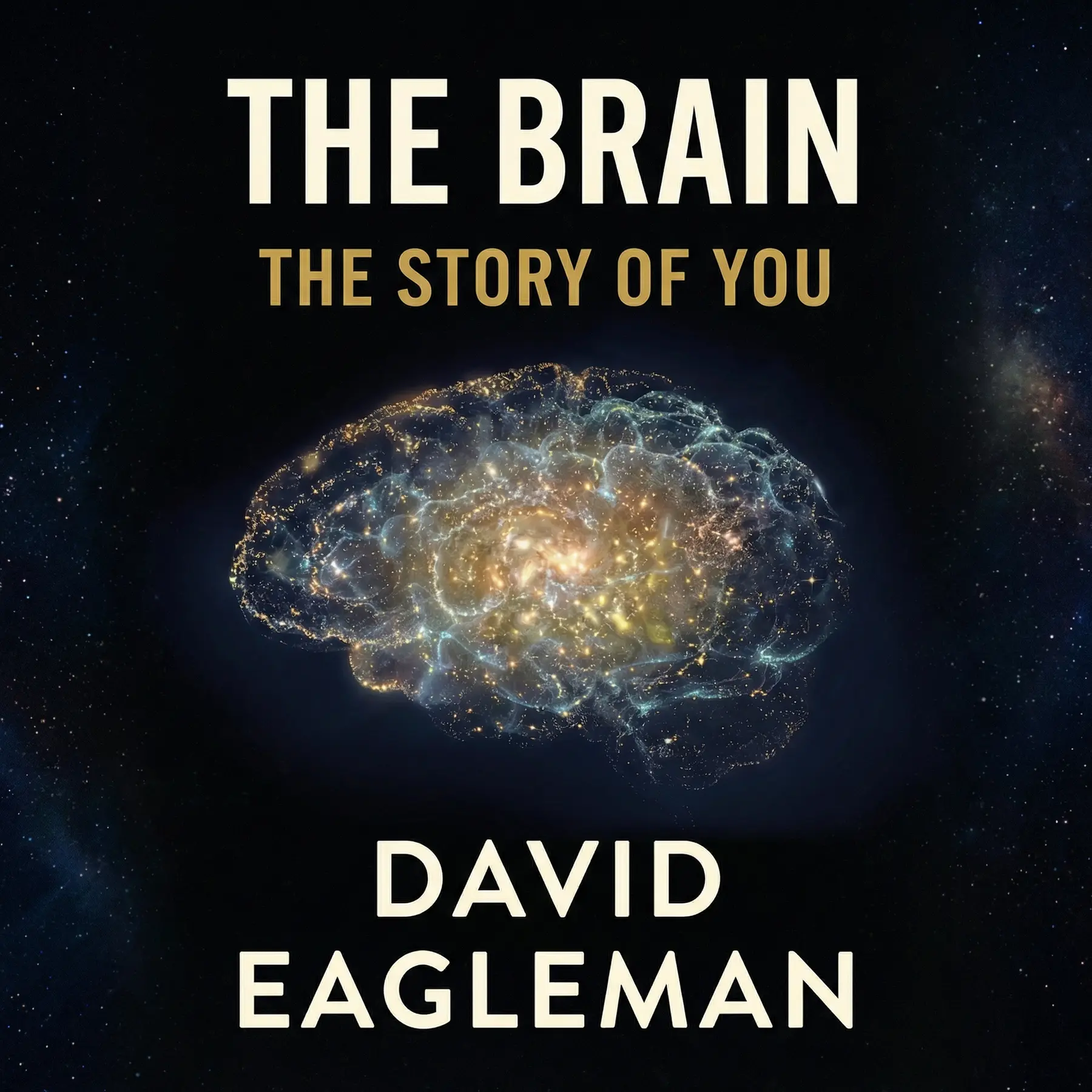
The Brain explores the most complex structure in the known universe: the human mind. It takes you on a journey from the microscopic connections between neurons to the grand scale of human social interaction and the future of our species. The book challenges the common assumption that we see the world as it truly is, showing instead that our reality is a sophisticated construction tailored by our biological needs. You will discover the hidden processes that drive your daily actions, many of which happen entirely without your conscious awareness. By examining the brain’s incredible plasticity, the narrative explains how our experiences literally rewire our physical structure. Beyond individual biology, it looks at how our brains are fundamentally designed to connect with others and how technology might soon allow us to transcend our current biological limits. The promise of this exploration is a deeper understanding of what it means to be human and an appreciation for the silent, lightning-fast calculations that create every moment of your life.
David Eagleman is a neuroscientist and an adjunct professor at Stanford University in California. A highly respected figure in the scientific community, his research has been featured in leading peer-reviewed journals such as Science and Nature. Eagleman is also a successful author, known for the science-focused Incognito: The Secret Lives of the Brain and the creative novel Sum: Forty Tales from the Afterlives. He further extended his reach by writing and presenting the BBC television series The Brain, which serves as a companion to his written work.
David Eagleman
David Eagleman
Listeners find the material both thought-provoking and captivating, offering excellent insights into the mechanics of the human mind while steadily pushing the boundaries of their comprehension. Furthermore, the prose is perfectly tailored for an educated non-specialist audience, and listeners value the way it demystifies intricate ideas with clarity and respect. The subject matter is also thorough; one listener mentions it covers the same ground as the PBS series, and another points out the fascinating portion regarding emergent properties.
Ever wonder why you feel like a consistent 'you' even though your body is constantly replacing its atoms? David Eagleman explores this beautifully, stripping away the dense jargon usually found in neuroscience to tell a story that feels deeply personal. He describes our perception of reality as a personalized television show that only we can see, which is both a comforting and slightly eerie thought. I was particularly fascinated by the discussion on how our brains are 'unfinished' at birth compared to other animals. This lack of hardwiring is exactly what allows for our incredible human adaptability. While some parts felt a bit light on the raw data, the narrative flow more than makes up for it. It is a gorgeous exploration of the inner cosmos that makes you realize you are a work in progress. Truly, this is the perfect starting point for anyone curious about why they think and feel the way they do.
Show moreEagleman has a rare gift for making the complex feel intuitive. He uses this brilliant metaphor of consciousness being like the CEO of a massive corporation. Most of the work is done by thousands of departments downstairs—our subconscious—and the CEO only gets involved when there's a major crisis or a new direction needed. It’s such a clear way to understand why we do so much on autopilot. The book is comprehensive but never feels like a slog. I found myself highlighting passages about how our brains are literally rewired by our experiences. The truth is, we aren't just one static 'self' but a shifting collection of processes. My only minor gripe is that the final chapter on the future of humanity felt a little disconnected from the rest of the biological focus. Still, for an intelligent layperson, this is an absolute gem of a book.
Show moreThe chapter on decision-making completely changed my perspective on our legal system. Eagleman argues that instead of just punishing 'bad' people, we should look at how we can rewire brains to help people make better choices. It’s a much more humane and scientifically grounded approach to justice. The book is full of these kinds of 'aha' moments. I loved the discussion on how our emotions aren't just distractions but are actually vital for making sound decisions. Robots might be logical, but they’d be terrible at navigating the real world without the gut feelings we rely on. The prose is snappy and the pacing is perfect for a weekend read. While it might skip over some of the deeper chemical processes, it provides a fantastic bird's-eye view of the landscape of the mind. It’s the kind of book you’ll want to talk about with everyone you meet.
Show moreWow, what a ride. I’ve read a few books on the brain before, but none have been quite as 'cinematic' as this one. Eagleman writes with a sense of wonder that is totally infectious. He manages to bridge the gap between hard neuroscience and deep philosophy without breaking a sweat. I particularly enjoyed the section on how our memories aren't like video recordings, but are actually reconstructed every time we recall them. It’s a bit scary to think about how much of our 'identity' is based on potentially flawed data! The book is beautifully paced and covers a massive amount of ground in just six chapters. If you’ve ever wondered why you can drive a car while thinking about something else entirely, this book has the answer. It’s an insightful, engaging, and genuinely challenging look at the most complex object in the known universe.
Show morePicked this up on a whim and couldn't put it down. The way Eagleman describes the brain as a 'shifting super-organism' is just fascinating. He moves from the individual neuron up to how entire societies interact, showing that we aren't as isolated as we think. The book is packed with great information about how the human brain works, and I loved the section on how we can expand our sensory inputs. Could we one day feel the invisible waves of the internet? It sounds crazy, but he makes a compelling case. The writing is clear and avoids the dry, academic tone that plagues so many science books. I will say that the final chapter felt a little rushed, almost like he was trying to fit too many futuristic ideas into too few pages. But overall, it's a stellar read that really makes you appreciate the three-pound organ sitting inside your head.
Show moreFinally got around to reading this after seeing Eagleman’s PBS special, and it’s a solid companion piece. The book follows the structure of the show closely, which makes the information very easy to digest for a casual reader. He manages to explain things like how the brain creates a sense of time or how we make decisions without getting bogged down in numbing detail. To be fair, if you’ve already read a lot of Sacks or Pinker, you might find some of the material a bit introductory. However, Eagleman’s writing style is so engaging that even the familiar topics feel fresh. I especially liked the section on how we are social creatures down to our very neurons. The way he explains empathy through neural simulation really clicked for me. It's a quick read but one that lingers in your mind long after you finish the last page.
Show moreThis book acts like a guided tour through your own skull. It asks the big philosophical questions—Who am I? What is real?—and then provides answers based on the latest research. I was particularly struck by the chapter 'Do I Need You?' which looks at the social brain. Eagleman explains how we are hardwired for empathy, but also how that same hardware can be manipulated by propaganda to dehumanize others. It’s a sobering look at how genocide becomes neurologically possible when we turn off our 'social' circuits. The writing is incredibly accessible and never condescending, which I appreciated. Not gonna lie, some of the experiments he describes are pretty mind-blowing, like the idea of feeling stock market data through a vest. It makes the future feel both exciting and a little terrifying. This is highly recommended for anyone who wants to understand the hardware behind their own thoughts.
Show moreFrankly, some of the stuff about sensory augmentation sounds like pure sci-fi, but it’s apparently happening now. The idea that we could 'hear' through our skin or 'see' through our tongues is just wild. Eagleman does a great job of explaining the brain’s plasticity—how it doesn't care where the data comes from, as long as it can find a pattern. I did find the later sections on uploading consciousness to be a bit too speculative for my taste. It felt like we moved from hard science into 'what if' territory very quickly. However, the first four chapters are incredibly solid. The explanation of 'emergent properties'—how billions of simple parts create one complex consciousness—was a major highlight. It’s an engaging read, though perhaps a bit light for someone who already has a degree in biology. It is perfect for a casual reader who wants a mind-expanding experience.
Show moreIf you're looking for a deep dive into synaptic chemistry, look elsewhere. This is very much a 'big picture' book designed for the intelligent layperson. Eagleman focuses on the 'story' of the brain, rather than just the mechanics. Personally, I found his explanation of why humans have such a long childhood compared to other animals to be the most interesting part. Our brains stay 'plastic' for so long so we can learn from our specific environment. It’s a brilliant trade-off. The tone is casual and conversational, making it easy to read a few pages before bed without getting a headache. To be fair, I think the book relies a bit too much on the 'Matrix' analogies at times, which can feel a little repetitive. But as an introduction to the field? It’s hard to beat. It makes you realize just how much of your daily life happens beneath the surface of your awareness.
Show moreAs a professional in the field of neuroscience, I found this book profoundly disappointing and intellectually dishonest. Look, I understand the need to simplify complex topics for a general audience, but there is a massive difference between simplification and presenting speculative fiction as established fact. Eagleman makes bold claims about memory storage and the 'illusory' nature of reality that simply aren't supported by rigorous peer-reviewed research. He almost suggests we're living in a version of The Matrix, dismissing the physical reality of sound waves and light photons as mere constructs. It’s sensationalist and irresponsible. The section on uploading consciousness to a computer is pure conjecture, bordering on sci-fi rather than actual science. Frankly, it’s frustrating to see such a high-profile figure prioritize 'hooks' over accuracy. If you want real science, stick to actual textbooks or authors who acknowledge the vast unknowns in our field. This is pop fiction dressed in a lab coat.
Show more


J. Craig Venter
Richard Wiseman
Carl Zimmer
Bill Bryson
AUDIO SUMMARY AVAILABLE
Get the key ideas from The Brain by David Eagleman, plus 5,000+ more titles in English and Thai.







