
Incognito: The Secret Lives of the Brain
David Eagleman
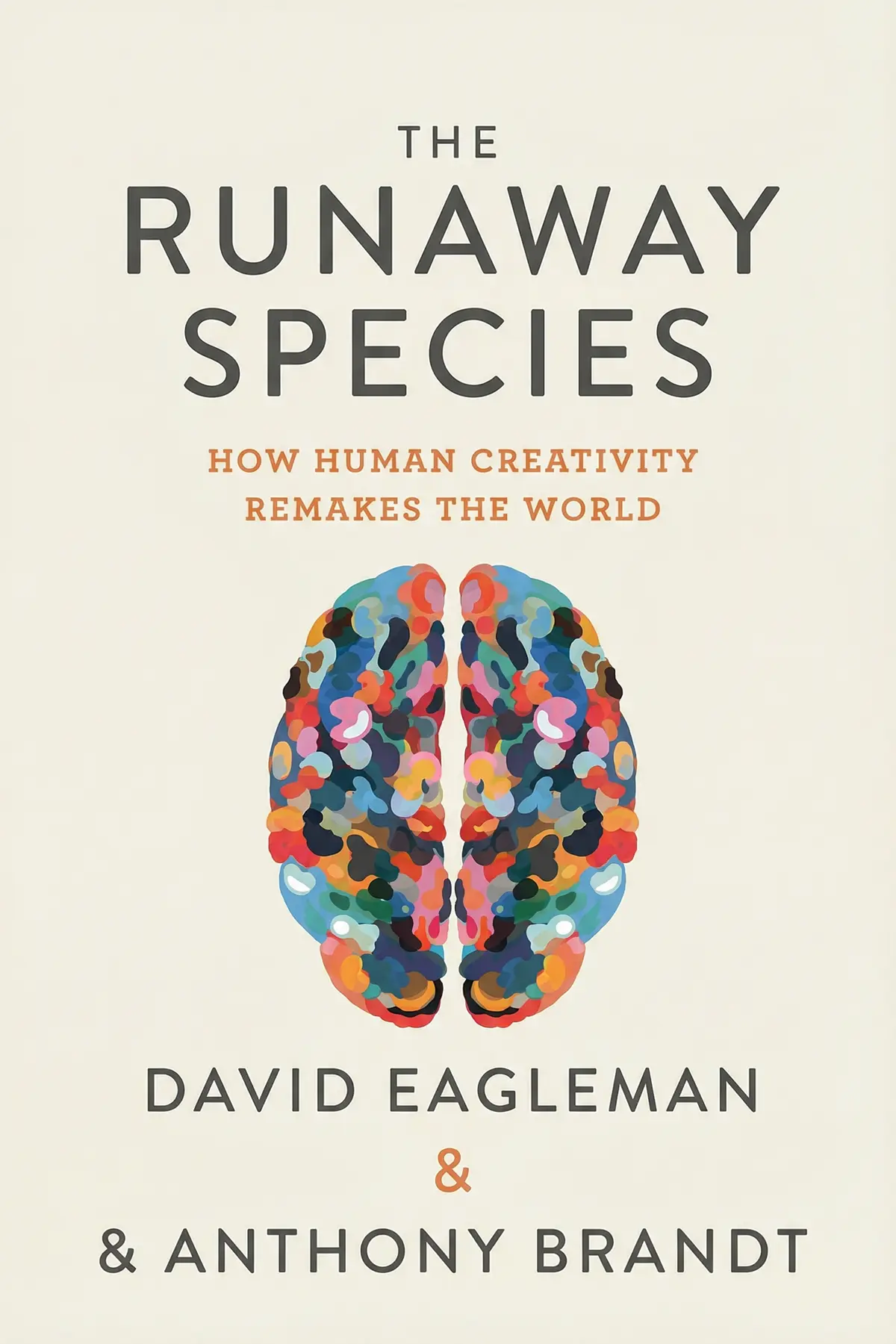
Explore the cognitive mechanisms behind human innovation. This summary reveals how our brains use bending, breaking, and blending to transform old ideas into revolutionary breakthroughs across science, technology, and the arts.
1 min 34 sec
Why is it that human beings are never satisfied with the status quo? While other species are content to live in the same types of nests or hunt with the same techniques for millennia, humans are constantly upgrading, redesigning, and reimagining everything around them. This relentless drive is the subject of our exploration today. We are looking at the core of what makes us the ‘runaway species’—a creature defined by its cognitive capacity to take the world as it is and turn it into something else entirely.
Creativity often feels like a mysterious, lightning-bolt moment of inspiration that strikes the lucky few. But as we will see, innovation is actually a biological and environmental process that follows specific, repeatable patterns. It is less about creating something out of thin air and more about the art of the remix. By understanding how our brains process information and inherited ideas, we can unlock a more consistent and powerful creative practice.
In this journey, we will establish a throughline: creativity is a systematic reshaping of existing templates. We’ll look at the three primary tools our brains use to do this—bending, breaking, and blending. We’ll also see why the path to a great idea is paved with hundreds of ‘bad’ ones and how we can build environments that keep this creative engine running. Whether you are an artist, a scientist, or a business leader, these principles provide the foundation for understanding how we, as a species, continue to remake our world.
2 min 17 sec
Discover why even the most revolutionary inventions are actually deep adaptations of the past, proving that every giant leap forward is built on the shoulders of forgotten predecessors.
2 min 31 sec
Explore the creative technique of ‘bending,’ where existing models are stretched or modified to solve problems, from the engineering of artificial hearts to the structure of modern drama.
2 min 36 sec
Learn how fracturing objects and concepts into smaller pieces can lead to radical new forms of expression and efficiency in art, cinema, and even language.
2 min 27 sec
Discover the power of ‘blending,’ where the fusion of two unrelated ideas creates something entirely new, from ancient mythological creatures to modern genetic engineering.
2 min 26 sec
Learn why the most successful innovators don’t aim for one perfect idea, but instead produce a vast quantity of options, embracing failure as a necessary part of the process.
2 min 51 sec
Discover how the most innovative organizations move beyond current problems to anticipate future challenges, fostering a culture where experimentation and risk-taking are the norm.
1 min 34 sec
The Runaway Species reminds us that we are all, by nature, innovators. Our brains are uniquely hardwired to take the legacy of the past and transform it through the three core processes of bending, breaking, and blending. We have seen that the iPhone was a remix of the past, that artificial hearts were bent from pumps into fountains, and that the most successful creators like Carver and Edison succeeded because they were willing to fail frequently and in public.
The throughline of our discussion is that creativity is not a rare gift, but a cognitive habit. It is the result of taking the world apart and putting it back together in surprising ways. It requires us to move away from the search for a single ‘perfect’ idea and instead embrace a strategy of abundance and experimentation. It also challenges us to build cultures—in our homes, schools, and offices—that value the ‘what if’ over the ‘what is.’
As you move forward from this summary, try to apply one of these tools to a challenge you are currently facing. Could you ‘bend’ a standard procedure to make it more efficient? Could you ‘break’ a complex problem into smaller, more manageable pieces? Or perhaps you could ‘blend’ a solution from a completely different field into your own work. Remember that every great breakthrough began as a version of something else. By consciously recycling and reshaping the world around you, you participate in the great human tradition of remaking the future.
The Runaway Species examines the fundamental drive that separates humans from other animals: our relentless need to innovate. While most species adapt to their environments over millions of years through biological evolution, humans use their unique brain structure to remodel the world in real-time. By looking at examples ranging from the evolution of the smartphone to the masterpieces of Picasso, the authors demonstrate that creativity is not a mystical gift reserved for a few geniuses. Instead, it is a systematic process of recycling what already exists. The book promises to demystify the creative process by identifying three core mental operations: bending, breaking, and blending. It explains how these tools allow us to take inherited ideas and reshape them into something entirely new. Beyond individual creativity, the text explores how organizations and schools can foster an environment of experimentation. Ultimately, it provides a roadmap for staying ahead in a fast-paced world by embracing failure, generating abundant options, and looking toward future challenges rather than just solving current ones.
Anthony Brandt is an acclaimed composer and a professor of music at Rice University. His musical compositions include an oratorio and two chamber operas. David Eagleman is a neuroscientist at Stanford University and the internationally best-selling author of The Brain, Incognito, and other works.
David Eagleman
David Eagleman
David Eagleman
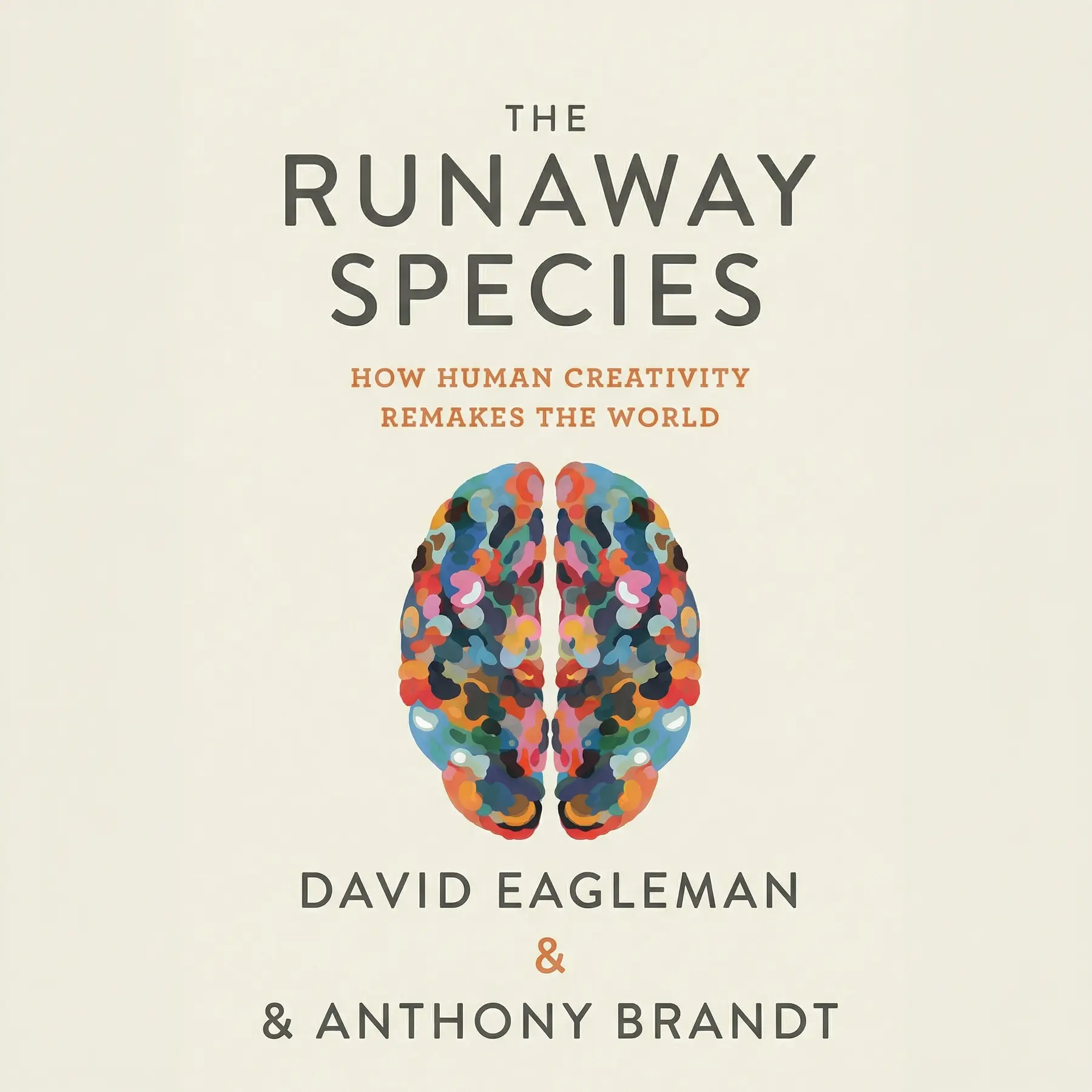
Listeners find the book absorbing and accessible, offering great perspectives on creativity along with a wonderful mix of scientific study and artistic arrangement. They value its informative nature, with one listener noting how it helps us understand who we are and another mentioning dozens of fascinating stories of perseverance. Views on the caliber of the research are varied among listeners.
Finally finished this deep dive into the human psyche and I’m genuinely impressed. Brandt and Eagleman provide a compelling look at the "three Bs"—bending, breaking, and blending—to explain how we innovate. It’s not just about art; it’s about how scientific breakthroughs like Apollo 13 share the same DNA as a Picasso painting. The writing is incredibly accessible, moving quickly between neuroscience and historical anecdotes without losing the reader in jargon. While some might find the optimism a bit much, I found the message about our inherent drive to refashion the world quite motivating. The book itself is beautiful, filled with color images that illustrate the concepts perfectly. This is a must-read for anyone who feels stuck in a creative rut.
Show moreWow, what a refreshing take on how we interact with the world around us. This book isn't just about "being an artist"; it's about the fundamental way the human brain functions to create new versions of reality. The concept of "proliferating options" really stuck with me—the idea that you have to let most of your ideas die to find the one that actually works. The authors do a fantastic job of showing how even "failed" ideas aren't waste, but seeds for future success. With its vibrant images and clear prose, it’s one of the most engaging nonfiction books I’ve picked up this year. It genuinely inspired me to take more risks in my own professional work and rethink my approach to problem-solving.
Show morePicked this up because I’m a writer, and I was looking for some inspiration to kickstart my creative process. The authors’ observations on how we "bend" reality—like how a novelist might take their own life and refashion it into fiction—were incredibly insightful. I loved the idea that art isn't divorced from our experience, but is actually our experience in its most distilled form. The advice to not commit to the first solution you find is something every creator needs to hear regularly. While the tone can be a bit self-congratulatory regarding human achievement, the enthusiasm is infectious. It’s a beautiful book that celebrates the messy, iterative, and wonderful process of bringing something new into existence through constant trial and error.
Show moreAs a teacher, I found the sections on reforming education to be the most vital part of the text. The authors argue that we need to foster risk tolerance in students rather than just rewarding the "correct" answer every time. By encouraging kids to go "different distances from the hive," we can actually prepare them for a world that requires constant adaptation. I loved the examples of how the brain seeks a balance between the familiar and the surprising. It’s a beautifully designed book with an attractive layout that makes it easy to digest in short bursts. My only gripe is that the research feels a bit thin in spots, relying more on stories than hard data to prove its points.
Show moreThe collaboration between a neuroscientist and a composer results in a uniquely rhythmic look at human innovation. It’s rare to see a book that treats a patent for a blouse by Einstein with the same level of intellectual curiosity as the development of the Gregorian calendar. I particularly enjoyed the discussion on "repetition suppression" and why we eventually get bored with the status quo. This innate hunger for novelty is what drives the "runaway" nature of our species. While the sheer volume of examples can be a mind-numbing whirl at times, the overarching framework remains sturdy. It’s a great pick for anyone looking to understand the bridge between the arts and the sciences and how they feed into each other.
Show moreTo be fair, this is more of a sociological survey than a hard science book, but that doesn't make it any less interesting. I was fascinated by the section on how we seek the "sweet spot" between the familiar and the completely new. Think about how Tesla car doors open upwards—it's a blend of a standard car and something futuristic that we've seen in sci-fi. Brandt and Eagleman argue that we are constantly remixing our experiences to push the boundaries of what is possible. Personally, I found the layout and the font choices to be a huge plus; it’s a book that practices what it preaches regarding design. It’s a solid 4-star read that offers plenty of food for thought for any curious mind.
Show moreEver wonder why humans are the only species that constantly tries to "upgrade" everything around them? This book attempts to answer that by looking at the specific ways our brains process and remix existing information. I appreciated the visual nature of the book; the diagrams and photos really help to clarify the "break and blend" concepts. However, to be fair, a lot of the advice feels a bit like preaching to the choir. Most people interested in creativity already know that we should "think outside the box" or "tolerate failure." It's a fun read and very engaging, but it might not offer many "aha!" moments if you've already read a lot of popular psychology on the same subject.
Show moreLook, I love David Eagleman’s work, but this one felt a little bit like "Creativity for Dummies" at times. The "bend, break, blend" model is a helpful way to categorize ideas, but I wanted more of the gritty neuroscience behind why our brains do this. Instead, we get a lot of anecdotes about things like Esperanto and the Apollo 13 mission. These are entertaining stories, for sure, but they don't always feel like they're building toward a meaningful scientific conclusion. It’s a quick, breezy read that will definitely make you feel good about being human. Just don’t expect a deep dive into the mechanics of neurons or complex cognitive mapping that explains the 'why' instead of the 'how'.
Show moreThe chapter on the various ways we "break" existing ideas to create new ones was the highlight for me, though the book as a whole has some issues. There are moments where the authors throw so many factoids at you—from the Wright brothers' wing surfaces to Edison's phonograph—that your head starts to spin. I found myself wishing they would spend twenty pages on one deep case study rather than two pages on ten different ones. It starts to feel a bit repetitive after a while, as if the authors are trying to prove the same point over and over with different names. Still, it’s an easy read and the central thesis about the "three Bs" is quite memorable and useful for brainstorming.
Show moreNot what I expected after hearing so much praise for Eagleman's previous work. While the premise is fascinating, the execution feels like a never-ending list of "did you know" facts that eventually lose their impact. In one short section, we are bombarded with Hemingway, Audi vehicles, and the Wright brothers, leaving no room for actual depth or analysis. Frankly, it felt more like a coffee table book than a serious exploration of the creative brain. The advice to "proliferate options" is solid but hardly groundbreaking, and the tone often drifts into self-congratulatory territory. If you want a collection of trivia about inventions, this is fine, but don't expect a rigorous scientific treatise with new neurobiological insights.
Show more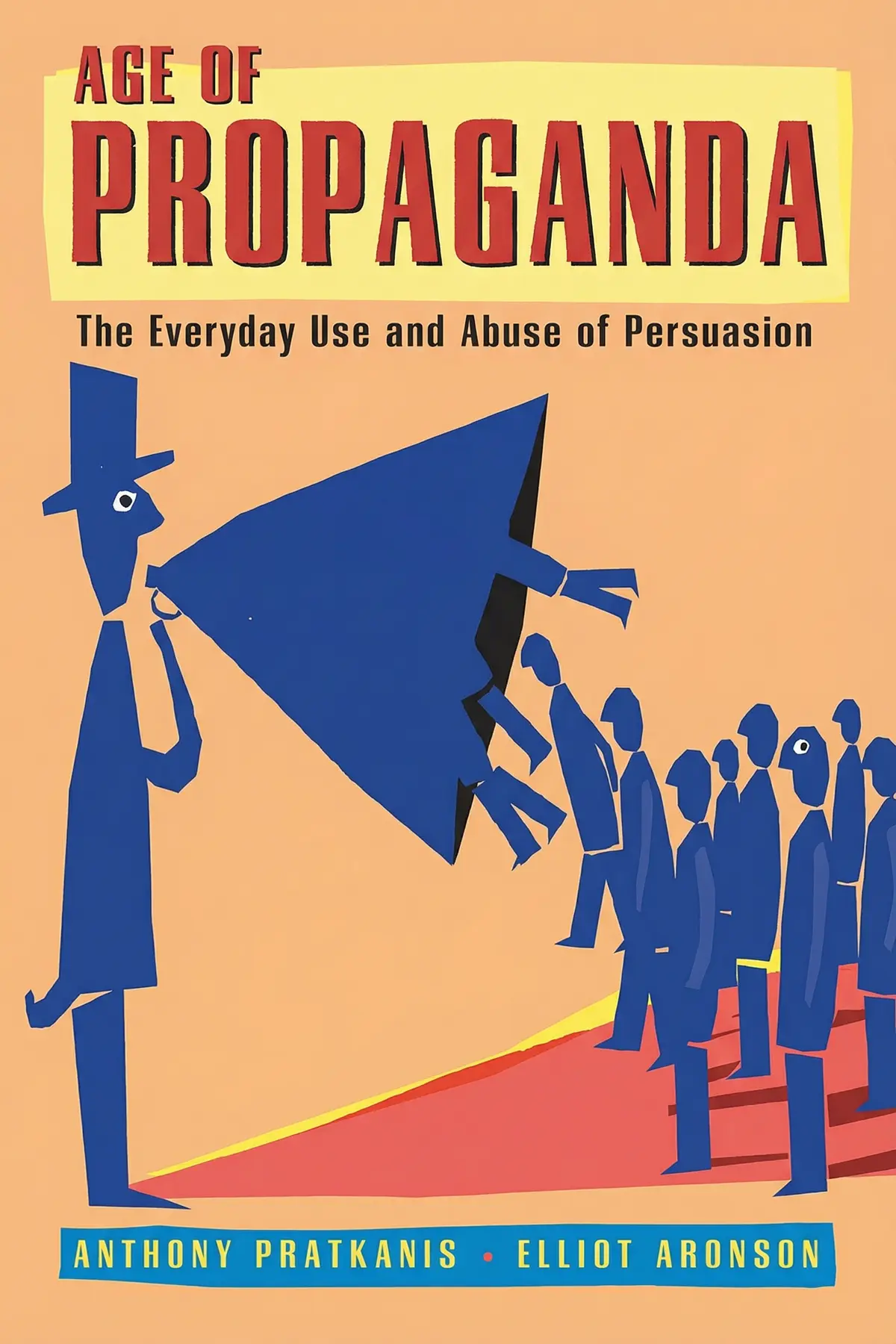
Anthony Pratkanis
Virginia Woolf
Richard Wiseman
AUDIO SUMMARY AVAILABLE
Get the key ideas from The Runaway Species by Anthony Brandt, plus 5,000+ more titles in English and Thai.







