
16 min 42 sec
The Brain’s Way of Healing: Stories of Remarkable Recoveries and Discoveries
The Brain’s Way of Healing explores the revolutionary potential of neuroplasticity, revealing how specific sensory stimulations and lifestyle changes can trigger the brain’s innate ability to repair itself and overcome chronic conditions.
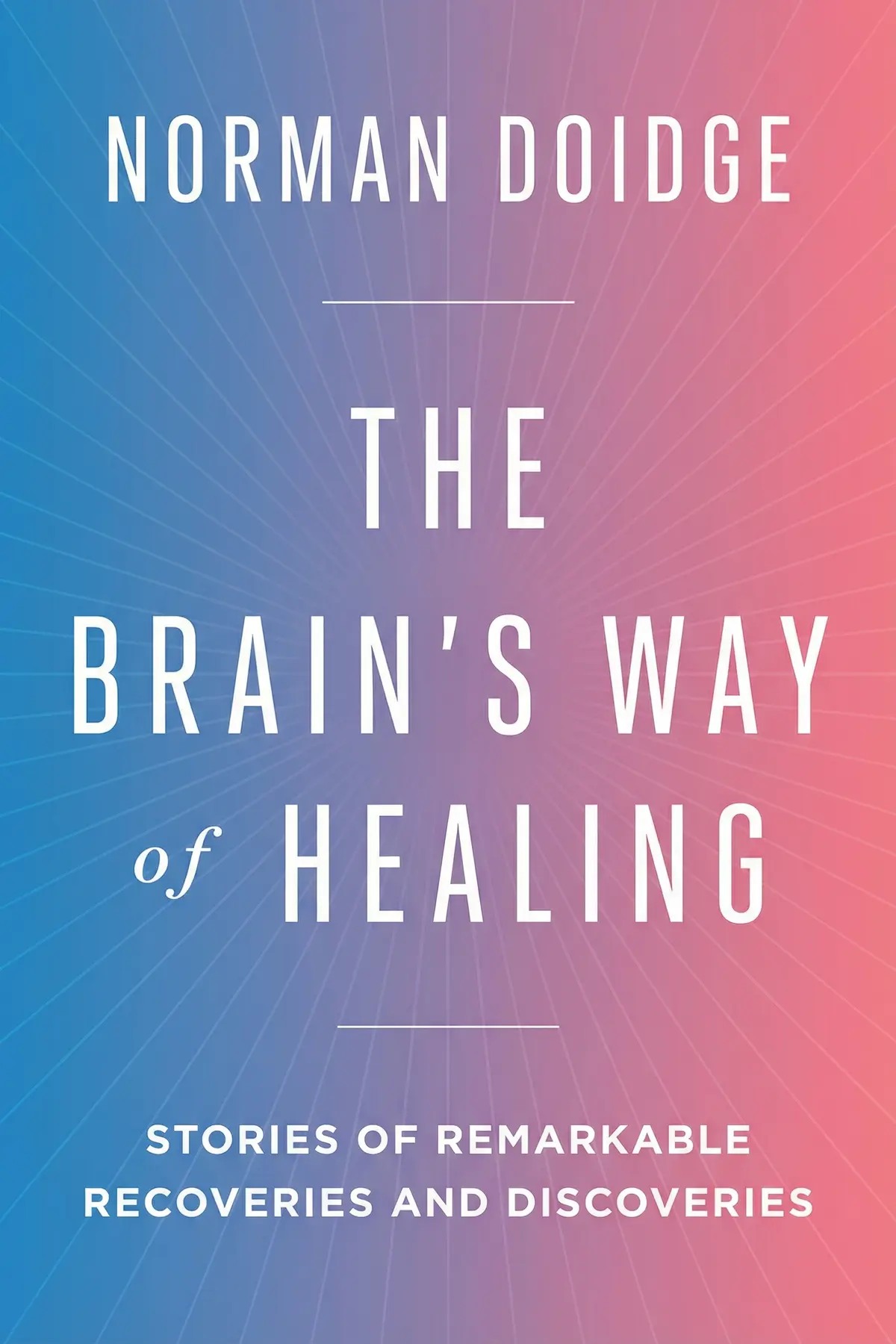
Table of Content
1. Introduction
1 min 45 sec
For centuries, the medical world operated under a somewhat grim assumption: that the adult brain was a rigid, unchangeable organ. We were taught that if a specific area of the brain was damaged by injury or disease, the functions associated with that area were lost forever. The brain was compared to a machine with fixed parts—once a circuit was broken, the system was permanently compromised. However, a massive shift has occurred in our understanding of the human mind, and it is this transformation that sits at the heart of The Brain’s Way of Healing.
Norman Doidge takes us on a journey into the world of neuroplasticity, the brain’s remarkable ability to change its own structure and function in response to activity and mental experience. This isn’t just a theoretical concept; it is a practical, life-altering reality for people who were once told their conditions were incurable. Through this summary, we will explore how the brain doesn’t just process information, but actually grows and repairs itself when given the right environmental and sensory cues.
We are going to look at the intersection of neuroscience and holistic recovery. We will see how the brain uses energy—in the forms of light, sound, and motion—to bypass damaged areas and forge new pathways. This isn’t about a single ‘miracle cure,’ but rather a fundamental shift in how we interact with our own biology. By understanding the principles of neuroplasticity, we can move away from a model of mere symptom management and toward a model of genuine healing. As we move through these ideas, you’ll discover that the brain is far more resilient and adaptable than we ever dared to imagine, providing a new horizon of hope for anyone facing chronic health challenges.
2. The End of the Static Brain
1 min 57 sec
Discover why the old belief that our brains are hard-wired is being replaced by a more dynamic understanding of the mind.
3. Healing Through Targeted Sensory Input
1 min 56 sec
Explore how light, sound, and vibration are being used as non-invasive tools to jumpstart the brain’s internal repair mechanisms.
4. The Power of Intentional Movement
1 min 54 sec
Learn how the simple act of moving can be refined into a powerful therapeutic process for the brain.
5. Unlearning Chronic Pain
1 min 58 sec
Understand how the brain ‘learns’ to feel pain and how neuroplasticity offers a way to reverse that process.
6. The Brain’s Internal Energy Systems
1 min 49 sec
Delve into the biological electricity that drives our thoughts and how stabilizing this energy is key to recovery.
7. The Role of Consciousness and Mental Effort
1 min 47 sec
Find out why the patient’s active mental participation is the most critical ingredient in neuroplastic healing.
8. Stages of the Neuroplastic Journey
1 min 57 sec
Trace the path from initial trauma to full recovery through the specific stages the brain must pass through.
9. Conclusion
1 min 39 sec
The Brain’s Way of Healing brings us to a new frontier in human health, one where the boundaries of ‘incurable’ are being pushed back every day. We have moved from a world where the brain was seen as a static, decaying machine to one where it is understood as a vibrant, self-renewing system. The stories and science we’ve explored show that the brain has an incredible capacity to bypass injury and reorganize itself, provided it is given the right stimulations and the patient brings a focused, persistent effort to the task.
The throughline of this work is clear: our brains are built for change. Whether through the targeted use of light and sound, the mindfulness of intentional movement, or the conscious effort to unlearn chronic pain, we have the tools to influence our neural architecture. This doesn’t mean that every condition can be perfectly cured, but it does mean that there is always room for improvement, adaptation, and a better quality of life.
As you take these ideas with you, remember that the most powerful tool you possess is your own mind. The way you focus your attention, the activities you choose to engage in, and your willingness to persist through the slow stages of neuroplastic change can literally reshape your biology. We are no longer passive observers of our neurological fate. We are active participants in a lifelong process of growth and repair. The brain’s way of healing is, ultimately, a journey of hope—a testament to the enduring resilience of the human spirit and the magnificent plasticity of the human mind.
About this book
What is this book about?
The Brain’s Way of Healing provides a deep dive into the second frontier of neuroscience: the practical application of neuroplasticity in medical recovery. While traditional medicine often treats the brain as a complex but static machine, psychiatrist Norman Doidge showcases a different reality. The book presents a series of remarkable accounts where individuals suffering from seemingly permanent conditions—ranging from chronic pain and Parkinson’s to brain injuries—found paths to recovery by engaging the brain’s natural self-healing mechanisms. The promise of this work is a shift in how we view the human body. It suggests that by providing the brain with the right kinds of input—such as light, sound, and movement—we can stimulate the nervous system to rewire itself. This isn't just about managing symptoms; it's about fundamental transformation and restoring lost function. Doidge bridges the gap between hard science and human experience, offering a hopeful vision of a future where the mind is recognized as the body's most powerful healing tool.
Book Information
About the Author
Norman Doidge
Norman Doidge is a psychiatrist specializing in neuroscience and the use of alternative methods for stimulating the brain. He is a graduate of the University of Toronto and a former resident of Columbia University’s Department of Psychiatry. Doidge is also the author of the New York Times best-selling book The Brain That Changes Itself, which introduced the world to the concept of neuroplasticity.
Ratings & Reviews
Ratings at a glance
What people think
Listeners find this work as engaging as a novel, brimming with intriguing case histories and pioneering breakthroughs. Additionally, the prose is transparent and uncomplicated, ensuring the material is approachable for the general public. They value how the text addresses brain restoration and offers answers for neurological injuries, deriving motivation and hope from its gripping tales of recovery.
Top reviews
Noah
Ever wonder if your brain can actually rewire itself after a major injury? Doidge provides a compelling argument that it can, moving beyond the static view of neurology we’ve held for decades. The stories here—like the man who walked off his Parkinson’s symptoms—are nothing short of breathtaking. To be fair, some of the methods like the PoNS device or light therapy sound like sci-fi, but the way he explains the "noisy brain" theory makes perfect sense. I found the writing extremely clear, almost like reading a series of medical mysteries rather than a dry textbook. It’s a book that offers genuine hope to people who have been told their conditions are permanent. While it's heavy on anecdotes, the underlying message about neuroplasticity is transformative. If you or a loved one is struggling with a neurological issue, this is essential reading.
Show moreTaw
Picked this up because I was curious about non-pharmacological treatments for ADHD, and I ended up staying for the music therapy and "electronic ear" sections. Norman Doidge has this incredible ability to make you feel like you’re right there in the clinic watching these recoveries happen. The story of Ron and the PoNS device was especially moving; seeing someone with MS regain their life through tongue stimulation is wild. Truth is, many doctors are still stuck in the "broken machine" model of the brain, but this book proves we are much more dynamic. The writing is engaging and moves at a brisk pace, never getting bogged down in jargon that would alienate a layperson. It’s a massive dose of inspiration for anyone who feels stuck with a diagnosis. Highly recommend for its forward-thinking perspective.
Show moreSiraporn
As someone living with chronic neurological symptoms, this book was the lifeline I didn't know I needed. It’s one thing to hear that the brain is "plastic," but it's another thing entirely to see the specific pathways by which it can repair itself. The detailed accounts of people overcoming strokes and MS are so empowering. Gotta say, Doidge writes with a level of empathy that is rare in the medical field. He doesn't just look at the symptoms; he looks at the person. The information on the "electronic ear" for autism and developmental delays was particularly fascinating and something I’ve already started researching further. This isn't just a book; it’s a map for a new way of thinking about recovery. It’s accessible, hopeful, and deeply researched.
Show moreSatit
Wow. This book completely flipped my understanding of the brain upside down. The idea that we can use conscious movement to bypass damaged areas of the brain, like the Parkinson’s patient John Pepper did, is just incredible. It’s rare to find a book that is both scientifically dense and emotionally resonant, but Doidge nails it. Not gonna lie, I was skeptical about the eye exercises at first, but the explanation of the Feldenkrais method helped bridge the gap for me. The book leaves you feeling like the human body has hidden reserves of strength we haven't even begun to tap into. If you want to know what the next fifty years of neurology looks like, read this now. It’s a brilliant, life-affirming piece of work.
Show moreChiw
The chapter on Michael Moskowitz and his visualization techniques for chronic pain was worth the price of admission alone. Doidge explores how the brain can be "unlearned" from its pain maps, which is a revolutionary concept for anyone dealing with long-term suffering. Personally, I appreciated how the author bridges the gap between complex neurobiology and everyday application. Look, it’s not a perfect manual—you can't just read this and cure yourself—but it points toward therapies that mainstream medicine often ignores. Some sections, like the deep dive into the Feldenkrais method, felt a bit long-winded and veered into biography, yet the payoff is always there. It’s a fascinating look at the frontiers of healing. The prose is accessible, ensuring that even those without a science background can follow the logic. Truly an eye-opening follow-up to his first book.
Show moreCamila
Doidge has a gift for narrative that makes this feel more like a novel than a science book. He spends a lot of time on the history of his subjects, like Moshe Feldenkrais, which helps you understand the philosophy behind the movement-based healing. In my experience, most medical books are too dry, but this one is packed with human emotion and struggle. My only minor gripe is that he occasionally sounds a bit too much like a cheerleader for these unconventional practitioners. I would have liked to see a bit more discussion on the cases where these treatments didn't work. However, the core idea—that the body can influence the brain just as much as the brain influences the body—is powerful. It’s a solid 4-star read that will definitely change how you think about your own health.
Show moreViroj
This book is essentially a deep dive into the "software" of the brain. While modern medicine focuses on the "hardware" (surgery and drugs), Doidge shows how we can use energy—light, sound, and movement—to reboot the system. Truth be told, the section on laser therapy was the most controversial for me, but the author provides enough citations in the back to keep it from feeling like total quackery. The pace is generally good, though some of the case studies go on for fifty pages when twenty would have sufficed. Still, the underlying science of how neurons that "fire together wire together" is explained better here than anywhere else I've seen. It’s a thought-provoking read that challenges the "permanent damage" dogma.
Show moreIce
Finally finished this sequel and it's a worthy successor to the first volume. Where the first book introduced the *what* of neuroplasticity, this one focuses on the *how* of healing. I particularly enjoyed the section on the PoNS device and how tongue stimulation can stabilize brain waves. It’s cutting-edge stuff that feels like it’s on the verge of becoming mainstream. One thing to note is that the author is very detailed—sometimes too detailed. You get the full biography of every practitioner and patient. Personally, I like that context, but I can see how some readers might find it slow. The writing remains clear and avoids the "dumbing down" trap. A must-read for anyone interested in the future of medicine.
Show moreNong
After hearing so much hype, I have mixed feelings about this one. On one hand, the potential for the brain to heal through light, sound, and movement is an exciting field that deserves more attention. On the other hand, the book is incredibly repetitive. Doidge tends to ramble, and the sections on Israeli history or the minutiae of a patient's childhood often felt like filler. I kept waiting for more "how-to" and got mostly "here's a long story." I'll be honest, the cases are interesting, but they are presented with such a fawning tone that it triggers my inner skeptic. Is it really as easy as blinking and sunning your eyes to fix vision problems? It feels a bit too good to be true. It’s worth a look for the concepts, but be prepared to skim through the fluff.
Show moreNum
Not what I expected after loving "The Brain That Changes Itself." While the first book felt grounded in emerging science, this one slips dangerously close to "woo-woo" territory for my taste. Frankly, I found it hard to stomach the claims about low-level laser therapy being a miracle cure for everything from TBI to cancer. It feels like Doidge has traded rigorous scientific skepticism for a collection of cherry-picked success stories that lack proper control groups. I was even more disappointed to find some highly questionable claims buried in the endnotes regarding vaccines. I’m all for neuroplasticity, but suggesting that shining LED lights on your skin can fix deep-seated neurological damage requires more evidence than what’s provided here. It’s a well-written book, sure, but it reads more like a collection of modern-day miracles than a serious medical text. Proceed with a healthy dose of salt.
Show moreReaders also enjoyed


Alien Earths: The New Science of Planet Hunting in the Cosmos
Lisa Kaltenegger

A Life Decoded: My Genome: My Life
J. Craig Venter
AUDIO SUMMARY AVAILABLE
Listen to The Brain’s Way of Healing in 15 minutes
Get the key ideas from The Brain’s Way of Healing by Norman Doidge, plus 5,000+ more titles in English and Thai.
- 5,000+ titles
- Listen as much as you want
- 7-day free trial
- Cancel anytime







