
34 min 24 sec
The Chemistry Book: From Gunpowder to Graphene, 250 Milestones in the History of Chemistry
By Derek B Lowe
Explore the evolution of chemistry from prehistoric metalwork to cutting-edge carbon capture. This journey highlights the accidental breakthroughs, tragic oversights, and brilliant minds that shaped our modern world through molecular discovery.
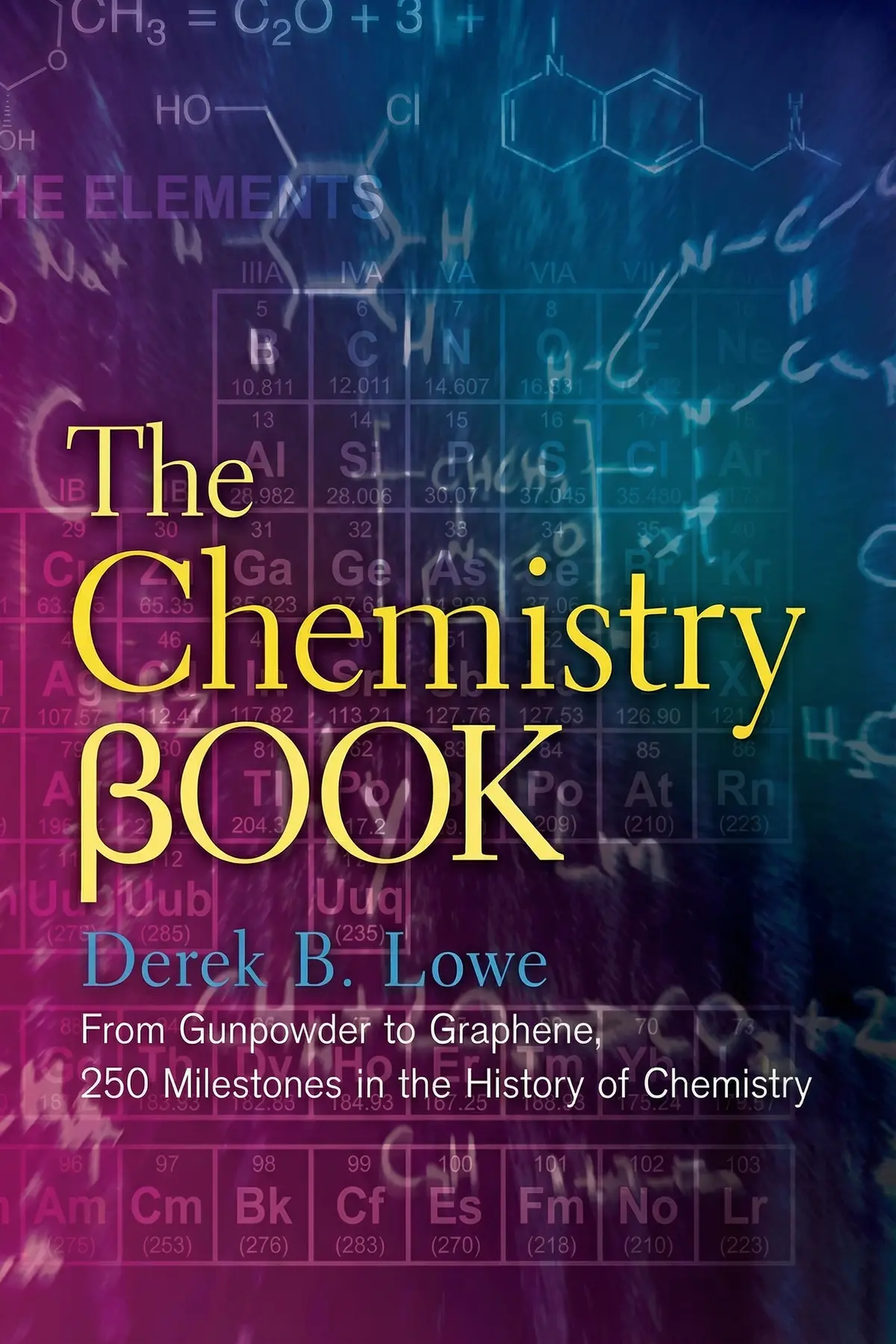
Table of Content
1. Introduction
1 min 53 sec
Chemistry is often thought of as a sterile subject confined to high school laboratories and complex equations, but its true history is anything but dull. It is a saga defined by high-stakes drama, accidental genius, and some of the most profound ironies in human existence. When we look back at the milestones that define this field, we find a story of humanity trying to make sense of the physical world—sometimes with noble intentions and other times with catastrophic results. From the ancient dream of turning lead into gold to the modern reality of engineering medicines at the molecular level, chemistry is the invisible hand that has shaped our civilization.
In this exploration, we aren’t just looking at a list of elements. We are looking at a series of turning points that altered the way we live, breathe, and survive. Think about the sudden flash of an explosion or the slow, steady cooling of a crystal cave in Mexico. These aren’t just events; they are chemical narratives. This summary will take you through the highlights of this evolution, showing how a Babylonian perfume maker paved the way for modern distillation and how a search for immortality in China accidentally changed the face of warfare forever.
As we move through these ideas, you’ll start to see a recurring theme: the persistent human desire to master nature. Sometimes, that mastery brings us miracles like anesthesia or clean mirrors. Other times, it brings us face-to-face with our own limitations, as seen in the tragic history of radioactivity or the unintended consequences of leaded gasoline. By the end of this journey, you’ll have a new perspective on the throughline that connects a Bronze Age forge to a 21st-century laboratory. We’ll examine how the past informs our present and how the future of chemistry might just be our best hope for saving the planet.
2. Natural Chemistry and the Dawn of Metallurgy
2 min 15 sec
Discover how the earth itself was the first laboratory and how early civilizations transitioned from primitive tools to the sophisticated alloys that defined entire eras.
3. Ancient Refinement and the Search for Value
2 min 25 sec
Follow the trail of early chemists who moved from making perfumes to inventing global currency through the sophisticated purification of precious metals.
4. The Secrets of Porcelain and the Language of Alchemy
2 min 25 sec
Uncover the centuries-long mystery of Chinese porcelain and the cryptic linguistic roots that gave us the modern term for nonsense.
5. Explosive Accidents and the Foundations of Medicine
2 min 32 sec
Explore how the search for eternal life accidentally sparked a military revolution and how toxic vapors led to the birth of modern anesthesia.
6. Malaria, Quinine, and the Atomic Foundation
2 min 16 sec
See how a South American tree bark fueled colonial expansion and how the transition from the four elements to atomic theory modernized our world.
7. The Chemistry of Color and the Spark of Life
2 min 18 sec
Follow the accidental creation of a world-famous pigment and the controversial experiment that blurred the line between the living and the non-living.
8. Harnessing Chaos: From Guncotton to Dynamite
2 min 25 sec
Observe the dangerous experiments that turned everyday materials into powerful explosives and led to the discovery of the earth’s protective atmospheric layer.
9. Toxic Reagents and the Price of Purity
2 min 29 sec
Investigate the lethal chemicals behind everyday items like mirrors and the high-risk reagents that chemists still use to unlock new molecular reactions.
10. The Radioactive Revolution and its Tragic Cost
2 min 19 sec
Walk through the glowing labs of the Curies to understand how the discovery of radiation changed medicine and led to a deadly consumer craze.
11. The Lead Scandal and the Age of the Earth
2 min 09 sec
Uncover how a single chemical additive poisoned the globe for decades and how a geologist’s quest to date the planet exposed the truth.
12. CFCs and the Vulnerability of Our Atmosphere
2 min 25 sec
Trace the rise and fall of ‘miracle’ refrigerants that saved lives in the kitchen but threatened the very sky above us.
13. Modern Drug Design and Molecular Engineering
2 min 13 sec
Learn how researchers moved from trial and error to ‘designer’ drugs, using purine frameworks and engineered enzymes to fight modern diseases.
14. The Future: Clean Energy and Artificial Nature
2 min 19 sec
Peer into the next century of chemistry, where hydrogen storage and artificial photosynthesis may be our best weapons against climate change.
15. Conclusion
2 min 01 sec
We have traveled from the heat of ancient forges to the cold, calculated precision of modern labs, and the throughline is clear: chemistry is the language of change. It is a field that rewards curiosity but demands respect. As we’ve seen, the history of this science is marked by a fascinating duality. It has given us the tools to feed billions through synthetic fertilizers and the ability to heal through sophisticated pharmaceuticals. Yet, it has also shown us how easily we can upset the delicate balance of our planet when we don’t fully understand the long-term consequences of the molecules we unleash.
The stories of accidental discoveries—like Prussian blue or guncotton—remind us that we are often stumbling into greatness. Meanwhile, the tragedies of leaded gas and CFCs remind us that scientific progress must always be tempered with environmental stewardship and ethical responsibility. The chemists of the past, from Tapputi to the Curies, were pioneers in every sense of the word, venturing into an invisible realm to bring back secrets that could transform human life. They turned the ‘gibberish’ of mystery into the clarity of knowledge.
As we look ahead, the challenges of energy storage and carbon sequestration represent the next great frontier. The history of chemistry suggests that we have the capacity to solve these problems, provided we continue to value empirical evidence and bold experimentation. Whether it’s through the potential of hydrogen or the refinement of artificial photosynthesis, the future of our civilization depends on our continued mastery of the molecular world. Chemistry isn’t just a subject in a textbook; it’s the toolkit we use to build the future. By understanding where we’ve been, we are better prepared to navigate the complexities of where we are going, ensuring that our next chemical milestones are ones of preservation and progress.
About this book
What is this book about?
The Chemistry Book serves as a chronological roadmap through the most significant milestones in the history of science. It begins in the ancient world, where early humans first learned to manipulate nature’s raw materials, and stretches into the distant future, imagining how we might solve the climate crisis through molecular engineering. The narrative covers a vast array of topics, from the mystical origins of alchemy and the quest for the philosopher's stone to the industrial-scale production of life-saving pharmaceuticals and high-tech materials like graphene. Listeners will gain a deep appreciation for the duality of chemical progress. For every world-changing discovery, like the synthesis of fertilizers or anesthetics, there are cautionary tales of environmental degradation and toxicity. By examining the lives of pioneers like Marie Curie and Robert Boyle, as well as the accidental inventions of pigments and explosives, this summary reveals the human story behind the periodic table. Ultimately, the book promises a clearer understanding of how the invisible dance of atoms dictates the course of human history and our prospects for a sustainable future.
Book Information
About the Author
Derek B Lowe
Derek B Lowe is a highly respected medicinal chemist with an extensive career in the pharmaceutical industry, having held research positions at major firms including Bayer, Vertex, and Novartis. He is widely recognized as a pioneer in science communication, launching In the Pipeline, one of the first and most influential blogs dedicated to the business and science of drug discovery. His writing offers unique perspectives on the intersection of chemistry, law, and corporate research. In addition to his blogging, Lowe is a frequent contributor to Chemistry World, where he shares his expertise on the historical and modern landscape of chemical research.
Ratings & Reviews
Ratings at a glance
What people think
Listeners describe this chemistry guide as a superb informational resource, with one listener mentioning that it offers a non-technical overview of major breakthroughs. Furthermore, the work is highly accessible and straightforward, contains beautiful imagery, and listeners praise the author's prose. They also prize the focus on history, with one listener emphasizing its ability to teach children about the background of the field, and view it as a valuable asset for high school collections.
Top reviews
Elan
This book is a visual masterpiece that manages to make the "central science" feel approachable and alive. Derek Lowe avoids the dry, textbook jargon that usually puts people to sleep, opting instead for a chronological tour of human curiosity. From the massive gypsum crystals in Mexico to the eventual discovery of synthetic urea, every single page is a self-contained story. Personally, I found the layout perfect for a coffee table because you can just dip in and out without losing the thread of the narrative. To be fair, if you are looking for deep mathematical equations, you might want to look elsewhere. However, for a casual reader who wants to understand how we got from smelting bronze to predicting the future of hydrogen fuel, this is absolute gold.
Show moreRyan
The chapter on Prussian blue was the exact moment I realized I was going to love this book. It’s wild to think that a failed attempt at making red paint accidentally gave us one of the most important pigments in art history. Derek Lowe has a real knack for finding these kinds of ironies, like how the quest for eternal life led to the invention of gunpowder. The writing style is brisk and engaging, making it easy to finish three or four entries in a single sitting before you even realize it. Some of the tragedies, like the Bhopal disaster and the realization of what CFCs were doing to our ozone, serve as sobering reminders of our responsibility. I appreciate that the book doesn’t just celebrate wins but also acknowledges the heavy cost of certain advancements.
Show moreOlivia
Chemistry is often called the central science, sitting right between physics and biology, and this book proves why that title is so well-deserved. From the ancient perfume makers in Babylon to the future of artificial photosynthesis, you can see how chemistry touches every single aspect of human existence. It’s a fascinating journey filled with "happy accidents" that changed the world forever, like the discovery of ether as an anesthetic. I loved how the author included the names and faces of luminaries like Pauling and Watson, giving a human element to the science. The book makes you realize that every modern convenience we have is the result of centuries of trial, error, and sometimes total disaster. It’s an inspiring read that makes me feel optimistic about what the next hundred years of chemistry might bring.
Show moreAria
Wow, I never thought a book about chemistry could be this emotional. Seeing the timeline of human achievement—from the first copper tools to the tragic brilliance of the Radium Girls—is a real rollercoaster of a read. Derek Lowe writes with a lot of heart and a clear passion for his subject, making the complex reactions feel like parts of a grand, unfolding drama. I was particularly struck by the entries on the Lydian gold secrets and the "Chinese snow" that became gunpowder. The book is definitely not a technical manual, but it’s a beautiful tribute to the people who risked everything to understand how our world is built. If you have even a passing interest in history or science, you really should check this out.
Show morePita
Ever wonder why your high school chemistry teacher was so obsessed with the periodic table? This volume provides the necessary context by focusing on the colorful characters and tragic accidents that defined the field. I bought this for my teenager, and it has been a fantastic way to introduce the "why" behind the "what" of their science curriculum. The stories about Tapputi, the world’s first recorded chemist, and the strange history of King Croesus’s gold refinement are genuinely gripping. It’s written in a way that doesn’t require a PhD to follow along, yet it never feels like it's talking down to the reader. My only minor gripe is that some of the later 20th-century entries feel a bit rushed compared to the ancient history.
Show moreNum
As a librarian, I am always on the hunt for science books that can bridge the gap between "too simple" and "impenetrable." This collection of 250 milestones is exactly what our high school section needed to provide some historical weight to the students' lab work. The entry on the Bronze Age alone explains so much about human trade and migration that you wouldn't typically find in a science text. It’s approachable and visually stunning, making it a great "gateway" book for kids who think they hate chemistry. Truth is, the anecdotes about alchemists and their secret Lydian techniques are much more memorable than a list of properties. It’s a sturdy, beautiful volume that should be on every science lover's shelf.
Show morePacharapol
Picked this up on a whim because the cover looked interesting, and I’ve been pleasantly surprised by how much I actually learned. The chronological format means you get to see how one discovery, like the isolation of quinine, eventually paved the way for complex organic synthesis. I especially liked the section on the transition from the Bronze Age to the Iron Age, as it highlighted that availability often beats quality. The book is very easy to read and understand, which is a relief because chemistry can be so intimidating. Some might find the one-page-per-topic limit a bit restrictive, but it keeps the pace moving along at a healthy clip. It's a great choice for anyone who wants a broad overview without getting bogged down in the weeds.
Show moreSamira
Finally got around to finishing this after dipping in and out for nearly two months. It isn't the kind of book you rush through; it's much better enjoyed as a daily dose of "did you know?" trivia. The stories about the discovery of mercury's toxicity and the unintended consequences of Freon were particularly eye-opening for me. I also really appreciated the forward-looking chapters on reducing carbon dioxide and the potential for clean hydrogen energy. It's rare to find a science book that covers such a massive span of time—from 3300 BCE to the year 2030—without losing its focus. While it might be a bit too heavy to carry around on a commute, it’s a wonderful addition to any home library.
Show moreLevi
In my experience, most science "survey" books tend to be either overly academic or way too simplified for an adult reader. Derek Lowe manages to strike a decent balance here, though I found myself wishing for a bit more organizational structure beyond just the timeline. Because each milestone is a single page, you sometimes miss the cumulative logic that connects these breakthroughs together. For instance, the leap from Robert Boyle’s atomic theories to modern toxicology could have been tied together more explicitly. Still, the quality of the writing is high, and the images are genuinely compelling to look at while you're drinking your morning coffee. It’s a solid 3-star read that functions better as a reference guide than a cover-to-cover narrative.
Show moreCamila
Not what I expected at all, especially considering the title and the price tag. While the descriptions of the 250 milestones are decent enough, the claim of being "lushly illustrated" is frankly a bit of a stretch. You get one stock photograph per entry, but there isn't a single chemical structure or diagram to be found in the entire book. How can you have a book about chemistry without showing the actual molecules or the mechanisms behind the reactions? It feels like a history book that just happens to be about chemicals rather than a science book. If you're looking for a serious reference or something to help with your studies, this is going to be a major disappointment. It’s okay for a quick browse in a waiting room, but it lacks the technical depth I was hoping for.
Show moreReaders also enjoyed
A History of the World in 6 Glasses
Tom Standage

A Long Way Gone: Memoirs of a Boy Soldier
Ishmael Beah
Alien Earths: The New Science of Planet Hunting in the Cosmos
Lisa Kaltenegger
A Splendid Exchange: How Trade Shaped the World
William J. Bernstein
A Spy Among Friends: Philby and the Great Betrayal
Ben Macintyre
AUDIO SUMMARY AVAILABLE
Listen to The Chemistry Book in 15 minutes
Get the key ideas from The Chemistry Book by Derek B Lowe, plus 5,000+ more titles in English and Thai.
- 5,000+ titles
- Listen as much as you want
- 7-day free trial
- Cancel anytime







