
17 min 08 sec
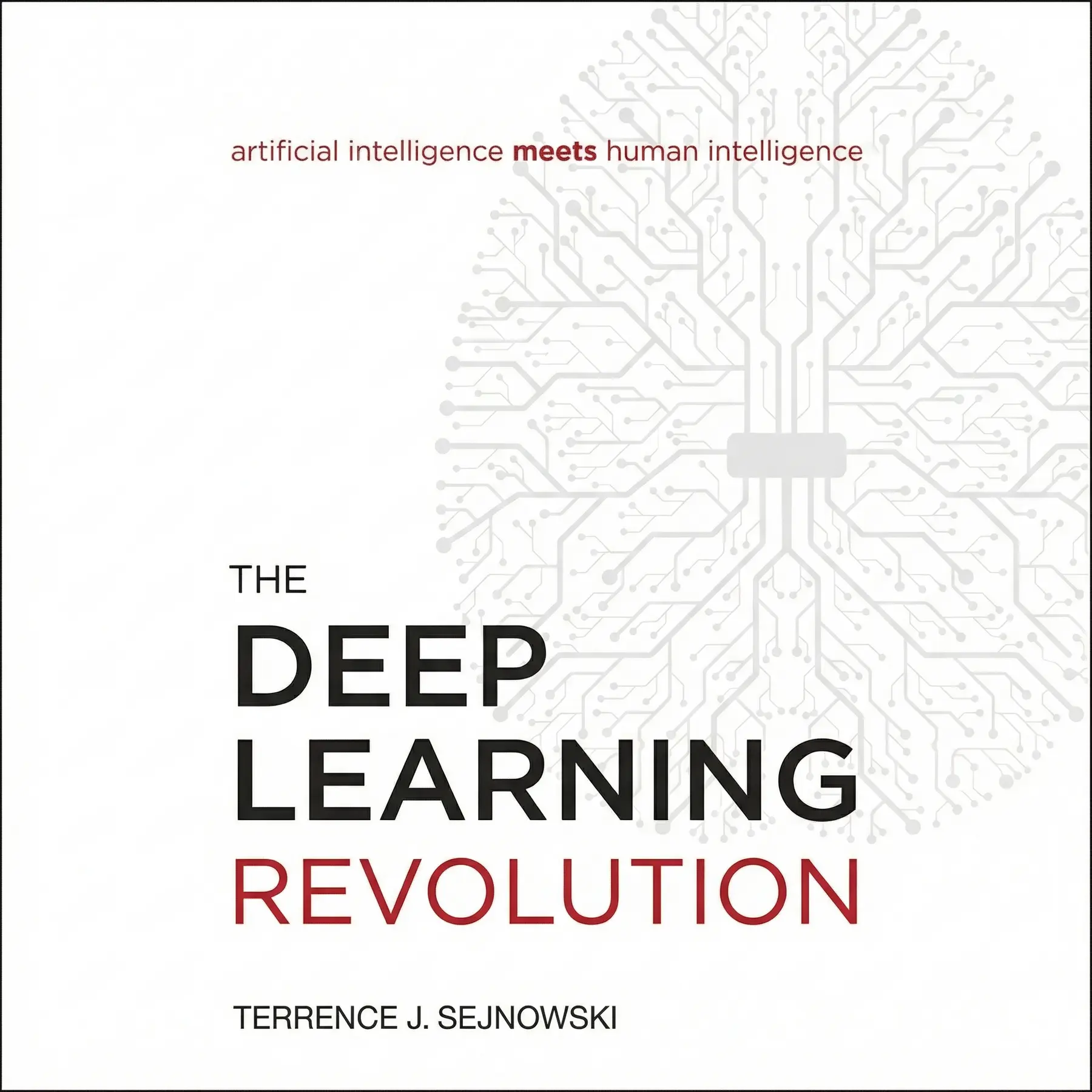
The Deep Learning Revolution
Explore the evolution of artificial intelligence from rigid rules to brain-inspired neural networks. This summary reveals how biological insights paved the way for the deep learning technologies currently reshaping our modern world.
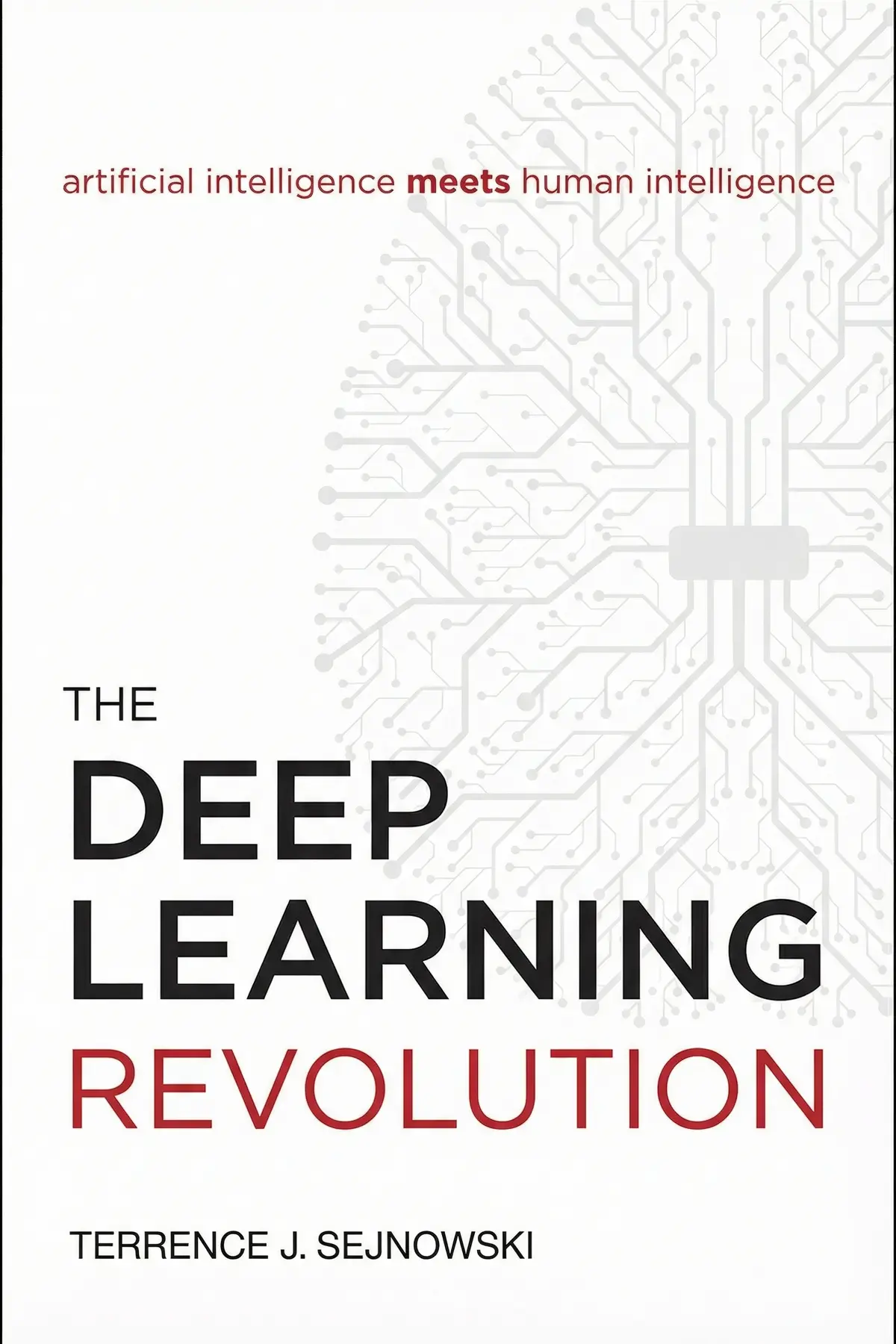
Table of Content
1. Introduction
2 min 01 sec
Think about the way a small child learns to understand the world. They don’t arrive with a manual of instructions or a pre-programmed database of definitions. Instead, they interact. They see a thousand dogs, hear a thousand voices, and fall down a thousand times. Each interaction subtly reshapes the physical structure of their brain, strengthening some connections and weakening others until patterns begin to emerge. This is the essence of biological intelligence: it is grown, not built.
For a long time, the world of computer science tried to ignore this natural blueprint. Engineers believed that the secret to artificial intelligence lay in logic, symbols, and rigid rules. They thought that if they could just write enough code, they could simulate the human mind. But they were wrong. The real breakthrough didn’t come from better programming; it came from mimicking the messy, interconnected, and adaptive nature of the human nervous system.
This shift is what we call the deep learning revolution. It is the story of how a marginalized group of scientists looked at the three-pound organ inside the human skull and decided to build machines that worked just like it. This wasn’t just a technical change; it was a philosophical one. It moved us away from a world where computers are calculators and toward a world where computers are learners.
In the following sections, we are going to trace this journey from the rebellious theories of the 1980s to the world-changing applications we see today. We will look at how the convergence of big data and powerful hardware finally allowed these biological theories to take flight. We will also explore the profound differences that still exist between artificial and human intelligence, and what the future might hold as these two forms of thinking continue to merge. By the end, you’ll understand not just how your smartphone recognizes your face, but why the bridge between biology and technology is the most important frontier in modern science.
2. The Rebellion Against Symbolic Logic
2 min 41 sec
Discover why the early days of artificial intelligence hit a massive wall and how a group of scientific outcasts looked to the human brain for a radical alternative.
3. Biological Foundations of Artificial Learning
2 min 29 sec
Explore the fascinating parallels between the human nervous system and the mathematical models that allow machines to teach themselves through trial and error.
4. The Convergence of Power and Data
2 min 59 sec
Learn how the rise of the internet and a surprise assist from the video game industry finally gave neural networks the fuel they needed to succeed.
5. The Essential Differences Between Carbon and Silicon
2 min 31 sec
While AI can beat us at chess and translate languages, it still lacks a fundamental human trait. Find out why the ’embodiment’ of our intelligence matters.
6. Navigating the Social and Ethical Frontier
2 min 49 sec
The deep learning revolution is changing how we work, learn, and even perceive truth. Explore the opportunities and risks of a world shaped by algorithms.
7. Conclusion
1 min 38 sec
The Deep Learning Revolution has taken us on a journey from the sterile corridors of symbolic logic to the vibrant, messy, and incredibly powerful world of neural networks. We have seen how a few determined researchers refused to give up on the idea that computers could learn like humans, and how their persistence eventually transformed every aspect of our modern lives.
We now live in a world where machines can see, hear, and translate with a proficiency that once belonged only to science fiction. This was made possible by honoring the blueprint of the human brain—recognizing that intelligence is not a list of rules, but a web of connections that grows through experience. However, as we have explored, the gap between silicon and carbon intelligence remains significant. We possess an embodied, emotional, and intuitive understanding of the world that no current algorithm can truly replicate.
As you step back into your daily life, take a moment to notice the hidden neural networks around you. They are in the recommendations on your screen, the voice in your smart speaker, and the systems keeping your digital life secure. But also notice the things they can’t do—the way you understand a friend’s unspoken sadness or the way you can navigate a crowded street without a single calculation. The deep learning revolution isn’t about machines replacing humans; it’s about a new partnership. By understanding how these systems work and where they come from, we are better equipped to guide their development toward a future that enhances our human potential rather than diminishing it. The revolution is here, and it’s up to us to decide where it goes next.
About this book
What is this book about?
The Deep Learning Revolution explores the remarkable transition from traditional, rule-based artificial intelligence to the sophisticated neural networks that power today's technology. It details how a small group of researchers, inspired by the biological workings of the human brain, challenged the established scientific community to create machines that learn from experience rather than just following programmed instructions. By examining the history and mechanics of connectionism, the book explains the convergence of massive data sets, powerful computing hardware, and innovative algorithms. Readers will discover why biological learning is so much more efficient than old-school coding and how these advancements have led to breakthroughs in speech recognition, medical diagnostics, and autonomous systems. Ultimately, it offers a vision of the future where silicon and carbon-based intelligence work in tandem to solve the world's most complex problems, while also addressing the ethical and social challenges this transition presents.
Book Information
About the Author
Terrence J. Sejnowski
Terrence Sejnowski holds the Francis Crick Chair at the Salk Institute for Biological Studies and serves as Distinguished Professor at the University of California, San Diego, where he directs the Computational Neurobiology Laboratory. He’s one of only a few individuals elected to all four National Academies: Sciences, Medicine, Engineering, and Inventors. He’s also received prestigious honors including the 2024 Brain Prize, the 2022 Gruber Neuroscience Prize, and the IEEE Frank Rosenblatt Award for his pioneering contributions to neural networks and computational neuroscience.
Ratings & Reviews
Ratings at a glance
What people think
Listeners find the book offers extensive depth on deep learning and acts as an outstanding primer on artificial intelligence. Furthermore, the performance earns positive remarks, with listeners characterizing the reading as interesting.
Top reviews
Nook
Finally got around to reading this, and it’s easily one of the best perspectives on the machine learning boom I've seen. Unlike many AI books that focus only on the last five years, Sejnowski takes us back to the 80s to show the struggle of the connectionist movement. The way he describes neurons 'voting' on their experience is such a clear way to visualize complex data processing. It’s part memoir, part science history, and part philosophical inquiry. Not gonna lie, some parts are heavy on the math, but the writing quality is top-notch. It makes you realize that the deep learning revolution wasn't an overnight success—it was a decades-long battle against the status quo.
Show moreMilk
This isn't just a book about code; it's a deep dive into what intelligence actually means. I was captivated by the idea that our brains don't follow checklists. We process the whole picture at once, combining posture and walk into instant recognition. Sejnowski explains how he and Hinton tried to replicate this using artificial neurons that strengthen their connections through experience. The book perfectly captures the 'magic' that happened when these networks were finally fed enough data. From defeating Go champions to spotting fraud, the applications are mind-blowing. It’s a comprehensive, authoritative, and deeply personal look at the technology that is currently reshaping our entire world. Highly recommended for the intellectually curious.
Show moreGabriel
To be fair, you need to understand that this is a historical overview, not a technical 'how-to' manual. Once you accept that, the book is a masterpiece. It bridges the gap between biology and silicon in a way that few other authors can. I was particularly struck by the discussion on 'common sense' and how current AI systems lack the sensory experience of a toddler. It’s a sobering reminder that we still have a long way to go. The prose is elegant and the anecdotes about the NIPS conference and early research are gold for any AI history buff. It’s an authentic, first-hand account of a revolution that is still very much in progress.
Show moreSirinat
The chapter on Boltzmann machines alone was worth the entry price for me. While some other reviews seem bothered by the memoir-like tone, I found that hearing about the evolution of AI directly from one of its founders added a layer of depth that a dry textbook simply cannot provide. Sejnowski explains the transition from the rigid, rule-based systems of the 80s to the fluid, data-driven approach of today with remarkable clarity. He draws brilliant parallels between biological learning and the mathematical neurons we now use. It isn't just about the algorithms; it’s about the very nature of thought. This is an essential read for anyone wanting to understand the foundation of the current technological landscape.
Show moreBoss
Sejnowski provides a fascinating look at how neural networks are essentially a biological democracy. For years, the AI establishment hated the idea of connectionism, but this book proves that the rebels were right all along. I particularly enjoyed the sections comparing the energy efficiency of the human brain to a petascale supercomputer; it really puts our current technology into perspective! My only gripe is that some of the technical sections are a bit dense. You’ll need a fair amount of prior knowledge to fully grasp the math behind backpropagation. Still, for a historical overview of how we moved from logic-based AI to the data-driven world of today, this is an excellent and deeply informative resource.
Show moreSupranee
Ever wonder how we actually got to the age of ChatGPT and self-driving cars? This book answers that question by tracing the long, often ignored history of neural networks. The author does a great job of explaining how the 'AI rebels' looked at nature—birds flying, babies hearing—to realize that intelligence is grown from data, not programmed. It was refreshing to read about the role of GPUs and the internet in finally giving these old theories the 'engine' they needed to actually work. It’s a bit technical in the middle, and Sejnowski does talk about his own work quite a bit, but the historical context is invaluable for anyone working in tech today.
Show morePatcharaporn
As someone who follows the AI space closely, I found this to be a bit of a mixed bag. The first half is a solid history lesson. It captures that radical idea of the 1980s: that computers should learn like babies rather than following a checklist of rules. I loved the bicycle analogy for connectionism—it really makes the concept of neural weights click. However, the book loses its way in the final third. The discussion on the societal impact of AI and the job market feels very generic and doesn't offer much that you haven't already read in a dozen Sunday op-eds. It’s a decent enough primer on the 'why' of deep learning, even if the 'how' is sometimes buried under too much personal history.
Show moreYuki
Picked this up looking for a clear explanation of how AlphaGo works, and while I got some of that, the rest felt uneven. Sejnowski is clearly a brilliant pioneer, and his excitement for the field is infectious, but the writing is occasionally too academic for a general audience. I appreciated the insight into how randomness helps brains escape 'bad solutions,' but then the text would pivot into a list of people the author has worked with, which slowed the momentum. It’s not a terrible book by any means. It just feels like it needed a stronger editor to decide if it wanted to be a textbook or a biography. A middle-of-the-road read for those with a lot of patience.
Show moreNoppadol
I really struggled to stay engaged with this one and eventually just had to put it down. The book tries to be two things at once: a casual history of the AI rebels and a deeply technical manual on learning algorithms. Unfortunately, it fails at both. The memoir sections are dry and feel like a lot of self-flattery, while the technical parts—like the explanation of Boltzmann machines—are dense and poorly explained for a layperson. Truth is, I have a decent background in tech terms, but I still found myself lost in the jargon. It's a bit of a slog. If you aren't already an expert in neural networks, you’ll probably find the pacing frustratingly inconsistent.
Show moreSomchai
The title is incredibly misleading and, quite frankly, I felt cheated by the marketing. I expected a deep dive into the technical 'how-to' of neural networks, but instead, I got a scattered memoir of Terrence Sejnowski’s career. It’s very lightweight. While he mentions the early days of connectionism and his kinship with other pioneers like Hinton, there is almost no technical substance to the writing. He glides over the actual development of deep learning architectures just to talk about who he met at conferences. For anyone looking for an actual explanation of how these systems function or where the field is going, look elsewhere. This is just a collection of historical anecdotes that fails to deliver on its grand promise.
Show moreReaders also enjoyed
AUDIO SUMMARY AVAILABLE
Listen to The Deep Learning Revolution in 15 minutes
Get the key ideas from The Deep Learning Revolution by Terrence J. Sejnowski, plus 5,000+ more titles in English and Thai.
- 5,000+ titles
- Listen as much as you want
- 7-day free trial
- Cancel anytime







