
17 min 58 sec
The Economic Singularity: Artificial Intelligence and the Death of Capitalism
By Calum Chace
Explore the inevitable rise of artificial intelligence and its power to reshape our workforce. This summary examines the coming economic shift where automation replaces human labor, necessitating a complete reimagining of our social and financial structures.
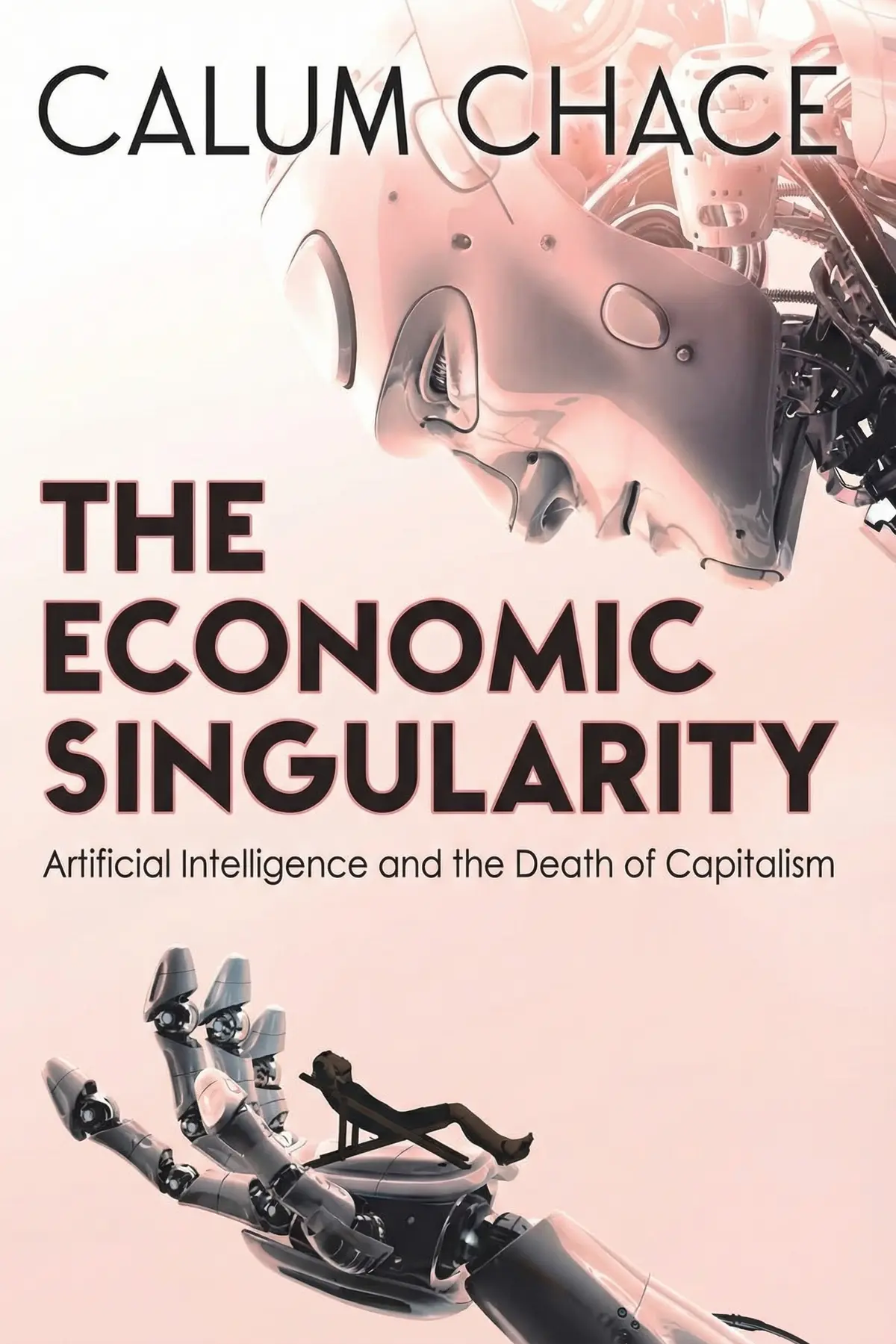
Table of Content
1. Introduction
1 min 47 sec
Imagine a world where the very concept of a ‘career’ is a relic of the past. For centuries, the foundation of human civilization has been built on the exchange of labor for survival. We study, we train, and we apply our skills in exchange for the resources we need to live. But what happens when the machines we’ve created become more capable, more efficient, and more cost-effective than even the most skilled human? We are standing on the precipice of what futurist Calum Chace calls the Economic Singularity.
This isn’t just a story about robots in factories or self-checkout kiosks at the grocery store. This is a story about the fundamental decoupling of human effort from economic value. As artificial intelligence advances at an exponential rate, it is moving beyond simple repetitive tasks and entering the realm of complex decision-making, creativity, and professional expertise. The throughline of this exploration is simple yet staggering: our current economic system is not designed for a world where humans are no longer the primary drivers of productivity.
In the coming pages, we will explore why this technological shift is fundamentally different from the Industrial Revolution of the past. We’ll look at how both blue-collar and white-collar roles are being transformed, and why the devaluation of human labor could lead to a total collapse of our current market dynamics if we don’t act. Ultimately, this journey is about more than just technology; it’s about how we redefine human purpose and economic structure in an era of total automation. It’s an invitation to stop looking at AI as a tool and start seeing it as the catalyst for the greatest transition in human history.
2. The Nature of the Singularity
2 min 15 sec
Discover why the upcoming economic shift is more than just a technological upgrade, and how it represents a fundamental change in the way our world functions.
3. Why This Time Is Different
2 min 14 sec
Contrast the cognitive revolution of today with the physical revolutions of the past to see why historical optimism might be misplaced.
4. The Devaluation of Human Effort
1 min 57 sec
Explore how the falling cost of artificial intelligence makes it impossible for human workers to compete in a traditional labor market.
5. The Erosion of Professional Certainty
1 min 57 sec
Learn why white-collar careers are no longer a safe haven from the waves of automation sweeping across the global economy.
6. The Collapse of the Consumer Loop
1 min 51 sec
Examine the dangerous feedback loop that occurs when a society of producers can no longer afford to be a society of consumers.
7. Adapting Through Lifelong Learning
2 min 01 sec
Understand why the old model of ‘learn then work’ is dying and why the future belongs to those who never stop being students.
8. Constructing a New Economic Model
2 min 08 sec
Investigate the radical solutions, like Universal Basic Income, that may be required to prevent a social crisis as jobs disappear.
9. Conclusion
1 min 48 sec
As we have seen, the Economic Singularity is not just a distant possibility; it is a process that is already underway. The exponential growth of artificial intelligence is systematically devaluing human labor and challenging the very foundations of our global economy. We are moving toward a world where the traditional connection between having a job and having a life is being severed. This transition promises to be the most disruptive period in human history, but it also carries the potential for a world of incredible abundance.
The throughline of our exploration is clear: the status quo is not an option. We cannot simply wait for the market to fix itself, because the market is the very thing being transformed. To survive and thrive, we must be proactive. On an individual level, this means embracing a commitment to lifelong learning and mental flexibility. We must stop defining ourselves by our job titles and start looking for ways to provide value that machines cannot yet replicate.
On a societal level, we must begin the hard work of designing a new economic model. Whether it’s through Universal Basic Income or a complete rethinking of how we provide for our citizens, we need a system that can handle a world of automated labor. The Economic Singularity is a challenge, but it is also an opportunity. It is an invitation to build a society where human potential is no longer tied to the necessity of toil. If we can navigate the coming storm with foresight and compassion, we can create a future where technology serves humanity, rather than the other way around. The time to start building that future is now.
About this book
What is this book about?
The Economic Singularity delves into the profound and potentially disruptive impact that artificial intelligence will have on our global economy. It argues that we are rapidly approaching a historical turning point—a singularity—where the capacity of machines to perform tasks exceeds that of humans in nearly every sector. Unlike previous industrial shifts, this revolution threatens not just manual labor but cognitive professions as well, potentially leading to a world where human labor is no longer a valuable commodity. Through this lens, the book explores the urgent need for society to prepare for a future without traditional employment. It highlights the impending challenges to our current capitalist model, which relies on wages to drive consumption. The narrative offers a path forward, suggesting that by embracing lifelong learning and transitioning to a new economic paradigm, humanity can harness the benefits of automation to create a world of abundance rather than one of systemic collapse.
Book Information
About the Author
Calum Chace
Calum Chace is a futurist and a speaker, with a lot to say on the state of artificial intelligence (AI) in modern society. After three decades of working as a successful businessman, he’s written multiple books on AI, including the novel Pandora’s Brain and the nonfiction book Surviving AI.
Ratings & Reviews
Ratings at a glance
What people think
Listeners find that this book delivers solid insights into upcoming tech trends and is organized logically. They value its accessible style, with one listener describing it as a helpful beginner’s guide to the field. The title draws acclaim for its economic perspectives, as one listener points to the effective breakdown of social and economic effects.
Top reviews
Tar
Finally got around to reading this after hearing it referenced in several podcasts. Chace provides a remarkably clear entry-level introduction to how AI will eventually dismantle our current labor market. I found the 'centaurs' concept—humans working alongside AI—to be particularly illuminating, though the author argues this is only a temporary phase. While the writing is accessible, it occasionally feels a bit like a survey of other people's ideas rather than a deep dive into original economic theory. Still, for anyone trying to wrap their head around technological unemployment and the necessity of Universal Basic Income, this is a solid starting point. It’s well-structured and doesn't get bogged down in overly dense jargon, making it a quick, thought-provoking read that I've already recommended to several colleagues.
Show moreWan
As someone who works in tech, this felt like an essential primer on the social implications of our work. The book is incredibly informative in a 'nuts and bolts' way, laying out the timeline of AI development without getting lost in the weeds of the math. I think the author’s passion for the subject really shines through, especially in the later chapters where he explores the potential for a 'zombie-like' or 'zen-like' future for humanity. It’s a frightening potential future, but Chace’s clear prose makes it manageable. Even if you don't agree with his accelerated timeline, the questions he raises about the death of capitalism are impossible to ignore. Truth is, we really cannot do much until we see for sure that there is a problem, and this helps us stay educated.
Show moreGin
Ever wonder what happens when the machines take over everything? This book tries to answer that by distinguishing between intelligence and consciousness, which is a vital point many people miss. Chace argues persuasively that we are heading toward a world where most human labor is simply obsolete. I liked the focus on the 'Economic Singularity' as a precursor to the technological one, though I suspect his timelines are a bit too aggressive. Remember when we were told we'd have fully self-driving cars by now? It’s a harrowing look into the future, but it’s handled with a level head and clear logic. Chace writes for an audience likely new to these ideas, and they will likely welcome the clear laying out of his argument. Definitely a must-read for those worried about career longevity.
Show moreWararat
Chace makes a compelling, if slightly terrifying, case for technological unemployment that feels like a natural successor to Martin Ford’s work. I particularly appreciated the way he breaks down the history of work and automation before diving into the future. The section on Universal Basic Income was a highlight for me, as it’s a topic I’ve only recently started following closely. While some of the predictions from 2016 haven't aged perfectly (looking at you, autonomous vehicles), the core argument remains incredibly relevant. My only real gripe is that the ending feels a bit rushed, leaving the hardest problems for future generations to solve. I don't want to wait around for Millennials and Gen Z to deal with it. Still, it’s a provocative read that forced me to reflect on my own role.
Show moreValentina
The first 60% of the book is basically a history lesson and a collection of facts you’ve likely heard if you follow tech news. Chace writes for a general audience, which is great for accessibility, but it can feel a bit basic for anyone who has immersed themselves in these topics for a while. I enjoyed the chapters on possible scenarios the most, especially the discussion on how society might change if we stop tying our value to our productivity. However, I found the proposed solutions in the final chapters to be a bit unsatisfying and brief. It’s a good refresher, but it lacks the 'forceful admonishment' I think our current situation requires. It’s a decent 4-star effort that works well as a background summary and starting point.
Show moreRin
Look, predicting the future is a fool's errand, but Chace gives it a solid go here with a well-researched and structured argument. I found the breakdown of the 'Economic Singularity'—the point where AI makes human labor redundant—to be much more grounded than the typical sci-fi talk about superintelligence. The book does a great job summarizing the opinions of major AI players like those at Google and Tesla. It’s true that some of the estimations have already fallen flat since publication, but the underlying logic about exponential growth remains sound. It’s a fascinating, if somewhat dry, look at how our economic theories will eventually break down. It definitely makes you think about what comes next for humanity, for better or worse.
Show moreAim
This isn't just another dry tech manual; it’s a warning about the fundamental shift approaching our society. I was fascinated by the exploration of 'centaurs' and the eventual transition to total automation. While some might find the economic aspects a bit lacking compared to the tech history, I thought the balance worked well for a general reader. The author doesn't shy away from the scary stuff, but he also presents a vision where we could actually thrive if we get the policy right. It’s rare to find a book that handles such complex ideas with this much clarity. Frankly, it’s a starting point for a conversation we should have had years ago. I hope in coming years to see more exploratory works from even more diverse backgrounds featuring experts from different fields.
Show moreSarocha
A bit of a mixed bag for me, to be fair. On one hand, the research is clearly thorough and the bibliography is a goldmine for further reading. On the other hand, the prose can be incredibly dry, reminding me of a very long, very detailed book report by a particularly studious, nerdy guy. I was hoping for more radical economic modeling, but the book spends a lot of time on the history of automation which I already knew. The chapters on UBI were interesting but felt a little too brief given how much they represent the 'solution' to the problems presented. It's an acceptable overview if you're new to the topic, but it didn't offer the breakthrough insights I was craving. It’s well-researched but not particularly compelling as a narrative.
Show moreMeen
Not what I expected given the title. While the book supposedly deals with the Economic aspect prior to the arrival of 'conscious' AI, I actually found it lacking on the actual economic theory. Chace borrows heavily from the terminology popularized by philosophers like Nick Bostrom, but most of the book is just a list of examples where AI is taking over white-collar jobs. This is fine if you’re new to the topic, but for anyone who has been following the 'inevitable tsunami' of job losses, there isn't much new here. It feels like it avoids the messy, complicated breakdowns of current economic laws in favor of a simpler narrative. I personally would have preferred more time spent on the challenges of a post-capitalist world rather than just the history of how we got here.
Show moreKai
Wanted to love this, but it felt like Chace was looking at the future through a very narrow lens. Where are the discussions on the greying of the population or the massive inequalities between nations that AI will only make worse? It's like he completely ignored climate change and other negative global trends that will intersect with the rise of AI. I found myself checking out during the middle sections because it felt repetitive. The book focuses so much on white-collar job losses in the West that it misses the bigger, messier global picture. It’s well-written enough, but the scope felt too limited for such a massive subject. I suspect I might have actually slept through some serious aspects if they were covered at all.
Show moreReaders also enjoyed

Adults in The Room: My Battle With Europe’s Deep Establishment
Yanis Varoufakis
21 Lessons for the 21st Century
Yuval Noah Harari
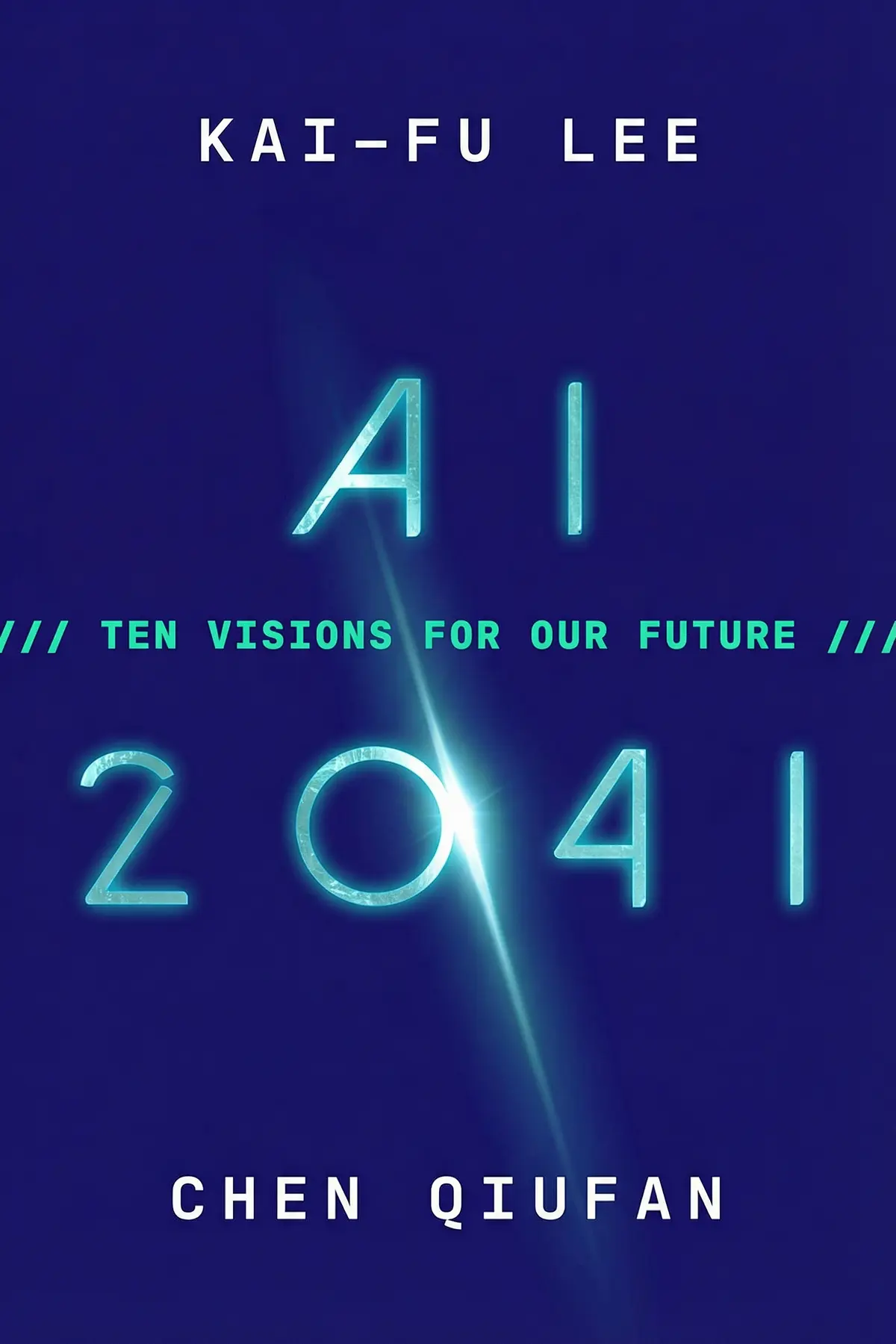
AI 2041: Ten Visions for Our Future
Kai-Fu Lee
AUDIO SUMMARY AVAILABLE
Listen to The Economic Singularity in 15 minutes
Get the key ideas from The Economic Singularity by Calum Chace, plus 5,000+ more titles in English and Thai.
- 5,000+ titles
- Listen as much as you want
- 7-day free trial
- Cancel anytime







