
The God Delusion
Richard Dawkins
A profound exploration of evolutionary biology that shifts the focus from individual organisms to the gene, arguing that genetic influence extends far beyond the physical body to shape the environment and other creatures.
1 min 48 sec
When we think about the story of life on Earth, we usually picture a grand stage filled with charismatic actors: the soaring eagle, the clever chimpanzee, or perhaps the resourceful human. We’ve been taught to see evolution as a race where these individuals are the contestants, struggling to survive and pass on their traits. This is the standard view of Darwinism, and it makes intuitive sense because we experience the world as individual beings. But what if the real action isn’t happening at the level of the animal at all? What if the creatures we see are just the outward expressions of a much deeper, more persistent force?
In this exploration, we are invited to pull back the curtain and look at life through a different lens. Instead of focusing on the ‘survival of the fittest’ organism, we shift our attention to the gene. Here, the gene is the star of the show, and the organism is simply the temporary vessel it inhabits. This isn’t just a minor tweak in how we describe biology; it’s a radical shift that changes how we explain everything from the color of a bird’s feathers to the complex architecture of a beaver’s dam.
We will move beyond the traditional boundaries of the body to see how genetic influence stretches out into the world. This journey will take us from the inner workings of the cell to the deceptive lures of deep-sea fish and the architectural wonders of insect larvae. We’ll investigate why evolution doesn’t always produce perfection and why organisms sometimes seem to act against their own best interests. By the end, the goal is to see life not as a collection of competing bodies, but as a vast, interconnected web of genetic reach—an extended phenotype that shapes the environment and other living things in the relentless pursuit of replication.
2 min 08 sec
Discover why viewing evolution through the lens of a gene rather than a whole organism is like looking at a famous optical illusion from a new angle.
2 min 08 sec
Examine the common myth that having a specific gene guarantees a fixed destiny and learn how the environment plays a crucial role.
2 min 10 sec
Find out why evolution doesn’t always lead to perfect organisms and how factors like time-lag prevent ideal adaptations.
2 min 06 sec
See how some creatures are evolutionarily designed to serve the interests of others, often to their own detriment.
2 min 03 sec
Learn the vital distinction between the things that make copies of themselves and the bodies that carry them through time.
1 min 58 sec
Discover how ideas, songs, and even jokes can follow the same evolutionary rules as biological genes.
2 min 03 sec
Uncover the internal conflicts within our own DNA, where ‘cheating’ genes are policed by a system of modifiers.
1 min 58 sec
Explore why our bodies carry so much seemingly useless genetic material and how the gene-centric view explains this mystery.
2 min 00 sec
Break down the different ways scientists define ‘fitness’ and why this jargon has caused so much confusion in evolution.
1 min 49 sec
Understand how the influence of a gene can stretch far beyond the physical body of the organism it inhabits.
1 min 56 sec
Learn how parasites can rewrite the genetic expression of their hosts, turning another creature’s body into their own tool.
2 min 04 sec
Conclude with the powerful idea that all behavior is ultimately designed to maximize the survival of genes, regardless of where they reside.
1 min 52 sec
As we conclude this journey into the extended phenotype, we find ourselves standing in a biological landscape that looks very different from the one we started in. We began with the familiar world of individual organisms—birds, bees, and humans—striving for their own survival. But by shifting our perspective, we’ve discovered that these individuals are just the tip of the iceberg. Beneath the surface, the true drivers of life are the genes: the persistent, selfish replicators that have been traveling through time for billions of years.
We have seen how these genes do not stop at the edges of the body. Their reach extends into the architecture of the world, from the stones of a larva’s case to the very chemistry of another creature’s brain. We’ve learned that the ‘perfection’ we expect from evolution is often hampered by the baggage of the past and the internal conflicts of the genome. And perhaps most importantly, we’ve seen that the distinction between an organism and its environment is much thinner than we ever imagined.
What does this mean for us? It suggests that to truly understand life, we must be willing to flip our perspective, just like looking at a Necker cube. We must see that we are both the vehicles for our genes and the participants in a much larger, extended network of biological influence. The next time you see a spider spinning a web or a bird building a nest, remember that you aren’t just looking at an animal at work. You are witnessing the long reach of the gene, a force that transcends the individual and shapes the very world we live in. By embracing this wider view, we don’t lose the wonder of the natural world; we gain a much deeper, more intricate appreciation for the invisible threads that connect all of life.
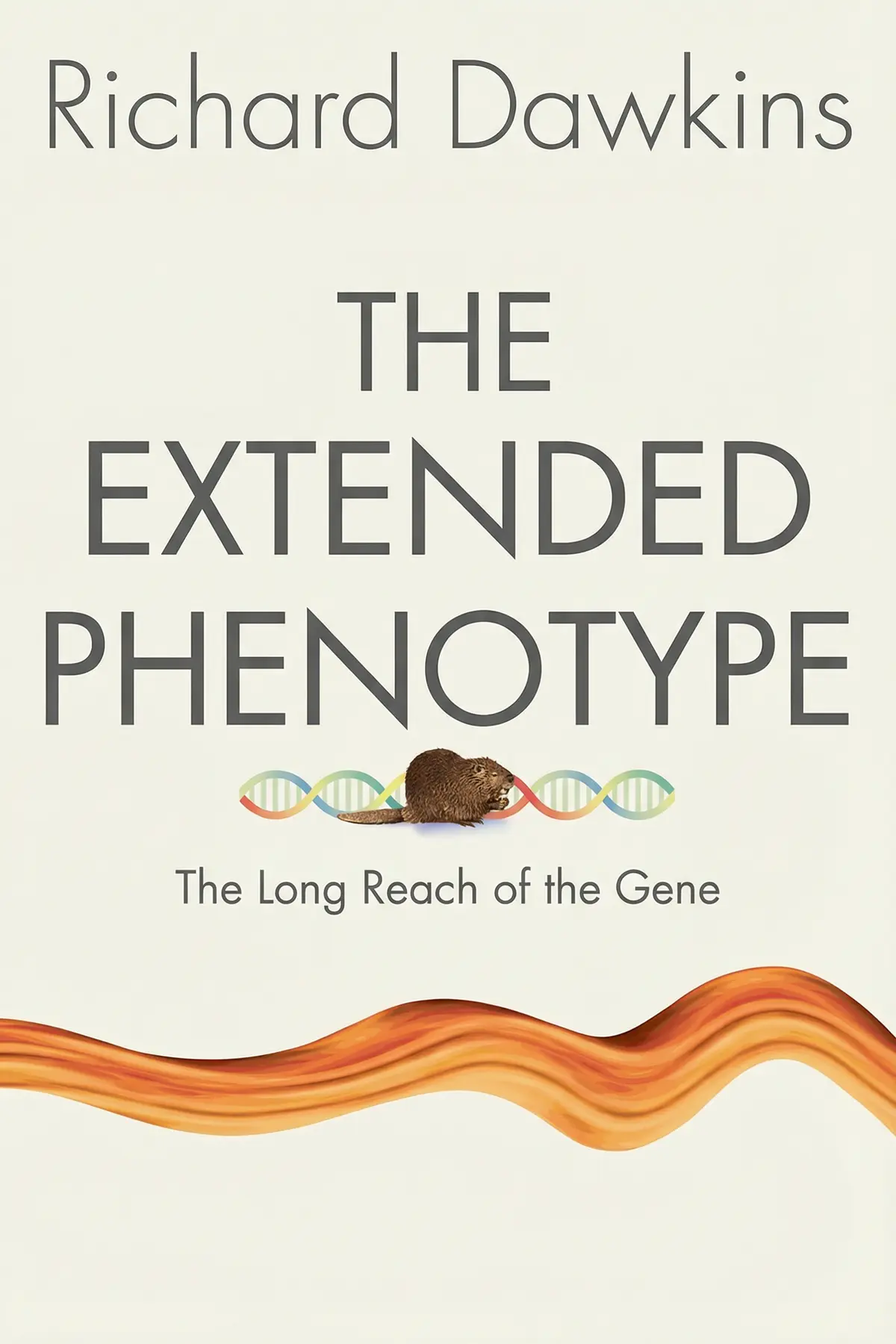
The Extended Phenotype explores a revolutionary perspective on Darwinian evolution. While we often view natural selection through the lens of individual plants and animals competing for survival, this work invites us to look closer—at the genetic level. It suggests that genes are the true units of selection, acting as replicators that use organisms merely as vehicles for their own propagation. The core promise of this exploration is to redefine our understanding of biological influence. It introduces the concept of the 'extended phenotype,' which posits that the effects of a gene do not stop at the skin or cell wall of an organism. Instead, genetic reach can manifest in the architecture of nests, the behavior of parasites, and the structural changes in the environment. By shifting our perspective, we gain a clearer picture of why certain biological 'imperfections' exist and how life forms manipulate one another in a constant, microscopic game of survival and replication.
Richard Dawkins is a distinguished fellow of the Royal Society and served as the Professor for the Public Understanding of Science at Oxford University from 1995 to 2008. He is a prolific author, most famously known for his groundbreaking bestseller The Selfish Gene, published in 1976. Over his career, Dawkins has earned high acclaim, including the 1987 Royal Society of Literature Prize and the Los Angeles Times Literary Prize.
Richard Dawkins
Richard Dawkins
Richard Dawkins
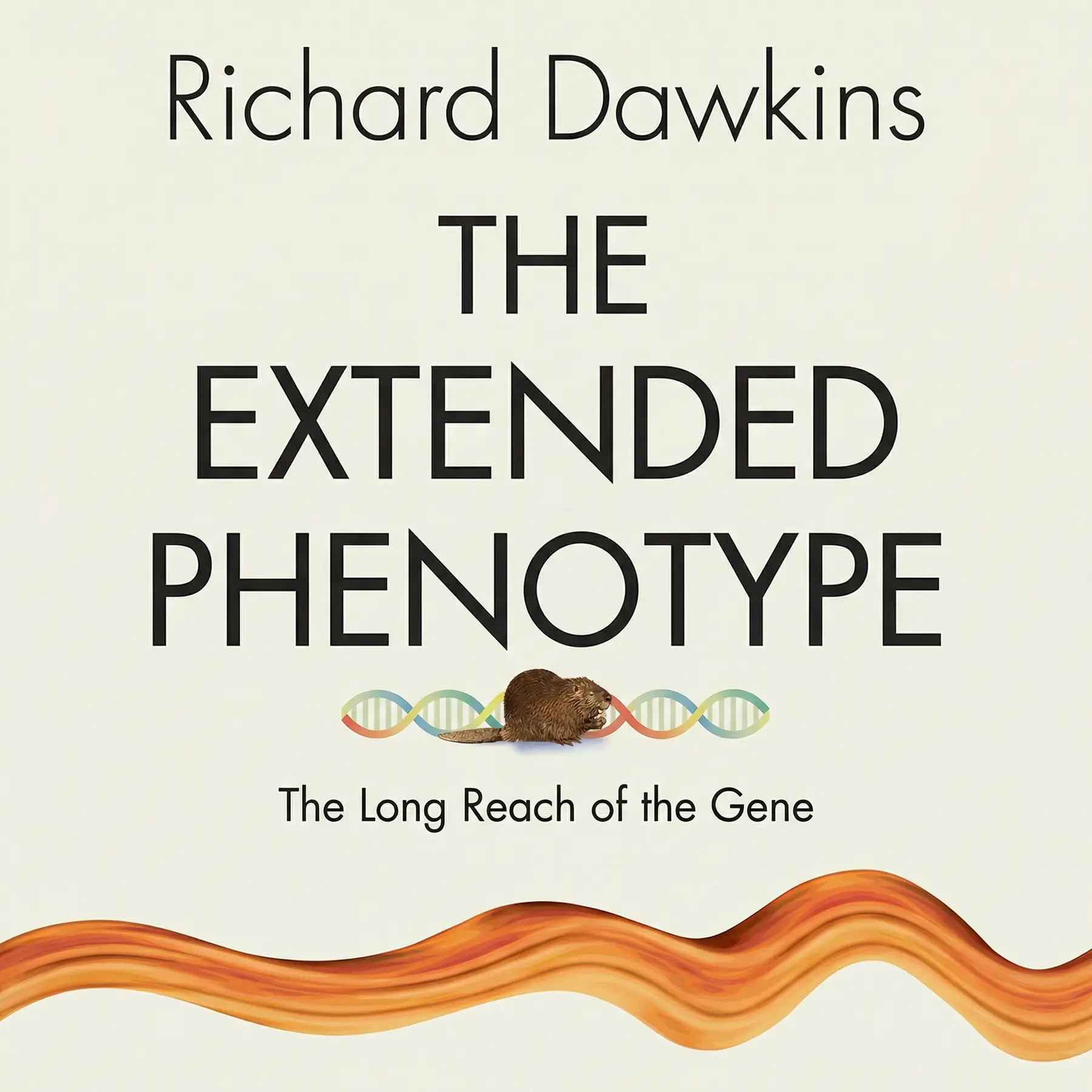
Listeners consider the book worth the exertion and value the high-quality information, with one listener highlighting how it challenges critics of gene-centered theory. Feedback on readability is varied, as one listener mentions needing to re-read essential passages. The diversity of topics also sparks different responses; one listener finds the variety captivating, while another observes that the subjects seem to transition unpredictably throughout the text.
This book is Dawkins at his absolute peak, though it clearly targets a more academic audience than his previous bestsellers. While The Selfish Gene introduced the revolutionary concept of the replicator, this work pushes that logic to its inevitable, beautiful conclusion. He argues that the phenotypic effect of a gene doesn’t stop at the skin of the organism. Whether it is a beaver’s dam or a parasite's influence on a snail’s shell, the reach of the gene is vast. To be fair, the prose is dense and requires significant concentration to follow the intricate arguments. You might find yourself re-reading entire pages to grasp the nuances of his response to critics. However, the intellectual payoff is immense for those willing to do the heavy lifting. It changes how you perceive the natural world entirely.
Show moreEver wonder where an organism actually ends and the environment begins? This book argues that the line is much blurrier than we think, proposing that artifacts and host behaviors are just as much a part of the phenotype as a limb or an organ. I found the logic behind genetic replicators to be airtight and incredibly persuasive. Daniel Dennett’s afterword is a wonderful addition that helps contextualize why these ideas were so controversial at the time. It’s a deep dive into the mechanics of variation and survival that every student of biology should experience. Some sections on genetic determinism are a bit heavy-handed, but the overall vision of life’s grandeur is undeniable.
Show moreDawkins remains a master of the metaphor even when he’s writing for his peers rather than the general public. His descriptions of parasitic manipulation, where one organism's genes essentially "reach out" to control another, are both terrifying and beautiful. This book serves as a vital bridge between pure genetics and behavioral ecology, showing that everything in nature is interconnected through the survival of replicators. To be fair, you have to be comfortable with a lot of jargon and a very formal writing style. If you can handle the academic tone, you’ll find a wealth of insights that few other science writers can provide. It is a peerless champion of the gene-centered view.
Show moreAfter hearing so much about the 'gene-eye view' of evolution, I felt compelled to tackle Dawkins' most serious contribution to the field. It’s a fascinating exploration of how behavioral traits and artifacts like nests function as extensions of the genetic code itself. The examples of cuckoo eggs and manipulation were particularly enlightening and helped clarify the "how" of natural selection. My only real gripe is that Dawkins spends a lot of time fighting with his critics, which can feel a bit repetitive if you aren't familiar with 1980s academic drama. Still, the information quality is top-notch and provides a rigorous framework for understanding biodiversity. It’s definitely not a light beach read, but it is deeply rewarding.
Show moreNot what I expected based on his other popular science works, but brilliant nonetheless. I've been a fan of Dawkins for years, but this particular volume is incredibly dense and seems written strictly for his colleagues. The vocabulary is highly technical and the sentence structure often requires multiple passes just to extract the basic meaning. I found myself getting lost in the "Ultra-Darwinist" debates and the complex genetic terminology he uses throughout. Frankly, it’s a bit of a chore to get through if you don't have a background in genetics. While the central idea of the extended phenotype is brilliant, the presentation is far too academic for the average reader.
Show moreFinally got around to finishing this monster and I’m glad I did, even if it took me twice as long as usual. Dawkins is defending his ground against those who misunderstood The Selfish Gene, and he does so with a sharp mind and even sharper wit. The discussion on how genes rely on their environment for successful replication is a necessary counter to the idea that he ignores ecological context. It is a tough situation to cope with mentally because it strips away the 'why' of evolution in favor of a cold, precise 'how.' Despite the occasionally abrasive tone toward his detractors, the book is a masterclass in logical argumentation. Highly recommended for the serious student.
Show moreThe truth is, you need a solid background in biology to fully appreciate the brilliance of this text. It isn't just an expansion of his earlier work; it is a total paradigm shift in how we view the unit of selection. By viewing beaver dams and bird nests as phenotypic expressions, Dawkins removes the "vehicle" from the pedestal and places the replicator at the center of everything. I'll admit that the readability fluctuates, and some of the chapters feel like they could have been condensed significantly. However, the information quality is so high that these minor frustrations are easily forgiven. It’s a foundational piece of literature for anyone interested in Neo-Darwinian synthesis.
Show moreAs someone who adored The Selfish Gene, this felt like a bit of a slog through mud at certain points. The core concept—that genes influence the world beyond the body—is absolute genius and makes so much sense once explained. Unfortunately, Dawkins gets bogged down in very specific, technical rebuttals that haven't aged as well as the central theory. I found the organization of the chapters a bit confusing, as if he was trying to address every single critic at once. It’s a great book for those who want to understand his exact reasoning, but it’s probably too much detail for the average person. I'm glad I read it, but I won't be picking it up again anytime soon.
Show moreI honestly found the sections on parasitic manipulation to be the most gripping part of this otherwise difficult read. The way certain genes can induce physical changes in another species' shell or behavior is just mind-blowing. It really challenges the traditional view of the individual organism as a discrete, sovereign entity. While the book is definitely a "serious effort" and can be quite taxing on the brain, the information is worth the effort. My only criticism is that it feels a bit repetitive in its defense against "Ultra-Darwinist" labels. Still, if you want a deep, uncompromising look at evolutionary mechanics, this is the book you need to buy.
Show moreLook, I really wanted to love this, but it felt remarkably disorganized compared to his later books. The way he moves between topics can feel almost random at times, jumping from technical rebuttals to fascinating thought experiments without much warning. If you aren't a professional biologist or an extremely dedicated amateur, the level of detail provided here is likely overkill for your needs. I appreciated the core argument about genes extending into the environment, yet the execution was far too dry for a casual read. It’s certainly a seminal work in evolutionary theory, but for me, the last chapter of his previous book was enough. I'll probably stick to his more accessible titles in the future.
Show more
J. Craig Venter
Carl Zimmer
Bill Bryson
Jeff Hawkins
AUDIO SUMMARY AVAILABLE
Get the key ideas from The Extended Phenotype by Richard Dawkins, plus 5,000+ more titles in English and Thai.







