
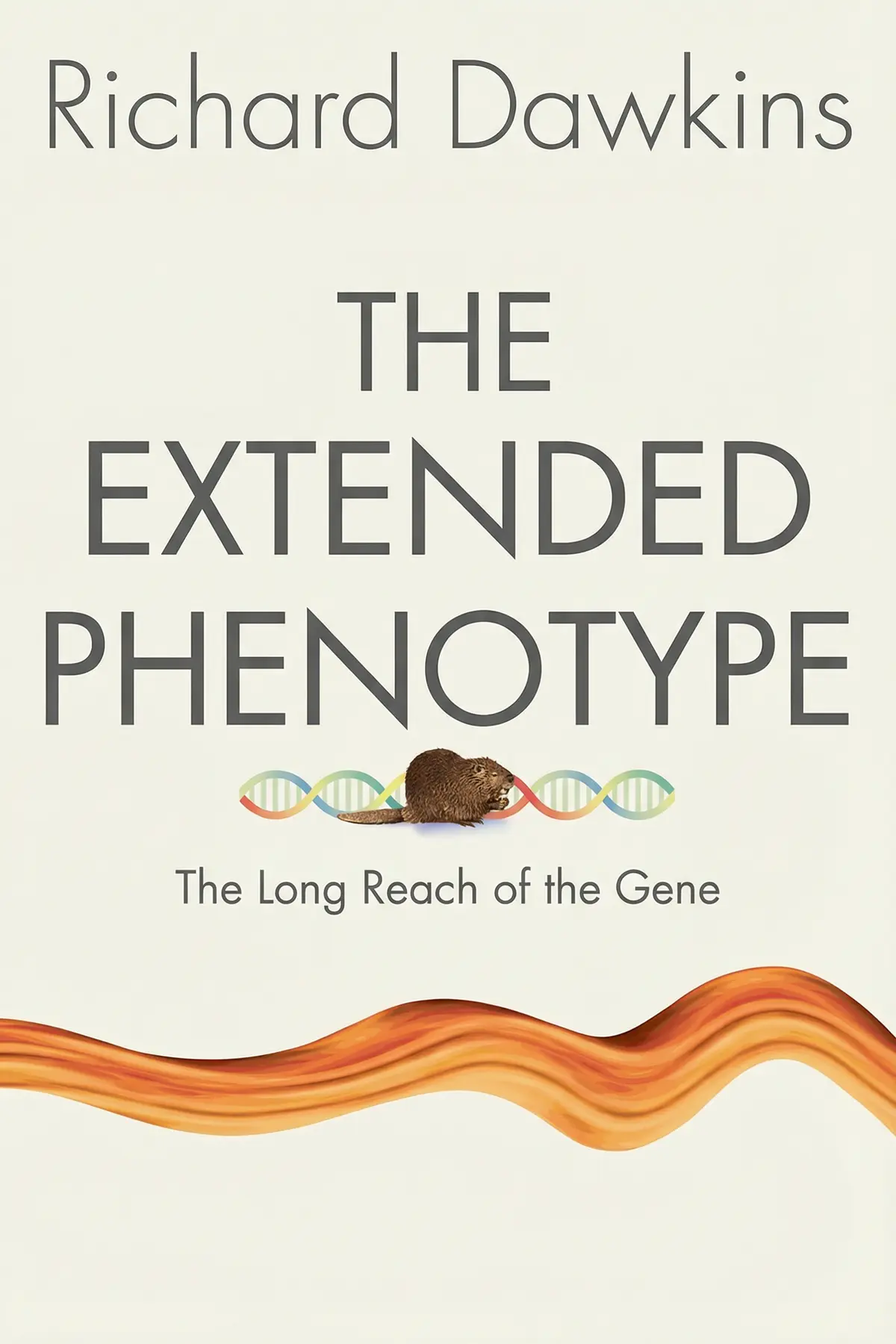
The Extended Phenotype: The Long Reach of the Gene
Richard Dawkins
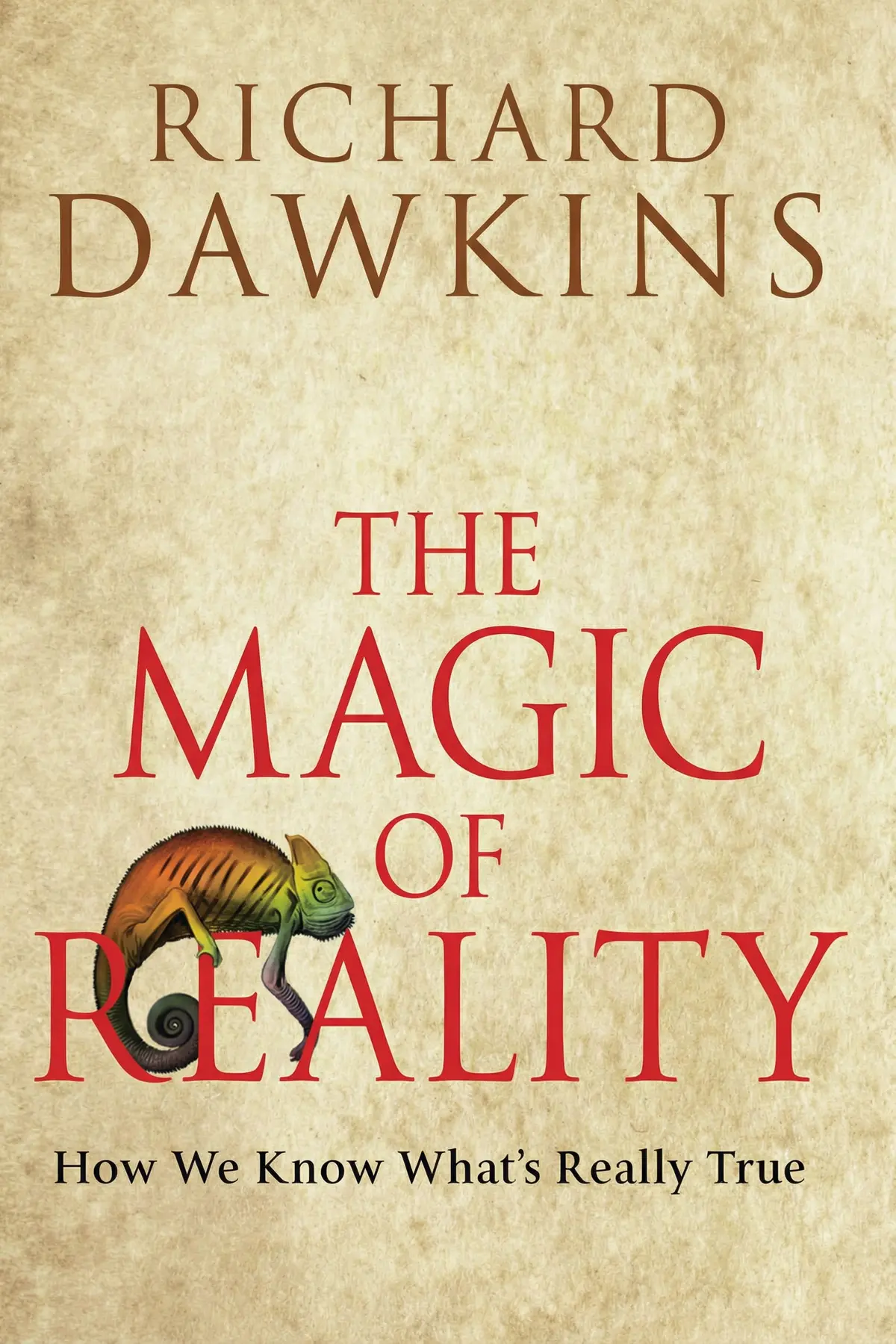
Explore the wonders of the universe through the lens of science, replacing ancient myths with the awe-inspiring truths of evolution, physics, and cosmology to reveal the genuine magic of reality.
2 min 03 sec
For as long as humans have looked up at the stars or felt the earth shake beneath their feet, we have sought explanations for the mysteries of our existence. In the distant past, when we lacked the tools to probe the depths of the ocean or the composition of the atmosphere, we turned to the only tool we had: our imagination. We populated the world with gods of thunder, spirits of the forest, and elaborate tales of how everything came to be. These stories were our first attempt to make sense of a world that seemed chaotic and unpredictable.
But as we have moved forward through history, a new kind of storytelling has emerged—one that doesn’t rely on the whims of deities, but on the firm foundation of evidence and reason. This is the story of science. Some might fear that by stripping away the supernatural, we lose the ‘magic’ of life. However, the reality is quite the opposite. When we understand the mechanics of a rainbow or the biological heritage written in our cells, the world becomes more enchanting, not less. This is the core throughline we are going to explore today.
We are going to revisit the fundamental principles that govern our world, looking at them through the clear lens of scientific inquiry. We will move away from the ‘poetic’ magic of fairytales and into the ‘true’ magic of reality. From the way our senses help us navigate the present to the ways we can reconstruct the deep history of the cosmos, we will see that the truth is often far more incredible than any myth. We will discover how a pile of photographs can reach into the clouds to show us our ancestors, how the very air we breathe can change its nature with just one extra atom, and how our modern world is literally powered by the light of a distant star. Prepare to see the world as it really is—a place of staggering complexity and undeniable wonder.
2 min 27 sec
How do we decide what is real and what is just a story? Learn why our five senses are our first line of defense in uncovering the truth.
2 min 27 sec
When we can’t see the answer directly, we build a mental map. Discover how scientists use models to predict the future and unlock the past.
2 min 37 sec
Forget the fairytales of instant transformation. Evolution is a slow, beautiful process that connects us to all of life’s history.
2 min 37 sec
How do we know who our cousins are in the animal kingdom? Discover the molecular clock and the ‘language’ written in our cells.
2 min 28 sec
Everything you touch is made of tiny building blocks and mostly empty space. Explore the strange and solid world of the atom.
2 min 18 sec
Where did the atoms in your body come from? The answer lies in the heart of dying stars and the power of supernovas.
2 min 32 sec
Every bite of food and every watt of power ultimately comes from the sun. Discover how our star fuels the entire planet.
2 min 23 sec
There is more to light than meets the eye. Learn about the ‘colors’ we can’t see and how they help us understand the world.
2 min 14 sec
How do we know how old the universe is? Discover the ‘redshift’ and the cosmic barcode that points back to the Big Bang.
2 min 08 sec
Why do we believe in the paranormal? Explore how our love for a good story can lead us to see magic where there is only math.
2 min 01 sec
Science doesn’t have all the answers yet, but that’s what makes it exciting. Learn why we should never stop at ‘supernatural.’
1 min 36 sec
We have traveled a long way, from the ancient tribes of Africa to the very edge of the observable universe. Along the way, we have seen that the tools of science—observation, modeling, and evidence—allow us to peel back the layers of the world to see the mechanisms beneath. We’ve discovered that we are the descendants of a 43-mile-high stack of ancestors, that we are built from the dust of exploded stars, and that the very light that hits our eyes is a carrier of ancient secrets from the birth of time itself.
The throughline of our exploration is clear: reality doesn’t need the ‘help’ of the supernatural to be extraordinary. In fact, the mythical stories we used to tell ourselves are often much simpler and less interesting than the truth. A world where a god vomits up the sun is nowhere near as beautiful as a world where the sun is a giant nuclear furnace that forged the very atoms in your body.
As you move forward, remember that the spirit of science is a spirit of perpetual curiosity. When you see something amazing, don’t settle for the easy answer of ‘magic.’ Look deeper. Ask how it works. Seek out the evidence. There is a deep, profound satisfaction in knowing how the universe actually functions. By embracing the magic of reality, we don’t just learn about the world—we learn how to appreciate the incredible privilege of being alive in a universe that is both logical and breathtaking. Keep asking questions, keep looking at the evidence, and never lose your wonder for the real world.
The Magic of Reality is a deep dive into the most profound questions of existence, using the tools of scientific inquiry to replace folklore with facts. The book addresses the fundamental mysteries that have captivated humanity for millennia: How did the universe begin? Where did humans come from? What are things actually made of? By contrasting ancient creation myths from diverse cultures with the evidence-based explanations of modern science, it demonstrates that the natural world is far more wondrous than any supernatural story ever told. Listeners are invited on a journey that spans from the microscopic level of atoms and DNA to the vast reaches of exploding stars and expanding galaxies. The promise of this summary is a renewed sense of wonder for the world around us. It strips away the confusion of the supernatural to reveal a reality that is logical, consistent, and breathtakingly beautiful. By the end, you will understand how we know what we know, and why the pursuit of truth through science is the most magical endeavor of all.
Richard Dawkins is a world-renowned ethologist and evolutionary biologist who has spent his career making complex scientific concepts accessible to the general public. As a fellow of the Royal Society, he is highly respected in the scientific community. He is perhaps best known as the author of several influential books, including the landmark work The Selfish Gene, which was instrumental in popularizing the gene-centered view of evolution and changed the way both scientists and laypeople understand the mechanisms of natural selection.
Richard Dawkins
Richard Dawkins
Richard Dawkins
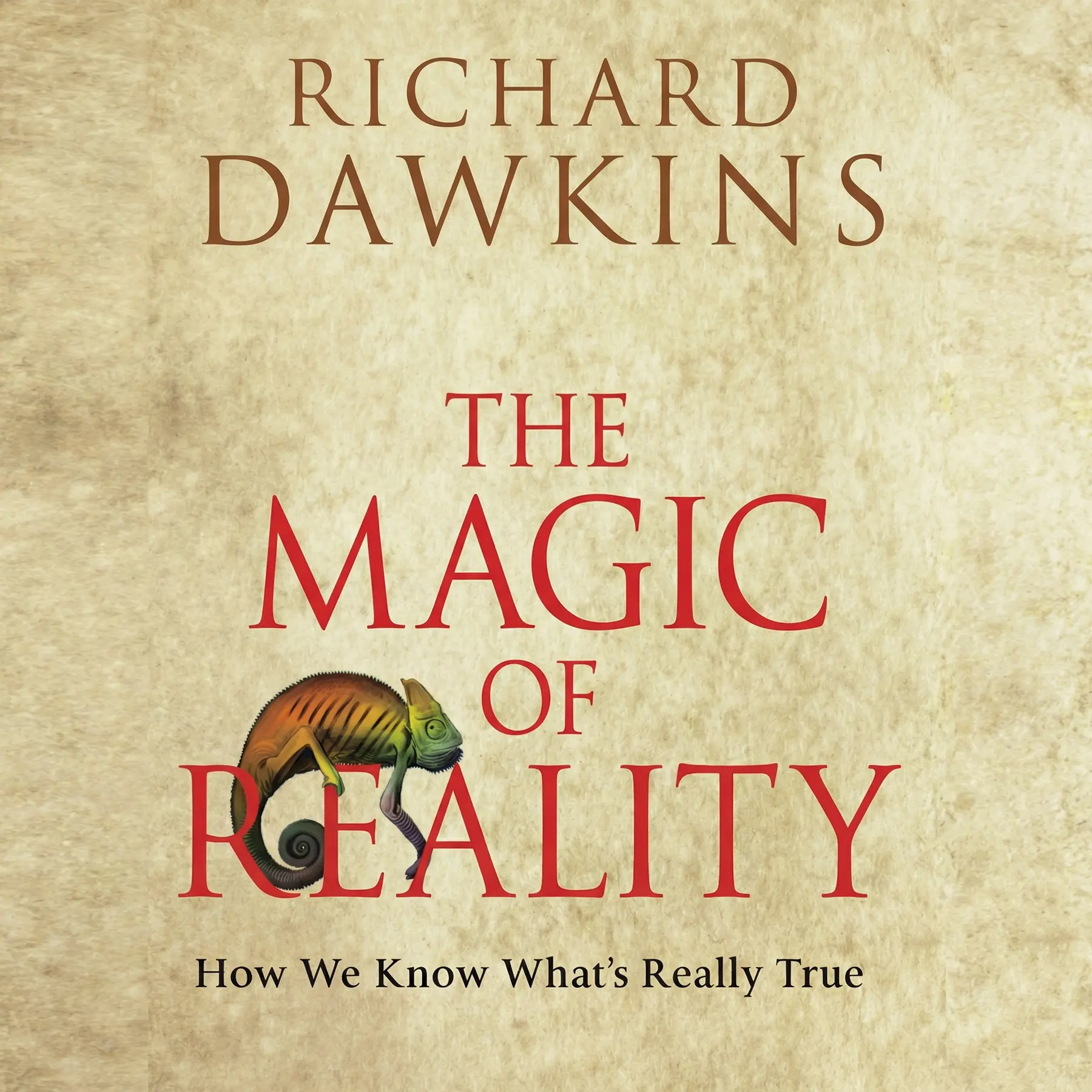
Listeners find this work captivating and superbly composed, offering lucid breakdowns of scientific principles that are simple to understand. Furthermore, the volume appeals to every age group by making scientific learning enjoyable and informative, especially for use in middle school curricula and homeschooling. In addition, they value the hardcover edition's abundance of drawings and photos, viewing it as essential reading for both kids and their parents.
As a parent looking for high-quality homeschooling material, I cannot recommend this volume enough. Dawkins breaks down the mysteries of our world—from earthquakes to the nature of the sun—with such infectious enthusiasm. My twelve-year-old was particularly captivated by the contrast between ancient creation myths and the actual evidence-based reality. Dave McKean’s illustrations are not just decorative; they are integral to the learning experience and make every page a visual feast. It’s rare to find a science book that feels both educational and genuinely magical. Truth is, I learned a few things myself about the composition of matter that I’d long forgotten since my own school days. This is a must-have for any family library.
Show moreEver wonder why we have seasons or why the rainbow appears after a storm? This book takes those fundamental 'why' questions and provides answers that are far more exciting than any legend about gods or monsters. Dawkins has a gift for making reality feel like a grand adventure, showing us that the truth is often more wondrous than fiction. I loved how he dismantled the idea of miracles by using simple, sharp logic and a bit of common sense. The hardcover format is sturdy and the paper quality is top-notch, making it something you'll want to keep on your shelf for years. It’s an essential read for anyone who values rational thought over superstitious hand-waving in the 21st century.
Show moreFinally got around to reading this with my nephew, and it was a revelation for both of us. The book handles the vast diversity of animal life and the origins of the universe with a sense of genuine awe that is contagious. Dawkins proves that you don't need supernatural explanations to find meaning or beauty in the world around us; the real world is plenty magical on its own. In my experience, children are far more capable of handling these big ideas than we give them credit for, and this book treats them with respect. It’s a vital tool for fostering a generation of thinkers who aren't afraid of evidence or the unknown. Plus, the physical book itself is just gorgeous to hold and flip through.
Show moreThis is exactly the kind of logic-based literature our current generation needs, providing a much-needed antidote to the anti-science rhetoric often found in modern discourse. Dawkins has written a book that is as entertaining as it is informative, making complex topics like the rainbow and evolution accessible to everyone. The layout is fantastic, and the integration of Dave McKean's art creates a reading experience that feels special. I found the 'miracles' chapter to be particularly thought-provoking, as it encourages readers to apply the same standards of evidence to everything they hear. If you want to spark a lifelong love of science in a young person, give them this book. It is a stunning achievement in popular science writing that doesn't talk down to its audience.
Show moreThe chapter titled 'Who was the first person?' is easily the highlight of this entire experience. Dawkins uses a brilliant thought experiment involving a stack of ancestor photos that makes the concept of evolution click in a way no textbook ever has. However, I have to agree with some other readers that the omission of quantum physics and relativity feels like a missed opportunity for a truly comprehensive guide. Despite that gap, the book is a masterclass in clear, concise writing that avoids unnecessary jargon. McKean’s artwork adds a surreal, almost dreamlike quality that balances the hard logic of the text. It's a solid primer for teens, though adults might find some of it a bit oversimplified.
Show morePicked this up for my daughter’s middle school science course and it has become her favorite part of the week. The way the author juxtaposes folkloric explanations with modern scientific discovery is a fantastic pedagogical tool for younger minds. Frankly, I think we need more books that aren't afraid to strike a blow for logic in an age where misinformation spreads so quickly. My only gripe is the final chapters on bad luck and miracles, which felt a bit more like a manifesto against religion than a pure science lesson. While I agree with the sentiment, the shift in tone was a bit jarring compared to the earlier, more whimsical chapters. Still, for a family-oriented science book, it's pretty hard to beat the clarity found here.
Show moreAfter hearing so much about Dawkins’ more 'militant' reputation, I was pleasantly surprised by how accessible and relatively mild this book actually is. He focuses heavily on the 'how' and 'why' of the natural world, using Occam's Razor to slice through the clutter of magical thinking. The illustrations by Dave McKean are worth the price of admission alone; they are dark, intricate, and perfectly complement the text. I did find the sections on biology much stronger than the physics, which felt a bit rushed and lacked mention of more modern theories like relativity. It’s a great introductory text that encourages kids to ask questions rather than just accepting what they're told. A must-have for any curious mind looking for a gateway into science.
Show moreThe physical quality of this hardcover is worth every penny, featuring thick pages and vibrant prints that make the science jump off the page. I particularly enjoyed the sections explaining the sun and earthquakes, which used metaphors that were easy to visualize and understand. Personally, I think some of the religious critiques might turn off a few sensitive parents, but the core scientific content is too good to ignore. It’s a perfect bridge for those transitioning from picture books to more serious non-fiction. I just wish there was a bit more depth regarding particle physics, as the author kind of glosses over the 'what are things made of' part. Overall, it's a fantastic addition to any home library for middle schoolers.
Show moreTo be fair, this book is clearly intended for a much younger audience than the description on the listing might suggest. If you are an adult looking for a deep dive into evolutionary biology like 'The Selfish Gene,' you are going to be disappointed by how basic the content is. The tone often veers into the condescending, treating the reader as if they have never encountered the scientific method before. That said, as a gift for a middle-schooler or a curious ten-year-old, it would be an excellent choice. The myths included at the start of each chapter are entertaining, even if Dawkins seems a bit too eager to dismiss their psychological significance. It’s a beautiful object, but the intellectual depth just isn't there for a seasoned science reader.
Show moreNot what I expected given the glowing praise, as the author seems more interested in mocking ancient cultures than actually explaining the science at times. Look, I’m all for scientific literacy, but the constant snide remarks about 'fairytales' and astrology felt unnecessary for a book aimed at children. It lacks the psychological depth that someone like Joseph Campbell brings to the table regarding why humans tell stories in the first place. Beyond the negativity, the science presented is so elementary that most of it is covered in a standard fifth-grade curriculum. The artwork is beautiful, but it can’t save a text that feels this arrogant and limited in its scope. I'd recommend taking a walk in the woods over reading this particular take on reality.
Show more

J. Craig Venter
Carl Zimmer
Bill Bryson
Jeff Hawkins
AUDIO SUMMARY AVAILABLE
Get the key ideas from The Magic of Reality by Richard Dawkins, plus 5,000+ more titles in English and Thai.







