
25 min 54 sec
The Four Tendencies: The Indispensable Personality Profiles That Reveal How to Make Your Life Better (and Other People’s Lives Better, Too)
Discover how your response to expectations defines your personality. This framework categorizes people into four distinct groups, offering a roadmap to better self-understanding, improved habits, and more effective communication with others.
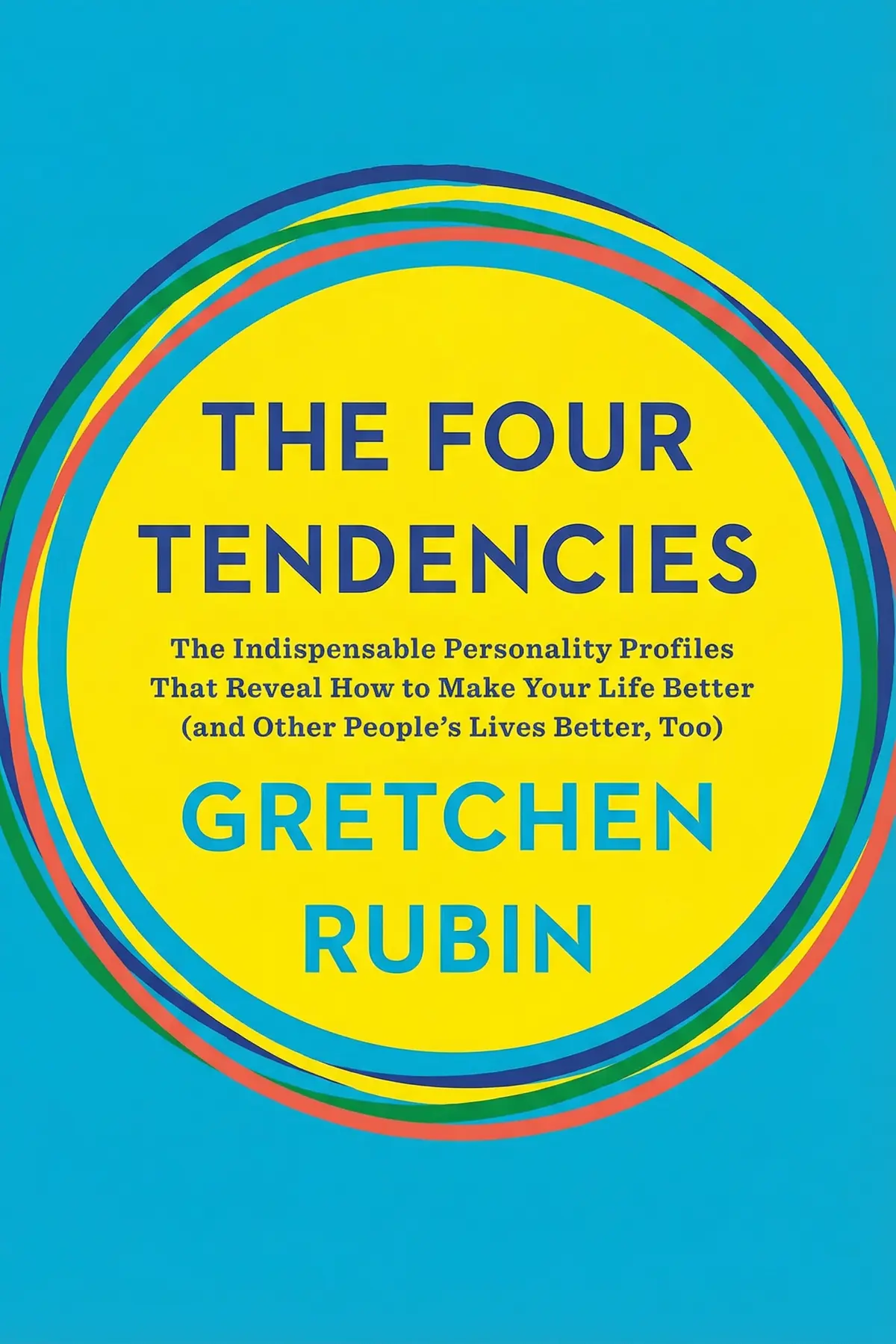
Table of Content
1. Introduction
2 min 00 sec
Have you ever stopped to wonder why certain tasks feel effortless while others feel like an uphill battle, even when you really want to do them? We often chalk our successes and failures up to things like willpower, character, or simple laziness. But what if there was a deeper, more structural reason for how we behave? The journey we are about to embark on suggests that much of our behavior is driven by a single, fundamental personality trait: how we respond to expectations.
Think about the various pressures you face every day. There are external expectations—the things other people ask of us, like a work deadline, a request from a spouse, or the rules of the road. Then, there are internal expectations—the things we ask of ourselves, like a New Year’s resolution, a personal creative project, or a commitment to go for a morning run. Most of us find that we are much better at meeting one type of expectation than the other, or perhaps we struggle with both, or excel at both.
In this exploration of Gretchen Rubin’s work, we are going to look at a framework that divides the world into four distinct groups: Upholders, Questioners, Obligers, and Rebels. This isn’t about putting people in boxes to limit them; it’s about providing a map. When you know which category you fall into, you stop fighting your own nature and start working with it. You’ll begin to see why your coworker always needs more data before starting a project, why your partner can’t seem to exercise unless they have a trainer, or why you personally feel a surge of resistance the moment someone tells you what to do.
As we move through these ideas, we’ll see how each profile carries its own unique strengths and its own set of pitfalls. We’ll look at how to communicate with different types, how to motivate yourself based on your specific needs, and how to build a life that feels smoother and more productive. This framework is a tool for self-compassion as much as it is for productivity. By the end of this summary, you won’t just see yourself differently—you’ll see every person in your life through a new, more understanding lens. Let’s dive in and see which tendency resonates with you.
2. The Foundation of the Four Tendencies
2 min 25 sec
Understanding how we respond to the two types of expectations—inner and outer—is the secret to unlocking our personal behavior and improving our relationships.
3. The Upholder: Reliability and its Risks
2 min 21 sec
Discover the profile of someone who naturally meets both internal and external demands, and why their greatest strength can sometimes become their biggest hurdle.
4. Working with and Managing the Upholder
2 min 06 sec
Learn how to effectively interact with Upholders by providing clear expectations and navigating their potential for rigidity.
5. The Questioner: Logic Above All
2 min 12 sec
Meet the individuals who only meet expectations if they make sense, and discover how their skepticism can be a powerful engine for efficiency.
6. Communicating with the Inquisitive Questioner
2 min 01 sec
To get a Questioner on board, you need more than authority—you need evidence. Learn how to provide the justification they crave.
7. The Obliger: The World’s Dependable Core
2 min 18 sec
As the most common tendency, Obligers are the people who keep society running, but they often struggle to prioritize their own needs.
8. Creating Accountability for the Obliger
2 min 08 sec
The secret to an Obliger’s success isn’t more willpower—it’s building external systems that make internal goals mandatory.
9. The Danger of Obliger Rebellion
2 min 04 sec
When an Obliger feels over-taxed and under-appreciated for too long, they may experience a sudden, total shutdown known as ‘rebellion.’
10. The Rebel: Freedom and Identity
2 min 07 sec
Rebels resist all expectations, both internal and external, choosing instead to act from a place of personal choice and authentic identity.
11. Motivating a Rebel: Information, Consequences, Choice
2 min 15 sec
Learn the three-step framework for communicating with Rebels that respects their need for autonomy while still achieving a positive outcome.
12. Conclusion
1 min 57 sec
We’ve journeyed through the four distinct ways that humans process expectations, and hopefully, you’ve seen pieces of yourself—and the people you care about—in these profiles. Whether you are the disciplined Upholder, the analytical Questioner, the dependable Obliger, or the independent Rebel, you now have a framework that explains why you act the way you do.
The most important takeaway is that none of these tendencies are ‘better’ than the others. Each one has its own brilliance and its own shadow. The goal isn’t to try and change your tendency; it’s to change your environment and your strategies so they align with your natural wiring. An Obliger shouldn’t try to be an Upholder; they should simply find a better accountability partner. A Questioner shouldn’t try to stop asking ‘why’; they should just learn to recognize when they have enough data to move forward.
When we understand these categories, we gain a superpower: the power of perspective. We stop taking other people’s behavior personally. We realize that the ‘stubborn’ coworker is just a Questioner who needs more information, and the ‘flaky’ friend is just an Obliger who has hit a point of rebellion. This understanding fosters empathy, reduces conflict, and allows us to build teams and families that are more harmonious and productive.
As you move back into your daily life, take a moment to observe the expectations flying around you. How are you responding to them? How are the people around you responding? Use the strategies we’ve discussed—clear instructions for Upholders, logical justifications for Questioners, external accountability for Obligers, and freedom of choice for Rebels. By speaking the right ‘language’ for each tendency, you can make your life better, and help those around you flourish, too. Happiness, it turns out, isn’t about changing who you are—it’s about understanding who you are and building a life that honors that truth.
About this book
What is this book about?
Have you ever wondered why you can easily meet a deadline for a boss but struggle to keep a New Year’s resolution for yourself? Or why some people seem to question every single instruction they receive, while others naturally follow every rule? The Four Tendencies provides the answers to these common frustrations by examining a single, powerful trait: how we react to expectations. Gretchen Rubin reveals that everyone falls into one of four categories based on how they handle inner and outer demands. By identifying whether you are an Upholder, a Questioner, an Obliger, or a Rebel, you can unlock the secrets to your own motivation. This guide offers more than just a personality test; it provides practical strategies to help you tailor your environment, your work life, and your personal relationships to fit your natural wiring. Whether you want to exercise more, lead a team better, or reduce conflict at home, understanding these profiles is the key to making life work for you rather than against you.
Book Information
About the Author
Gretchen Rubin
Gretchen Rubin is an influential writer whose books have sold millions of copies around the world. Her writing strives to examine human nature in a way that can help anyone understand themselves better and therefore live a happier life. Her best-selling books include The Happiness Project and Better Than Before.

Ratings & Reviews
Ratings at a glance
What people think
Listeners find this work highly practical and insightful, delivering useful lessons that apply to everyday social interactions. Additionally, it receives praise for its smooth pacing and enjoyable content, with listeners mentioning that it is a quick, fun read to talk about with friends. Listeners also appreciate the way the book explores personality traits, providing clear definitions for each tendency and explaining how to effectively motivate different individuals. Finally, they value the guidance on communicating and working with people of every category, calling the experience a life-changing read.
Top reviews
Big
After decades of feeling like I was 'too much' for people, this book gave me the peace of mind I didn't know I needed. Identifying as an Upholder made so much sense of my rigid adherence to schedules and my frustration when others don't follow through. Rubin’s insights into how these tendencies interact are brilliant. I finally understand why my husband needs me to ask him to do things specifically rather than just expecting him to see what needs to be done. The prose is clear and the tone is encouraging without being overly sugary. It’s a practical guide to human behavior that feels very accessible. I’ve recommended it to everyone in my circle. It’s rare to find a book that offers such immediate, actionable value for your personal relationships. Truly life-changing!
Show moreSuthinee
Wow, this was a total lightbulb moment for me. I’ve spent years feeling guilty because I couldn't stick to habits that seemed easy for everyone else. Reading the chapter on 'Rebels' was like looking in a mirror; I finally understand that I’m not lazy, I just resist internal and external expectations! Gretchen Rubin has a gift for making complex behavioral patterns feel simple and manageable. The book is well-structured and moves at a great pace, never getting bogged down in too much jargon. I’ve already started using her tips for 'harnessing' my tendency rather than fighting it, and it’s been incredible. If you’ve ever felt like a failure because traditional productivity advice doesn’t work for you, you need to read this book immediately. It is a game-changer for self-acceptance.
Show moreSarawut
Not gonna lie, I was skeptical about another personality framework, but this one actually stuck. Unlike other systems which can feel a bit abstract, the Four Tendencies is focused entirely on action. How do you respond to expectations? That’s it. That one question reveals so much about how we function daily. I found the advice for 'Questioners' to be particularly helpful for my own work habits. I no longer feel bad about needing to do hours of research before making a decision! Rubin’s voice is friendly and relatable throughout. She doesn't pretend to be a clinical psychologist; she’s just a keen observer of human nature. This book provided the 'aha' moments I was looking for to finally get my habits in order. Highly recommend for any self-help junkie.
Show moreChatri
Finally got around to listening to the audiobook version, which Gretchen Rubin narrates herself, and I loved it. Her passion for the subject really comes through in her voice. The framework is simple enough to remember but deep enough to be useful in almost any situation. I’m an Obliger married to a Rebel, and let me tell you, this book saved our marriage from a lot of unnecessary arguments. Knowing that his resistance isn't a personal attack on me, but just his natural tendency, changed everything. The book is practical, insightful, and surprisingly fun to get through. It’s a quick listen that leaves you with tools you can use five minutes after finishing. I can see why people call her one of the most influential writers on human nature.
Show moreFatima
My manager recommended this book to help our team communicate better, and I have to say, it’s actually quite useful in a professional setting. Understanding that some coworkers need a 'why' before they start a task while others just need a clear deadline has saved us a lot of friction. Rubin’s writing is punchy and she keeps the momentum going, which I appreciate. Look, it’s not a medical textbook, but it offers a practical framework for navigating daily interactions. Some of the strategies for dealing with 'Rebels' were particularly eye-opening for me. It’s a fast read and provides immediate takeaways that you can apply at the office or at home. It’s definitely improved the way I approach my delegating and my own task management. It is a solid tool for anyone in a leadership position.
Show moreDivya
Picked this up for book club and we had a blast trying to type each other! It’s such a fun, social book because it gives you a new vocabulary to describe people’s quirks. I’m definitely a Questioner, which explains why I spent half the book looking for her sources, haha! Even though the evidence is mostly anecdotal, the observations feel incredibly spot-on in practice. The truth is, it doesn't matter if it's 'scientific' if the advice actually helps you get things done and understand your friends. I appreciated the specific suggestions for how to communicate with people of each tendency. It’s a quick, engaging read that avoids the dry, preachy tone of many self-help books. Definitely worth the time if you're interested in personal growth or just want to understand your family better.
Show moreGai
Gretchen Rubin has a very specific way of looking at the world that is both incredibly organized and deeply personal. This book takes one small concept from her previous work and expands it into a comprehensive system. While I can see how some might find it a bit 'neat and tidy' for something as messy as human personality, I found the clarity refreshing. It’s not trying to be a deep dive into the psyche; it’s a tool for habit formation. Personally, I think the real strength lies in the sections on how to effectively motivate others. Whether you’re a parent, a teacher, or a boss, there’s something here for you. The pacing is excellent and the chapters are bite-sized, making it easy to jump around. It’s a smart, observant piece of writing.
Show morePim
Ever wonder why you can keep a promise to your boss but can’t seem to stick to a gym routine you set for yourself? That’s the core question here, and Rubin provides some interesting answers. I found myself relating to parts of the 'Obliger' descriptions, which helped me realize why I need external accountability to get things done. However, I’m not sure I buy into the idea that every person on earth fits perfectly into one of these four categories. It’s a bit reductive. The book is fun to discuss with friends, and the anecdotes are relatable, but don’t expect deep psychological insights. It’s a light, breezy read that works better as a conversation starter than a life manual. I liked the practical tips for communicating with different types, but I’m still a bit skeptical of the theory's validity.
Show moreRohan
I really wanted to like this because I enjoyed her previous work on habits, but this felt like a massive stretch. The entire book is based on a short quiz about how people respond to expectations, and frankly, it doesn’t justify a full-length publication. It felt like reading the same chapter four times with minor variations. To be fair, her writing style is conversational and easy to digest, but the content is incredibly repetitive and self-congratulatory. She seems to hold her own tendency—the Upholder—as the gold standard while describing Obligers in a way that feels almost condescending and trapped. I found the labels more limiting than liberating. Instead of helping me grow, it felt like she was just trying to shove me into a tidy little box that ignores individual nuance. It’s a quick read, but ultimately, it lacks the substance I was hoping for.
Show moreNatchaya
As someone who appreciates psychological depth, I found this incredibly frustrating. Rubin presents her 'Four Tendencies' as if they are established scientific facts, but there is absolutely no peer-reviewed research or empirical data to back them up. It’s essentially one person’s observation of her social circle and blog commenters masquerading as a breakthrough in human nature. If you question her logic, she simply labels you a 'Questioner' to dismiss your critique entirely. It feels like a neat little trick to avoid real accountability for a theory built on shaky ground. The framework is far too rigid for the complex nature of human personality. While her writing is accessible and the pacing is fine, I can’t get past the lack of academic rigor. It’s pop-psychology at its most anecdotal and shallow. I expected more than just a rehashing of ideas she already introduced in her previous books.
Show moreFeatured in

Readers also enjoyed
59 Seconds: Change Your Life in Under a Minute
Richard Wiseman
A Liberated Mind: How to Pivot Toward What Matters
Steven C. Hayes
Acting with Power: Why We Are More Powerful Than We Believe
Deborah Gruenfeld
AUDIO SUMMARY AVAILABLE
Listen to The Four Tendencies in 15 minutes
Get the key ideas from The Four Tendencies by Gretchen Rubin, plus 5,000+ more titles in English and Thai.
- 5,000+ titles
- Listen as much as you want
- 7-day free trial
- Cancel anytime







