
14 min 43 sec
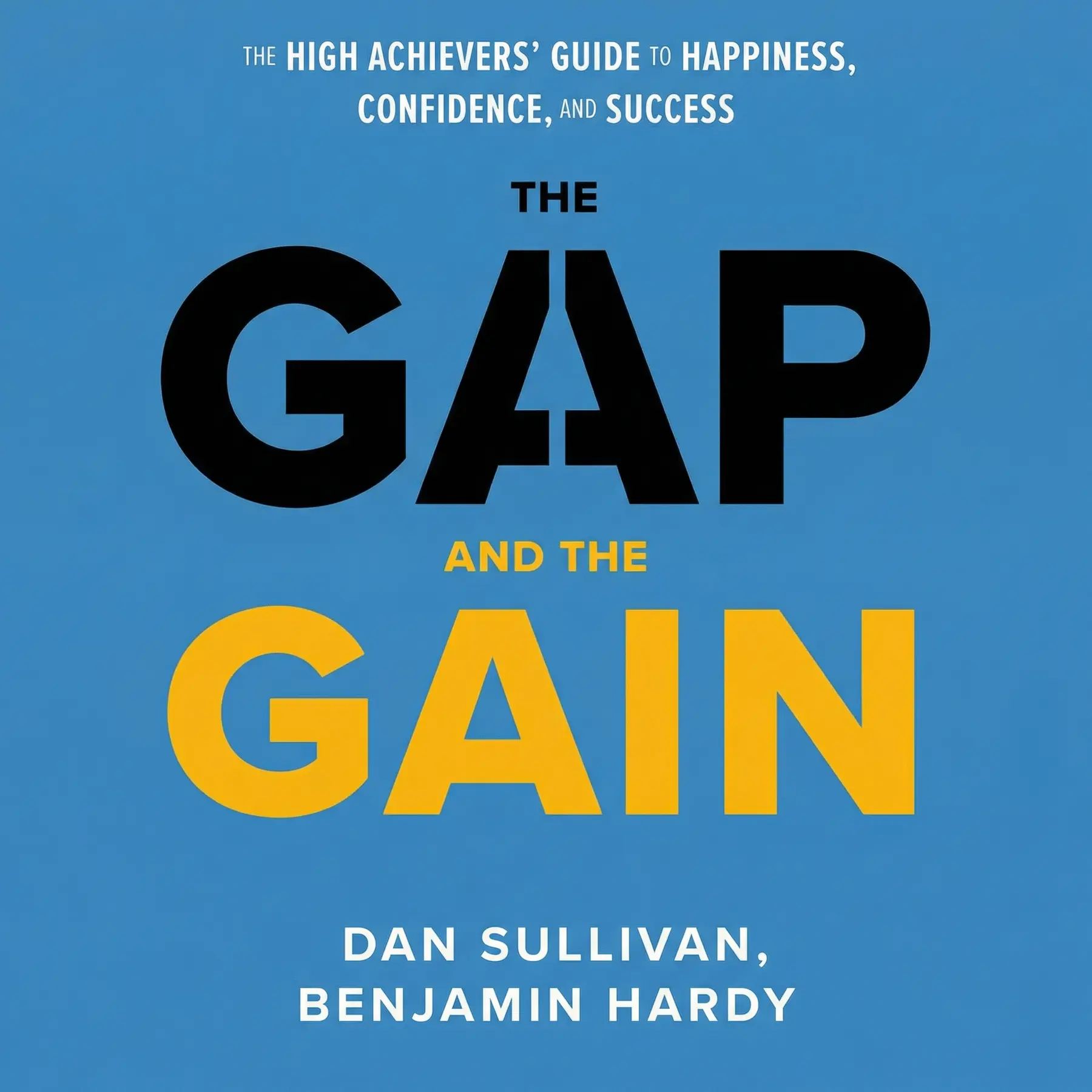
The Gap and the Gain: The High Achievers' Guide to Happiness, Confidence, and Success
Learn to shift from a mindset of constant lack to one of measurable progress. This summary explores how high achievers can find immediate happiness by measuring backward rather than chasing unreachable ideals.
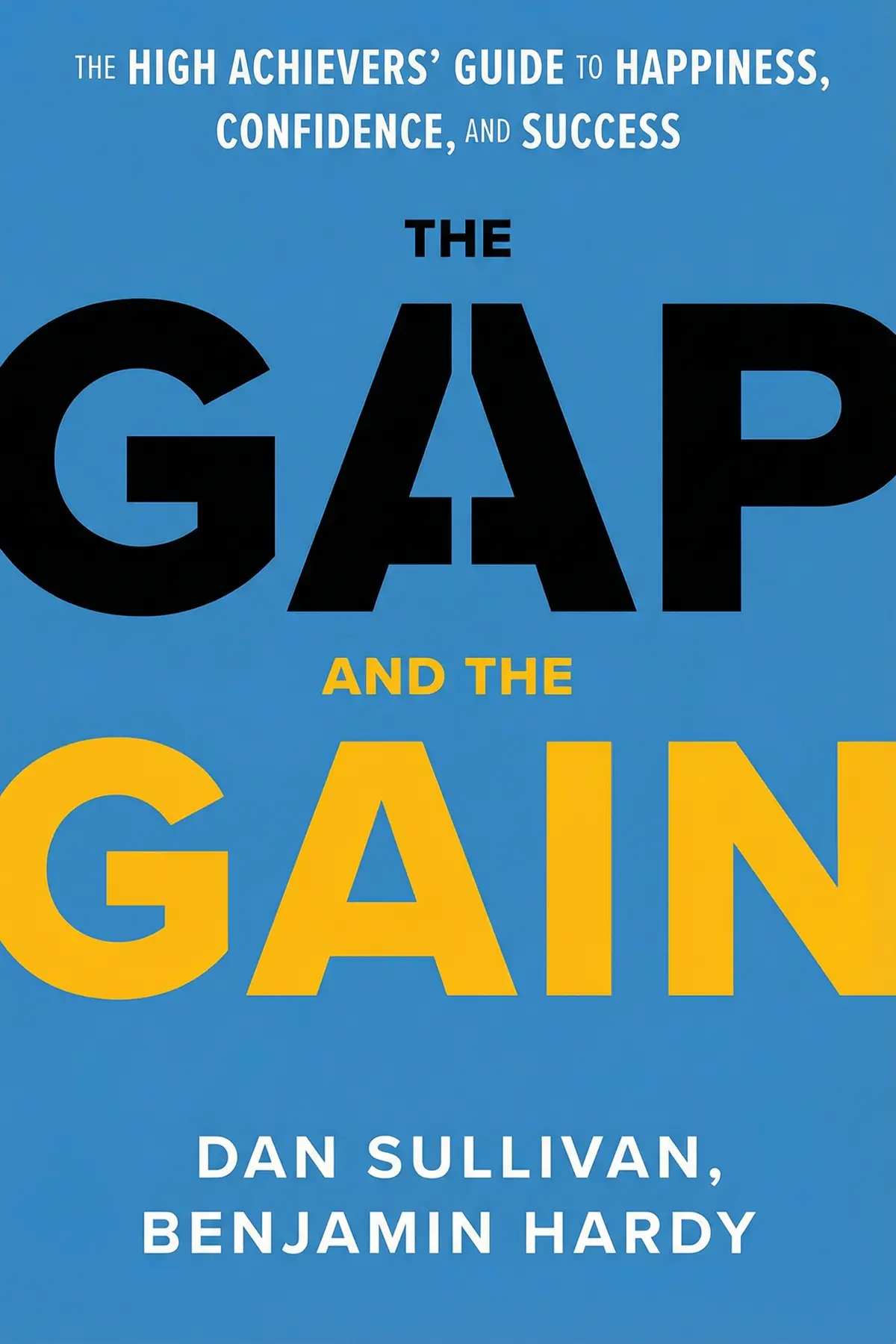
Table of Content
1. Introduction
1 min 52 sec
Have you ever noticed that the more you achieve, the further away your ultimate goals seem to drift? It is a common frustration for high achievers. You land the promotion, you hit the revenue target, or you finally buy that dream home—yet, within days or even hours, the feeling of satisfaction evaporates, replaced by a new, more demanding target. This cycle is what keeps so many successful people in a state of perpetual anxiety. We often operate under the assumption that happiness is something we must chase, a prize waiting for us at the finish line of our next big accomplishment. This idea was even baked into the founding documents of nations, suggesting that we have a right to the ‘pursuit’ of happiness, as if it were a shadow we could eventually catch if we only ran fast enough.
But what if happiness isn’t a destination at all? What if it is a starting point? The Gap and the Gain proposes a fundamental shift in how we perceive our progress and our worth. Most people spend their lives living in ‘The Gap’—the empty space between where they are and where they think they should be. This ideal they strive for is like the horizon; no matter how many steps you take toward it, it remains exactly the same distance away. This creates a permanent sense of failure, regardless of how much you have actually accomplished.
In this summary, we are going to explore a different way of living: ‘The Gain.’ This involves training your brain to stop looking forward at the unreachable ideal and to start looking backward at how far you have already come. We will dive into the psychology of why our brains are wired for dissatisfaction and how we can re-engineer our daily habits to foster confidence and resilience. By the end of this journey, you will see that success doesn’t lead to happiness, but rather, a happy and grateful mindset is the most powerful engine for success. Let’s look at how you can stop chasing the horizon and start celebrating the ground you’ve already covered.
2. Taking Ownership of Internal Happiness
2 min 07 sec
Success often follows happiness rather than causing it. Discover how one Olympic athlete turned a decade of disappointment into a world-record victory by shifting his focus from the podium to his personal growth.
3. The Trap of Social Comparison
1 min 51 sec
Modern life is designed to keep us looking at others, which fuels a sense of inadequacy. Learn how to define your own success and escape the digital world’s pressure to measure up.
4. How Perception Alters Physical Reality
1 min 50 sec
Your mindset doesn’t just change your mood; it can actually change your biology. Explore the fascinating studies showing how positive thinking can increase your lifespan and physical health.
5. The Importance of Measuring Backward
1 min 53 sec
Most people measure themselves against a future ideal that doesn’t exist. Learn why looking at your past self is the only way to accurately gauge your true growth and build momentum.
6. Optimizing the Final Hour of the Day
1 min 53 sec
The sixty minutes before you sleep can dictate the success of your next twenty-four hours. Learn the ‘Three Wins’ ritual to prime your brain for rest and high-level productivity.
7. Developing Psychological Flexibility
1 min 39 sec
Setbacks are inevitable, but they don’t have to be permanent. Discover how to reframe negative experiences into valuable ‘Gains’ using the Experience Transformer technique.
8. Conclusion
1 min 38 sec
The journey from the Gap to the Gain is not a one-time event, but a daily practice. It is a commitment to seeing your life through the lens of progress rather than lack. We have explored how the ‘Ideal’ is a useful tool for direction, but a terrible one for measurement. By shifting your focus to the ‘Gain,’ you unlock a level of happiness and performance that is impossible to achieve when you are constantly chasing the horizon.
You now have the tools to reclaim your internal standards and stop the cycle of social comparison. You understand that your mindset is a physical asset that protects your health and extends your life. By measuring backward and celebrating your specific achievements, you build a foundation of confidence that no external setback can shake. The simple act of tracking your ‘Three Wins’ each night can transform your relationship with your work and your rest, turning every day into a success before it even begins.
As a final piece of actionable advice, try the ‘Five-Minute Rule.’ It is unrealistic to expect yourself to never fall into Gap thinking. When things go wrong, give yourself exactly five minutes to be frustrated, to sulk, and to live in the Gap. Feel the disappointment fully. But once those five minutes are up, make the conscious choice to pivot. Ask yourself, ‘Where is the Gain here?’ By allowing yourself a brief window for your emotions before returning to a mindset of growth, you develop the resilience necessary for a truly successful and fulfilling life. Remember: you don’t have to wait for the future to be happy. You can look back at how far you’ve come and choose to be happy right now.
About this book
What is this book about?
The Gap and the Gain addresses a common paradox among successful people: why does achieving more often lead to feeling less satisfied? The book introduces two distinct ways of measuring progress. The Gap is the space between your current reality and an elusive, moving ideal. When you live in the Gap, you are constantly focused on what is missing, leading to burnout and unhappiness. The Gain, however, is the distance between where you are now and where you started. By measuring backward, you recognize tangible growth, which builds confidence and internal motivation. This guide provides a practical framework for reframing your daily experiences. It promises to help you reclaim ownership of your happiness by detaching your self-worth from external milestones and social comparisons. Through techniques like the three-win evening routine and developing psychological flexibility, the authors demonstrate how a simple shift in perspective can improve your mental health, your physical longevity, and your overall performance in every area of life.
Book Information
About the Author
Dan Sullivan
Dan Sullivan is the cofounder of Strategic Coach, which is recognized as a premier coaching program for entrepreneurs worldwide. He has authored dozens of articles and books detailing the mindsets necessary for professional success. Dr. Benjamin Hardy is an organizational psychologist and the author of several best-selling titles, including Willpower Doesn’t Work and Personality Isn’t Permanent. Together, Sullivan and Hardy have collaborated on influential works such as the national best seller Who Not How.
Ratings & Reviews
Ratings at a glance
What people think
Listeners consider this work life-altering, valuing how it helps them celebrate their progress and create a fundamental shift in perspective. Furthermore, the book provides substantial concepts to apply; one listener specifically noted its usefulness in both their career and personal life. They also appreciate the wisdom shared and find the material easy to grasp, featuring straightforward action steps. The concept of gaps and gain earns high marks, making it an excellent read for every ambitious individual. On the other hand, several listeners mention that the writing feels repetitive.
Top reviews
Supaporn
Finally got around to reading this, and I’m frankly annoyed I didn’t pick it up sooner. The core premise—that we should measure our progress backward from where we started rather than forward toward an unreachable ideal—is a total game-changer for anyone prone to burnout. I’ve spent years feeling like I was failing because my 'ideal self' was always ten steps ahead. This book provides a practical framework to shift into a state of gratitude and confidence. While the writing can be a bit repetitive at times, the 'three wins' journaling habit has already made my evenings more peaceful. It’s not just business advice; it’s a necessary mental recalibration for any high-performer who feels perpetually unsatisfied. It helps you ground yourself when the overachiever in you takes control and pounds you down.
Show moreGrace
Wow, the chapter on 'measuring backward' completely flipped my perspective on success and happiness. I used to think that being hard on myself was the only way to stay motivated, but Sullivan and Hardy argue that this just leads to a permanent state of inadequacy. By focusing on the 'gain'—the distance between who I am today and who I was a year ago—I’ve found way more energy to actually hit my goals. The practical tools, like the mental exercise of imagining your life without your current successes, are surprisingly effective at generating immediate gratitude. It’s a simple shift, but it’s a profound one. This is essential reading for anyone who is successful on paper but still feels like they’re losing the game.
Show moreVimolwan
Truth is, I was skeptical about another 'mindset' book, but The Gap and the Gain delivered a much-needed reality check. The concept of measuring your progress against your past self rather than an idealized future version of yourself has significantly lowered my daily stress levels. I specifically loved the action steps regarding journaling—writing down three wins before bed really helps prime the brain for success the next day. It’s simple, but that’s why it works. It doesn’t overcomplicate the psychology; it just gives you a lens to view your life through that doesn't involve constant self-flagellation. For any 'striver' out there who feels like they’re never enough, this book is a must-buy. It's a transformational journey rather than a theoretical one.
Show moreRod
Ever wonder why you’re constantly hitting your targets but still feeling miserable? This book explains exactly why: you’re measuring against the 'ideal' instead of the 'gain.' I realized I was living my entire life in the Gap, which is a recipe for permanent unhappiness and anxiety. Sullivan and Hardy show you how to measure backward, which sounds counterintuitive but is actually the key to building real confidence. Not gonna lie, I’ve already started using the 'three wins' method with my team at work, and the morale shift has been noticeable. It’s a fast read, very accessible, and provides a paradigm shift that actually sticks if you do the exercises. Highly recommended for entrepreneurs and high-performers alike.
Show moreRung
Look, this isn't a literary masterpiece, but as far as personal development books go, it’s one of the most practical I’ve ever read. It takes one very specific psychological trap—the gap between who you are and who you wish you were—and gives you a foolproof way to escape it. I appreciated the collaboration between Sullivan’s decades of coaching experience and Hardy’s psychological background. While it’s true that the book is repetitive, I think that’s intentional to help the message sink in. Measuring your gains instead of your gaps is a muscle that needs training, and this book serves as the workout manual. Personally, I’ve already recommended it to several colleagues who struggle with burnout. It offers a significant return on investment.
Show moreJoy
As a chronic overachiever, I’ve spent most of my life trapped in 'The Gap,' comparing my current reality to a perfectionist version of the future that doesn't exist. This book offers a much-needed exit ramp from that cycle of anxiety. Benjamin Hardy does a solid job of translating Dan Sullivan’s coaching wisdom into something actionable, like the daily practice of logging three wins. However, I’ve gotta say that the book does feel stretched; the message is powerful but could have been delivered in half the page count. Some of the anecdotes felt a bit dated, and Sullivan’s 'old school' business perspective occasionally clashed with modern sensibilities regarding social responsibility. Still, the psychological shift from focusing on what’s missing to what’s been gained is worth the price of admission.
Show moreElise
Picked this up after seeing it recommended in a course, and the truth is, it's a very quick and insightful read. The distinction between an 'ideal' (which is like the horizon you can never reach) and a 'goal' (which is a specific point you can hit) is something I’ll be thinking about for a long time. It helps turn that 'insecure overachiever' energy into something more sustainable and healthy. To be fair, if you’ve read a lot of Benjamin Hardy’s previous work or follow Strategic Coach, there won't be many surprises here. The writing style is very direct, almost like a transcript of a coaching session, which makes it easy to digest but slightly repetitive. Definitely a solid 4-star book for the mindset shift alone.
Show moreSayan
After hearing so many people rave about this, I decided to see if the hype was real. The core message is powerful: the 'Gap' is where you focus on what’s missing, leading to frustration, while the 'Gain' is where you focus on progress, leading to happiness. It’s a simple switch, but hard to maintain without the tools they provide. I found the journaling prompts and the 'want vs. need' framework particularly useful for my business planning. However, the book does have a bit of a 'privileged' perspective that might not resonate with everyone, and the repetition is definitely there. Regardless, the core framework is one of the most useful things I’ve learned this year. It makes the 'horizon' of success feel attainable.
Show morePick
In my experience, most self-help books take a great concept and dilute it with too much fluff, and this one is no exception. The idea of the 'Gap' and the 'Gain' is brilliant and genuinely helpful for mental health, but the book repeats the same three points in every single chapter. I found myself nodding along for the first twenty pages and then skimming the rest because the point had already been made. Also, some of Dan Sullivan’s comments in the interview sections felt a bit disconnected from reality, almost like he was reminiscing about a bygone era of business that doesn't care about social impact. It’s a good reminder to practice gratitude, but it probably didn't need to be 200 pages. Not gonna lie, I expected more depth.
Show moreMason
This book should have been a tweet, or perhaps a short LinkedIn post. I am frankly annoyed that I spent time on this when the central idea—measuring backward to see your gains—is a tip you can find in any basic productivity blog. It felt like a fortune cookie message expanded into a full-length manuscript just to satisfy a publishing contract. I also found the tone quite dogmatic and a bit out of touch with anyone who isn't a wealthy entrepreneur. There's a lot of talk about 'needs vs. wants' that ignores basic economic realities for the average person. If you want the gist: stop comparing yourself to your dreams and look at how far you've come. There, I saved you ten hours and twenty dollars. Not nicely written at all.
Show moreReaders also enjoyed
59 Seconds: Change Your Life in Under a Minute
Richard Wiseman

A Guide to the Good Life: The Ancient Art of Stoic Joy
William B. Irvine
A High-Performing Mind: Strengthen Your Mind and Live Your Best Life
Andrew D. Thompson

Abundance: The Inner Path to Wealth
Deepak Chopra
AUDIO SUMMARY AVAILABLE
Listen to The Gap and the Gain in 15 minutes
Get the key ideas from The Gap and the Gain by Dan Sullivan, plus 5,000+ more titles in English and Thai.
- 5,000+ titles
- Listen as much as you want
- 7-day free trial
- Cancel anytime







