

A Biography of Loneliness: The History of an Emotion
Fay Bound Alberti
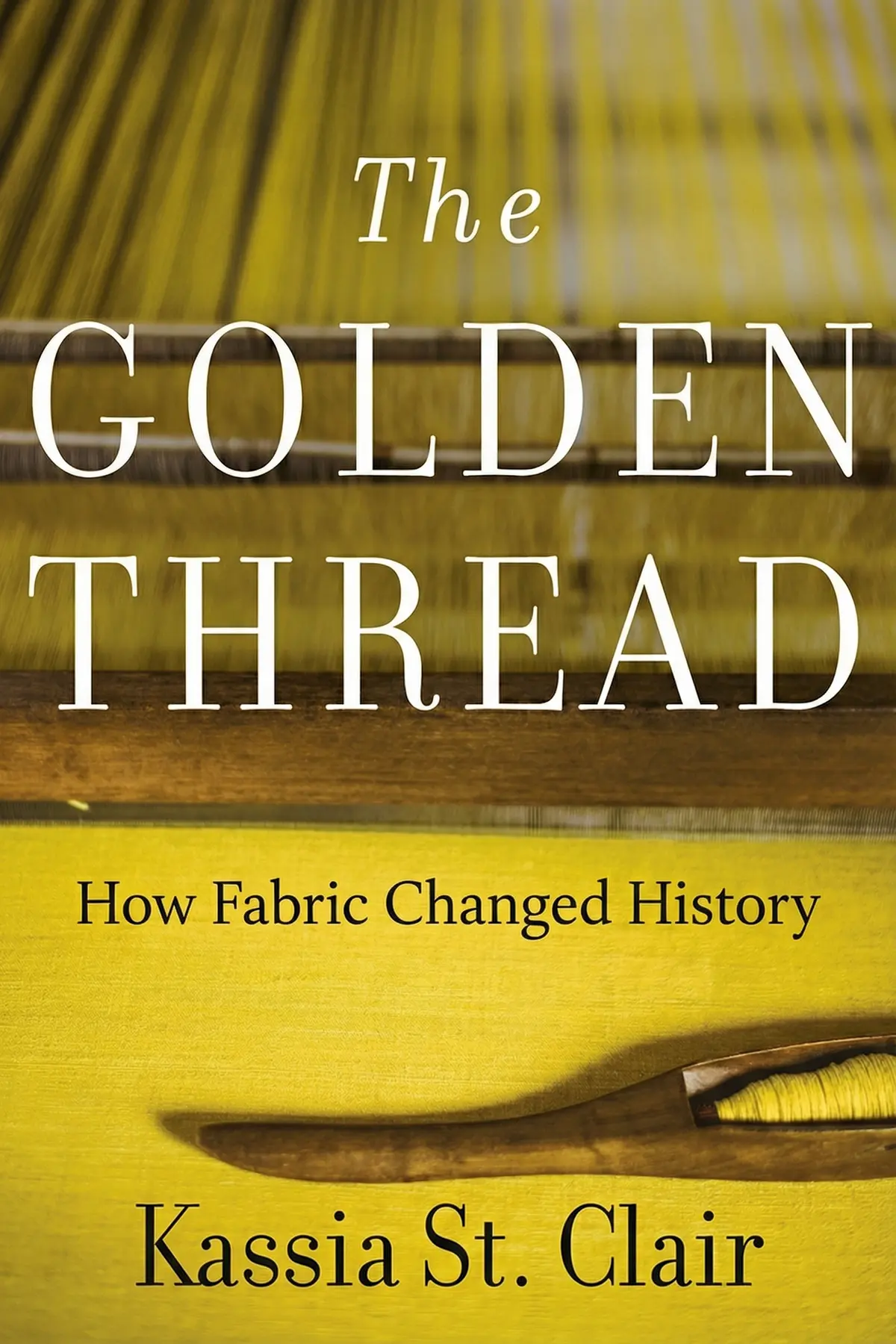
The Golden Thread explores the hidden history of textiles, revealing how fabric has fueled exploration, established empires, and protected the human body from the most extreme environments on Earth and beyond.
1 min 57 sec
Think for a moment about how we categorize the great leaps of human progress. We speak of the Stone Age, the Bronze Age, and the Iron Age. These names reflect the hard, durable materials that survived the passage of time—the tools and weapons that archaeologists can dig up and hold in their hands. But there is a silent partner in this history that we rarely mention: the age of thread. Because fabric is organic and prone to decay, it often vanishes from the archaeological record, leaving a gap in our understanding of the past. Yet, if we look closely at the imprints left on clay or the preserved remnants in unique climates, a different story emerges.
This is the story of the golden thread, a metaphor for the continuous presence of textiles in the human journey. From the very first moment a human figured out how to twist plant fibers together to make a string, we were no longer just another animal; we were makers. Textiles have been the essential technology that allowed us to move into colder climates, cross vast oceans, and even step onto the surface of the moon. They have served as currency, as status symbols, and as sacred objects that bridged the gap between the living and the dead.
In this exploration, we are going to look beyond the surface of the clothes we wear every day. We will see how the labor of spinning and weaving, often performed by women in the shadows of history, propped up the economies of ancient empires. We will investigate how a simple change in the material of a sail allowed a group of Northmen to conquer the seas, and how a refusal to adopt new textile technologies led to tragedy in the frozen wastes of the Antarctic.
What you will find is that fabric is not just a secondary detail of our history; it is the throughline. It is a testament to human ingenuity—a record of how we have used the materials of the natural world to extend the capabilities of our own fragile bodies. So, let’s begin pulling on this thread to see how it connects the ancient looms of Egypt to the high-tech laboratories of the modern world.
2 min 27 sec
Ancient Egypt was built on more than just stone; it was woven from flax. Discover how linen served as both a spiritual gateway and a financial backbone.
2 min 30 sec
Silk was much more than a luxury; it was a strategic weapon in the hands of the Chinese empire and a profound medium for personal expression.
2 min 14 sec
The Vikings are famous for their ships, but their true secret weapon was the material of their sails—a technological marvel made from the wool of ancient sheep.
2 min 35 sec
In the race to the South Pole, the choice of fabric was a matter of life and death. Learn why the wrong clothes led to one of history’s greatest tragedies.
2 min 36 sec
The birth of rayon and nylon changed the way the world dressed, but the path to modern fast fashion was paved with chemical hazards and human suffering.
2 min 26 sec
NASA’s greatest challenge wasn’t just the rocket; it was the clothing. Discover how a team of seamstresses from a lingerie company saved the Apollo mission.
2 min 29 sec
In high-stakes sports, a swimsuit can be faster than the person wearing it. Explore the controversy that turned Olympic pools into laboratories.
1 min 45 sec
As we look back at the long and winding path of the golden thread, it becomes clear that textiles are far more than just a backdrop to history. They are the very substance of it. From the linen bandages that transformed the dead into the divine in ancient Egypt, to the woolen sails that allowed the Vikings to challenge the vastness of the Atlantic, fabric has been the primary tool humans have used to navigate and master their environment.
We have seen how textiles can be a source of immense power and beauty, as in the silk trade of China, but also a source of tragedy and suffering, seen in the frozen footsteps of Robert Falcon Scott or the chemical-filled factories of the twentieth century. The story of fabric is a story of contradictions. It is an industry that has relied on the invisible labor of millions of women, yet it is also the industry that pioneered the most advanced technologies of the Space Age.
What this really means is that our relationship with textiles is one of the most intimate and influential connections we have with the physical world. Every piece of clothing you put on today is a descendant of thousands of years of trial and error, innovation, and artistry. The next time you feel the texture of your shirt or pull a blanket over your shoulders, consider the history woven into those fibers.
We are a species that has learned to live beyond its skin. We have used the materials around us to build a second skin—one that allows us to explore the coldest mountains, the deepest oceans, and the silence of space. The golden thread continues to spin, and as we look toward the future, it will be the ingenuity of our textiles that continues to define the limits of what it means to be human. Whether we are seeking sustainability in our modern fashion or developing the next generation of smart fabrics, we are still doing what we have always done: weaving our future, one thread at a time.
This summary takes you on a journey through the millennia to uncover how the humble thread has woven the very fabric of human civilization. While we often name historical eras after metals like bronze or iron, this narrative argues that textiles were the true engine of progress, enabling everything from the maritime dominance of the Vikings to the survival of astronauts in space. You will discover the sacred rituals of ancient Egyptian linen and the high-stakes diplomacy of Chinese silk. The text explores how the technological evolution of fabrics—from hand-spun wool sails to scientifically engineered synthetic swimsuits—has consistently pushed the boundaries of what humans can achieve. It is a story of ingenuity, survival, and the intimate relationship between our species and the materials we wear.
Kassia St Clair is a London-based freelance journalist and author who specializes in the intersection of design, history, and culture. She holds a first-class honors degree in history from Bristol University and a Master’s degree from Oxford University. Since 2013, she has written a column for Elle magazine, and her work has appeared in major publications like The Economist and New Statesman. She is also the author of the acclaimed book The Secret Lives of Colour.
Listeners find the book highly accessible and thoroughly researched, offering captivating details on how textiles have played a vital role throughout human history. They value the prose and view it as educational, with one listener noting how it enhances understanding through anecdotes and quotations. The content receives positive feedback regarding its exploration of fabric usage, and one review highlights its beautiful descriptions of historical textiles. Listeners find the narrative engaging, with one describing it as a great trip through the history of mankind. However, the visual quality draws mixed reactions, with one listener noting the lack of illustrations.
Ever wonder how a tiny thread could topple an empire? St Clair has a real talent for excavating the forgotten bits of our past, weaving a narrative that makes something as mundane as a shirt feel like a miracle of engineering. This book is a masterclass in making history feel personal and tactile. I was particularly floored by the chapter on Viking sails—the idea that their naval dominance relied on the wool of two million sheep is staggering. It’s a remarkable compilation of well-researched stories that connects the dots between ancient Egyptian tombs and the high-tech suits used in space exploration. While some might find the jump between eras a bit sudden, the sheer variety of anecdotes kept me hooked. The writing is accessible, witty, and deeply educational without ever feeling like a dusty textbook.
Show moreAfter hearing so many good things about St Clair’s style, I finally dove into this, and it didn't disappoint. It is an absolutely gorgeous history of fabric that looks at the world through a completely unique lens. The economic and gendered significance of silk in ancient China was a standout for me. Specifically, the story of Su Hui and her 3,000-way palindrome poem embroidered in silk was mind-blowing. The book is full of these 'a-ha' moments where you realize just how much our modern world owes to the weavers of the past. The prose is crafted with considerable wit, making the transition from mummy wrappings to Mount Everest base layers feel surprisingly natural. It’s the kind of book you’ll find yourself quoting to friends for weeks.
Show moreThis book is an involving history that provides much-needed context for the clothes we wear today. I read it alongside some books on the modern fashion industry, and it served as a perfect historical anchor. St Clair’s exploration of the cultural and symbolic power of cloth is just brilliant. I was particularly struck by the complexity of handmade lace—up to six hundred bobbins for one pattern! It’s a testament to human patience and skill. The writing is clear and the pace is brisk, making it a very readable volume for non-specialists. Even the darker chapters on Nazi-era rayon factories were handled with a careful, informative touch. It’s a beautiful reminder that our history is woven, not just written.
Show moreFinally got around to reading this, and it’s every bit as good as her book on color! The Golden Thread is a remarkable achievement that manages to be both scholarly and immensely entertaining. I loved the variety of the topics, especially the bits on record-breaking sports fabrics and the elusive nature of spider silk. St Clair has a way of making you feel the texture of the past through her descriptions. It’s a great trip through the history of mankind, viewed through the looms and needles of our ancestors. While it’s not an exhaustive encyclopedia, it’s a wonderful entry point for anyone curious about how we came to be the 'clothed animal.' Highly recommended for anyone who loves micro-histories and quirky facts.
Show moreThe chapter on space suits alone is worth the price of admission. I never realized that the iconic silver look of the Apollo missions was an aesthetic choice rather than a purely functional one! Kassia St Clair writes with a journalistic flair that makes the technical aspects of textile production surprisingly digestible. From the grueling labor of cotton plantations to the futuristic labs developing record-breaking swimwear, the scope is impressive. Look, it’s not a deep-dive scholarly tome, and yes, it skips over some major developments like the rise of knitting. But as a general overview of how human ingenuity is literally wrapped in cloth, it’s a great trip. It changed how I look at my own wardrobe, even if the narrative flow was a little jerky at times.
Show moreAs someone who enjoys both history and crafts, I found this narrative particularly absorbing. Truth is, we often ignore the very things we are encased in every single day. St Clair does a brilliant job of reminding us that fabrics have defined, advanced, and shaped human history. I especially enjoyed the later chapters on extreme environments—the struggle to create clothing for polar exploration was gripping. My only real gripe is that the subtitle 'How Fabric Changed History' feels a bit like a stretch. It’s more of a history of how we’ve adapted fabric to meet our needs. Still, the information about King John owning 185 silk shirts in the 13th century was the kind of detail that makes history spring to life. Definitely worth a read.
Show moreGotta say, I didn't think I’d care this much about the history of thread. St Clair has a knack for finding the human story behind the commodity. Whether she's discussing the cultivation of silk or the grueling demands of early industrial steam power, she keeps the reader engaged with a steady stream of surprising facts. Personally, I would have liked more focus on the environmental impact of 'fast fashion,' which was only briefly touched upon, but I understand she was going for a broader historical sweep. The lack of illustrations is a shame, as I spent half the time Googling the fabrics she was describing. Regardless, it’s a solid, informative read that makes the mundane world feel a lot more complex.
Show morePicked this up because I adored her previous work on color, but I have mixed feelings about this one. To be fair, the research is clearly there, and the facts about spider silk and medieval lace are genuinely fascinating. However, the structure feels oddly fragmented and kaleidoscopic, almost like a series of long-form magazine articles that haven't quite been stitched together. I kept waiting for a grander conclusion or a unifying theory on 'the fabric,' but it never quite arrived. Also, for a book about such a visual subject, the lack of actual photographs or illustrations is a massive oversight. Those stylized chapter headings just don't do the descriptions justice. It’s an informative read for a casual afternoon, but I wouldn’t call it a definitive history.
Show moreNot what I expected from the title, but an interesting journey nonetheless. The book is essentially thirteen separate essays, and like any collection, some are much stronger than others. I found the sections on ancient linen and the Vikings to be excellent, but the chapters on synthetic fabrics like rayon felt a bit dry and rushed. To be honest, I was hoping for something more cohesive that traced the evolution of weaving techniques more strictly. Instead, it feels a bit directionless, hopping from one fun fact to the next without a strong central thread. It’s well-written and certainly educational, but it lacks the depth that a true textile enthusiast might be looking for. It’s a bit too 'dilettante' for my taste, though the research is broad.
Show moreFrankly, this felt like a missed opportunity. While the subject is fascinating, the execution is irritatingly superficial and, in several places, just plain sloppy. For someone touted as a scholar, St Clair makes some elementary factual errors that a decent editor should have caught—like the confusion over Richard the Lionheart’s ransom. The chronological leaps are jarring, and the tone feels too journalistic for its own good, skimming the surface of complex social histories without drawing any real conclusions. I also found the anachronistic application of modern perspectives to ancient cultures quite distracting. It’s a sad indictment of our current publishing trends that such a 'lite' version of history gets so much hype. If you want a rigorous look at textiles, look elsewhere.
Show moreFay Bound Alberti

Ben Macintyre
Ron Chernow
Philip Freeman
Michael Axworthy
Tom Standage
Ishmael Beah
AUDIO SUMMARY AVAILABLE
Get the key ideas from The Golden Thread by Kassia St Clair, plus 5,000+ more titles in English and Thai.







