

23 min 03 sec
The Happiness Hypothesis: Putting Ancient Wisdom and Philosophy to the Test of Modern Science
Jonathan Haidt explores the intersection of ancient philosophical wisdom and modern psychological science, revealing how understanding our divided minds, social instincts, and biological leanings can unlock a truly meaningful and happy life.
Table of Content
1. Introduction
1 min 19 sec
Why does it often feel like we are at war with ourselves? We make plans to eat better, work harder, or stay calm, yet we find ourselves reaching for the snack, procrastinating on the project, or losing our temper. For thousands of years, the world’s greatest thinkers—from the Buddha to the Stoics—have grappled with these internal contradictions. They sought to understand the nature of the human spirit and the secret to a life well-lived.
In our modern era, we have more tools than ever to answer these questions, yet we often feel more lost. This is where Jonathan Haidt steps in with a compelling framework. He suggests that our minds are not unified wholes but are instead divided into parts that frequently disagree. To find happiness, we must learn to navigate these divisions.
In this exploration, we are going to look at the intersection of timeless philosophy and cutting-edge social psychology. We will dive into the mechanics of our brains, the evolution of our social instincts, and the surprising ways that external circumstances—and our internal reactions to them—shape our well-being. By the end, you’ll see that happiness isn’t just something you find; it’s something you create by fostering the right relationships between your mind, your body, and the world around you. Let’s begin by looking at the fundamental split that defines the human experience.
2. The Divided Self
2 min 10 sec
Discover why your brain often feels like two different people fighting for control, and why your rational side usually loses to your instincts.
3. The Genetic Lens and Training the Mind
2 min 15 sec
Uncover why some people are naturally gloomier than others and how you can actually reprogram your brain’s default settings for joy.
4. The Social Glue of Reciprocity
2 min 06 sec
Explore the ancient instinct that forces us to give back when we receive, and why gossip is actually a vital tool for human survival.
5. The Blindness of the Self
1 min 45 sec
Learn why it’s so easy to spot a hypocrite but so hard to realize when you are being one yourself, and how to break the cycle of blame.
6. The Adaptation Principle
2 min 00 sec
Why winning the lottery won’t change your happiness for long, and what you should focus on instead to find lasting joy.
7. Two Kinds of Love
1 min 57 sec
Understand why that initial ‘spark’ in a relationship is a dangerous drug, and how to build a love that actually lasts a lifetime.
8. The Benefits of Adversity
1 min 50 sec
Find out how life’s most difficult moments can actually lead to personal growth, provided they hit you at the right time.
9. The Practice of Virtue
1 min 51 sec
Why reading about being a good person won’t actually make you one, and how to train your character through action.
10. The Dimension of Divinity
1 min 55 sec
Discover the ‘vertical’ dimension of human experience and why feeling small in the face of something vast is good for your soul.
11. Finding Meaning through Coherence
2 min 04 sec
The final secret to a fulfilled life: how to align your biology, your psychology, and your purpose.
12. Conclusion
1 min 51 sec
As we wrap up our journey through these ten big ideas, it becomes clear that the path to a fulfilling life isn’t found in a single secret or a magic pill. Instead, it is found in the delicate work of balancing the different parts of ourselves. We have seen that we are both rational and instinctive, both individual and social, both physical and spiritual.
To live well, we must first acknowledge the strength of our inner elephant. We can’t simply wish our way to happiness; we have to train our habits, choose our environments wisely, and use tools like meditation or cognitive therapy to shift our perspective. We must recognize the power of reciprocity and the danger of our own self-righteousness, working to build bridges of fairness and humility in our relationships.
We also learned that while we adapt quickly to material gains, we never lose our need for deep connection and meaningful work. We thrive when we use our unique strengths and when we align our daily activities with our core values. And finally, we saw that even in a modern world, we still need the sacred—the moments of awe and divinity that remind us we are part of something much larger than our own small concerns.
The most important takeaway is that you are the architect of your own internal environment. You have the power to examine the relationship between your ‘rider’ and your ‘elephant’ and to start making the small, daily changes that lead to coherence. Don’t wait for a major life event to find your purpose. Start today by looking for your own faults in your next disagreement, by finding a way to help someone else, or by simply taking a moment to appreciate something vast and beautiful. Happiness is a relationship, and by tending to the connections within and without, you can create a life that truly feels worth living.
About this book
What is this book about?
The Happiness Hypothesis investigates ten profound ideas discovered by different civilizations across history, subjecting them to the scrutiny of modern cognitive science. Jonathan Haidt uses the central metaphor of a rider on an elephant to describe the struggle between our rational mind and our instinctive, emotional self. Through this lens, the book examines why we struggle with self-control, how our genetics influence our baseline of joy, and why social reciprocity is the bedrock of human community. It moves beyond simple self-help platitudes to offer a deep exploration of love, adversity, virtue, and divinity, ultimately promising a path to fulfillment that requires aligning our inner selves with our outward actions and relationships.
Book Information
About the Author
Jonathan Haidt
Jonathan Haidt is a prominent Professor of Social Psychology at New York University. He has gained international recognition for his extensive research into the psychological underpinnings of morality and the complex emotions surrounding disgust. Beyond this work, he authored the New York Times bestseller The Righteous Mind: Why Good People Are Divided by Politics and Religion in 2012.
Ratings & Reviews
Ratings at a glance
What people think
Listeners find the book highly inspirational, including one who shares how it reveals fresh paths in life. Furthermore, the writing is polished and accessible, creating an enjoyable listening experience. The quality of the research is also well-regarded; one listener remarks that it offers a thorough survey of psychological discoveries. Listeners also prize the self-help insights provided, with one pointing out how the content aids in understanding both personal motivations and the behavior of others.
Top reviews
On
Picked this up thinking it was another fluff-filled self-help book, but I was pleasantly surprised by the intellectual rigor. Haidt’s central metaphor of the rider and the elephant is genuinely one of the most useful ways to conceptualize the struggle between our conscious will and our unconscious drives. It makes so much sense why we fail at our New Year's resolutions when you realize the rider is just a tiny advisor to a six-ton beast. The way he weaves together Buddhist philosophy with modern neuroscience feels seamless rather than forced. It’s a dense read at times, but the insights into why we do what we do are worth the effort. Frankly, it changed how I view my own anxieties and the 'cortical lottery' I was dealt at birth. This isn't just about being happy; it’s about understanding the mechanics of the human soul through a scientific lens.
Show moreJulian
Wow. This book didn't just give me things to think about; it actually shifted the direction of my daily habits. I’ve started a meditation practice after reading his explanation of how it retrains the 'elephant' to be less reactive to negative stimuli. The 'Happiness Formula' (H = S + C + V) is a brilliant way to break down what we can actually control versus what we just have to accept. It’s rare to find a book that respects both the spiritual insights of Buddha and the rigorous data of modern psychology. I felt like I was sitting in on a world-class lecture series that actually cared about my well-being. If you’ve ever felt like your brain is working against you, this book provides the roadmap to a ceasefire.
Show moreGrace
The chapter on the 'Great Divide' between our moral foundations was worth the price of the book alone. Haidt has this incredible ability to take complex social theories and make them feel relevant to your Sunday afternoon. I loved the deep dive into the concept of 'elevation' and how witnessing acts of virtue can physically change our state of mind. It’s a beautiful exploration of the human condition that refuses to settle for easy answers or 'life hacks.' The writing is elegant, moving from Ben Franklin to cognitive science without ever losing the reader in jargon. It’s one of those rare books that makes you feel smarter while also making you want to be a better person. Truly a comprehensive review of what it means to flourish in the modern world.
Show moreNam
After hearing so many people mention the 'Elephant and Rider' metaphor, I decided to see what the fuss was about. This book is a masterpiece of synthesis. It’s one of the few things I’ve read that actually bridges the gap between the lab and the living room. The sections on cognitive therapy were life-changing for me, providing a structured way to identify the 'cognitive demons' that keep me in a loop of negativity. I appreciate that Haidt doesn't promise a quick fix; he acknowledges that changing the elephant is a slow, arduous process. The research quality is top-notch, and you can tell he spent years curating these insights. It’s an essential read for anyone trying to navigate the complexities of modern life with some semblance of peace.
Show moreArjun
As someone who usually avoids the psychology section, this book felt like a breath of fresh air because of its historical grounding. I loved how Haidt doesn’t just give you 'tips' but explains the evolutionary logic behind things like gossip and the reciprocity reflex. Knowing that our brains are essentially wired for social survival makes it easier to forgive my own neurotic tendencies. The discussion on cognitive therapy and how it mirrors ancient Stoic wisdom was particularly eye-opening for me. It’s well-written and avoids the patronizing tone you often find in this genre. However, some of the later chapters on the 'divinity' dimension felt a bit abstract compared to the practical brilliance of the first half. Still, it’s a comprehensive review of what makes life meaningful.
Show moreWachira
Ever wonder why winning the lottery doesn't actually make people happy in the long run? Haidt explains the 'hedonic treadmill' with such clarity that it fundamentally changed my relationship with my career goals. We spend so much time chasing the next big thing, oblivious to the fact that our baseline happiness is largely determined by our genetics. The book is easy to understand, even when he’s diving into the neurochemistry of Prozac or the philosophy of Epictetus. I particularly enjoyed the section on how we use gossip to regulate social behavior; it’s a bit cynical but rings incredibly true. My only gripe is that he occasionally meanders into political commentary that feels a bit dated now. Overall, it’s an inspirational read that offers real substance instead of empty platitudes.
Show moreCarter
Finally got around to reading this after seeing it on every 'must-read' list for a decade, and it mostly lives up to the hype. The synthesis of ancient wisdom and modern research is impressive, especially when he discusses the importance of social connections. He makes a compelling case that 'no man is an island' isn't just a cliché, but a biological reality for our species. I found the chapters on the 'adversity hypothesis' quite challenging—the idea that we actually need some trauma to grow is a tough pill to swallow. It’s a very masculine, analytical approach to happiness, which worked for me, but might feel a bit cold to others. It’s definitely helped me understand the people around me better, even the ones I disagree with politically.
Show moreTern
Jonathan Haidt is a gifted storyteller, and he uses that skill to turn a psychology textbook into a page-turner. I was fascinated by the discussion on how our brains are wired for reciprocity and how that affects everything from our friendships to our politics. The book provides a great framework for understanding why we are so prone to hypocrisy—we are designed to see the faults in others while remaining blind to our own. While I didn't agree with every conclusion he drew about 'sacredness,' I appreciated the way he challenged my liberal biases. It’s a thought-provoking journey that manages to be both intellectual and deeply personal. It’s a solid 4-star read that I’ll likely be thinking about for a long time.
Show morePick
To be fair, this is a well-argued book, but I couldn't shake the feeling of 'pop-psychology' fatigue while reading it. While the elephant and rider metaphor is catchy, I worry about how much of the cited research holds up given the recent replication crisis in psychology. Haidt writes with a lot of confidence, but many of the studies he mentions feel like they might be oversimplified for the sake of a good narrative. I also found his constant comparisons to Steven Pinker a bit exhausting, as if there’s a specific 'intellectual' club they're both trying to lead. The insights on the liberal-conservative divide were interesting, yet they felt somewhat disconnected from the core theme of individual happiness. It’s a decent primer if you’re new to the subject, but read it with a healthy dose of skepticism.
Show moreTawee
Look, I wanted to like this, but the 'evo-psy' smarm was just too much for me to handle. Haidt seems to have an answer for everything, usually rooted in some vague evolutionary 'logic' that conveniently supports the status quo. It feels like he’s writing from a position of immense privilege, telling the 'losers' of the cortical lottery that they should just meditate their problems away. His dismissal of certain Buddhist concepts because they don't fit his 'stability' model felt narrow-minded and intellectually dishonest. Also, his obsession with 'purity' and 'divinity' as essential for happiness feels like a back-door way to justify conservative social structures. There are some interesting facts buried in here, but the tone is so patronizing that I struggled to get through it.
Show moreReaders also enjoyed
A Liberated Mind: How to Pivot Toward What Matters
Steven C. Hayes
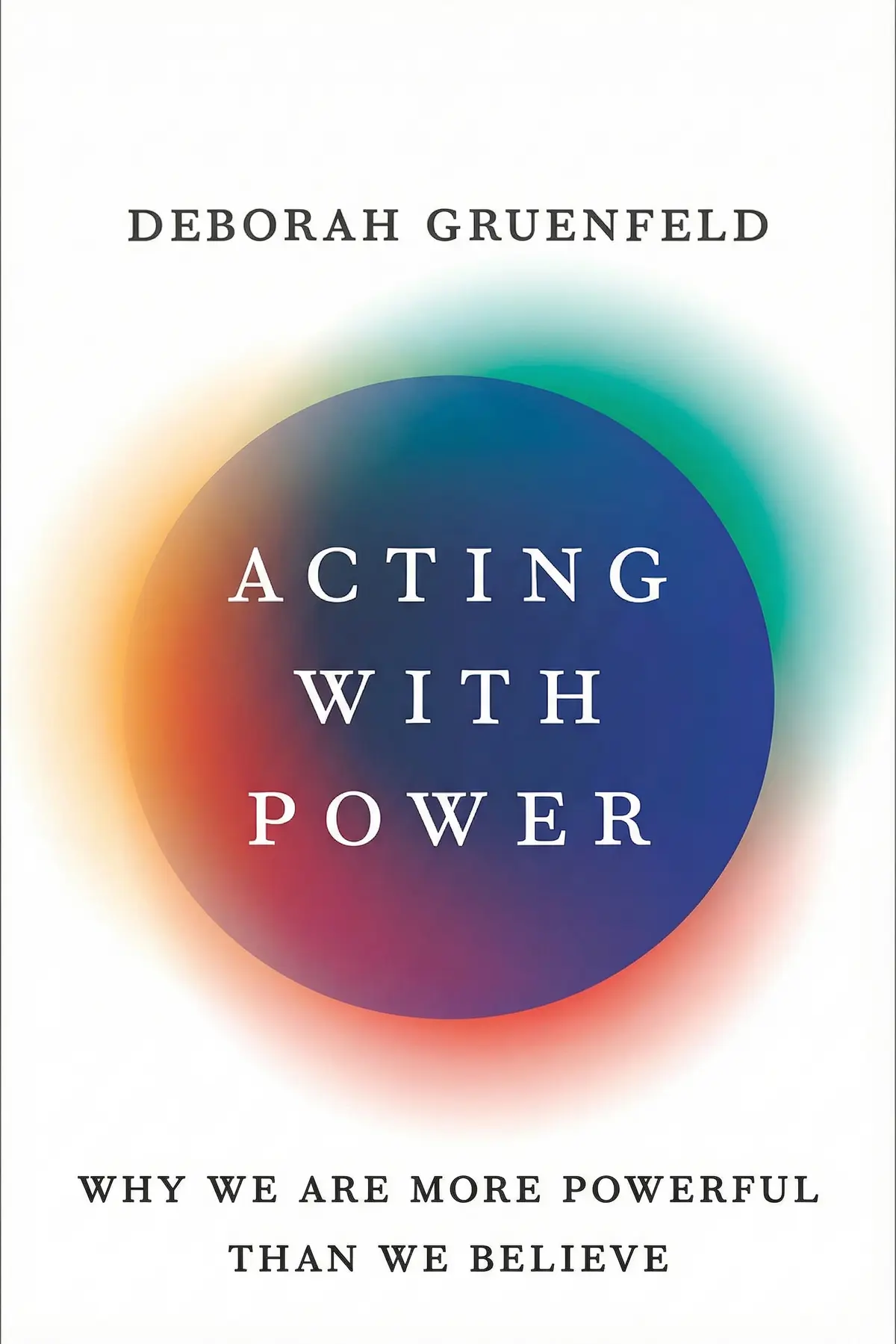
Acting with Power: Why We Are More Powerful Than We Believe
Deborah Gruenfeld

Age of Propaganda: The Everyday Use and Abuse of Persuasion
Anthony Pratkanis
AUDIO SUMMARY AVAILABLE
Listen to The Happiness Hypothesis in 15 minutes
Get the key ideas from The Happiness Hypothesis by Jonathan Haidt, plus 5,000+ more titles in English and Thai.
- 5,000+ titles
- Listen as much as you want
- 7-day free trial
- Cancel anytime







