
18 min 45 sec
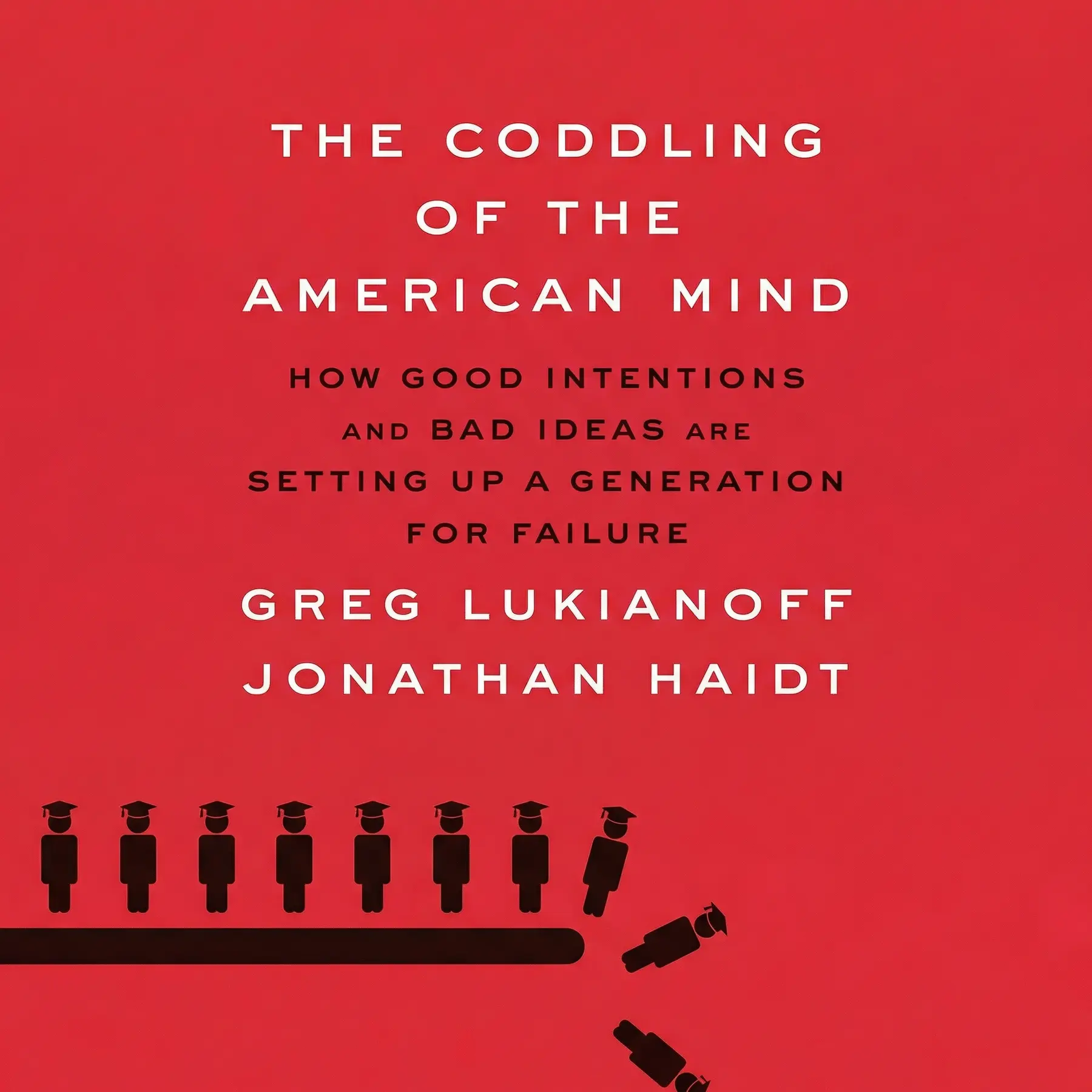
The Coddling of the American Mind: How Good Intentions and Bad Ideas Are Setting Up a Generation for Failure
Explore how well-meaning attempts to protect young people from discomfort have unintentionally fueled anxiety and fragility, while undermining the pursuit of truth and intellectual diversity in modern American society.
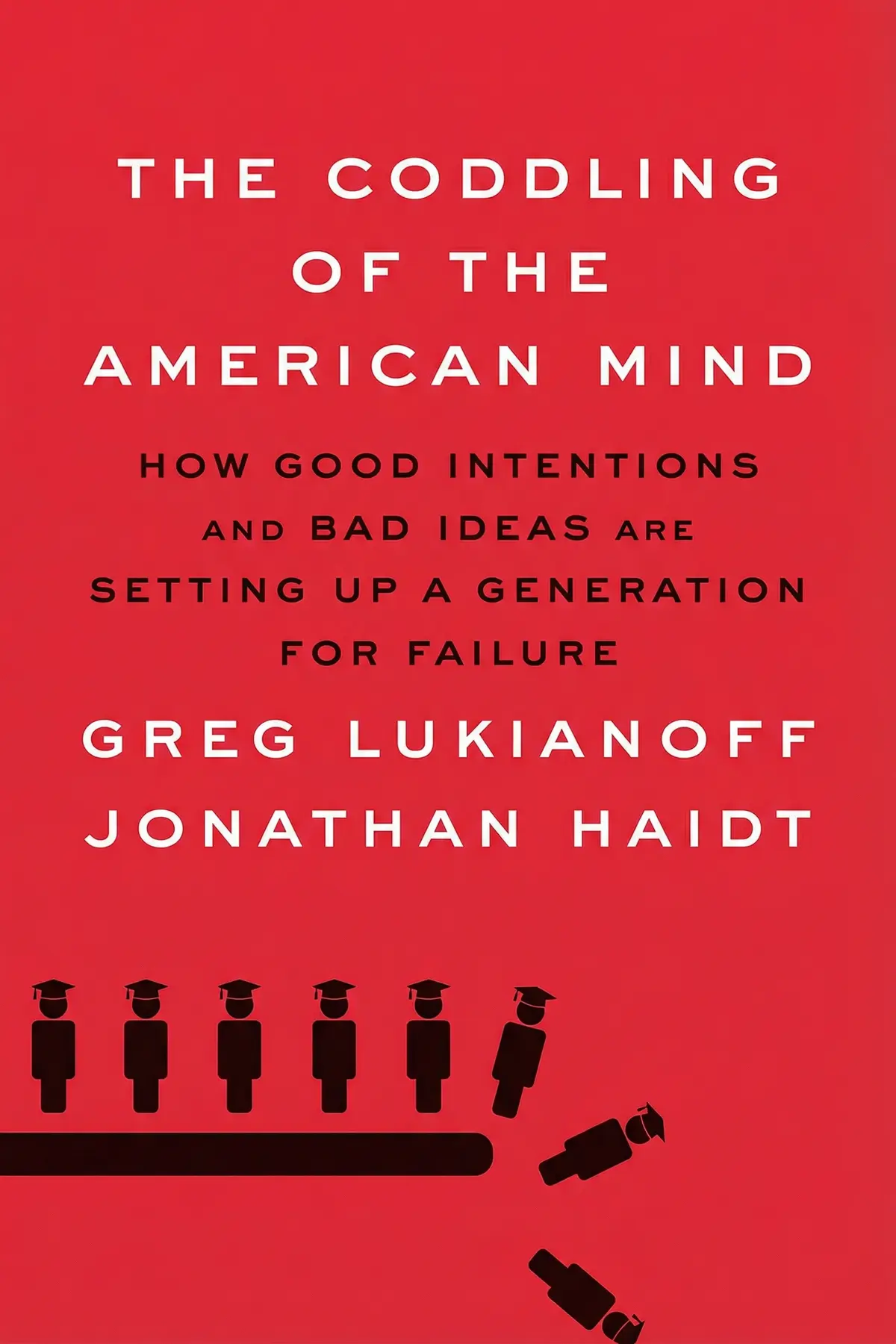
Table of Content
1. Introduction
2 min 12 sec
In recent years, a strange new culture has taken root across many institutions, particularly within the walls of higher education. It is a culture that prioritizes ‘safety’ above almost everything else—but it isn’t the kind of safety involving fire drills or seatbelts. Instead, it is an obsession with emotional safety, the idea that words, ideas, and even speakers can be inherently ‘unsafe’ or ‘violent.’ This shift represents a profound departure from the traditional goals of a university, which have historically focused on the rigorous pursuit of truth through debate, disagreement, and the exposure to challenging perspectives.
At the heart of this transformation are three major cognitive distortions that have been mistakenly elevated to the status of deep wisdom. These ideas, which the authors call the ‘Three Great Untruths,’ are making people less resilient, more anxious, and more divided. The first is the idea that what doesn’t kill you makes you weaker. The second is the habit of always trusting your feelings. And the third is the belief that life is a constant struggle between good people and evil people. When these ideas are institutionalized, they don’t just protect people; they actively harm them by preventing the development of the psychological tools needed to navigate a complex world.
In this summary, we will explore how these untruths gained traction and why they are so damaging. We will look at the decline of childhood independence and how ‘paranoid parenting’ has left a generation unprepared for the friction of adult life. We will also examine how the bureaucracy of modern universities has encouraged a culture of ‘safetyism’ that treats students as fragile objects rather than growing, capable individuals. By understanding these trends, we can begin to see why political polarization is deepening and why mental health among young adults is in decline. Most importantly, we will discuss how to reverse these trends by fostering anti-fragility, intellectual humility, and a renewed commitment to the free exchange of ideas. This isn’t just a critique of campus life; it’s a roadmap for restoring the health of the American mind.
2. The Paradox of Anti-fragility
2 min 25 sec
Discover why shielding young people from every possible stressor actually prevents them from developing the strength they need to thrive.
3. The Trap of Emotional Reasoning
2 min 31 sec
Explore how the habit of prioritizing feelings over facts leads to a distorted view of reality and fuels unnecessary conflict.
4. The Danger of Binary Thinking
2 min 26 sec
Understand how the ‘Us vs. Them’ mentality turns every social interaction into a moral battleground, destroying the possibility of nuance.
5. The Decline of Unstructured Play
2 min 26 sec
Examine how the disappearance of free play has hindered the development of social skills and conflict resolution in younger generations.
6. The Bureaucracy of Safetyism
2 min 15 sec
See how the growth of administrative departments in universities has institutionalized the culture of fragility and discouraged open inquiry.
7. The Path Toward Intellectual Humility
2 min 16 sec
Learn how embracing the possibility of being wrong and valuing viewpoint diversity can lead to a more resilient and truth-seeking society.
8. Conclusion
2 min 14 sec
The rise of ‘safetyism’ and the institutionalization of the Three Great Untruths have created a significant challenge for modern society. By treating young people as fragile, encouraging them to trust their emotions as absolute facts, and framing every conflict as a moral battle between good and evil, we have unintentionally fueled a crisis of anxiety and polarization. We have seen how the decline of unstructured play and the rise of administrative overreach have exacerbated these problems, leaving a generation ill-equipped for the complexities of adult life. However, the situation is not hopeless. The first step toward a solution is recognizing that humans are anti-fragile. We grow through challenge, and we thrive when we are forced to engage with ideas that make us uncomfortable.
To reverse these trends, we must take actionable steps in our families, our schools, and our broader culture. For parents, this means giving children back the freedom to play, to take risks, and to resolve their own disputes. For educators and university leaders, it means prioritizing the pursuit of truth over the pursuit of emotional comfort and robustly defending the principles of free speech and viewpoint diversity. For all of us, it means practicing intellectual humility—accepting that we don’t have all the answers and that our ‘opponents’ might have something valuable to teach us. We must choose to see disagreement as an opportunity for growth rather than a threat to our identity.
Ultimately, the ‘American mind’ does not need to be coddled; it needs to be challenged. By rejecting the untruths that have led us toward fragility and tribalism, we can restore a culture of resilience and open inquiry. We can build a society where people are judged by their character, where debate is welcomed as a tool for progress, and where the search for truth remains our highest calling. This journey requires courage and the willingness to face discomfort, but the reward is a stronger, more capable, and more united generation. It is time to step out of the safe spaces and back into the vibrant, messy, and essential arena of the free exchange of ideas.
About this book
What is this book about?
The Coddling of the American Mind explores a shift in cultural values that prioritizes emotional safety above all else. Authors Greg Lukianoff and Jonathan Haidt argue that this shift, while often motivated by compassion, is based on three foundational logical errors: the belief that children are fragile, the idea that one should always trust their feelings, and the view that life is a battle between good and evil. These 'Three Great Untruths' have significantly altered parenting, childhood development, and the atmosphere on college campuses. By examining the rise of 'safetyism,' the book explains how the removal of challenges prevents young people from developing the resilience needed for adulthood. It identifies several factors—from the decline of unsupervised play to increased political polarization—that have contributed to a mental health crisis among younger generations. The authors promise a path toward restoring intellectual humility and fostering an environment where open inquiry can thrive. Ultimately, this is a call to move away from over-protection and back toward a culture that values debate, resilience, and the pursuit of objective reality.
Book Information
About the Author
Greg Lukianoff
Greg Lukianoff is the CEO and president of the Foundation for Individual Rights in Education (FIRE), a free-speech advocacy group focusing on college campuses. He is the author of Freedom From Speech and Unlearning Liberty. Jonathan Haidt is the Thomas Cooley Professor of Ethical Leadership at New York University’s Stern School of Business. He has also written The Righteous Mind and The Happiness Hypothesis.
Ratings & Reviews
Ratings at a glance
What people think
Listeners find this book to be vital reading for Americans, highlighting its extensive research and profound insights. The prose is approachable and well-suited for a general audience, with listeners valuing its role as an educational resource for Cognitive Behavioral Techniques or Therapy. Furthermore, the content is intellectually stimulating; one listener specifically mentioned how it fosters a more discerning and receptive mental approach. Still, the political elements draw varied responses, as some listeners appreciate what they consider a neutral stance while others feel the text is politically biased.
Top reviews
Preeda
This book is a vital wake-up call for anyone concerned about the trajectory of our social discourse. Lukianoff and Haidt examine how three 'Great Untruths' have infiltrated campus culture, leading to a rise in anxiety and intellectual fragility among students. I appreciated how they connected these cultural shifts to the principles of Cognitive Behavioral Therapy, showing how we’ve accidentally taught kids to think like people with clinical depression. The writing remains conversational throughout, making complex psychological concepts accessible for a general audience. Frankly, it's one of the few books that offers practical solutions instead of just complaining about 'kids these days.' It’s a thorough, well-researched piece of work that everyone should read.
Show moreNannapat
As someone who works in higher education, I found the analysis of 'concept creep' and administrative bloat to be absolutely spot-on. The authors do a great job explaining how we’ve moved from protecting physical safety to demanding 'emotional safety' at the cost of free inquiry. The section on Cognitive Behavioral Therapy is a total game-changer because it basically teaches you how to stop catastrophizing every minor disagreement. Look, it’s a bit politically charged at times, but the core message about resilience and the dangers of tribalism is undeniable. We are training students to be fragile by removing all the 'weights' from the intellectual gym. This book is a necessary blueprint for fixing our universities.
Show moreEleni
The chapter on the Three Untruths really resonated with me because I see these specific patterns in my own thinking almost daily. Believing that 'what doesn't kill you makes you weaker' is a recipe for a miserable, stagnant life. This book serves as a fantastic guide to regaining mental fortitude and questioning our own emotional reasoning before we lash out. I appreciated the attempt to keep the tone apolitical, even if the examples mostly skew toward campus leftism. It’s less of a polemic and more of a practical handbook for healthy, resilient thinking in an era of high-speed outrage. I walked away feeling much more equipped to handle difficult conversations without feeling personally attacked.
Show moreMo
Pick this up if you're tired of the constant 'outrage culture' and want to understand the actual psychological roots behind it. Lukianoff and Haidt explain how well-intentioned parents and administrators created a culture of 'safetyism' that actually harms the very people it’s meant to protect. The book is well-researched but stays conversational, making it easy to digest over a single weekend. Personally, I found the advice on raising 'antifragile' children to be the most practical and moving part of the entire text. It's a necessary read for anyone who wants to promote a more open, resilient, and less polarized society. We need more of this kind of intellectual humility in our public discourse today.
Show moreAnawin
I've never highlighted a non-fiction book as much as I did this one. This is an essential guide for navigating the modern world. The authors aren't just 'shouting at clouds'; they provide a coherent roadmap for restoring intellectual humility and courage in our educational institutions. It encourages a much more critical and accepting thought process toward those we might normally find ourselves disagreeing with. Gotta say, it fundamentally changed how I view my own emotional reactions to 'offensive' or 'uncomfortable' ideas. We should be teaching these principles in every middle school in the country to help kids prepare for the real world. A total 5-star read for any concerned parent or citizen.
Show moreLaor
Ever wonder why anxiety rates among Gen Z skyrocketed so suddenly after 2013? Haidt and Lukianoff dig into the phenomenon of 'safetyism' and the unintended consequences of trying to eliminate every possible discomfort from a child's life. It's incredibly insightful, though I’ll admit it sometimes feels like they lean a bit too heavily on a few extreme campus anecdotes to make their point. To be fair, the logic behind 'antifragility' is gold for parents; the idea that we are like a musculoskeletal system that needs stress to grow is a game-changer. This is a thought-provoking guide for anyone raising children in the age of social media and overprotection.
Show morePenelope
Finally got around to finishing this after seeing Haidt on several podcasts last year. It’s a very accessible read, written in a way that doesn’t require a PhD in psychology to understand the main arguments. Not gonna lie, I think they occasionally over-generalize the behavior of a small group of activists to an entire generation of young people. However, the psychological framework regarding how we handle adversity is rock solid and very helpful for personal growth. The authors provide a sobering look at how the lack of unsupervised play has stunted the emotional development of many modern kids. It’s a compelling argument that deserves a seat at the table in our current culture wars.
Show moreLucia
After hearing so much controversy about this book, I was surprised by how much of it is actually grounded in standard, non-partisan psychology. The connection between current campus trends and the exact opposite of Cognitive Behavioral Therapy is absolutely fascinating to witness. Instead of challenging distorted thoughts like labeling or catastrophizing, many institutions are now effectively validating them. It’s a bit alarming to realize how we’ve institutionalized anxiety through these new campus norms. My only real gripe is that the middle section can be a bit repetitive, but the historical context they provide for the 2013 shift is excellent. It explains a lot about why our current social climate feels so uniquely fragile and tense.
Show moreMats
A decent analysis of a complex problem, but the book definitely feels a little lopsided in its presentation. The authors make excellent points about the lack of free play and the documented dangers of social media for young girls, providing some really sobering data. However, they barely touch upon the polarization coming from the right-wing, making their 'both sides' argument feel a bit thin in practice. Truth is, it’s a great essay that has been bloated into a full-length book with a lot of anecdotal evidence that feels cherry-picked for effect. I’d recommend reading the original Atlantic article first to see if you actually want the 300-page deep dive into these specific anecdotes.
Show morePranee
Not what I expected given the massive hype this received from the 'intellectual dark web' crowd. While I agree with the basic premise that feelings aren't always facts, the book feels incredibly narrow in its actual application. It focuses almost entirely on a tiny sliver of elite universities and ignores broader systemic issues like rising inequality or the influence of right-wing extremism on the same generation. In my experience, the authors make vast over-generalizations based on ten or so highly publicized events that play on a loop in conservative media. It reads like a 300-page version of an article that was already long enough. There just isn't enough hard data to justify the sweeping title.
Show moreReaders also enjoyed

A Biography of Loneliness: The History of an Emotion
Fay Bound Alberti
59 Seconds: Change Your Life in Under a Minute
Richard Wiseman
A Force for Good: The Dalai Lama's Vision for Our World
Daniel Goleman

A Room of One’s Own
Virginia Woolf
AUDIO SUMMARY AVAILABLE
Listen to The Coddling of the American Mind in 15 minutes
Get the key ideas from The Coddling of the American Mind by Greg Lukianoff, plus 5,000+ more titles in English and Thai.
- 5,000+ titles
- Listen as much as you want
- 7-day free trial
- Cancel anytime







