
The Mosquito: A Human History of Our Deadliest Predator
Timothy C. Winegard
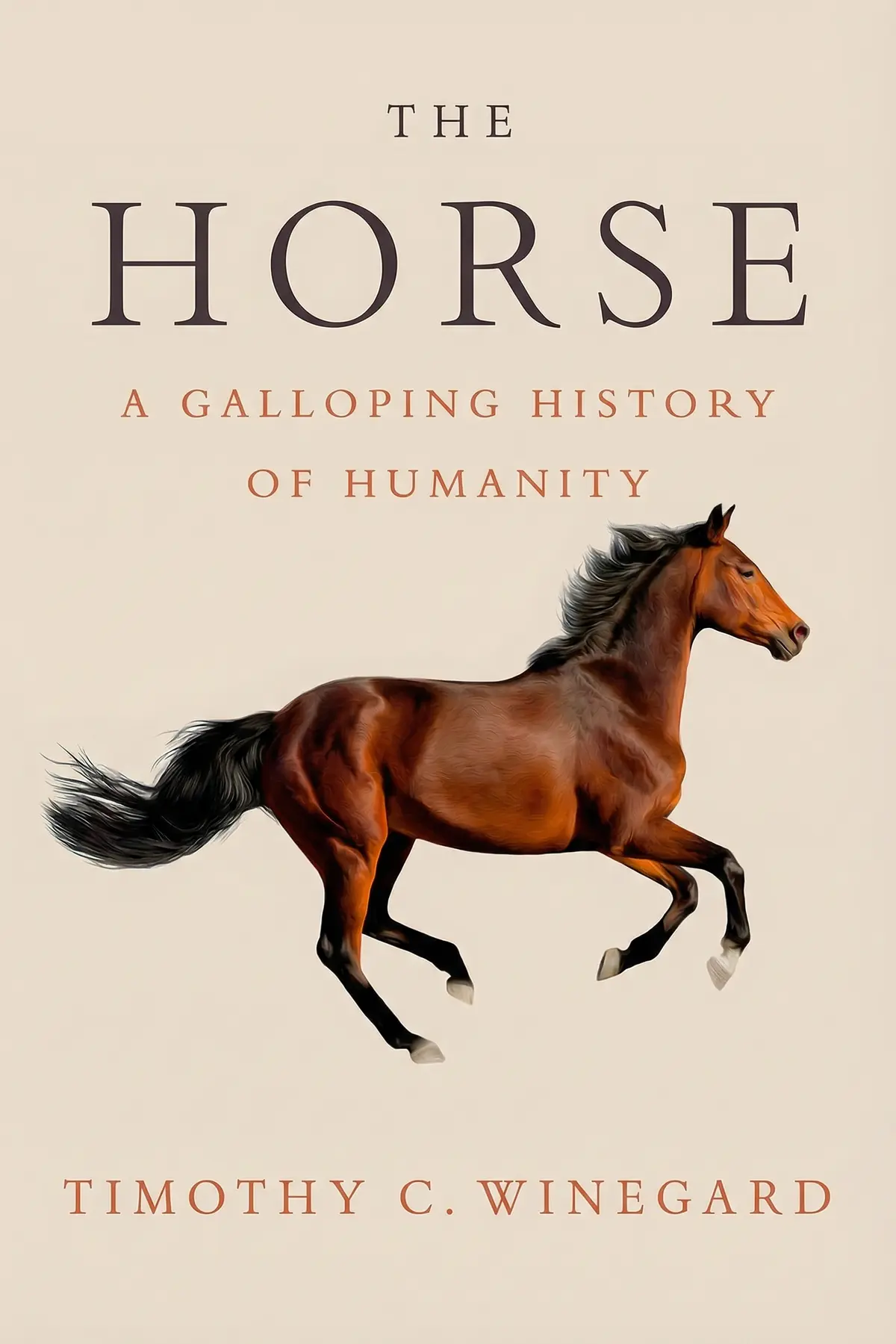
Explore the epic journey of the horse, from its prehistoric roots in North America to its role as the driving engine behind human empires, agriculture, and global commerce.
1 min 24 sec
Think for a moment about the language we use every day. If you’ve ever felt the need to “rein in” your spending, or if you’ve been told to “get off your high horse,” you are speaking a language built on the back of a four-legged creature. Even as we sit in high-tech vehicles, we measure their performance in horsepower. These aren’t just colorful metaphors; they are the linguistic echoes of a partnership that lasted for thousands of years. For most of recorded history, the horse was not just a companion or a farm animal—it was the most advanced technology humanity possessed. It was our engine, our wings, and our primary weapon.
In this exploration of Timothy C. Winegard’s work, we are going to look at the galloping history of how these animals transformed us. We will trace their journey from tiny forest dwellers in North America to the massive, powerful creatures that carried empires on their backs. We’ll see how they revolutionized the way we farm, the way we fight, and the way we move across the globe. This is more than a story about an animal; it’s a story about how one species provided the momentum for human progress. From the vast steppes of Asia to the bustling streets of Victorian London, the horse has been the constant catalyst for change. So, let’s begin this journey by looking back to the very beginning, to a time long before the first saddle was ever cinched, to discover where this remarkable creature actually came from.
2 min 26 sec
Travel back fifty-five million years to witness the surprising origins of the horse in the forests of North America before it conquered the globe.
1 min 53 sec
Discover how the first human to climb onto a horse’s back forever altered the landscape of warfare and the reach of human ambition.
2 min 00 sec
Step into the world of Genghis Khan, where the horse was not just an animal, but the foundation of an entire civilization.
1 min 58 sec
Witness the dramatic homecoming of the horse to North America and its revolutionary impact on Native American cultures.
1 min 46 sec
See how a simple piece of leather and wood—the horse collar—unlocked the potential of the horse to feed a growing world.
2 min 00 sec
Discover the hidden history of the Industrial Revolution, an era where horsepower was much more than just a measurement.
2 min 00 sec
Explore the messy reality of 19th-century cities, where the sheer number of horses created a logistical nightmare that forced a technological shift.
2 min 06 sec
Observe how the horse transitioned from an economic necessity to a beloved partner in therapy, sport, and spiritual connection.
1 min 38 sec
As we look back over the galloping history of the horse, it becomes clear that we are not just looking at the story of an animal, but at the story of ourselves. For thousands of years, the horse was the mirror in which we saw our own ambitions. It was the creature that allowed us to imagine a world bigger than our own village, to move faster than our own legs could carry us, and to build civilizations that spanned continents. From the tiny dawn horse in the North American forests to the massive draft horses of the Industrial Revolution, this species has been our most loyal and transformative partner.
The throughline of this journey is one of acceleration. Every major leap in human progress—the expansion of empires, the growth of the global food supply, the birth of modern industry—was facilitated by the horse. While the internal combustion engine eventually took over the heavy lifting, the horse left an indelible mark on our culture, our language, and our very DNA.
Today, our relationship with the horse has changed from one of utility to one of mutual respect and emotional connection. Whether it’s through the healing power of therapy, the thrill of competition, or the preservation of wild herds, the horse remains a vital part of the human story. The final takeaway is a simple but profound one: we didn’t just ride the horse through history; the horse carried us into the future. Even in an age of rockets and robots, we carry the legacy of the horse with us, a reminder of the powerful bond that can exist between two different species working toward a common goal. As you move forward, remember that the world we live in today was paved by the hooves of the past.
This summary traces the transformative relationship between humans and horses, illustrating how this single species accelerated the development of civilization. It explores the evolutionary origins of the horse in North America, its mysterious disappearance from the continent, and its eventual return as a tool of conquest and colonization. Beyond the battlefield, you will learn how the horse powered the agricultural and industrial revolutions, reshaping how we feed ourselves and transport goods. From the Mongol empire to the manure-filled streets of Victorian London, the horse has been an indispensable partner in our history. The book concludes by examining the horse’s modern role in therapy and recreation, proving that while its economic utility has faded, its spiritual and cultural importance remains as strong as ever.
Dr. Timothy C. Winegard is a historian, bestselling author, and associate professor at Colorado Mesa University. His diverse background includes military service in both the Canadian and British armies, and he holds a PhD from the University of Oxford. Winegard has gained international recognition for his books, including the New York Times bestseller The Mosquito: A Human History of Our Deadliest Predator, which showcases his unique approach to exploring history through the lens of species that have significantly impacted human civilization.
Timothy C. Winegard
Listeners find the work brimming with captivating details and insights, delivering a top-tier look at horse evolution. Additionally, the writing is polished, and listeners feel the time spent is rewarded, with one listener calling it a fantastic ride through world history. The narrative approach also wins acclaim, as one listener points out it is an enthralling historical journey. That said, there are varied opinions concerning the horse-specific material, with some listeners reporting that it fails to offer enough information on the creatures themselves.
This book is a sweeping, grand achievement that reframes our entire understanding of civilization through the lens of the equine. Winegard argues convincingly that horses were the ultimate revolutionary political allies, fundamentally changing how we moved, fought, and expanded our borders. I was completely captivated by the sections detailing the evolutionary mechanics that transformed a small forest creature into the powerful beast that carried humanity on its back. The narrative flows with an energy that mirrors a galloping steed, covering 5,500 years of history without ever losing its momentum. While the prose is dense and occasionally leans into dramatic modifiers, the sheer volume of fascinating facts kept me turning pages late into the night. It is a fantastic ride through world history that makes you realize how much we truly take these animals for granted.
Show moreAs a lifelong rider, I was prepared to be critical, but Winegard completely won me over with this magnificent historical journey. He proves that while dogs might be our best friends, the horse is the partner that actually built the modern world. The level of detail regarding how horses acted as our deadliest weapons of war and tireless explorers is simply staggering. I especially loved the sections on the Columbian Exchange, which offered a fresh and gritty perspective on how equines transformed the Americas. It’s a sublime history that manages to be both academic and incredibly entertaining at the same time. Not gonna lie, some of the darker chapters about the treatment of war horses are hard to stomach, but they are necessary for a complete picture. This is essential reading for anyone with a true need for steed.
Show moreWow, Timothy Winegard has a knack for making 5,500 years of history feel like a fast-paced thriller. This isn't just a book for 'horse people'; it's a book for anyone who wants to understand the hidden mechanics of human progress. From the steppes of Central Asia to the battlefields of the World Wars, the horse is shown to be our most vital and tragic ally. The writing is vivid and helps you visualize the sheer power and utility of these animals throughout time. It’s an invaluable addition to any historical collection.
Show moreThe chapter on the evolutionary mechanics of the early equine ancestors was the absolute highlight for me. I had no idea that horses were so integral to things like vaccine development or that their physiological changes were so closely tied to human migration patterns. Winegard writes with a sense of wonder that is infectious, turning what could have been a dry academic study into an enthralling historical journey. The book is filled with 'did you know' moments that I’ve been annoying my friends with for weeks. While some critics mention the author's wordiness, I found the descriptive style helped flesh out the atmosphere of the different eras he explores. It's a beautiful tribute to the animal that carried us into the modern age. I highly recommend it for the fresh perspective it offers on our development.
Show morePicked this up thinking it would be a simple biology text, but it is actually a massive, survey-level history of humanity. Winegard is an excellent storyteller who manages to make the complex dynamics of ancient warfare and trade feel personal and immediate. Frankly, the book is at its strongest when it focuses on the horse itself, such as the surprising revelation about their role in early vaccine production. There are moments where the horse falls into the background of general world history, which might frustrate readers looking for a more animal-centric biological study. However, the author’s ability to weave the equine thread through the scaffolding of human growth is undeniably impressive. It is a slightly longer read than it needs to be, yet the storytelling is enthralling enough to warrant a permanent place on any history lover's shelf.
Show moreFinally got around to finishing this massive tome, and the scope of the research is truly breathtaking. It sits in a similar vein to popular histories like Sapiens, offering a big-picture look at how a single factor shaped our species' trajectory. Winegard makes a very compelling case that horses were more crucial to human development than almost any other technological advancement. My only real gripe is that the scholarship occasionally feels like it relies too heavily on secondary sources rather than original discovery. Also, the author has a habit of using twelve words when five would do, leading to some repetitive stretches in the middle chapters. Still, the overarching narrative is so powerful that I’d recommend it to anyone interested in the intersections of nature and culture. It is a solid, informative addition to the genre.
Show moreIn my experience, books that try to cover 'everything' about a subject often fail, but this one mostly succeeds through sheer enthusiasm. Winegard’s writing is charming and entertaining, even when he’s discussing the more technical aspects of equine biology or military logistics. I did find the pacing a bit uneven, particularly in the later chapters where the narrative seems to drag through familiar historical events. Some editing to make this a slimmer tome would have benefited the flow significantly. Nevertheless, the central thesis—that we owe our current world to the horse—is defended with passion and an impressive array of facts. It is a fascinating, eyes-wide-open look at our shared history that manages to be both humorous and horrifying. Definitely worth the read if you have the patience for a long, discursive journey.
Show moreLook, I’m not saying every page is a masterpiece, but the sheer volume of fascinating facts makes it worth the slog. The book offers a survey-level history that is perfect for those who want to see the big picture of how horses and humans influenced one another. I appreciated that Winegard didn't write a sentimental tale, but instead chose to be an objective observer of the often-brutal reality of our equine partnership. The discussion of the horse as a 'deadly weapon' was particularly enlightening and well-researched. My main issue was the repetitive nature of some arguments, which made the middle section feel a bit like a repetitive circuit. But overall, it's a flowing history that digs into the stories behind the stories we all learned in school. If you want a deep dive into how the world was actually made, this is a great place to start.
Show moreEver wonder how a single animal could dictate the rise and fall of entire empires? This book attempts to answer that, though the results are a bit of a mixed bag for me. To be fair, the research into early horse ancestors and the evolutionary path of the species is genuinely riveting and well-presented. But once we hit the medieval period, the focus shifts so heavily toward general military history that the horse becomes a mere footnote in its own biography. The deep dive into the Battle of Tours felt particularly out of place since the winning side didn't even rely on heavy cavalry. I also found the writing style a bit bloated, as if the author was following a 'more is more' philosophy with his adjectives. It is an informative read, but it lacks the tight focus I expected from the title.
Show moreNot what I expected from the title, unfortunately. The book starts strong with the evolution of the horse, but quickly devolves into a generic history of Eurasian humanity where the horse is barely a character. For instance, the author spends ages on specific battles where horses played a minimal role, making the whole project feel like a general history book with a horse-themed cover slapped on it. I also found the prose incredibly frustrating to navigate because of the excessive use of extreme adjectives. Everything is 'sadistic' or 'monumental' or 'revolutionary' to the point where those words lose all their impact. To be honest, it felt like reading a community college creative writing project stretched out to 450 pages. I love the concept of a galloping history of the world, but this felt more like a slow, repetitive crawl through outdated secondary sources.
Show more
Ben Macintyre

Charles C. Mann
James Shapiro
Andrew Ross Sorkin
Pankaj Mishra
Fay Bound Alberti

Ben Macintyre
AUDIO SUMMARY AVAILABLE
Get the key ideas from The Horse by Timothy C. Winegard, plus 5,000+ more titles in English and Thai.







