
25 min 38 sec
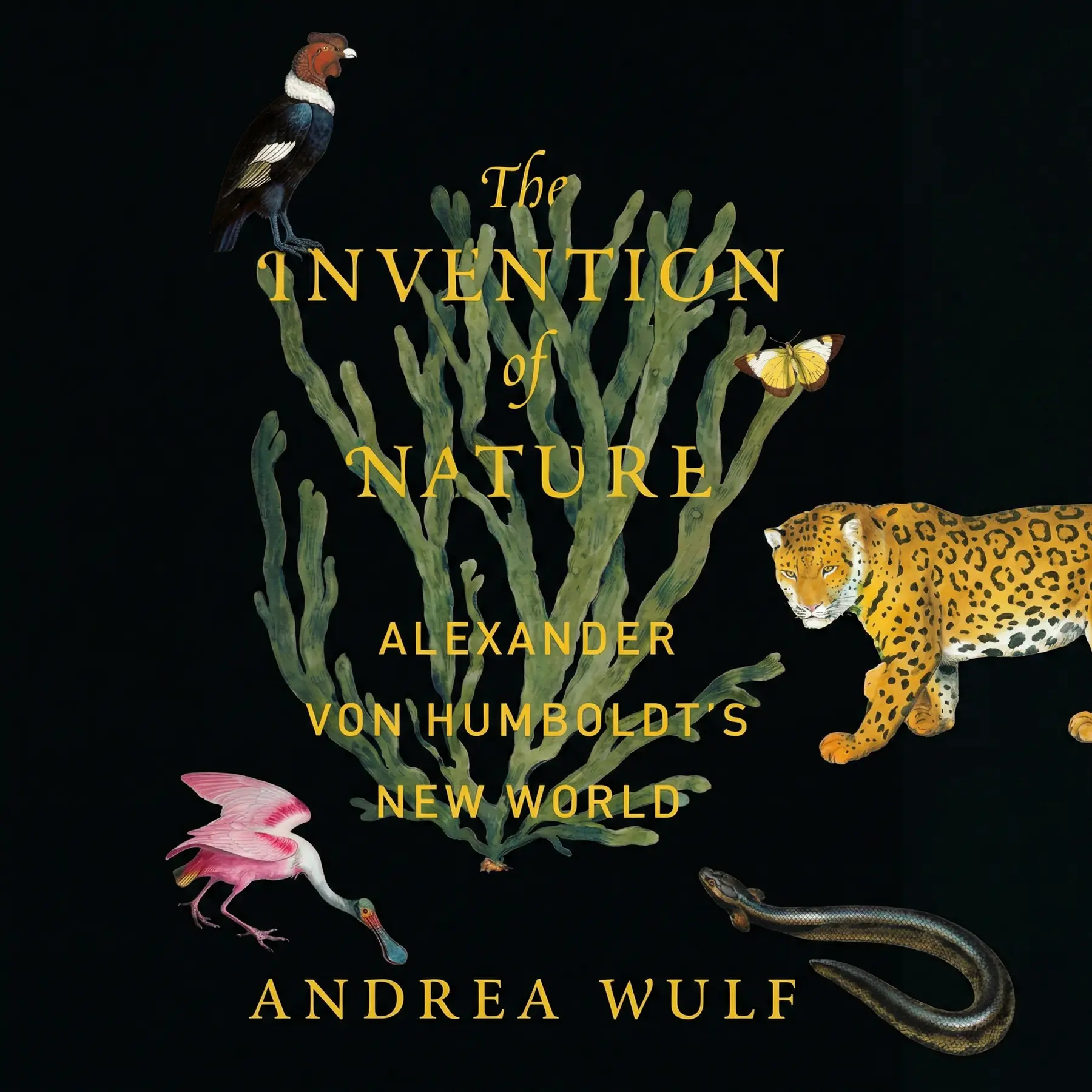
The Invention of Nature: Alexander von Humboldt’s New World
By Andrea Wulf
Explore the life of Alexander von Humboldt, the visionary naturalist who revolutionized our understanding of the environment by envisioning the world as a single, interconnected living organism, inspiring generations of scientists.
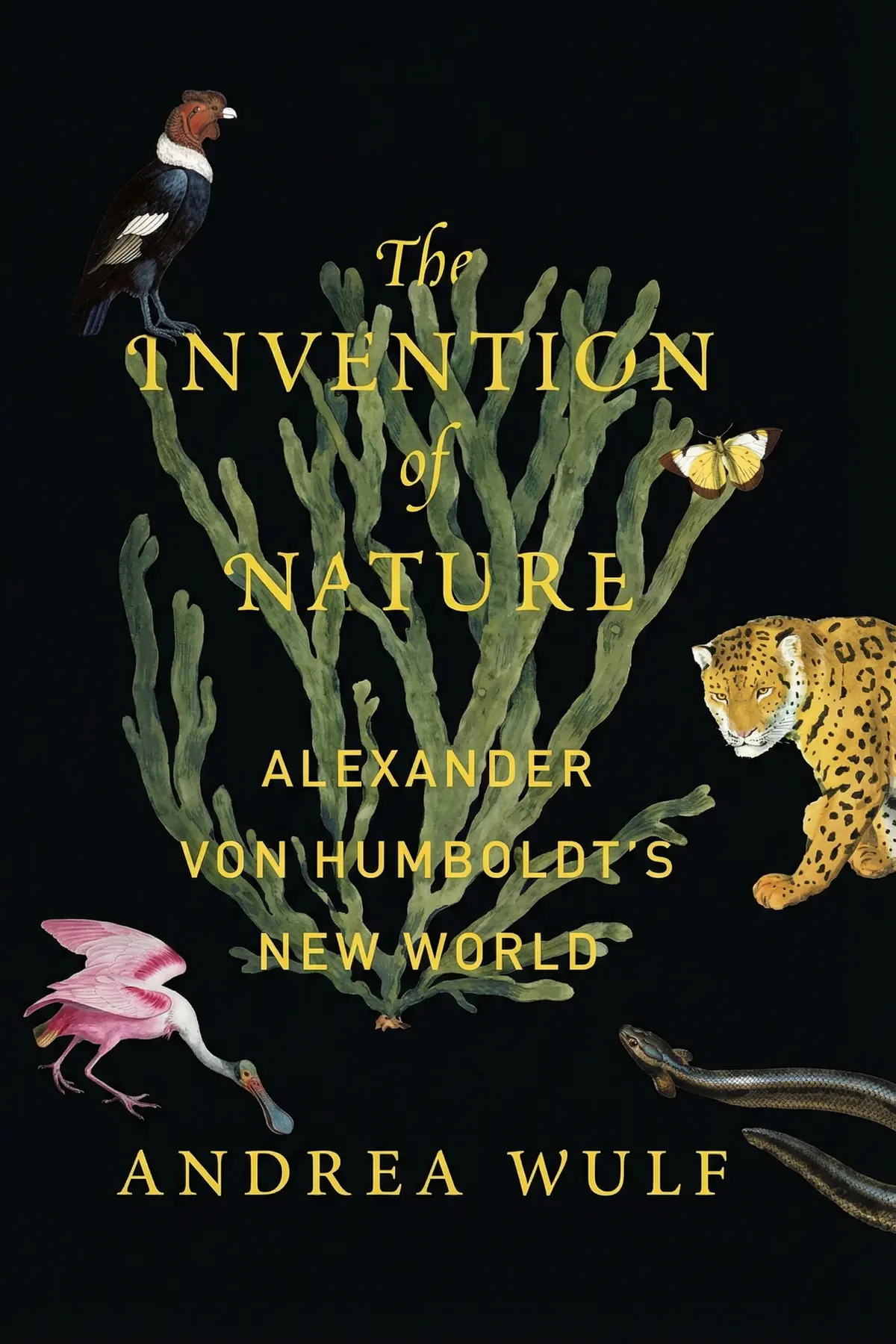
Table of Content
1. Introduction
2 min 03 sec
In the modern era, we often take the concept of ‘the environment’ for granted. We speak about ecosystems, climate change, and the web of life as if these ideas have always been part of human consciousness. However, the way we perceive the natural world—as a holistic, interconnected system—was largely the creation of one man whose name has faded into the background of history, despite being more famous than almost anyone else in his time. That man was Alexander von Humboldt. Born in the late eighteenth century, Humboldt was a restless explorer, a meticulous scientist, and a visionary thinker who spent his life trying to understand the ‘forces of nature’ that bind the world together.
In the following pages, we will delve into the extraordinary life of a man who climbed the highest mountains, navigated unexplored rivers, and challenged the scientific establishment of his day. We will see how he moved beyond the rigid classification systems of the Enlightenment to develop a more poetic and integrated view of our planet. This journey isn’t just a biography of a long-dead scientist; it is the origin story of modern environmentalism. From his daring expeditions in South America to his later influence on figures like Charles Darwin and John Muir, Humboldt’s story reveals why his ideas are more relevant now than ever before.
We will explore his radical notion that the earth is a single living organism where the smallest blade of grass and the most distant star are part of the same unified whole. We will also examine how his observations of human impact on the land led him to be one of the first people to warn about the dangers of deforestation and human-induced climate change. As we trace his steps from the salons of Paris to the peaks of the Andes, we’ll see how Humboldt bridged the gap between the hard data of science and the deep emotion of the human experience, ultimately inventing the way we see nature today.
2. The Revolutionary Concept of the Web of Life
2 min 40 sec
Discover the pivotal moment on a South American peak where Humboldt realized that nature is not a list of plants, but a vast, interconnected tapestry.
3. The Intersection of Empirical Science and Emotional Wonder
2 min 24 sec
Learn how Humboldt broke the mold of the ‘cold scientist’ by arguing that we must feel nature with our hearts to truly understand it with our minds.
4. A Daring Expedition Through the Wilds of South America
2 min 25 sec
Follow Humboldt’s five-year journey through the Americas, where he faced jaguars, electric eels, and treacherous rivers to map the unknown.
5. The Prophet of Human-Induced Climate Change
2 min 12 sec
Long before the modern environmental movement, Humboldt observed how human activity was altering the planet’s climate and ecosystems.
6. A Fierce Critique of Colonialism and Slavery
2 min 10 sec
Explore Humboldt’s hidden role as a social activist, where he argued that the exploitation of nature and the exploitation of humans were two sides of the same coin.
7. The Spark for Darwin’s Theory of Evolution
2 min 16 sec
Find out how a young Charles Darwin was so captivated by Humboldt’s travelogues that he set out on the Beagle to find his own ‘vision of nature.’
8. Inspiring the American Transcendentalists and Conservationists
2 min 26 sec
Trace the thread from Humboldt to Henry David Thoreau and John Muir, as they used his ideas to build the foundations of the American environmental spirit.
9. The Final Adventure and the Creation of 'Cosmos'
2 min 31 sec
In his twilight years, Humboldt embarked on a massive journey through Russia and then attempted the impossible: writing a book that described the entire universe.
10. Rediscovering the Man Who Shaped Our World
2 min 29 sec
Why did we forget the most famous scientist of the 19th century? Re-evaluating Humboldt’s legacy in the face of our current environmental challenges.
11. Conclusion
2 min 02 sec
As we conclude our journey through the life and mind of Alexander von Humboldt, the primary takeaway is the realization that our current understanding of nature is not an ancient truth, but a hard-won intellectual achievement. Before Humboldt, the world was often seen as a collection of resources to be exploited or a series of disconnected species to be labeled. Humboldt gave us a different vision: a world that is alive, interconnected, and profoundly sensitive to the actions of humanity. He was the first to bridge the gap between global patterns and local ecosystems, and the first to warn that our interference with these systems could have world-altering consequences.
His story is a reminder of the power of a single individual’s curiosity and courage. By daring to step outside the library and into the wilderness, by measuring the unmeasurable and feeling the ‘breath’ of the forest, Humboldt transformed the human consciousness. His influence flows through the works of Darwin, the activism of Muir, and the laws that protect our environment today. He reminds us that true knowledge requires more than just data; it requires a sense of connection and a moral commitment to the world we inhabit.
Today, as we navigate the complexities of a changing climate and a declining natural world, Humboldt’s ‘web of life’ provides both a warning and a map. It warns us that we cannot damage one part of the system without affecting the whole, but it also offers a map for how we might live more harmoniously within that system. The ‘Invention of Nature’ was not just a scientific discovery; it was a shift in the human spirit. By rediscovering Humboldt, we rediscover the beauty and fragility of our planet, and perhaps, we find the inspiration needed to preserve the incredible ‘web’ that sustains us all. In the end, Humboldt’s greatest legacy is the realization that nature is not ‘out there’—it is the very fabric of our existence, and we are but one thread within it.
About this book
What is this book about?
The Invention of Nature explores the remarkable life and enduring legacy of Alexander von Humboldt, an eighteenth-century polymath whose adventures and scientific insights laid the groundwork for modern ecology. At a time when science was focused on categorization and isolation, Humboldt dared to see the big picture. He journeyed through the treacherous terrains of South America and the vast wilderness of Russia, meticulously measuring everything from atmospheric pressure to the magnetism of the earth. His observations led to a radical realization: nature is not a collection of individual parts, but a global web of life where everything is connected. This book details how Humboldt’s vision didn't just influence science, but also shaped the thoughts of figures like Charles Darwin, Henry David Thoreau, and John Muir. It highlights his prophetic warnings about human-driven climate change and his passionate arguments against slavery and colonial exploitation. Through this narrative, the reader discovers how Humboldt literally invented the way we perceive nature today—as a fragile, unified system that requires our protection and understanding.
Book Information
About the Author
Andrea Wulf
Andrea Wulf is an acclaimed author who trained as an art historian at London’s Royal College of Art. Her expertise in blending historical narrative with scientific development is evident in her previous works, which include Chasing Venus and Founding Gardeners. Beyond her books, she is a frequent contributor to prominent publications such as the New York Times and the Wall Street Journal, where she shares her insights on history and the natural world.
Ratings & Reviews
Ratings at a glance
What people think
Listeners consider this account of Alexander von Humboldt’s life an essential read, commending its thorough research and evocative writing style. It chronicles the journey of a bold thinker whose scientific legacy deeply influenced the fields of ecology and environmentalism. Listeners characterize him as a monumental intellectual who motivated people to value the natural world, with one review highlighting how he established the ecological concept of interconnectedness.
Top reviews
Ten
Andrea Wulf has crafted a masterpiece that breathes life into a man whose name is everywhere yet whose story is largely forgotten. Alexander von Humboldt wasn't just a scientist; he was a visionary who perceived the earth as a living, pulsing organism rather than a collection of static categories. I was particularly struck by the descriptions of his Latin American expeditions, where he survived mosquito swarms and climbed volcanoes to measure the world. Wulf's prose is as vivid as a novel, making the dense scientific history feel urgent and accessible. It is frankly astonishing how much his insights on human-induced climate change predated our current conversations by two centuries. This is a vital read for anyone who wants to understand why we view nature the way we do today.
Show moreNim
Rarely does a biography change the way you look at the physical world, but this one managed it. Wulf presents Humboldt as the missing link in our understanding of the history of science. Before reading this, I didn't realize that Darwin literally couldn't have written 'The Origin of Species' without Humboldt’s 'Personal Narrative' as a guide. The book tracks his journey from a stifled Prussian mining inspector to a global celebrity who predicted the environmental impact of monoculture and deforestation long before the industrial revolution peaked. The writing style is energetic and fast-paced, though it covers a massive amount of ground. It's an intellectual adventure story that manages to be both deeply researched and emotionally resonant. Every nature lover needs this on their shelf.
Show moreMai
Picked this up after hearing it compared to the works of Jared Diamond, and the comparison is apt. This is a keystone narrative that ties together science, politics, and art in a way that few non-fiction books manage to pull off successfully. Humboldt's life was truly extraordinary; imagine climbing Chimborazo without modern gear or dodging crocodiles on the Orinoco! Wulf captures the sheer physicality of his explorations while explaining his 'web of life' concept with remarkable clarity. I was fascinated by the section on his return to Europe and his struggle to publish his findings while the continent was in the middle of the Napoleonic Wars. It’s a thick book, but I flew through it. Absolutely phenomenal work.
Show moreNoah
Wow. I had no idea one man could influence so many different fields. From inspiring the Romantic poets to shaping Simon Bolivar’s revolution, Humboldt was everywhere in the 1800s. Wulf writes with a passion that matches her subject, and her descriptions of the natural world are breathtaking. She makes a compelling case that Humboldt invented our modern concept of nature as a unified, global force. I especially liked the details about his personal life and his refusal to marry, which added a human layer to the scientific giant. This is non-fiction at its best—informative, exciting, and deeply moving.
Show moreSirichai
The sheer scale of Humboldt’s ambition is almost impossible to wrap your head around, but Wulf does a brilliant job of anchoring it in human experience. He was a man who wanted to measure everything—from the blue of the sky to the magnetic pull of the earth—and yet he never lost his sense of wonder. This book is a beautiful reminder that science and poetry don't have to be enemies. The way he influenced Thoreau's 'Walden' was a revelation to me. Wulf’s narrative is sweeping and dramatic, much like the landscapes Humboldt explored. It’s an essential piece of writing for anyone interested in how our current environmental consciousness was born.
Show moreA
After finishing this, I'm left wondering why Humboldt isn't a household name in America anymore. Wulf’s argument about the impact of the World Wars on his reputation makes a lot of sense, but this book should go a long way toward fixing that. It’s a thrilling account of a life lived at the limits of human endurance and intellect. Whether he was being eaten alive by mosquitoes in the jungle or debating with Thomas Jefferson in D.C., Humboldt remained a relentless seeker of truth. The book is brilliantly organized and the research is staggering. If you enjoy histories that connect the dots between disparate ideas, you will love this. A must-read.
Show moreKamol
Why haven't we heard more about this man in our history classes? It seems Humboldt’s legacy was buried under waves of anti-German sentiment after the World Wars, which is a tragedy given his massive influence on figures like Darwin and Jefferson. This biography does a fantastic job of rehabilitating his image, showing him as the ultimate polymath who bridged the gap between the Enlightenment and Romanticism. I loved the chapters on his friendship with Goethe and how he essentially invented the concept of isotherms. My only minor gripe is that the middle sections feel a bit repetitive when detailing every single plant he collected. Still, the way he connected social justice—specifically his hatred of slavery—with his ecological views was eye-opening. A very solid four stars.
Show moreWissanu
As a student of environmental science, I was familiar with the Humboldt Current, but I had no idea about the man's radical politics or his global network of correspondence. Wulf highlights his progressive stance against colonialism and slavery, which he viewed as a violation of the natural order. The book is incredibly well-researched, though some sentences are a bit long and academic for a casual reader. I appreciated the inclusion of his Russian expedition in his later years—it shows he never lost that frantic drive for discovery. Truth is, we owe our modern understanding of ecology to him. It's a great biography that only occasionally drags when it gets into the weeds of 19th-century Prussian politics.
Show moreTuck
While the subject matter is undeniably fascinating, I found the execution to be a bit uneven at times. Wulf clearly adores Humboldt, and that enthusiasm is contagious, but it also leads to a narrative that feels a bit uncritical. She credits him with nearly every major scientific advancement of the 19th century, which feels like a stretch when she starts discussing his indirect influence on people like John Muir or George Perkins Marsh. The writing is beautiful, don't get me wrong, but the second half of the book drifts away from the man himself to focus on his 'disciples.' I would have preferred more detail on his actual experiments rather than so many chapters on his legacy. To be fair, it's still a well-researched book, just not a perfect read.
Show moreUdom
I struggled to stay engaged with this one despite my interest in the history of science. The pacing felt completely off to me. We spend a lot of time on his childhood and early travels, which were great, but then the book pivots into long, dry chapters about other people who read his books. Personally, I wanted a biography of Alexander von Humboldt, not a history of everyone who ever liked him. Wulf’s writing is definitely polished, but the tone felt a bit too much like a hagiography. It lacks the critical distance I look for in a serious biography. Not gonna lie, I ended up skipping the last few chapters on Marsh and Muir just to finish.
Show moreReaders also enjoyed

A Different Kind of Power: A Memoir
Jacinda Ardern
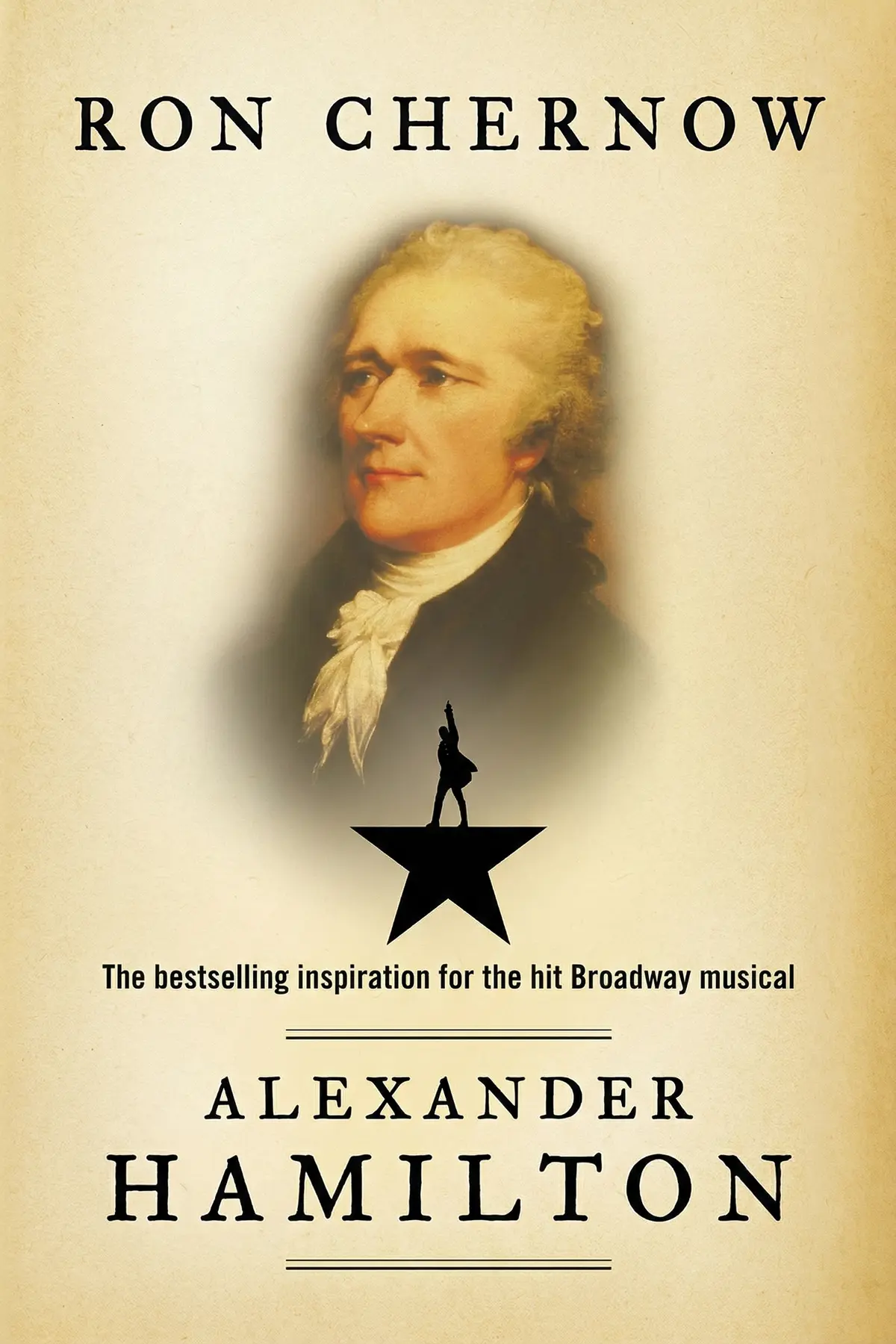
Alexander Hamilton
Ron Chernow

A Higher Loyalty: Truth, Lies and Leadership
James Comey
Alexander the Great
Philip Freeman

Ali: A Life
Jonathan Eig
A Life Decoded: My Genome: My Life
J. Craig Venter


A Long Way Gone: Memoirs of a Boy Soldier
Ishmael Beah
AUDIO SUMMARY AVAILABLE
Listen to The Invention of Nature in 15 minutes
Get the key ideas from The Invention of Nature by Andrea Wulf, plus 5,000+ more titles in English and Thai.
- 5,000+ titles
- Listen as much as you want
- 7-day free trial
- Cancel anytime







