
16 min 32 sec
The Light Eaters: How the Unseen World of Plant Intelligence Offers a New Understanding of Life on Earth
The Light Eaters explores the hidden, sophisticated world of plant intelligence, revealing how flora communicate, learn, and react to their environment through complex chemical and electrical networks that challenge our definitions of consciousness.
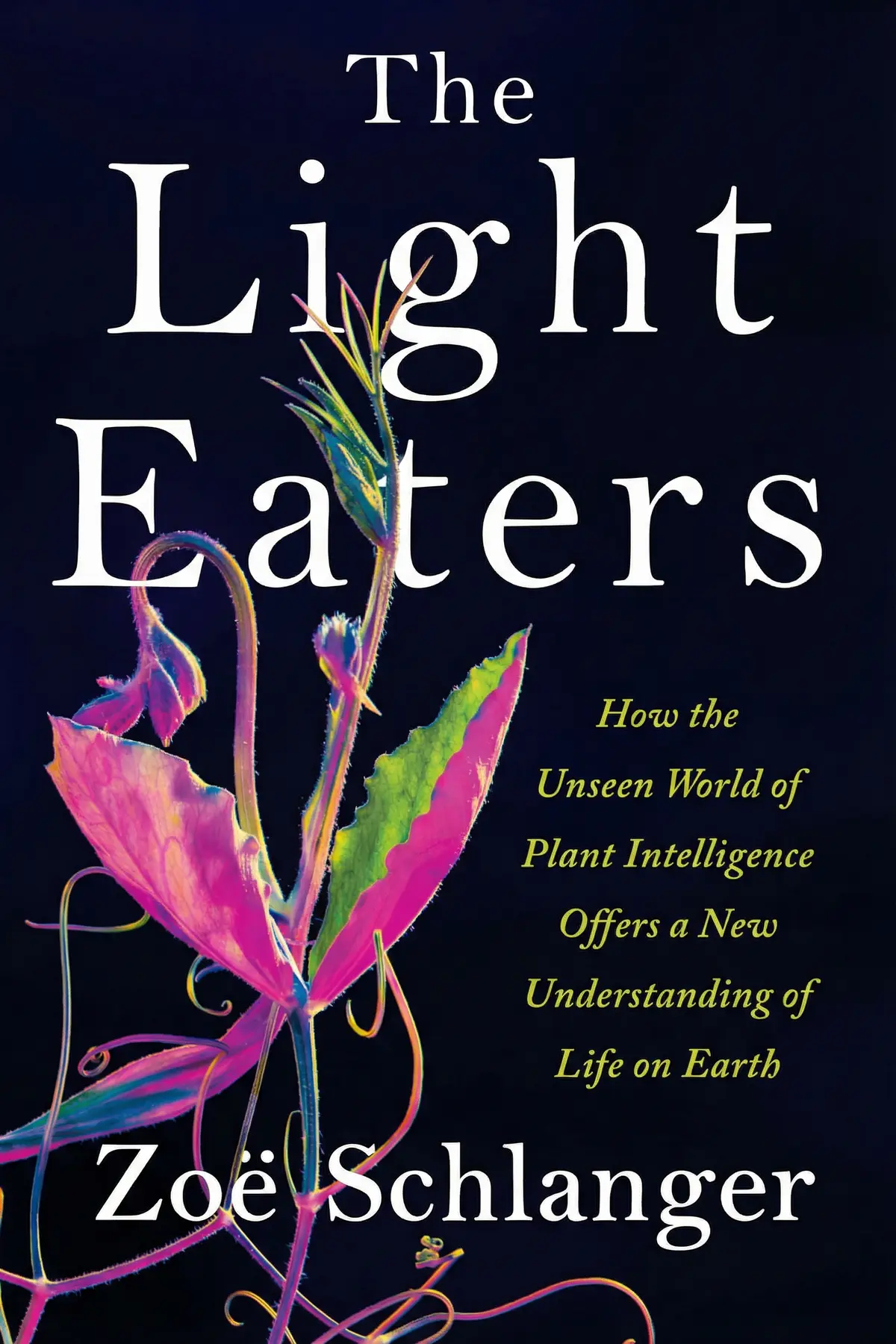
Table of Content
1. Introduction
1 min 51 sec
Imagine stepping into a forest and realizing that every leaf, stem, and root is part of a massive, silent conversation. For decades, we have looked at plants as beautiful but ultimately inert objects—biological machines that simply grow, photosynthesize, and die. But a quiet revolution is happening in the world of science, one that suggests we have been profoundly wrong about the greenery surrounding us.
Back in the early 1970s, a book called The Secret Life of Plants took the world by storm. It claimed that plants had feelings, enjoyed certain genres of music, and were basically humans in green disguises. While the public loved it, the scientific community was horrified. The backlash was so intense that for nearly fifty years, any serious researcher who even hinted at ‘plant intelligence’ risked their career. The study of plant behavior was pushed to the fringes, dismissed as pseudoscience or hippie nonsense.
However, the tide is finally turning. Modern researchers, armed with high-tech sensors and genetic mapping, are discovering that plants exhibit behaviors that look remarkably like awareness. They don’t have brains or neurons, yet they solve problems, recognize their relatives, and remember the past. They are the ‘light eaters’—creatures that turn sunbeams into matter and navigate a world of constant challenge with sophisticated strategies. In this exploration, we’re going to look at the evidence that is forcing us to redefine what it means to be alive. We will see how plants communicate through the air, how they use electricity to signal danger, and how they even ‘hear’ the sounds of the world around them. This isn’t just about botany; it’s about a fundamental shift in our perspective on the entire natural world.
2. Chemical Warning Systems and Social Awareness
2 min 43 sec
Explore the mysterious deaths of South African antelopes and discover how trees use invisible chemical plumes to warn their neighbors of impending danger and prioritize their own genetic relatives.
3. The Hidden Electrical Language of Plants
2 min 35 sec
Investigate how plants use bursts of electricity to move and react, revealing a hidden internal network that functions remarkably like an animal’s nervous system without needing a brain.
4. Acoustic Awareness and the Sense of Hearing
2 min 21 sec
Discover how plants perceive the world through vibrations, allowing them to distinguish between the sound of a gentle breeze and the deadly crunch of a hungry predator.
5. The Roots of Memory and Habituation
2 min 34 sec
Uncover the surprising evidence that plants can learn from experience and store memories, allowing them to ignore false alarms and prepare for recurring environmental threats.
6. Interspecies Alliances and Ecological Dialogues
2 min 44 sec
Explore the complex relationships between plants and animals, from bees that use physical cues to demand flowers to plants that call in mercenary insects to fight their battles.
7. Conclusion
1 min 44 sec
The journey into the world of plant intelligence brings us to a startling conclusion: we are surrounded by a form of life that is deeply aware, highly communicative, and incredibly resourceful. We have moved far beyond the pseudoscience of the 1970s and into a new era where we can finally appreciate the complexity of the botanical world on its own terms. Plants don’t need to be like humans to be intelligent. They have developed their own unique way of being in the world—a decentralized, chemical, and electrical existence that has allowed them to dominate almost every corner of the Earth for hundreds of millions of years.
What this means for us is a complete shift in perspective. We can no longer view a forest as just a collection of timber or a garden as just a hobby. These are communities of sentient beings that are constantly observing, learning, and reacting. This understanding should foster a deeper sense of respect and stewardship. When we recognize that plants can remember stress, recognize their kin, and call for help, we realize how much we still have to learn from them.
As you go about your day, take a moment to look at the trees and flowers with new eyes. Remember that they are ‘hearing’ your footsteps, ‘smelling’ the air, and perhaps even sharing information about your presence with their neighbors. The world is much more alive than it appears. By opening our minds to the possibility of plant consciousness, we don’t just learn about botany; we learn about the vast, diverse, and interconnected nature of life itself. The ‘light eaters’ have much to teach us, if only we are willing to listen to their silent, sophisticated language.
About this book
What is this book about?
The Light Eaters offers a revolutionary look at the botanical world, moving beyond the traditional view of plants as passive scenery. It delves into the emerging science of plant neurobiology, investigating how vegetation possesses sensory capabilities once thought exclusive to the animal kingdom. The book bridges the gap between old-school botany and cutting-edge research to show that plants are active, aware participants in their ecosystems. Readers will discover the fascinating ways plants respond to threats, remember past stressors, and even communicate with other species. By exploring experiments involving electrical signaling, acoustic sensitivity, and social networks, the text promises a profound shift in how we understand the nature of life on Earth. Ultimately, it invites us to reconsider what it means to be intelligent and aware, suggesting that the greenery around us is far more alive and intentional than we ever imagined.
Book Information
About the Author
Zoë Schlanger
Zoë Schlanger is a distinguished science journalist and staff writer at The Atlantic, where she covers climate change and environmental health. Her work has appeared in prominent outlets such as The New York Times, The New York Review of Books, Time, Newsweek, and The Nation. She is also a recipient of the National Association of Science Writers' reporting award and was a finalist for the Livingston Award.
Ratings & Reviews
Ratings at a glance

What people think
Listeners find this book as readable as a compelling novel, packed with intriguing details about botanical life, and view it as essential for nature lovers. The prose is superb, and listeners characterize it as a marvelous tale that shifts their connection to plants. They value the stimulating look at plant intelligence and the investigation into how various species communicate with each other.
Top reviews
Carlos
This book completely rewired how I look at my backyard garden. I used to see my hostas as simple decorations. Now? I see them as active participants in an ancient, chemical conversation. Schlanger takes us through incredible studies on plant kinship and defense mechanisms that left me absolutely stunned. Her writing is fluid and narrative, almost like a novel, yet it's packed with data about how plants sense and react to their environment. I was particularly fascinated by the sections on how plants recognize their own genetic relatives. It makes you realize that the world is far more 'alive' than we give it credit for. If you enjoy learning about the hidden complexities of nature, this is mandatory reading. It’s the kind of book that stays with you long after you close the final page.
Show moreHom
Ever wonder if the vines on your trellis are actually 'aware' of their surroundings? This book suggests they might be, and the evidence is wild. The section on the Boquila trifoliolata—a plant that can mimic the leaves of completely different species—is worth the price of admission alone. How does it do that without eyes? Schlanger explores these mysteries with a sense of wonder that is infectious. She manages to balance the hard science of epigenetics with a philosophical inquiry into what it means to be a sentient being. The writing is top-notch; she has a way of making even the smallest cellular process feel like a high-stakes drama. It’s a beautiful, world-expanding piece of non-fiction that every nature lover should own. Truly a magnificent achievement in science communication.
Show morePriya
Wow, what an absolute journey into the silent green world that usually just fades into the background of our lives. I’ve read a lot of nature books, but this one felt different. It’s not just about what plants do; it’s about how they perceive. Schlanger makes a convincing case that we need a new vocabulary for life. The chapters on plant hearing and their response to sound frequencies were mind-blowing. I loved how she interviewed the actual researchers, giving us a 'behind-the-scenes' look at the struggles of studying things that don't have a central nervous system. The writing is elegant and evocative. It’s rare to find a book that is both intellectually stimulating and emotionally resonant. I’ve already bought three copies to give to friends this year. It is a wondrous story indeed.
Show moreVilaiporn
Honestly, I wasn't expecting to be so moved by a book about botany, but Schlanger has a way of making every leaf feel like a miracle. This is the kind of writing that changes your relationship with the physical world. I spent the afternoon after finishing this just staring at the trees in the park, thinking about the chemical signals moving through the air between them. The depth of research is astounding, yet it never feels dry. She weaves together personal anecdotes, historical context, and cutting-edge studies into a seamless narrative. It’s a beautiful exploration of the 'unseen world' mentioned in the title. I think this book is destined to become a classic in the genre. If you have even a passing interest in nature, you need this on your shelf.
Show moreTod
After hearing about the shapeshifting Boquila vine on a podcast, I knew I had to pick this up. The book did not disappoint. Schlanger is a master at making the 'boring' world of plants feel absolutely electric. She takes us on a global tour of laboratories and forests, introducing us to a new generation of scientists who are pushing the boundaries of what we thought was possible. The sections on how plants communicate to ward off predators were particularly cool. It turns out, they aren't just sitting there waiting to be eaten; they are fighting back with sophisticated chemical weaponry. The writing is brilliant, and the information is presented in a way that feels urgent and important. It’s a rare book that actually changes the way you perceive reality. Highly recommended for everyone.
Show moreWissanu
Zoë Schlanger writes with the curious eye of a reporter, which makes the complex biology in this book surprisingly accessible to a layperson. She doesn't shy away from the controversy surrounding the term 'intelligence,' which I appreciated. The truth is, our language is built for animals with brains, and plants just don't fit that mold. Still, the evidence she presents for plant memory and communication is compelling. I did find the pacing a bit slow in the middle chapters when she deep-dives into the history of botanical research, but the payoff is worth it. Her descriptions of chemical signaling are vivid. You can tell she spent a lot of time in the field with these scientists. It’s a thought-provoking look at the green world that we usually just treat as a backdrop.
Show morePakpoom
Finally got around to this after seeing it everywhere, and I have to say, the science is mind-bending. The idea that plants can 'remember' past droughts and adjust their future behavior is just incredible. Schlanger does a great job of explaining how these processes happen at a molecular level without getting too bogged down in jargon. My only gripe is that she occasionally leans a bit too heavily into the 'Secret Life of Plants' vibe, which can feel a little pseudo-scientific if you aren't careful. But to her credit, she does acknowledge the skepticism within the scientific community. The book is excellently written and flows very well. It really challenges the human-centric view of the world. Even if you don't buy into the 'intelligence' label, you’ll definitely gain a new respect for the bushes in your yard.
Show moreKet
As someone who loved Ed Yong’s writing, I found Schlanger’s approach to be equally world-expanding and insightful. She has this way of taking a tiny botanical detail and turning it into a profound philosophical question. I was particularly gripped by the discussion on plant kinship. The idea that a plant can distinguish its own offspring from a stranger and change its root growth to avoid competition is fascinating. The book is a bit of a slog in the later chapters when it moves into legal rights for plants, but the earlier sections on biology are gold. It’s a very high-quality popular science book. It makes you realize that plants aren't just objects; they are subjects with their own unique ways of being. Definitely worth a read for anyone interested in biology or ecology.
Show moreDao
To be fair, I struggled with how much the author anthropomorphizes her subjects throughout the narrative. While the facts about plant sensing are undeniably cool, the language used to describe them felt a bit over the top. Schlanger often uses verbs like 'strive,' 'want,' or 'plan,' which implies a level of conscious agency that the science hasn't fully proven yet. If you can get past the flowery prose, there is a lot of interesting information here about plant-to-plant communication and evolutionary adaptations. However, I found myself wishing for a more conservative, strictly biological approach like you'd find in a textbook. It’s an easy read and definitely engaging for a general audience, but more skeptical readers might find the 'intelligence' framing a bit too speculative for their tastes. A decent read, but not quite what I expected.
Show moreWitthaya
Look, I’m clearly in the minority here, but this felt more like a philosophical manifesto than a rigorous science book. The author is a journalist, and it shows. She takes very small, specific studies and draws massive, sweeping conclusions about plant 'consciousness' that the original researchers might not even agree with. The anthropomorphism is constant and, quite frankly, distracting. I was hoping for more hard data on chlorophyll and cellular mechanics, but instead, I got a lot of 'what if' scenarios and flowery descriptions of the author's feelings. It’s a very easy read, which I suppose is why it’s so popular, but it lacks the scientific depth of something like Entangled Life. If you want a feel-good book about plants being our 'buddies,' you’ll love it. If you want rigorous biology, look elsewhere.
Show moreReaders also enjoyed

Alien Earths: The New Science of Planet Hunting in the Cosmos
Lisa Kaltenegger




A Life Decoded: My Genome: My Life
J. Craig Venter
A Planet of Viruses
Carl Zimmer
AUDIO SUMMARY AVAILABLE
Listen to The Light Eaters in 15 minutes
Get the key ideas from The Light Eaters by Zoë Schlanger, plus 5,000+ more titles in English and Thai.
- 5,000+ titles
- Listen as much as you want
- 7-day free trial
- Cancel anytime







