
13 min 10 sec
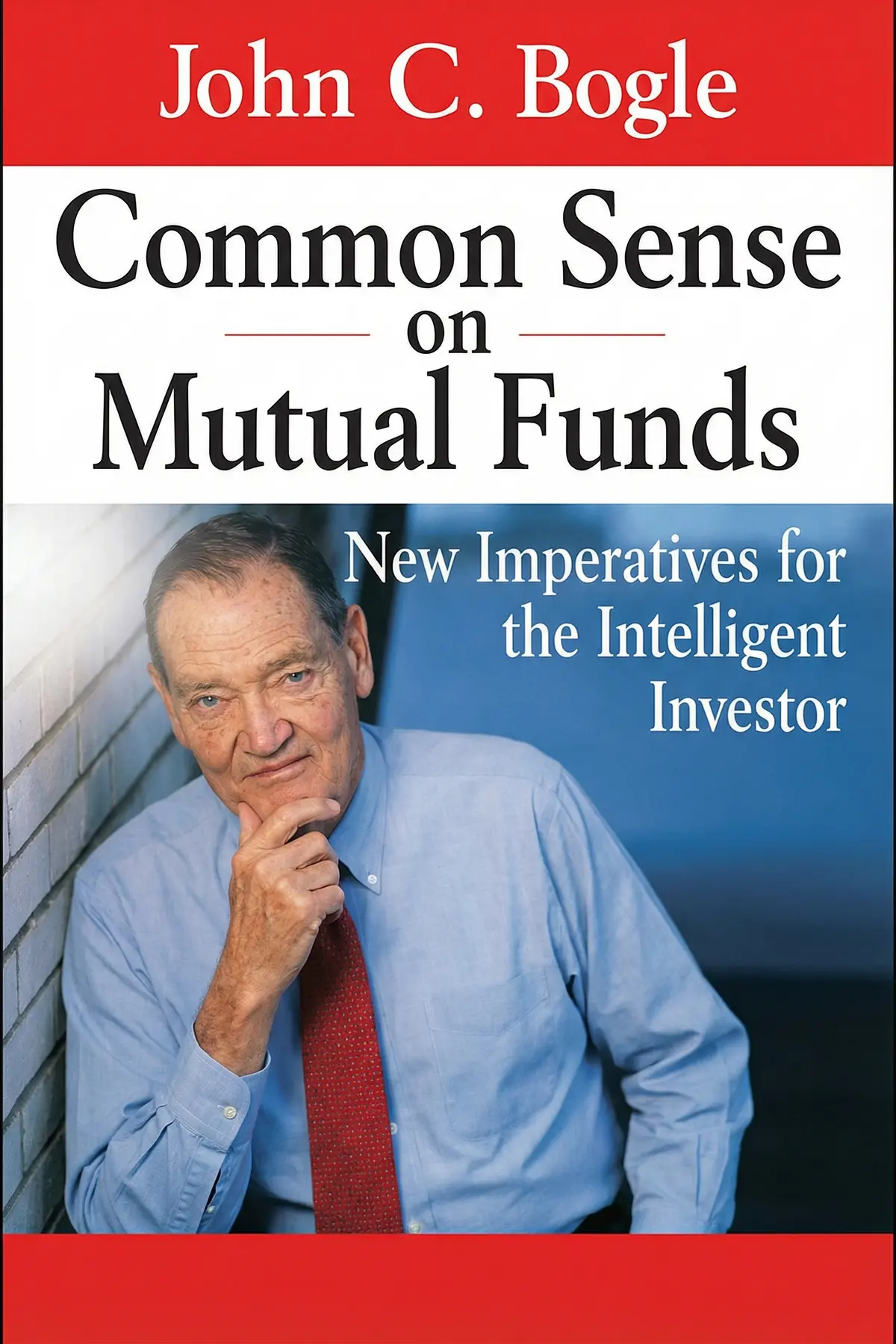
The Little Book of Common Sense Investing: The Only Way to Guarantee Your Fair Share of Stock Market Returns
A fundamental guide to wealth building through low-cost index funds. John C. Bogle reveals why passive investing consistently outperforms active management by minimizing costs and embracing the long-term growth of the entire market.
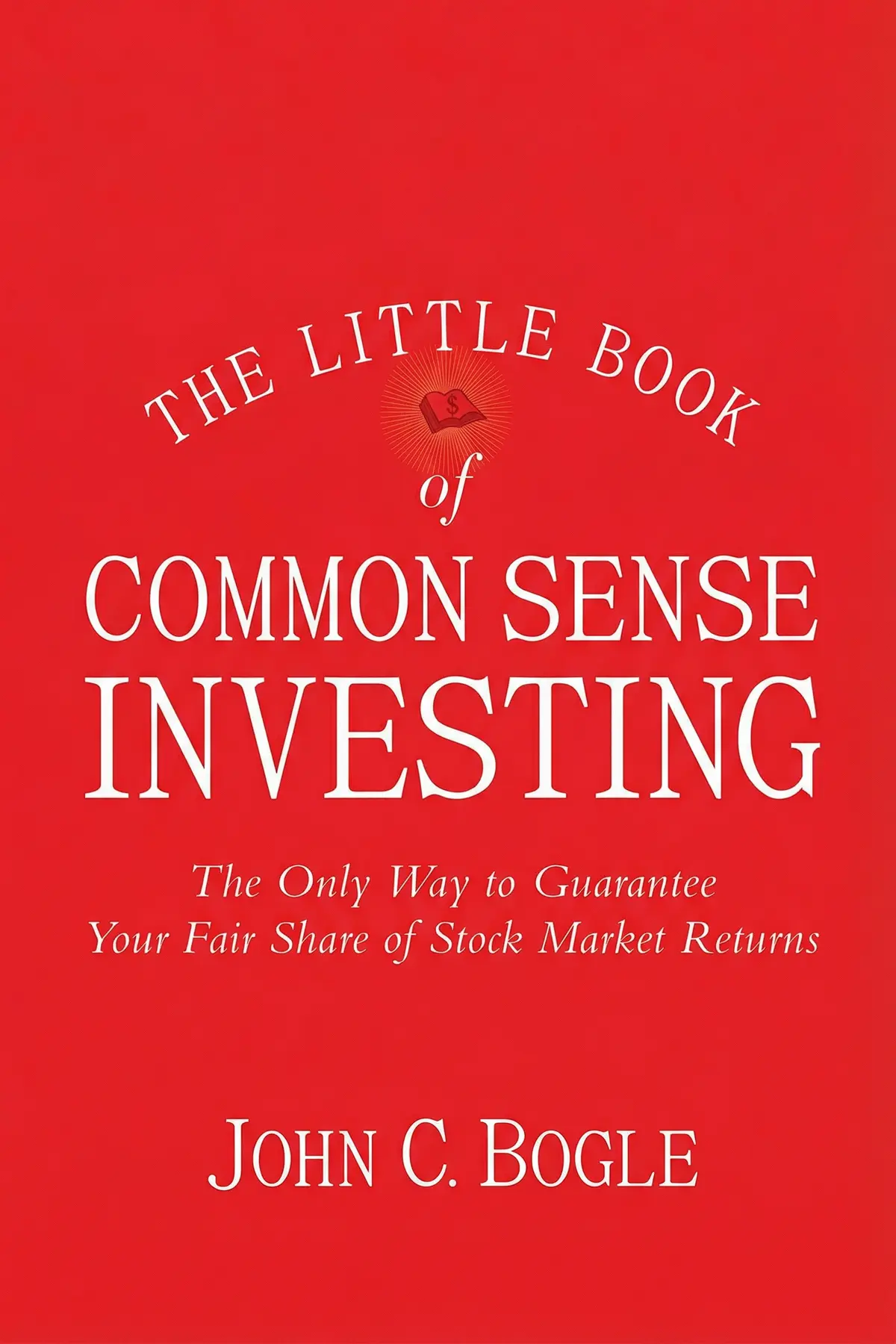
Table of Content
1. Introduction
1 min 40 sec
Imagine for a moment that you are standing in a crowded room where everyone is shouting. Some people are claiming they have the secret to predicting the future, while others are trying to sell you a map to a hidden treasure. This is often what the world of investing feels like. We are bombarded with data, expert opinions, and the latest trends that promise to make us rich overnight. But what if the most effective way to grow your wealth was actually the quietest and simplest path? This is the central premise of the philosophy we are about to explore. It’s a call to move away from the frantic energy of trading and toward a more rational, steady approach.
At the heart of this discussion is a fundamental truth about how the economy works. Businesses produce goods and services, they earn profits, and they distribute those profits to their owners. Over many decades, this process has created immense wealth. However, between those corporate profits and your personal bank account stands an entire industry of intermediaries—brokers, fund managers, and advisors—who all take a small cut of your money. The throughline of our journey today is understanding how to bypass these costs and claim the maximum possible share of the market’s growth.
We will look at why the math of the market makes it nearly impossible for the average person to beat the system through active trading. We will see how simplicity, rather than complexity, is the ultimate sophisticated strategy. By the end of this, you’ll see that successful investing isn’t about being smarter than everyone else; it’s about being more disciplined and more aware of the simple arithmetic that governs every dollar you invest. Let’s look at how you can stop playing a game designed for the house to win and start building a future based on common sense.
2. The Paradox of Active Trading
1 min 51 sec
Discover why the quest to beat the market often leads to disappointment and how simplifying your strategy can actually increase your long-term wealth by avoiding common pitfalls.
3. The Tyranny of Compounding Costs
1 min 42 sec
Explore the hidden math of the financial industry where small fees compound into massive losses, and learn how to keep more of your hard-earned money.
4. The Logic of the Index Fund
1 min 39 sec
Learn the philosophy behind owning the entire market rather than searching for individual winners, and why this passive approach is the most reliable path to success.
5. Navigating Market Speculation vs. Reality
1 min 39 sec
Distinguish between the short-term noise of market speculation and the long-term reality of business growth to find stability in a volatile financial world.
6. The Trap of Chasing Past Performance
1 min 37 sec
Understand why yesterday’s top-performing funds rarely stay on top and how the principle of reversion to the mean can protect you from making emotional mistakes.
7. Discipline and the Investor's Journey
1 min 34 sec
Find out why the most difficult part of investing isn’t the math, but the discipline required to stay the course when everyone else is panicking.
8. Conclusion
1 min 28 sec
As we wrap up our exploration of this common-sense approach to the financial world, the message is clear: the path to wealth is not paved with complex trades or high-priced advice. Instead, it is built on the solid ground of low costs, broad diversification, and relentless patience. We have seen how the arithmetic of the market makes it nearly impossible for active managers to beat a simple index over time, and how the compounding of fees can quietly devastate a lifetime of savings. The most radical act you can take as an investor is to refuse to play the game of speculation and instead choose to own the entire market.
This isn’t just about money; it’s about freedom. It’s the freedom from having to worry about the daily headlines or the latest financial fads. By capturing your fair share of market returns through low-cost index funds, you are allowing the global economy to work for you. The strategy is simple, but as we’ve discussed, it isn’t necessarily easy. It requires the discipline to stay the course when the rest of the world is losing its head.
Your next step is to look at your own portfolio. Ask yourself how much you are paying in fees and how much of your strategy is based on trying to outguess others. If you find yourself overcomplicating things, remember the core lesson: don’t look for the needle, just buy the haystack. Simplify your approach, minimize your costs, and trust in the long-term growth of the businesses that drive our world. In the end, the most sophisticated thing you can do for your future is to embrace the power of common sense.
About this book
What is this book about?
The financial world often presents investing as a complex game reserved for experts with sophisticated algorithms and high-speed trading platforms. In this guide, the focus shifts away from the noise of Wall Street toward a strategy rooted in simplicity and mathematics. The core promise is that you don't need to outsmart the market to succeed; in fact, trying to do so is often what leads to failure. By understanding the distinction between the real economy of business production and the speculative world of stock prices, you can build a portfolio that captures the long-term rewards of the corporate world. This approach centers on the use of low-cost index funds, a tool designed to track the performance of the entire market rather than picking individual winners. You will learn how the compounding of costs—such as management fees, taxes, and trading expenses—can quietly erode your savings over decades. By eliminating these unnecessary drains and maintaining a disciplined, long-term perspective, you can ensure that you receive your fair share of market returns. It is a masterclass in the power of patience and the unavoidable logic of arithmetic in the quest for financial independence.
Book Information
About the Author
John C. Bogle
John C. Bogle is the founder and now-retired CEO of the Vanguard Mutual Fund Group, an American investment management company. His other books include the bestselling classic Common Sense on Mutual Funds. He is widely recognized for creating the first index fund for individual investors and for his lifelong advocacy for low-cost, shareholder-first investing practices.
Ratings & Reviews
Ratings at a glance
What people think
Listeners find this investment guide full of essential knowledge and simple to follow, which makes it especially appropriate for those starting out or focused on long-term growth. This work offers straightforward advice on value investing, and one listener points out that it translates complex mathematics into understandable concepts. Listeners value its emphasis on index funds and the way it shifts their investment mindset, serving as a helpful tool for both novice and seasoned investors.
Top reviews
Orm
This is the definitive guide for anyone tired of the Wall Street casino. Bogle doesn't just give advice; he provides a mathematical foundation for why passive indexing wins over the long haul. Most people overcomplicate things by chasing "hot" managers who eventually fail. To be fair, the writing can feel a bit repetitive with the constant mention of the "relentless rules of humble arithmetic." However, that repetition is necessary to drown out the noise of modern trading apps. If you want to understand why low-cost index funds are superior to active mutual funds, this is your bible. It’s clear, concise, and frankly, life-changing for my retirement strategy. Don't expect fancy tricks here. It’s about being a "passive nobody" who ends up wealthier than the "experts."
Show moreSureerat
Every young person entering the workforce needs to read this immediately. Bogle simplifies the intimidating world of the stock market into something anyone can grasp. He focuses on the arithmetic of investing, showing how low costs are the most reliable predictor of future success. Not gonna lie, I used to think I could pick winning stocks by watching the news. This book completely changed my perspective on what it means to be a successful investor. It’s not about being smart; it’s about being disciplined and staying the course. The comparison to Thomas Paine’s "Common Sense" is apt because it challenges the aristocracy of high-fee money managers. It’s a refreshing, honest take in an industry full of smoke and mirrors. Truly a masterpiece.
Show moreMax
Imagine a world where you don't have to stress about the daily fluctuations of the DOW. That is the peace of mind John Bogle offers in this classic. He makes a compelling case for the "all-market" index fund as the only rational choice for the average person. The math is simple enough for a middle schooler to understand, yet profound enough to baffle Wall Street geniuses. I found the tone quite charming, even if his attempts at humor are a bit in "dad-joke" territory. He emphasizes that the stock market is a giant distraction from the actual business of owning corporate America. Personally, I found the chapter on the "relentless rules" to be the most enlightening part. It’s a roadmap to wealth that requires zero effort once you set it up.
Show moreMo
Finally got around to reading this and I regret not doing so ten years ago. It’s rare to find a finance book that isn't trying to sell you a secret system or a subscription service. Bogle is the real deal, advocating for the "common man" against the "financial parasites." The way he explains how 2% in fees can eat half your wealth over forty years is terrifying. It makes you realize that complexity is just a tool used by banks to justify their existence. The writing is straightforward and avoids unnecessary jargon, which makes it perfect for those who are intimidated by numbers. This isn't just a book about stocks; it's a book about reclaiming your financial future. It’s a five-star must-read for every household.
Show moreElias
Wow, what a refreshing dose of sanity in an insane industry. John Bogle takes a sledgehammer to the myth of the "star" fund manager. He shows that most professionals can't even beat a simple index, especially once you account for their exorbitant fees. I love how he ties the philosophy back to common sense and basic mathematics. The book is short, but every page reinforces the idea that you should own the market, not trade it. In my experience, this is the only investing advice you will ever truly need. It clears away all the clutter and focuses on what actually works: low costs, diversification, and time. If you follow this advice, you’ll be far ahead of the crowd in thirty years.
Show moreAndrew
Picked this up after hearing about the Boglehead movement for years. The core message is incredibly powerful: stop paying middlemen to lose your money. Bogle breaks down how management fees and taxes eat your returns like a slow-moving parasite. Look, I agree with the critics who say the book could have been a long blog post. He says the same thing in every chapter, just using different charts to prove it. But maybe that's the point? He really wants to drive home that trying to beat the market is a loser’s game. I appreciated the historical data comparing mutual funds to the S&P 500. It’s a solid 4-star read, even if it gets a little dry toward the middle sections. Essential for beginners.
Show moreAim
After hearing my friends rave about Bogle, I finally sat down with this little red book. It’s a dense but accessible read that focuses heavily on the impact of compounding and costs. Bogle’s central argument is that you get what you don’t pay for. While he does repeat himself often, the data he presents is hard to argue with. I especially liked the sections explaining why ETFs are often treated too much like trading vehicles rather than long-term holds. Truth is, the financial industry hates this book because it tells you to stop giving them money. My only gripe is that it feels a bit dated in the era of zero-commission trading, though the core principles remain valid. It’s a foundational text for a reason.
Show moreNam
As someone who used to day trade, this was a much-needed reality check. I was tired of the stress and the inconsistent returns that came with trying to time the market. Bogle proves that the most boring strategy—buying the whole market—is actually the most profitable one. The "humble arithmetic" he mentions really does dictate everything in the end. Gotta say, the book is a bit heavy on the historical data, which might bore some readers looking for quick tips. However, that data is necessary to build the conviction needed to stay invested during a downturn. It’s a very persuasive argument for simplicity over complexity. I feel much more confident in my long-term strategy now. Great for both new and experienced investors.
Show morePaisley
Why did I spend twenty dollars on a book that says one thing? "Buy index funds and wait." That is literally the entire book. I understand that Bogle basically invented the index fund, but the ego on display here is a bit much. He quotes himself and his friends constantly to prove he's right. Frankly, the "relentless rules of humble arithmetic" phrase made me want to scream by page 100. If you have any basic knowledge of finance, you already know everything in these pages. It’s a repetitive slog that ignores the psychological difficulty of holding through a crash. Save your money and just Google a summary instead of buying this. Your time is worth more than reading the same three paragraphs rephrased for ten chapters.
Show moreSophia
The information here is undeniably valuable, but the presentation is exhausting. I appreciate Bogle's contribution to the investing world, but did we really need twenty chapters to explain one concept? He beats the "passive index funds win" horse until it's a fine powder. Every chapter follows the same formula: make a claim, show a chart, quote a famous economist, repeat. To be fair, if you are a skeptic who needs mountains of proof, this is the book for you. If you already believe in indexing, you can stop after chapter three. It’s a great resource to keep on the shelf for reference, but it's not exactly a page-turner. I’d recommend it to beginners with a caveat: feel free to skim the middle heavily.
Show more
Readers also enjoyed
AUDIO SUMMARY AVAILABLE
Listen to The Little Book of Common Sense Investing in 15 minutes
Get the key ideas from The Little Book of Common Sense Investing by John C. Bogle, plus 5,000+ more titles in English and Thai.
- 5,000+ titles
- Listen as much as you want
- 7-day free trial
- Cancel anytime







