
The Female Brain: A Comprehensive New Look at What Makes Us Women
Louann Brizendine
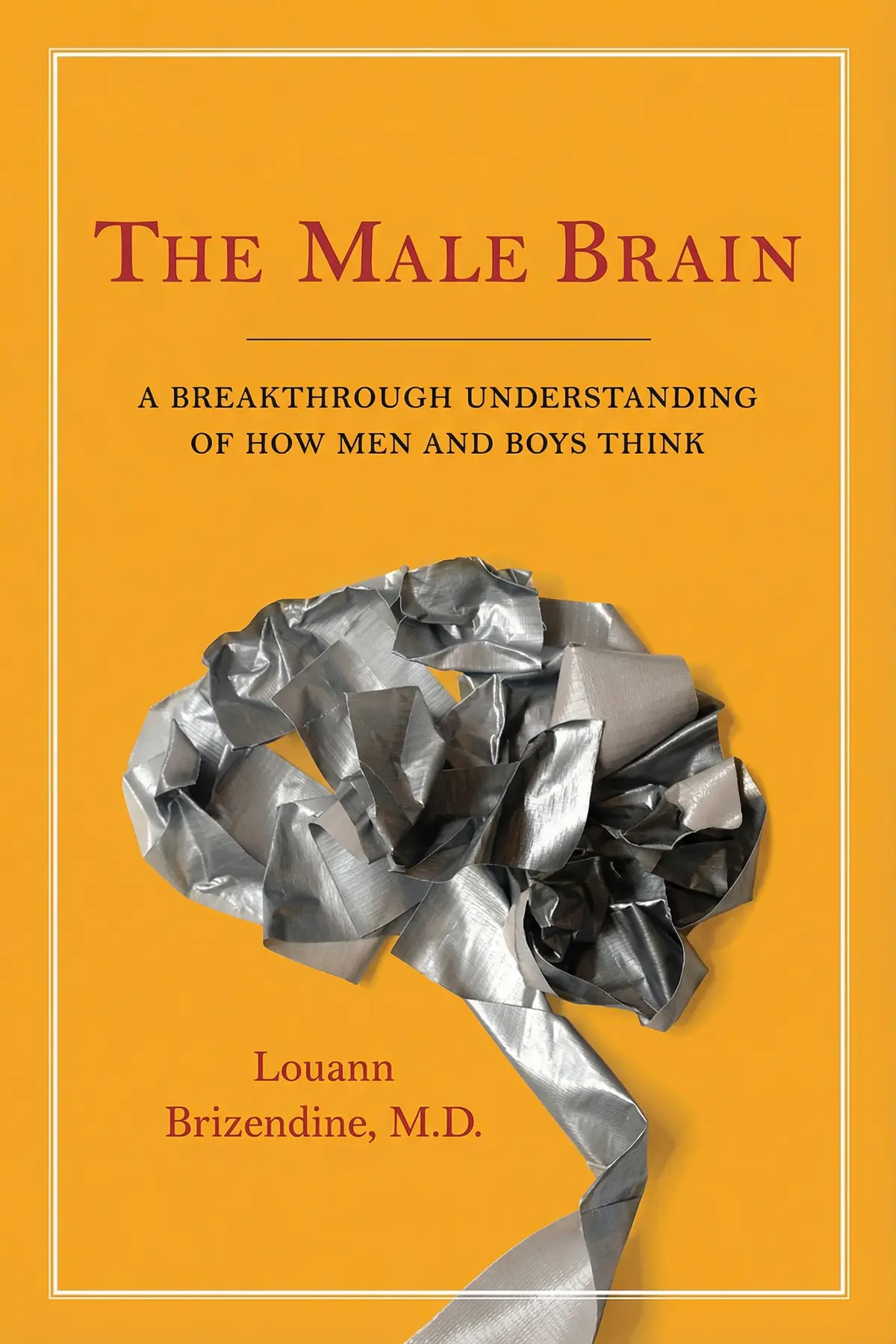
Explore the biological and hormonal forces that shape male behavior, from the womb to old age. This summary reveals the neuroscience behind communication, aggression, bonding, and the unique evolution of the male brain.
1 min 20 sec
For the first two months of existence, every human brain looks essentially the same—and that look is female. But at the eight-week mark, a dramatic biological event occurs for about half of all embryos. A massive surge of testosterone floods the system, acting like a chemical architect that begins to rewire the brain’s very structure. This is the moment the male brain is born, and from that point forward, its trajectory is fundamentally altered.
In this exploration of Louann Brizendine’s work, we are going to look at the powerful, often invisible forces of nature that guide men and boys through the various stages of their lives. It isn’t just about anatomy; it’s about a complex interplay of hormones that drive everything from a toddler’s need to wrestle to a grandfather’s newfound gentleness. We often attribute male behavior to social conditioning, but as we will see, there is a deep neurological throughline that explains why men think, love, and react the way they do. By understanding the cycles of testosterone, the bonding power of vasopressin, and the structural differences in the amygdala, we can begin to see the male experience not as a series of stereotypes, but as a fascinating biological journey. Whether you are navigating a relationship, raising a son, or reflecting on your own life, understanding the male brain offers a vital key to empathy and clarity.
2 min 25 sec
Discover how a specific trio of hormones transforms a developing embryo and creates the unique structural architecture that defines early male behavior.
2 min 23 sec
Explore why young boys find physical play so addictive and how the onset of puberty reshapes their priorities through a massive neurological shift.
2 min 04 sec
Unpack the biological tension between the drive for sexual pursuit and the deep hormonal need for intimate bonding and monogamy.
1 min 56 sec
See how fatherhood triggers a surprising hormonal shift that suppresses aggression and heightens a man’s protective instincts.
2 min 11 sec
Learn why men often respond to emotional distress with solutions rather than empathy and how their brain architecture handles feelings differently.
2 min 10 sec
Witness the final chapter of the male brain’s journey as declining hormone levels lead to a more emotional, connected, and peaceful stage of life.
1 min 20 sec
The journey of the male brain is a cycle of hormonal ebbs and flows that define the human experience in a very specific way. From the initial eight-week surge that sets the template, through the turbulent, dopamine-fueled years of youth, to the protective instincts of fatherhood and the eventual mellowing of old age, biology is a constant companion.
Understanding these patterns allows us to move beyond frustration and toward a more profound empathy. When we recognize that a teenage boy’s risk-taking is a result of an unfinished prefrontal cortex, or that a man’s tendency to ‘fix’ problems is a hardwired response to distress, we can communicate more effectively. We see that masculinity isn’t a monolith, but a shifting landscape of chemicals and neural circuits.
The most important takeaway is that while these biological drives are powerful, they are not a cage. By understanding the ‘why’ behind the behavior, men can gain better control over their impulses, and those who love them can offer better support. The male brain is built for action, for protection, and eventually, for deep, quiet connection. Embracing this full spectrum—from the aggressive amygdala to the bonding power of vasopressin—is the key to a more integrated and fulfilling life.
Have you ever wondered why men and boys behave the way they do? Is it purely cultural, or is there a deeper, biological explanation? The Male Brain dives into the neurological and hormonal underpinnings that define masculinity across the lifespan. Starting from a pivotal moment just eight weeks into gestation, the male brain begins a journey shaped by a specific cocktail of chemicals that influence everything from physical play and risk-taking to the drive for status and the complexities of romantic bonding. This summary provides a breakthrough understanding of the male experience. You will learn how hormones like testosterone and vasopressin dictate social hierarchies and fatherhood, why teen boys are prone to impulsive behavior, and how the aging process eventually mellows the male temperament. By looking through the lens of a neuroscientist, listeners gain a new perspective on the impulses, emotional responses, and communication styles that characterize the male brain, offering a roadmap for better relationships and a clearer understanding of human nature.
Louann Brizendine is a distinguished American neuroscientist, researcher, and professor who has dedicated her career to understanding the biological differences between the sexes. A graduate of Yale and Harvard, she currently serves as a clinician. Brizendine is the author of several influential books, including the bestseller The Female Brain, and her research served as the creative spark for the 2017 feature film of the same name.
Louann Brizendine
Listeners find this work to be a necessary read that translates dense empirical research into a captivating narrative. It offers deep perspective on the male mind, and one listener highlights its coverage of modern breakthroughs in neurology and psychology. Furthermore, they appreciate the clarity provided for understanding boys and men, with one listener observing that it refrains from criticizing either sex. Nevertheless, the book's scientific precision receives varied feedback.
As a mother of three boys, I was constantly baffled by their high-energy antics and apparent lack of any volume control. This book was a total revelation for our household. Brizendine takes what could be very dry, hard-to-read empirical research and presents it in a way that is both engaging and deeply compassionate. I finally understand why my teenager needs such intense sensations to even feel 'awake' during his homework. Frankly, it’s a relief to know that their behavior is rooted in neurology rather than just a desire to drive me crazy. The book doesn't bash men at all; instead, it provides a roadmap for better communication and patience. It’s easily become a required read for all the parents in my social circle.
Show moreThis book should be required reading for any woman navigating a male-dominated workplace. It provides such a unique perspective on how men process stress, hierarchy, and conflict differently than women do. I used to think my male coworkers were being intentionally stoic or dismissive, but this book helped me see the neurological 'why' behind their communication styles. The writing is punchy and fast-paced, making it feel more like a conversation than a textbook. I loved how it tracked male development from infancy all the way through the 'man-pause.' It has definitely helped me cultivate more empathy for the men in my life, both at home and in the office. Truly a breakthrough for me.
Show moreFinally got around to this after reading Brizendine's first book on the female brain, and I found the insights into marriage dynamics particularly striking. To be fair, I was that guy who always tried to 'fix' my wife’s problems with logic while she just wanted me to listen and offer emotional support. Seeing the neurological explanation for the male 'systemizing' impulse helped us both stop taking these misunderstandings so personally. While some of the science on hormones felt a bit dense, the author has a way of translating complex data into relatable anecdotes. It isn't perfect, but it’s a great tool for any couple looking to bridge the communication gap. I wish I had read this ten years ago.
Show moreThe chapter on the 'Daddy Brain' alone made this worth the purchase for me. Seeing how a man’s hormones actually shift when he’s around a newborn was fascinating and honestly quite moving. Most books on parenting focus entirely on the mother, so it was refreshing to see the latest breakthroughs in male neurology highlighted here. Brizendine writes in an engaging manner that keeps you turning pages, even when she’s diving into the nitty-gritty of testosterone and vasopressin. My only gripe is that it occasionally feels a bit reductionistic, as if we are all just slaves to our chemical signals. Still, it’s an eye-opening look at the male experience that avoids the usual gender-bashing tropes.
Show moreEver wonder why teen boys seem to have zero impulse control and a death wish for adventure? This book breaks down the 'remodeling' of the adolescent brain in a way that is both terrifying and illuminating. I appreciated how Brizendine used real-world clinical cases to illustrate her points about the reward centers in the male brain. It’s a very engaging read that doesn't feel like a chore, which is rare for books based on empirical research. Although I think she underestimates the power of social conditioning, the biological perspective she offers is a vital piece of the puzzle. It helped me understand my son's 'one-track mind' without getting angry. Definitely a helpful guide for parents.
Show moreAfter hearing about this on a podcast, I picked it up to better understand my husband’s tendency to go into 'fix-it' mode whenever I’m upset. Personally, I found the chapter on the adult male brain to be the most validating thing I’ve read in years. It explains the 'search-and-rescue' neurological response that men have toward their partners' distress. Instead of seeing it as him not caring about my feelings, I now see it as his brain trying to protect me. The book is full of these 'aha' moments that make you look at your relationships in a whole new light. It’s a quick read, very accessible, and provides a lot of much-needed clarity on male psychology.
Show moreI found this surprisingly funny and lighthearted despite the heavy focus on neurology and brain chemistry. Brizendine has a gift for taking hard-to-read research and turning it into something that feels like a page-turner. Not gonna lie, I laughed out loud at some of the descriptions of the 'testosterone-fueled' teen years because they were just so spot-on. While I agree with other reviewers that it can be a bit reductionistic regarding romance and pheromones, the overall message of understanding and compassion is loud and clear. It’s a great bridge for anyone trying to understand the 'why' behind male behavior. It definitely doesn't bash men; if anything, it makes you root for them.
Show moreIs it a bit over-generalized? Probably. Look, I appreciate that Brizendine is trying to make neuroscience accessible to the masses, but at times the biological determinism feels a little heavy-handed. She has a habit of taking a statistical trend and turning it into a universal truth, which might alienate men who don't fit the 'typical' extroverted, sports-loving mold. I found the section on middle-aged brain shifts interesting, yet I couldn't help but feel that culture plays a much larger role than she admits. The book is an easy read, and the stories are fun, but take the 'hard-wired' claims with a grain of salt. It’s a decent starting point for understanding male psychology, provided you remember that everyone is an individual.
Show moreTo be fair, Brizendine does cite a lot of sources, but I worry about how she presents the data to the general public. There’s a fine line between 'statistically more likely' and 'men are just built this way,' and she crosses it often. I noticed she frequently mentions small effect sizes as if they are vast chasms of difference. For example, her take on how teen boys process homework versus high-intensity stimuli felt a bit like an excuse for bad behavior rather than a nuanced explanation. That said, the book is undeniably engaging and offers some great talking points for couples. It’s a mixed bag—partly brilliant insight, partly questionable oversimplification. I’d recommend it, but read it with a critical eye.
Show moreTruth is, I found this book deeply frustrating. While Brizendine is clearly knowledgeable, she leans so heavily into gender stereotypes that it starts to feel like a 1950s sitcom disguised as science. She constantly uses 'shorthand' that ignores the massive variation within the male sex, focusing almost exclusively on a narrow, neurotypical version of masculinity. If you aren't a high-testosterone, risk-taking alpha, you might feel like your brain isn't 'truly' male according to her definitions. Some of the studies she cites are even based on animals like goldfish, which is a huge stretch for explaining human social behavior. It’s an easy read, sure, but the scientific accuracy is shaky at best. It just didn't ring true for me at all.
Show more





J. Craig Venter

Richard Wiseman

Carl Zimmer

Bill Bryson
AUDIO SUMMARY AVAILABLE
Get the key ideas from The Male Brain by Louann Brizendine, plus 5,000+ more titles in English and Thai.







