
13 min 54 sec
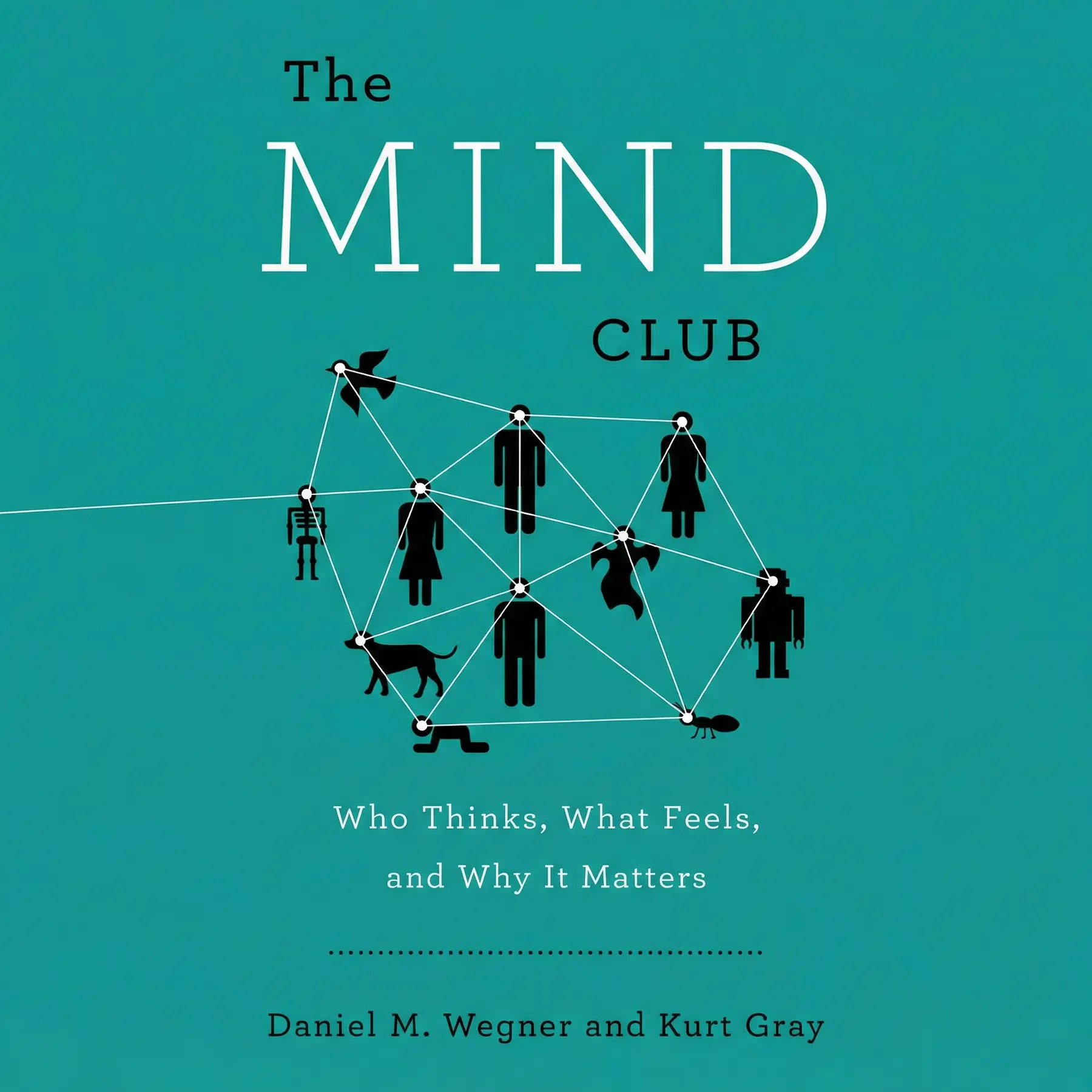
The Mind Club: Who Thinks, What Feels and Why It Matters
The Mind Club examines how we determine who possesses a mind. By exploring the traits of agency and experience, it reveals how our perceptions of consciousness dictate our moral and social interactions.
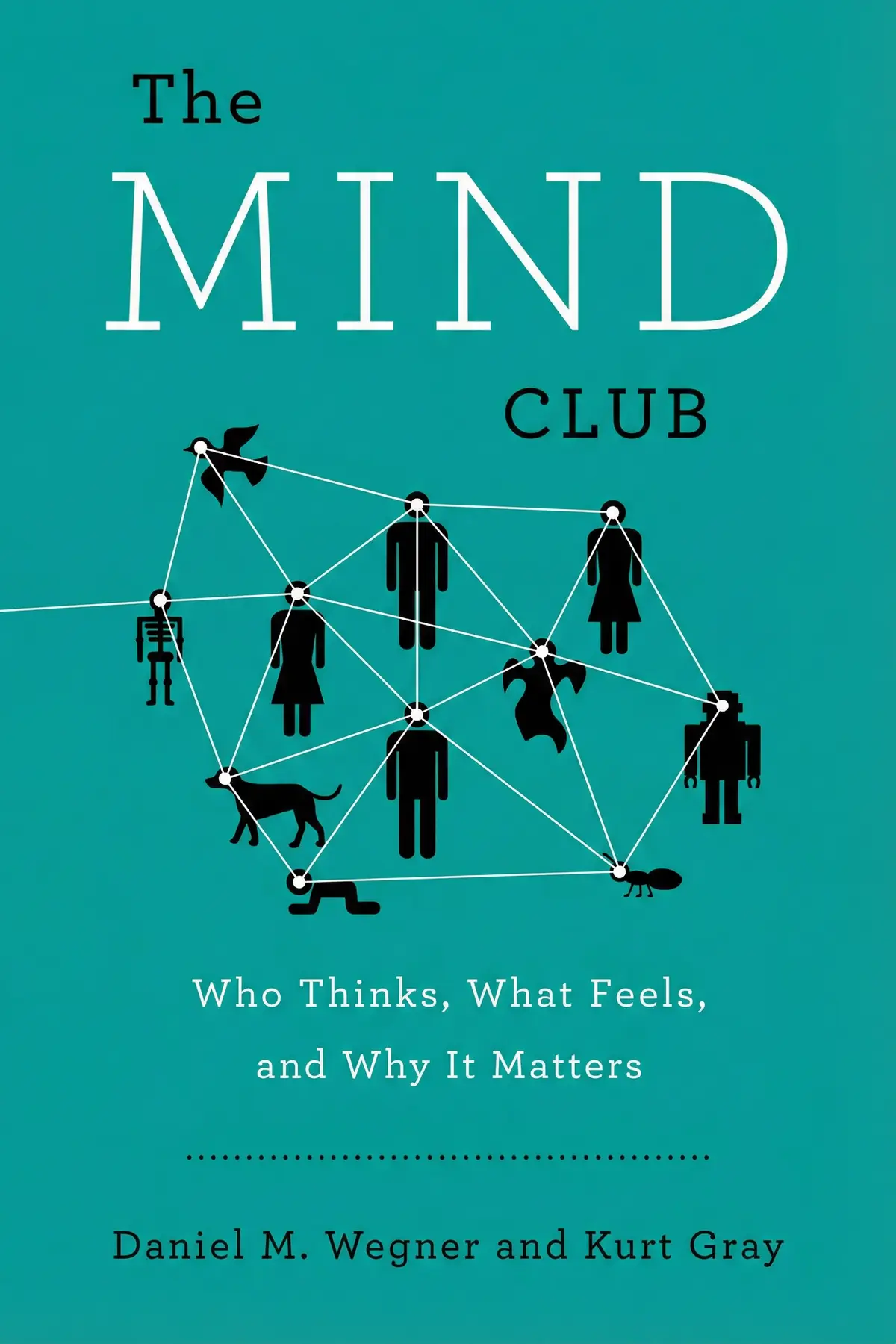
Table of Content
1. Introduction
1 min 30 sec
Have you ever paused to wonder if the people around you are truly ‘there’ in the same way you are? It is a classic philosophical puzzle: how do you know your best friend or even your own mother isn’t just a highly sophisticated biological machine, simulating the behavior of a conscious being without any actual inner light? While we cannot strictly prove that others possess a mind, we live our lives with the absolute conviction that we are surrounded by thinking, feeling entities. This conviction is what grants them entry into what psychologists Daniel M. Wegner and Kurt Gray call the ‘Mind Club.’
Membership in this club is the foundation of everything that makes us human. It dictates who we protect, who we punish, and who we ignore. Yet, as we will explore, the criteria for membership are surprisingly subjective. Whether we are looking at a family pet, a corporate executive, a sophisticated computer program, or even a newborn baby, our brains are constantly making snap judgments about the presence of a mind.
In this exploration, we are going to look at the two specific traits that serve as the ‘admission tickets’ to this club. We will see how these traits shift our view of morality and how the denial of these traits can lead to the darkest chapters of human history. We will also investigate why our brains are evolutionarily programmed to see minds even where none might exist—and how this tendency helps us survive. By the end of this journey, you may find that the boundaries of the mind are much more fluid than you ever imagined.
2. The Two Dimensions of Mind
2 min 17 sec
Discover the two essential traits that determine who gets into the Mind Club and why we categorize thinkers and feelers differently.
3. The Moral Connection
2 min 08 sec
Learn how our perception of agency and experience dictates who we hold responsible for their actions and who we choose to protect.
4. The Psychology of Dehumanization
2 min 12 sec
Explore the disturbing ways we mentally ‘evict’ others from the Mind Club to justify harmful behavior and ease our own guilt.
5. The Evolutionary Search for Intent
2 min 09 sec
Why our brains are wired to see conscious agents everywhere, from rustling bushes to the movements of a sleepwalker.
6. The Subjective Reality of Cryptominds
2 min 15 sec
Examine the ‘borderline’ members of the Mind Club—like God, AI, and animals—and why their status is a matter of perception.
7. Conclusion
1 min 23 sec
The Mind Club reveals that our social and moral lives are built on a foundation of perception. We don’t navigate the world by interacting with physical bodies; we navigate it by interacting with what we believe are the inner lives of others. By understanding that we judge minds through the lenses of agency and experience, we can begin to see why we are so quick to blame some and so eager to protect others.
This framework also offers a warning. The same psychological mechanisms that allow us to empathize with a crying child also allow us to dehumanize those we consider enemies. When we strip away a person’s agency or experience, we move them outside the circle of our moral concern. Recognizing this tendency is the first step toward resisting it.
As you move forward, keep in mind that every interaction you have is a test of membership. Whether you are talking to a colleague, playing with a pet, or interacting with a new AI, you are constantly deciding who gets a seat at the table. The Mind Club is a reminder that the ‘self’ is not an island, but a member of a vast, perceived community. By being more conscious of how we grant ‘mindhood’ to others, we can build a more empathetic and responsible world. The next time you look into the eyes of another being, ask yourself: what kind of mind am I seeing, and why does it matter?
About this book
What is this book about?
The Mind Club offers a deep dive into the psychological mechanisms we use to grant or deny the status of 'consciousness' to the beings around us. Authors Daniel M. Wegner and Kurt Gray suggest that having a mind isn't a biological fact we discover, but rather a perception we project based on two key dimensions: agency—the ability to plan and act—and experience—the capacity to feel and suffer. This framework explains why we treat babies differently than CEOs, why we struggle with the moral status of animals and AI, and the dark psychological roots of dehumanization. By understanding the 'Mind Club,' listeners gain a new perspective on morality, responsibility, and the very nature of the self. The book promises to change how you see your neighbor, your pet, and even the technology in your pocket, ultimately revealing that our social world is built upon the subjective ways we perceive the inner lives of others.
Book Information
About the Author
Daniel M. Wegner
Daniel M. Wegner was a highly regarded psychologist and the author of the influential work The Illusion of Conscious Will. His contributions to the field were recognized with numerous honors, most notably the 2011 Distinguished Scientific Contribution Award from the American Psychological Association. Kurt Gray is a psychologist who studied under Wegner. He has shared his insights through various essays and opinion pieces, including the notable article The Myth of the Harmless Wrong published in The New York Times.
Ratings & Reviews
Ratings at a glance
What people think
Listeners find this title remarkably engaging and perceptive, particularly suggesting it to those fascinated by psychology. Furthermore, they value its stimulating material, as one listener emphasizes the examination of moral judgment and another mentions the captivating anecdotes regarding the human mind. The book also earns praise for its wit, writing quality, and clarity, with one listener characterizing it as an accessible survey of psychological principles.
Top reviews
Anna
A profound and moving experience that blends high-level psychological theory with a deeply personal narrative. Knowing that Daniel Wegner was battling ALS while writing this adds a layer of weight to every chapter, especially when discussing the 'silent minds' of those in vegetative states. The core concept—that we perceive minds through the dual lenses of agency and experience—is one of those ideas that seems obvious only after someone explains it to you. It completely changed how I look at my dog, my computer, and even my enemies. The writing is incredibly accessible, making complex moral philosophy feel like a casual conversation at a bar. While it handles heavy topics like abortion and the death penalty, it never feels bogged down by academic jargon. It is a rare book that makes you smarter while also making you feel more connected to the world around you. Truly a must-read for anyone interested in the human condition.
Show moreAhmed
Picked this up on a whim at the library, and I'm honestly floored by how much it changed my perspective on the world. It’s rare to find a book that is this entertaining while dealing with such heavy moral weight. The authors explore who gets a 'membership card' to the Mind Club and why. Is a fetus a person? Is a corporation a person? Why do we treat them differently? The way they break down these massive questions using the agency/experience metrics is just masterclass communication. It’s easy to understand without being patronizing. I especially loved the section on 'cryptominds' and how we attribute intention to things that clearly don't have it, like a glitchy computer. It’s funny, it’s sad, and it’s deeply intellectual. If you’ve ever wondered why humans are so weirdly inconsistent about who we care about, you need to read this book immediately.
Show moreCarter
Wait, does God get hungry? This sounds like a silly question, but it gets to the core of how we categorize minds, and this book explores that with incredible wit. I found the 'Mind Club' concept to be one of the most useful psychological frameworks I've encountered in years. It explains the 'uncanny valley' better than anything else I’ve read—we like robots that act (agency), but we get creeped out when they seem to feel (experience). The prose is sharp, the stories are engaging, and the underlying theory is robust. It's an easy-to-read overview that doesn't shy away from the 'big' questions of life and death. I’ve already recommended it to three people this week. It’s the perfect blend of entertainment and education. Even if you don't agree with every conclusion the authors draw, you'll be thinking about their arguments for months after you put the book down.
Show moreNoi
Finally got around to reading this exploration of moral judgment, and it mostly lived up to the hype. The authors introduce a fascinating framework: the 'Mind Club' is divided into those who can do (agents) and those who can feel (patients). This explains so much about our social friction. For instance, why is it so hard to see a criminal as a victim? Because our brains struggle to attribute both high agency and high experience to the same person at once. I found the chapter on the 'Uncanny Valley' and robotics particularly timely given the current AI boom. My only gripe is that the tone is occasionally a bit too 'pop-science' for my taste, with some jokes that don't quite land. To be fair, though, it keeps the pages turning quickly. It’s an insightful, easy-to-read overview that provides a solid mental toolkit for understanding why we care about some beings and ignore others.
Show moreChanon
Ever wonder why we feel bad for a vacuum robot when it gets stuck but have no problem ignoring a corporation's lack of feelings? The Mind Club answers these questions by showing how we 'complete the dyad' of morality. The book is chock-full of interesting research, though I did find myself Googling several studies to see if they’d actually been replicated. Most had, which was a relief! The writing is breezy and conversational, which makes it a great 'beach read' for nerds. I particularly liked the discussion on how we perceive the 'dead' as still having a mind, which explains so much about grief and religion. It’s a bit light on practical advice—it tells you *how* we think, but not necessarily what we *should* do with that information. Still, it’s an engaging and insightful look at the boundaries of humanity. Definitely recommended for fans of Jonathan Haidt or Oliver Sacks.
Show moreWillow
After hearing so much about this in my undergraduate psychology circles, I decided to dive in myself. The concept of the 'Moral Dyad' is a total game-changer for understanding societal prejudices. The authors argue that we perceive others as either 'thinking doers' or 'vulnerable feelers,' and this categorization dictates how we treat them. It’s a fascinating lens through which to view racism, animal rights, and even how we perceive God. Speaking of God, that chapter was easily the most controversial part of the book. While the authors try to stay objective, their atheist bias is pretty clear, which might turn off some religious readers. However, the logic they use to explain why people see God as having high agency but zero experience (He doesn't get hungry or tired) is brilliant. The book is fast-paced and witty, though sometimes the humor feels a bit forced. Overall, a very strong 4-star read.
Show moreOoi
As someone who enjoys pop psychology, I appreciated how the authors distilled complex moral theories into a digestible 2x2 grid. The book is incredibly insightful, particularly the sections on how we dehumanize others by stripping away their 'experience' or 'agency.' It makes you realize that our moral failures are often just failures of perception. The writing is punchy and moves at a great clip. To be fair, there are moments where the authors get a little too speculative, especially when they start talking about the afterlife and ghosts. It felt like they were stretching their theory a bit thin to cover every possible 'mind' in existence. However, the core of the book—how we judge others and why it matters—is rock solid. It’s a thought-provoking read that manages to be both lighthearted and deeply serious. Definitely worth the time for any psychology enthusiast.
Show moreKob
This book walks a very thin line between serious academic inquiry and over-the-top comedy routines. I suspect Kurt Gray took the lead on the prose here, and his voice is markedly different from Wegner’s previous solo works. Gray tries a bit too hard to be the 'funny professor,' peppered with one-liners that often distracted me from the actual data. The central thesis—the 2x2 grid of agency and experience—is undeniably clever and helps organize a lot of disparate psychological findings. However, the science feels a bit 'lite.' There are numerous instances where a single, small-scale study is used to make a massive, sweeping generalization about human nature. Look, the ideas are definitely worth your time, but you should go into this expecting more of a philosophical thought experiment than a rigorous scientific text. It's a fun ride, but take the speculative conclusions with a grain of salt.
Show moreWipawan
The premise is absolutely brilliant, but the execution feels a bit lopsided at times. I loved the opening chapters that established the two dimensions of mind—agency and experience. It’s a clean, elegant framework. But as the book progressed, the chapters started to feel like a collection of loosely related essays rather than a cohesive argument. The chapter on 'The Silent' was heartbreaking and beautiful, likely influenced by Wegner’s own tragic health struggles. However, the chapter on 'The Dead' felt more like spooky campfire stories than psychological science. In my experience, popular science books work best when they don't try to answer *everything*, and this one tries to tackle God, robots, fetuses, and corporations all in one go. It’s an entertaining read for sure, and the writing style is very polished, but I finished it feeling like I had eaten a meal of appetizers rather than a main course. Good, but not great.
Show moreDuang
Frankly, I found the lack of scientific rigor to be a massive distraction from what could have been a seminal work. The authors frequently cite a study and then immediately leap to a speculative conclusion that the data doesn't actually support. For example, the section on 'teleporting babies' as evidence for inherent dualism felt like a massive reach. I also found it a bit suspicious that they mention funding from the Templeton Foundation, which often has a specific agenda when it comes to reconciling science and religion. This bias is particularly glaring in the chapter on God, where the authors seem to let their own philosophical leanings drive the narrative rather than objective research. If you want a cutesy book with vaguely relevant illustrations and transparent hooks for a general audience, this is fine. But if you’re looking for the deep, empirical psychological analysis Wegner was once known for, you will likely be disappointed by this shallow treatment.
Show moreReaders also enjoyed
A Liberated Mind: How to Pivot Toward What Matters
Steven C. Hayes
Acting with Power: Why We Are More Powerful Than We Believe
Deborah Gruenfeld
Age of Propaganda: The Everyday Use and Abuse of Persuasion
Anthony Pratkanis

59 Seconds: Change Your Life in Under a Minute
Richard Wiseman
AUDIO SUMMARY AVAILABLE
Listen to The Mind Club in 15 minutes
Get the key ideas from The Mind Club by Daniel M. Wegner, plus 5,000+ more titles in English and Thai.
- 5,000+ titles
- Listen as much as you want
- 7-day free trial
- Cancel anytime







