
15 min 30 sec
The Nazi Conspiracy: The Secret Plot to Kill Roosevelt, Stalin, and Churchill
Uncover the chilling true story of a high-stakes Nazi plot to assassinate Roosevelt, Churchill, and Stalin. This account details the narrow window in 1943 where the world’s fate hung on a single secret meeting.
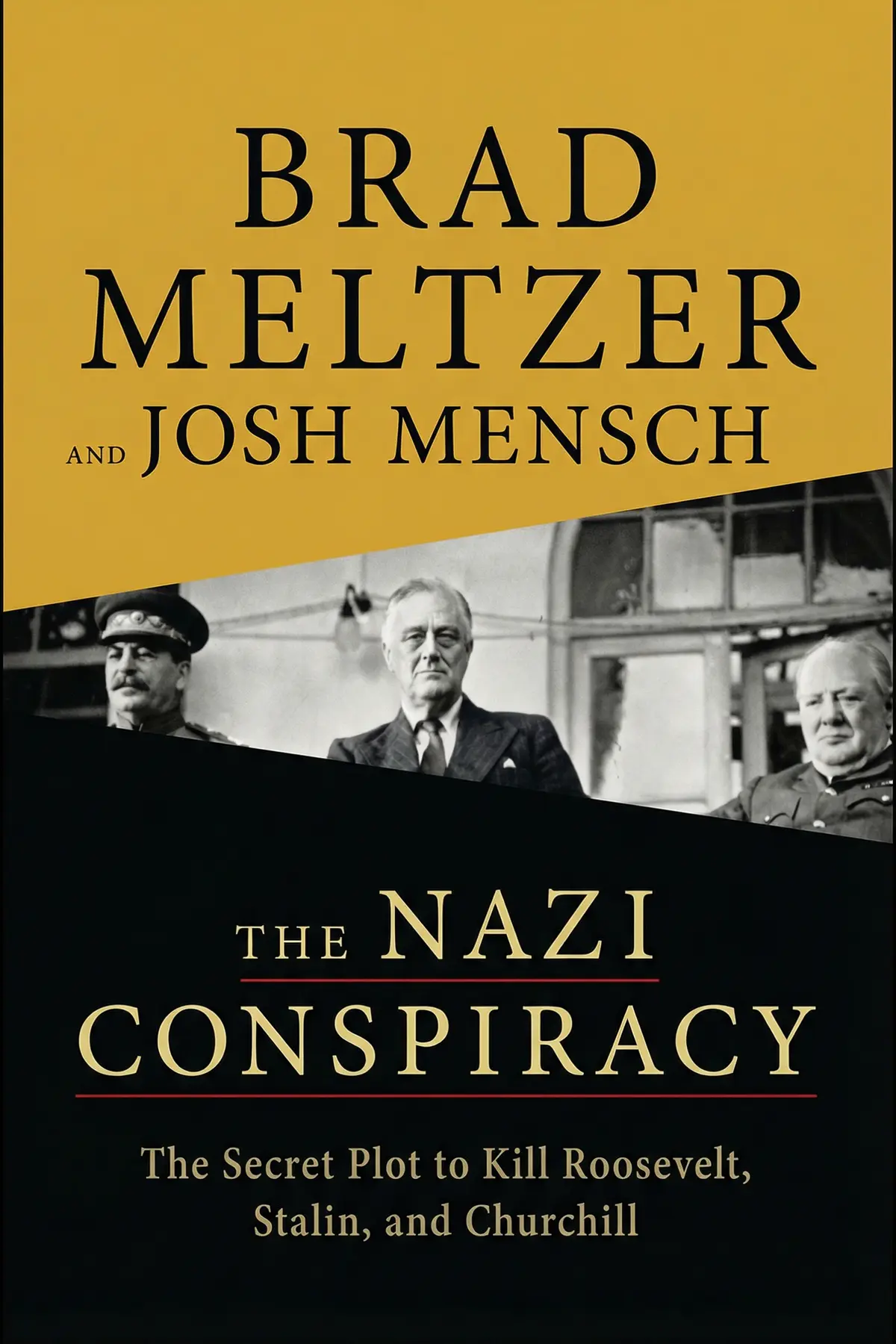
Table of Content
1. Introduction
2 min 17 sec
As the calendar turned to 1943, the global landscape was defined by shadow and smoke. For more than three long years, the European continent had been strangled by the expansionist grip of the German military machine, driven by the ideology of Adolf Hitler and the ruthless mechanics of the Nazi regime. Every passing week revealed new depths of horror that would eventually take generations to process. The conflict was no longer a localized European struggle; it had become a truly global conflagration fought on three distinct and punishing fronts.
In the Pacific, the United States—led by President Franklin Delano Roosevelt—found itself locked in a grueling fight for maritime and island supremacy against the Japanese Empire. It had been a year since the devastating surprise at Pearl Harbor, and the American industrial giant was finally waking up to the full reality of modern warfare. Meanwhile, in North Africa and the Mediterranean, British Prime Minister Winston Churchill was pushing a strategy he called the soft underbelly of Europe, hoping that by striking through Italy, the Allies could find a back door into the Nazi heartland. On the Eastern Front, the situation was even more desperate. The Soviet Union, under Joseph Stalin, was enduring an onslaught of unimaginable scale, with Russian soldiers and civilians dying in numbers that defied comprehension. Stalin was screaming for help, demanding that his Western allies open a second front in Europe to relieve the pressure on his bleeding nation.
This is the atmosphere of The Nazi Conspiracy. It is a story about the intersection of high-stakes diplomacy and low-profile espionage. To win the war, these three very different leaders—Roosevelt, Churchill, and Stalin—needed to sit in the same room and forge a unified path forward. But as they planned their historic summit in Tehran, they were unaware that they were walking into a trap. The German intelligence services had recognized the opportunity of a lifetime. If they could eliminate the leaders of the United States, Great Britain, and the Soviet Union in a single afternoon, the war would essentially be over, and the Nazi vision for the world would be secured. This script follows the twisting path of that conspiracy, the friction between the Allied giants, and the narrow margins by which history was preserved.
2. The Friction of Diplomacy and the Call for Unconditional Surrender
2 min 14 sec
Discover how the initial meetings between Roosevelt and Churchill set a radical new standard for the war’s end, while simultaneously highlighting the glaring absence of their Soviet counterpart.
3. The Architect of the Underground Network
2 min 21 sec
Explore the hidden world of Nazi espionage in Iran, where a lone spy spent years building a resistance network from the shadows of Tehran.
4. The Birth of Operation Norma and the Entry of the Most Dangerous Man
2 min 14 sec
Learn about the terrifying tactical plan to wipe out the Allied leadership and the legendary commando selected to lead the charge.
5. The Paranoia and Theater of the Tehran Summit
2 min 19 sec
Peek behind the curtain of the conference, where decoys, hidden microphones, and a very tense atmosphere threatened to derail the meeting before it began.
6. The Final Move: Counter-Intelligence and the Birthday Breakthrough
2 min 21 sec
Witness the silent battle between Soviet agents and Nazi radio operators that decided the outcome of the war, followed by a surprising moment of unity.
7. Conclusion
1 min 44 sec
The Tehran Conference was more than just a meeting; it was the hinge upon which the 20th century turned. Because the Nazi conspiracy failed to take out the Allied leadership, the world witnessed the largest military operation in history on June 6, 1944. The invasion of Normandy, which had been the primary point of contention and the ultimate achievement of the Tehran summit, involved over 150,000 soldiers and thousands of ships and planes. It was the beginning of the end for the Third Reich. As the Western Allies pushed through France, the Soviet Red Army began its relentless march from the East, eventually forcing Adolf Hitler into a desperate suicide in his Berlin bunker.
For the Big Three, the victory was bittersweet. They met one final time in early 1945, but the toll of the war was evident on all of them. Franklin Roosevelt, who had navigated the complexities of the Tehran summit with grace despite his failing health, would not live to see the final surrender of Germany or Japan. He passed away just months after that final meeting, leaving behind a legacy of global cooperation that had been forged in the high-stakes shadows of Iran.
The Nazi Conspiracy reminds us that history is often decided in small rooms and quiet streets. If Franz Mayr’s network had remained undetected, or if Soviet intelligence had been just a few hours slower, the course of the war—and the nature of the modern world—would have been irrevocably altered. The survival of Roosevelt, Churchill, and Stalin ensured that the forces of fascism were met with a unified resistance, proving that even in the darkest hours of conflict, coordination and collective resolve are the most powerful weapons of all.
About this book
What is this book about?
The Nazi Conspiracy explores one of the most audacious and overlooked assassination plots of World War II. In 1943, the Allied powers—represented by Franklin D. Roosevelt, Winston Churchill, and Joseph Stalin—agreed to meet in person for the first time in Tehran to coordinate their strategy against the Axis. However, the Third Reich saw this as a golden opportunity to eliminate all three leaders in one strike, an operation known as Operation Norma. This narrative delves into the intricate web of Nazi espionage in Iran, the tension-filled diplomacy between the Big Three, and the heroic work of intelligence agents who sought to prevent a global catastrophe. It offers a gripping look at the security measures, the decoys, and the hidden microphones that defined this pivotal moment in history, illustrating how close the world came to a radically different ending.
Book Information
About the Author
Brad Meltzer
Brad Meltzer is the best-selling author of many political and historical thrillers, including The Lightning Rod and The Escape Artist. He also hosts Brad Meltzer’s Decoded and Brad Meltzer’s Lost History on the History Channel, through which he helped find the missing 9/11 flag which the firefighters had raised at Ground Zero. Josh Mensch is a best-selling author and producer of American history television documentaries. Alongside Brad Meltzer, he’s coauthored other historical conspiracy books including The First Conspiracy and The Lincoln Conspiracy.
Ratings & Reviews
Ratings at a glance
What people think
Listeners find the book to be gripping and expertly written, reading much like a detective thriller while providing thorough historical facts. Furthermore, listeners appreciate the narrative from this pair of master storytellers, noting the extensive detail and historical accuracy of the content. They also value the authors' methodology, with one listener highlighting how their presentation style truly makes the history come alive.
Top reviews
Ford
Wow. I didn’t expect a nonfiction book about the 1943 Tehran Conference to read like a high-octane political thriller, but Meltzer and Mensch absolutely nailed the pacing. They take the dry facts of history and inject a level of suspense that makes you forget you already know how World War II ends. The narrative focus on Mike Reilly and the Secret Service’s efforts to protect FDR was particularly fascinating to me. I had never heard of the specific Nazi spy networks operating in Iran, like the one run by Franz Mayr. While some might argue the 'plot' itself is based on thin evidence, the authors do a great job laying out why the threat was perceived as real at the time. It’s a masterclass in making history accessible and exciting for a general audience. If you enjoy detective stories with a historical backdrop, this is a must-read for your collection.
Show morePruet
Brad Meltzer and Josh Mensch have done it again by shining a light on a 'little known' corner of the Second World War. The way they weave together the different threads—the Nazi agents in Tehran, the internal politics of the Allies, and the sheer physical toll on FDR—is nothing short of brilliant. This book reads like a detective novel where the stakes are the fate of the entire free world. I was particularly gripped by the descriptions of the security measures taken during the conference. You can really feel the paranoia and the weight of the moment in every chapter. Some critics say it’s too dramatic, but I think that’s exactly what makes it so readable. It brings these historical figures to life as actual human beings rather than just names in a textbook. I couldn't put it down and finished it in just two sittings.
Show moreNannapat
The depth of research here is staggering, especially regarding the Secret Service logs and the German intelligence reports. Meltzer and Mensch have a gift for finding the human elements in these massive historical events. I was fascinated by the logistical details of how they got a paralyzed FDR halfway across the world in total secrecy. The threat from the Nazi underground network in Tehran felt very real through the authors' vivid descriptions. Even if the assassination plot was ultimately foiled or exaggerated, the bravery of the men protecting the Allied leaders is worth documenting. The book moves at a breakneck speed and the short chapters make it very hard to find a stopping point. It’s a fantastic look at the intersection of diplomacy and danger. I would highly recommend this to anyone who loves a good spy story or WWII history.
Show morePhu
Finally got around to this one, and it didn't disappoint. I've always been a fan of Meltzer's fiction, so I was curious to see how he handled a true story. He and Josh Mensch have a great rhythm, blending hard facts with a narrative drive that is rare in history books. The chapters focusing on the Nazi paratroopers and the ruthless Otto Skorzeny were absolutely chilling. It’s terrifying to think how differently the 20th century could have turned out if those three men had been killed in Iran. The book does a wonderful job of exploring that 'what if' scenario without losing sight of the actual events. I found the ending to be quite moving, especially the reflections on Roosevelt's declining health. It’s a powerful, well-written book that proves truth is often just as exciting as fiction. A definite five stars for keeping me hooked from start to finish.
Show moreYaowaluk
As a history enthusiast, I went into this expecting a dense academic text, but what I got was a very polished piece of pop-history. The book spends a significant amount of time setting the stage—the rise of Hitler, the friction between Churchill and Stalin, and the logistical nightmare of meeting in Iran. Some might find the build-up a bit slow, but I appreciated the context because it made the eventual summit feel much more consequential. The details regarding Otto Skorzeny and the German intelligence operations were the highlight for me. To be fair, the 'conspiracy' mentioned in the title feels a bit secondary to the general history of the Big Three's relationship. It’s a bit sensationalized in parts, using a present-tense style that feels very cinematic, but it kept me turning pages. It’s a solid four-star read that offers a unique perspective on a well-documented era.
Show moreNong
The tension in these pages is palpable, even if the historical record is a bit thin on the actual assassination attempt. Meltzer uses his thriller-writing expertise to structure the chapters in a way that keeps you on edge. I found the sections on the German 'Abwehr' and the operations of Walter Schellenberg to be the most compelling parts of the narrative. It’s interesting to see how close the Nazis actually came to infiltrating the Allied communications. Look, is it 100% factually certain? Probably not, and the authors are relatively honest about that in the final chapters. However, the atmosphere they create is incredibly immersive. The short, punchy chapters make it a breeze to move through, and the inclusion of photos adds a nice touch of authenticity. It’s a great pick for a weekend read if you want something that is both educational and entertaining without being overly dry.
Show moreWorawit
Ever wonder what really happened in Tehran back in '43? This book attempts to answer that by diving into the murky world of wartime espionage and the alleged plot to kill the Big Three. Personally, I think the strongest parts of the book are the character studies of Roosevelt and Churchill. Their friendship was so vital to the war effort, yet this book shows the cracks and the stress they were under. The authors do a great job of making the reader feel the heat and the dust of Iran during that pivotal week. While the 'conspiracy' might be more legend than fact, the context provided about the Nazi presence in the Middle East was eye-opening. It’s a fast-paced, enjoyable read that makes history feel alive. It might not satisfy the most hardcore academic historians, but for a casual reader like me, it was exactly what I wanted.
Show moreHannah
Not exactly what I was expecting from the title, but I ended up enjoying it anyway. The book functions more as a dual biography of the Big Three leaders leading up to their first meeting than a focused study of a single conspiracy. To be fair, the authors do eventually get to the Nazi plot, but it takes a while to get there. The writing is very accessible—it's definitely 'pop-history' in the vein of Bill O'Reilly's 'Killing' series. I think the highlight was learning about the friction between the British and American intelligence agencies. They didn't always trust each other, and that added another layer of complexity to the story. While I agree with other reviewers that the evidence for the plot is mostly circumstantial, the book still succeeds as a gripping narrative. It’s well worth the effort for the insights into the Tehran summit alone.
Show moreNikolai
I’m torn on this one because the writing is undeniably engaging, yet the core premise feels a little shaky. The book is titled 'The Nazi Conspiracy,' but by the end, even the authors admit there is no smoking gun proving the assassination plot actually existed. It feels like a bit of a bait-and-switch when you spend ten hours on an audiobook only to find out the 'plot' might have been Soviet misinformation. Frankly, the middle section drags as it retells standard WWII history that most people already know. I did enjoy the insights into the personal dynamics between Roosevelt, Churchill, and Stalin, though. Their petty arguments and the tension of the 'Eureka' meeting provided the real drama. If you want a fun, fast-paced story and don't mind a lot of conjecture, you'll probably like it. Just don’t expect a definitive historical revelation that changes everything we know about the war.
Show moreNiramai
This should have been a long-form article at most. I found the book to be incredibly verbose and repetitious, often circling back to the same points just to maintain a sense of drama. The present-tense writing style was distracting and made the whole thing feel more like a screenplay for a History Channel special than a serious work of non-fiction. There’s a lot of 'what if' and 'could have been,' but very little concrete evidence to support the sensationalist title. Most of the book is just a general summary of WWII events that I’ve read a dozen times before in better books. By the time I reached the end, I felt frustrated by the lack of a real climax. The narrator of the audiobook was fine, but even he couldn't save the repetitive nature of the prose. It’s a disappointing entry from authors I usually respect much more.
Show moreReaders also enjoyed
1491: New Revelations of the Americas Before Columbus
Charles C. Mann
A Year in the Life of William Shakespeare: 1599
James Shapiro
1929: Inside the Greatest Crash in Wall Street History--and How It
Andrew Ross Sorkin
Age of Anger: A History of the Present
Pankaj Mishra

A Biography of Loneliness: The History of an Emotion
Fay Bound Alberti
Agent Sonya: The Spy Next Door
Ben Macintyre

Alexander Hamilton
Ron Chernow
AUDIO SUMMARY AVAILABLE
Listen to The Nazi Conspiracy in 15 minutes
Get the key ideas from The Nazi Conspiracy by Brad Meltzer, plus 5,000+ more titles in English and Thai.
- 5,000+ titles
- Listen as much as you want
- 7-day free trial
- Cancel anytime







