
16 min 17 sec
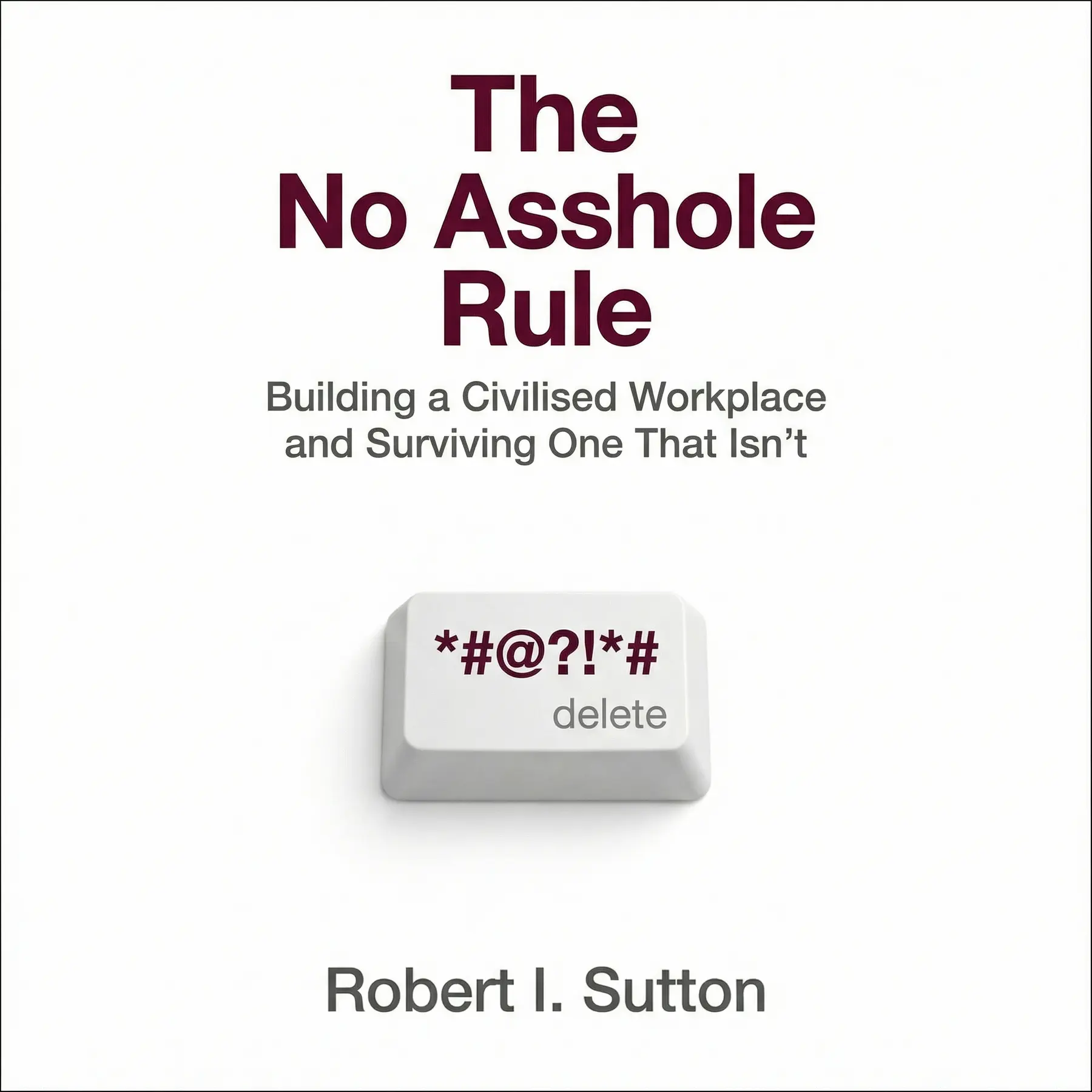
The No Asshole Rule: Building a Civilised Workplace and Surviving One That Isn't
The No Asshole Rule explores the high cost of toxic behavior in the workplace. It provides a framework for identifying bullies and implementing a culture of mutual respect and civility.
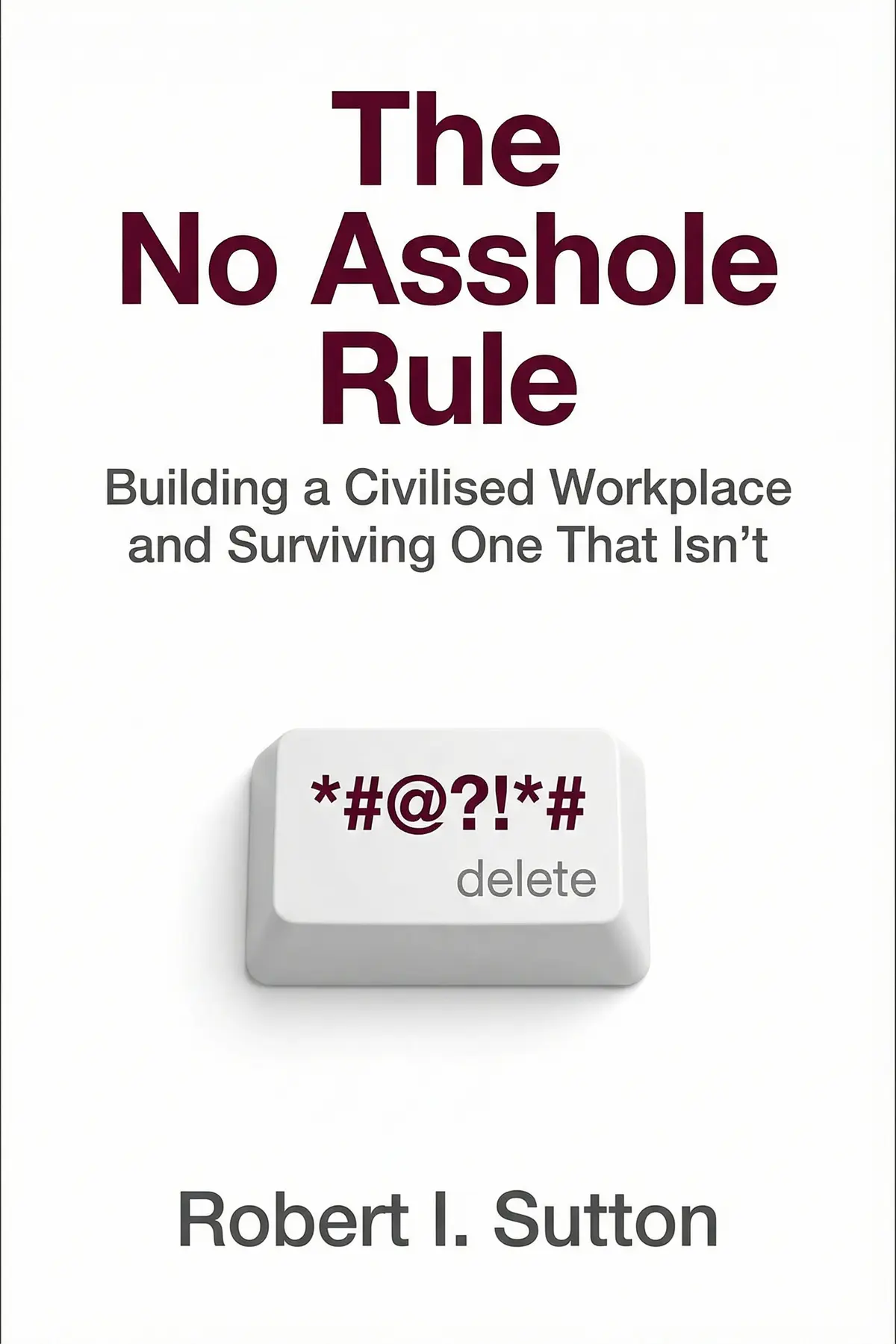
Table of Content
1. Introduction
1 min 16 sec
Imagine walking into your office and feeling an immediate sense of dread. For many, this isn’t just a bad morning; it’s a daily reality caused by a specific type of person: the workplace bully. In The No Asshole Rule, Robert I. Sutton takes a blunt and necessary look at these toxic personalities. He doesn’t sugarcoat the issue because the damage these individuals cause is far too significant to ignore. The central throughline of this summary is simple but profound: a single toxic person can poison an entire organization, and the only way to save the culture is to refuse to tolerate them.
Throughout this exploration, we will see that civility isn’t just a ‘nice to have’—it’s a fundamental requirement for business success. We’ll look at why high-performers who treat others poorly are actually liabilities, how power corrupts even the best of us, and what strategies you can use to protect your own mental health if you’re stuck in the line of fire. By the end, you’ll understand that a civilized workplace is not a luxury, but a competitive necessity that requires active maintenance. Let’s dive into how we can identify these ‘certified assholes’ and why removing them is the smartest financial and human decision a company can make.
2. Defining the Chronic Bully
1 min 54 sec
Not everyone who has a bad day is a toxic influence. Learn the crucial difference between a temporary lapse in judgment and a destructive, ingrained personality trait.
3. The Economic Price of Toxicity
1 min 59 sec
Bullies don’t just hurt feelings; they hurt the bottom line. Explore the hidden costs of allowing hostile individuals to remain in management positions.
4. Standardizing the No Asshole Rule
1 min 47 sec
Implementation is key. Discover why a formal policy of zero tolerance for bullying must apply to everyone, regardless of their rank or talent.
5. The Link Between Status and Cruelty
1 min 41 sec
Power has a peculiar way of changing behavior. Learn how hierarchy fuels bullying and what companies can do to minimize the ‘status gap.’
6. Fostering Cooperation over Competition
1 min 44 sec
Aggressive internal competition is a breeding ground for toxicity. Discover why shifting to a culture of ‘we’ instead of ‘I’ leads to better results.
7. The Contagious Nature of Toxicity
1 min 27 sec
Asshole behavior is like a virus that spreads from person to person. Learn how to protect yourself before you catch the ‘infection’ yourself.
8. Building Your Emotional Shield
1 min 27 sec
When you can’t escape a bully, you must learn to defend your mind. Explore strategies for creating emotional distance and staying calm under fire.
9. The Mirror Test for Personal Accountability
1 min 36 sec
We all have the potential to act poorly. Discover how to check your own behavior and ensure you aren’t the one poisoning the well.
10. Conclusion
1 min 26 sec
In the final analysis, The No Asshole Rule is about much more than just workplace etiquette; it’s about the fundamental dignity of every human being. We’ve seen that toxic people act as a massive drag on productivity, morale, and innovation. They drive away the best talent and leave behind a culture of fear. We’ve also learned that power can be a corrupting force, making even decent people act with a lack of empathy, and that bullying behavior can spread through an office like a contagious disease.
The actionable takeaway is clear: organizations must implement a zero-tolerance policy for chronic bullies. This means refusing to hire them, refusing to promote them, and being brave enough to fire them—even if they are high performers. For individuals, the message is one of resilience and self-awareness. Protect yourself with emotional distance when you must, but also keep a close watch on your own behavior to ensure you aren’t contributing to the problem.
Ultimately, a civilized workplace is a more profitable, creative, and joyful place to spend our lives. By committing to the ‘No Asshole Rule,’ we aren’t just improving the bottom line; we are making the professional world a little more human. Let this be your guide: be respectful, stay vigilant, and remember that no amount of talent justifies treating others poorly.
About this book
What is this book about?
The No Asshole Rule is a pragmatic look at the devastating impact that mean-spirited individuals have on organizational health. Robert I. Sutton argues that 'certified assholes' do more than just ruin a person’s day; they actively drain a company's resources, stifle innovation, and drive away top talent. The book serves as a manifesto for leaders and employees alike, offering a clear set of criteria for identifying toxic personalities and a robust strategy for removing them from professional environments. Beyond just identifying the problem, the book provides a promise: a blueprint for building a civilized workplace. It delves into the psychology of why power leads to poor behavior and how shifting toward a culture of cooperation can boost the bottom line. Whether you are a manager trying to fix a broken culture or an employee seeking to survive a hostile boss, this summary provides the tools to defend your dignity and improve your professional surroundings.
Book Information
About the Author
Robert I. Sutton
Robert I. Sutton, born in 1954, is a distinguished Professor at Stanford Business School. Throughout his career, he has provided expert guidance to various international corporations. Sutton has penned several popular books on management and social science. His insights are informed by his extensive experience observing high-level corporate dynamics, including his work with major global companies and well-known industry leaders such as Steve Jobs.
Ratings & Reviews
Ratings at a glance
What people think
Listeners consider this a mandatory read for incoming managers, highlighting its useful guidance and rigorous research. They value its entertainment factor, humor, and identifiable stories about real individuals, with one listener mentioning how it aids in comprehension of human behavior. The tempo draws varied feedback; some find it a fantastic way to spark dialogue, while others describe it as quite repetitive.
Top reviews
Vilaiporn
Ever wonder why some offices feel like a playground for bullies while others thrive on collaboration? This book explains exactly how that happens and how to stop it. I found the 'Total Cost of Asshole' (TCA) calculation to be a total game-changer for my business. It’s not just about the emotional toll; it’s about legal fees, turnover, and lost innovation. Sutton’s writing is sharp, and he doesn't pull his punches when describing the damage these people do. I especially loved the section on how to detect an asshole during the hiring process before they even get through the door. If you’re a manager and you haven’t read this yet, you’re essentially flying blind. It’s an easy, engaging read that provides a much-needed wake-up call for corporate America.
Show moreChanida
The concept of 'asshole poisoning' changed my entire perspective on team dynamics. It's terrifying how quickly one person's toxic behavior can spread through a department, making even the kindest people start acting like jerks out of self-defense. This book is a must-read because it tackles the 'myth of the brilliant jerk' head-on, proving that no amount of talent is worth the destruction of a company's culture. I found the stories to be relatable and the advice on 'managing moments' to be incredibly empowering. For the first time, I have a clear set of criteria to judge whether a situation is just a personality clash or a genuine case of assholery. Personally, I think this should be required reading for every MBA student in the country. It’s funny, research-backed, and provides a clear roadmap for anyone who wants to work in a respectful environment.
Show moreValentina
Wow, I didn't expect a business book to be this funny and relatable. Sutton manages to take a serious subject and infuse it with enough humor and 'TMZ-style' anecdotes about famous assholes to keep things moving at a brisk pace. Unlike other leadership books that are full of fluff, this one is packed with actual data showing how negative interactions have five times the impact of positive ones. It really makes you rethink every interaction you have during the day. I appreciated the frankness regarding how assholes are often rewarded with promotions, and the strategies provided for navigating that reality are actually useful. Whether you’re a CEO or just someone trying to survive a nightmare boss, there is something in here for you. It’s the kind of book you’ll want to buy for your friends and leave anonymously on your boss's desk. Truly a fantastic, insightful read that I'll be revisiting for years.
Show morePang
As someone who has survived a toxic corporate culture where 'asshole poisoning' was the norm, this book felt like a long-overdue validation of my experiences. Sutton manages to take a crude word and turn it into a legitimate framework for organizational health. The most striking part for me was the section on how 'assholes hire other assholes,' creating a self-perpetuating cycle of misery that can destroy a company from the inside out. I’ve seen this happen firsthand, where one 'brilliant jerk' is allowed to stay because of their skills, only for the entire team's creativity to be stifled by fear and self-preservation. While some of the advice on indifference felt a little weak, the overall message that civility is a competitive advantage is spot on. It’s a solid resource for anyone looking to build a team that actually enjoys working together.
Show moreDarius
Finally got around to reading this after a colleague mentioned the 'No Asshole Rule' during a particularly heated project. I found the practical tips on keeping your own 'inner asshole' in check to be the most valuable part of the book. We all have bad days where we might de-energize or demean someone, but Sutton distinguishes between a temporary lapse and a permanent personality trait. The writing is accessible, though I agree with others that it gets a bit repetitive in the middle sections. Not gonna lie, the anecdotes about big-shot CEOs acting like toddlers were pretty entertaining and made my own work drama feel a bit more manageable. To be fair, the book could have been shorter, but the central thesis—that one bad apple really can spoil the bunch—is supported by enough evidence to make even the most skeptical executive take notice.
Show moreFelix
Sutton provides a solid framework for what most of us already know instinctively: mean people are bad for business. What I liked most was the emphasis on 'constructive confrontation.' The advice to 'fight as if you're right, listen as if you're wrong' is a gem that I've already started using in my own meetings. It helps distinguish between someone who is being a jerk and someone who is simply passionate about the work. The book does a great job explaining the 'ripple effect' where bystanders are just as affected by bullying as the actual victims. My only gripe is that some of the case studies feel a little dated now. But if you’re looking for a way to articulate why a toxic employee needs to go, this gives you the ammunition you need.
Show moreLincoln
After hearing about 'The No Asshole Rule' at a tech conference, I expected a revolutionary manifesto on building engineering teams. In reality, it’s a decent resource that suffers from serious pacing issues and could have used a much tighter edit. The core concept of the 'Total Cost of Asshole' (TCA) is brilliant because it gives managers a financial language to describe why a high-performer might actually be a net negative for the company. However, the advice on how to survive these people if you can’t fire them is pretty depressing. Sutton tells you to 'hide from your tormenters' or lower your expectations, which feels like a surrender rather than a solution. I gotta say, listening to this at 1.5x speed was the only way I made it through the repetitive middle chapters. It’s worth a skim for the hiring tips, but don’t expect a life-changing epiphany.
Show moreRyan
Is this book a bit redundant? Absolutely. Does it still have value? Yes, especially if you’re new to a leadership role and need to justify cleaning house. Truth is, most of what Sutton writes is common sense, but having the data to back up why assholes ruin productivity is helpful for HR conversations. I appreciated the two-part test for identifying a 'certified' asshole—specifically how they treat people with less power—but the tone sometimes felt a bit high-and-mighty. The author spends a lot of time patting himself on the back for his own department’s rules while offering tips that seem contradictory. It’s a fast read if you skip the repetitive research summaries, but it doesn't quite live up to the hype. It’s okay, just not great.
Show moreIsabella
Wicked disappointed with the lack of depth in what should have been a much more engaging read. While the title is catchy and the premise is something we can all relate to, the actual content is a dry, humorless slog through basic psychological principles that anyone with a modicum of common sense already knows. I kept waiting for the 'standard-setting Grade A' stories of office mayhem, but instead, we get tepid anecdotes about people using aggressive body language or interrupting in meetings. The book is incredibly redundant, repeating the same three or four points across hundreds of pages of research statistics that feel like filler. Truth is, Sutton is the one being an asshole for stretching ten minutes of insight into an entire book. If you're looking for entertainment or truly groundbreaking strategies, look elsewhere. This is just an academic exercise in stating the obvious over and over again.
Show moreYuwadee
Look, I really wanted to find some actionable wisdom here, but the 'Tips for Surviving Nasty People' section was absolute garbage. Sutton suggests we should basically lay down and take it by developing 'emotional detachment,' which is just a fancy way of telling employees to become doormats. To be fair, the author starts strong by defining what actually constitutes a 'certified asshole,' but then he veers off into advocating for retaliatory behavior that makes you just as bad as the person you're fighting. I was stunned to see a professional academic suggest that putting laxatives in a colleague's food is a 'small win' to sustain your spirit. Frankly, that isn't just petty; it’s potentially criminal. If your solution to workplace bullying is to become a passive-aggressive nightmare yourself, you haven't solved the problem—you’ve just added another asshole to the roster. It felt like a massive waste of time that could have been a three-page blog post.
Show moreFeatured in
Readers also enjoyed
A Year with Peter Drucker: 52 Weeks of Coaching for Leadership Effectiveness
Joseph A. Maciariello

Acting with Power: Why We Are More Powerful Than We Believe
Deborah Gruenfeld
All In: How Great Leaders Build Unstoppable Teams
Mike Michalowicz
7 Powers: The Foundations of Business Strategy
Hamilton Helmer
AUDIO SUMMARY AVAILABLE
Listen to The No Asshole Rule in 15 minutes
Get the key ideas from The No Asshole Rule by Robert I. Sutton, plus 5,000+ more titles in English and Thai.
- 5,000+ titles
- Listen as much as you want
- 7-day free trial
- Cancel anytime







