
15 min 50 sec
The Asshole Survival Guide: How to Deal With People Who Treat You Like Dirt
Learn practical psychological strategies and tactical maneuvers to handle toxic individuals in the workplace and beyond. This guide offers actionable advice for identifying, evading, and occasionally confronting the difficult personalities that disrupt professional life.
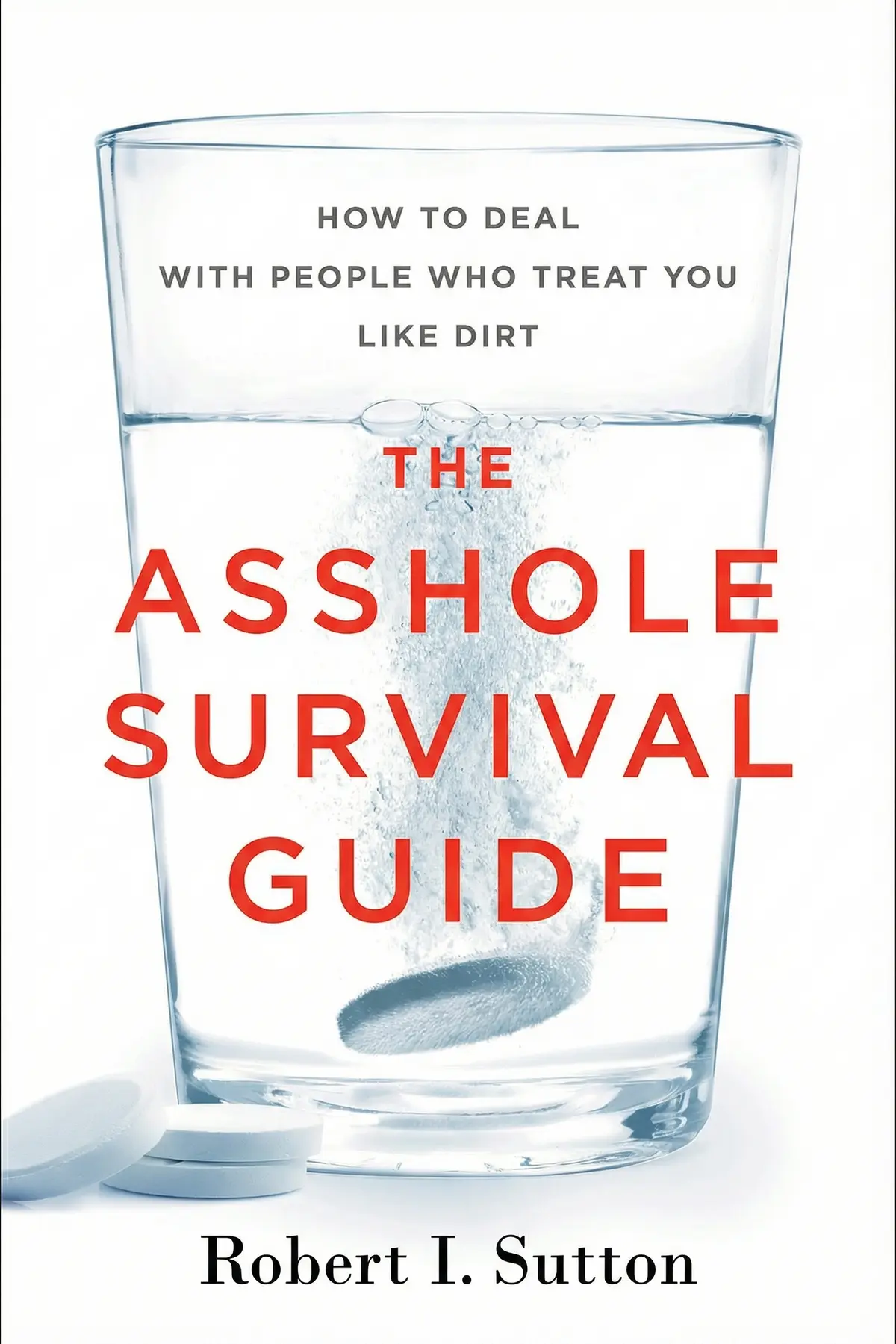
Table of Content
1. Introduction
1 min 29 sec
No matter what industry you work in or what stage of life you’ve reached, there is an uncomfortable reality we all must face: at some point, you will encounter a person who seems determined to make your life miserable. We aren’t just talking about a minor annoyance or a slight personality clash. We’re talking about those individuals who consistently drain your energy, belittle your contributions, and leave you feeling emotionally exhausted. It’s easy to feel like a victim in these scenarios, but there is a path forward that doesn’t involve constant suffering.
This isn’t just about complaining; it’s about tactical defense. The central goal here is to equip you with a set of tools that allow you to navigate these toxic interactions without losing your sanity or your job. We will explore how to identify the specific type of difficult person you’re dealing with—whether they are a temporary nuisance or a permanent fixture of toxicity.
You’ll discover why these behaviors are so dangerous, not just to your mood, but to your long-term psychological well-being. We will look at how negativity can spread like a virus through an office, how physical distance can be your greatest ally, and when it might actually be necessary to stand your ground and fight back. Along the way, we’ll also turn the mirror on ourselves, examining the risk factors that might lead any of us to unknowingly become the source of the problem. This journey is about more than just surviving a bad boss or a rude colleague; it’s about mastering your environment so you can thrive despite them. Let’s look at how we can start reclaiming your workplace peace.
2. Defining the Impact of Toxic Behavior
2 min 30 sec
Identify the true markers of a problematic personality and learn why the way a person makes you feel is the most important metric for survival.
3. Overcoming Habituation and the Sunk Cost Fallacy
2 min 16 sec
Explore the dangerous phenomenon of becoming blind to mistreatment and why staying in a toxic environment often feels easier than leaving.
4. The Science of Toxic Contagion and Physical Distance
2 min 02 sec
Negativity isn’t just a mood—it’s an infection. Learn how to protect your mental health by using physical space as a shield.
5. The Power of Psychological Reframing
2 min 04 sec
When you can’t change your surroundings, you must change your perspective. Discover how to turn a threatening situation into a manageable challenge.
6. Strategic Combat and the Importance of Evidence
2 min 07 sec
If you must confront a bully, you need more than just courage—you need a plan. Learn the two main ways to stand your ground effectively.
7. Maintaining Self-Awareness to Break the Cycle
1 min 56 sec
The most important mirror you can look into is the one that reveals your own behavior. Learn why success can sometimes turn us into the people we dislike.
8. Conclusion
1 min 26 sec
Surviving a toxic environment is a marathon, not a sprint. It requires a combination of self-preservation, tactical maneuvering, and deep self-reflection. We have seen that the most important metric is your own emotional health; if a person consistently makes you feel belittled, you must take action. Whether that action is physical—putting distance between you and the source—or psychological—reframing the insults to strip them of their power—you have more agency than you might think.
Remember that documentation is your best friend if you choose to fight back, but also recognize that sometimes the best way to win is simply to leave the room. Beyond protecting yourself, the ultimate goal is to foster an environment where this kind of behavior isn’t tolerated or replicated. This starts with a commitment to self-awareness, ensuring that your own success doesn’t come at the cost of your humanity.
To put these ideas into practice today, try a simple test during your next interaction. Ask yourself: Is there a balance between questions and statements? Is the other person showing any genuine interest in what I have to contribute, or are they simply waiting to dominate the conversation again? If the answer is a resounding ‘no’ across the board, you know exactly what you’re dealing with. Armed with the strategies we’ve discussed, you can move forward with confidence, knowing that while you can’t control how everyone acts, you have total control over how you respond and how much of your peace you are willing to give away.
About this book
What is this book about?
Dealing with unpleasant people is an unfortunate but universal part of professional life. This book provides a comprehensive roadmap for navigating these turbulent social waters. It begins by helping readers define exactly what constitutes toxic behavior and how to differentiate between someone having a bad day and a person with a chronically damaging personality. By understanding the emotional toll these interactions take, individuals can begin to build a defense system tailored to their specific situation. The promise of this work is not just survival, but the reclamation of one's peace and productivity. Through a combination of psychological reframing, physical distancing, and strategic confrontation, the guide empowers readers to take back control. It explores the contagious nature of negativity and the dangerous phenomenon of habituation, where victims stop noticing they are being mistreated. Ultimately, it serves as a toolkit for protecting one's mental health while maintaining a professional career, ensuring that the behavior of others doesn't dictate one's own success or character.
Book Information
About the Author
Robert I. Sutton
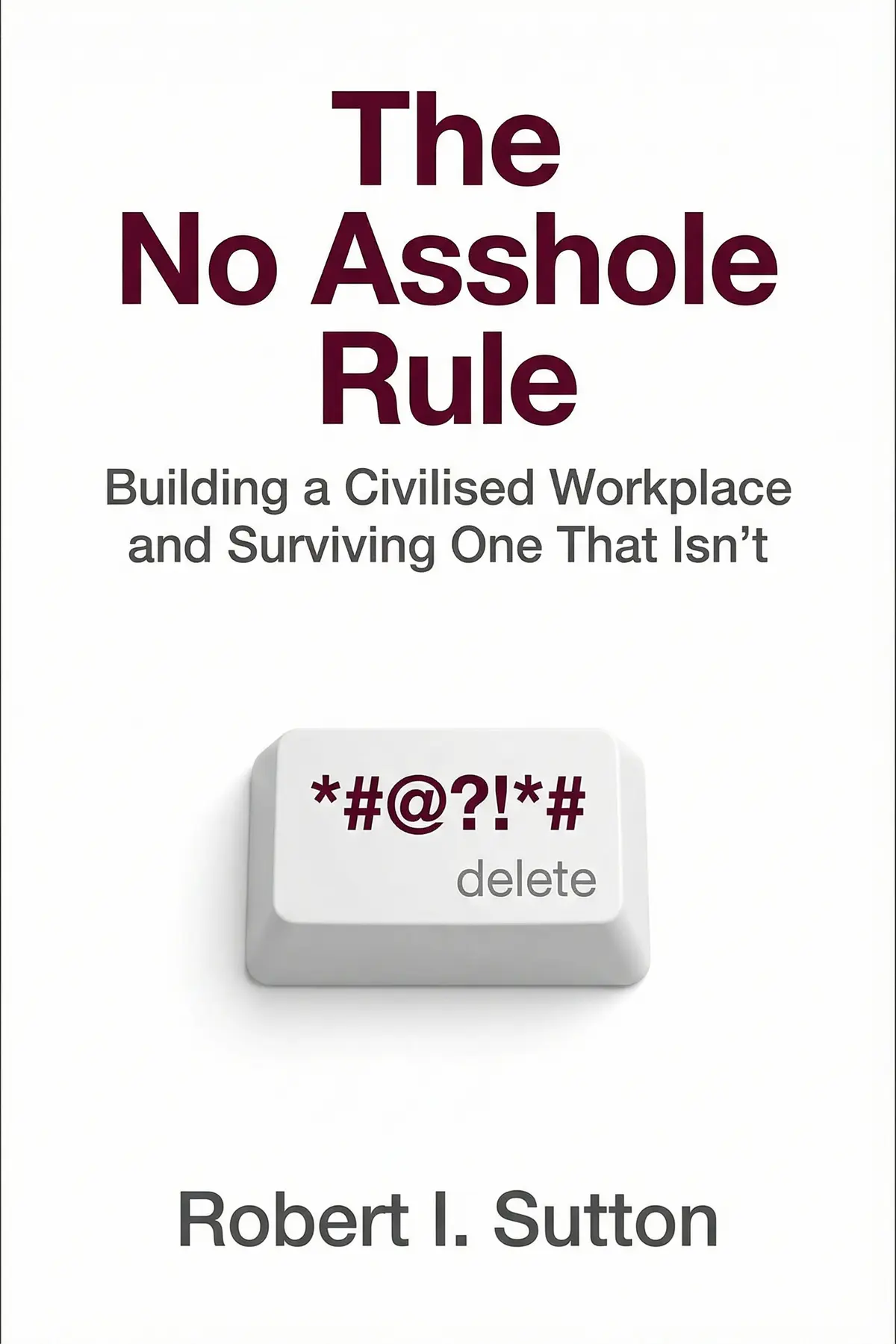
Robert I. Sutton is a distinguished professor of management science at Stanford University. A prolific voice in organizational behavior, he has authored numerous articles for prominent publications including the Harvard Business Review, the Financial Times, and the McKinsey Quarterly. His expertise in workplace dynamics is further evidenced by his best-selling works, which include The No Asshole Rule and Good Boss, Bad Boss: How to Be the Best and Learn from the Worst.
Ratings & Reviews
Ratings at a glance
What people think
Listeners consider the book an engaging read that provides useful suggestions and important insights for handling daily interactions. They value the blend of wit and academic rigor, with one listener highlighting that it synthesizes hundreds of peer-reviewed studies. Listeners regard it as a worthwhile sequel to the first title and admire its genuineness, specifically mentioning one review that points out its honest evaluations of certain people. Perspectives on the content are divided, however, as some listeners feel it lacks real solutions.
Top reviews
Petch
Ever wonder if you're actually the problem in your office dynamic? Sutton starts off with six diagnostic questions that really force you to look in the mirror before you start pointing fingers at everyone else. I love how he dwells on the idea of self-awareness and how we often judge others more quickly than we retrospect ourselves. The book offers incredibly practical advice on identifying and tackling different kinds of jerks in the wild. I found the section on 'bad interfaces vs. bad operating systems' to be a total game-changer for my perspective. It’s a research-based approach that doesn't feel cold or detached; it feels honest and human. This is easily one of the most valuable books I’ve read this year for navigating the complexities of human interaction. If you work in a high-stress environment, you absolutely need this on your shelf for the sanity checks alone.
Show moreLevi
Wow, I didn't expect to laugh so much while reading a book about workplace toxicity! Sutton has a great, humorous tone that makes a very heavy subject much easier to digest. The book is packed with authentic stories from real people that make you feel less alone in your struggles. It’s not just about venting, though; the advice is backed by actual studies on human behavior and organizational psychology. I particularly liked the section on how to avoid 'catching' the bad behavior yourself, which is a real risk in toxic offices. The honesty in his evaluation of certain types of people is refreshing in a world of sanitized HR-speak. It’s a survival guide in the truest sense of the word. I’ve bought three copies already for friends who are struggling with their management. This is definitely a necessary palate cleanser for anyone dealing with a difficult administration or a bully.
Show moreAlejandra
After hearing so much about Sutton's previous work, I finally dove into this one expecting a dry academic text. Instead, I found a surprisingly practical guide that synthesizes hundreds of peer-reviewed studies into something actually usable for the average employee. The author manages to take complex psychological research and boil it down into actionable tactics for when you’re stuck in the trenches with a nightmare boss. I particularly appreciated the section on strategic non-responsiveness and creating distance. Some of the concepts are definitely repeated more than necessary, but the core message remains strong. It’s a solid resource for anyone whose mental health is suffering because of a toxic colleague. The tone is authoritative yet conversational, making it feel more like a coaching session than a lecture. While it won't solve every problem, it provides a much-needed framework for self-preservation.
Show moreSuda
Picked this up as a follow-up to the author’s earlier bestseller, and it serves as a much more grounded, tactical companion. While the first book focused on the 'why' and the policy side, this guide is all about the 'how' for the individual. I found the chapter on 'Asshole Detection' to be particularly insightful, as it helps you distinguish between someone having a bad day and a true, consistent menace. The research-based approach adds a lot of credibility that you don't usually find in the self-help aisle. Look, the truth is that we all have to deal with these people, and Sutton provides a toolkit that is both realistic and sophisticated. I’ve already started using the 'reframing' techniques to manage my stress levels during meetings. It’s not a perfect book—it can be a bit repetitive—but it’s a great read with valuable information for everyday situations.
Show moreTariq
Current events seem to have given license to every jerk in the world to act out, so I grabbed this for some protection. Sutton is an expert on this topic, and it shows in how he categorizes the different flavors of bad behavior we encounter daily. The points on caution and reflection are especially valuable because they prevent you from making a bad situation worse by overreacting. I appreciated the specific element of 'battle' strategies for when you actually have the allies and power to take someone down. It’s a very realistic look at power dynamics that doesn't sugarcoat how hard it is to win these fights. My only gripe is that it can be a bit redundant in the middle chapters. However, the practical takeaways are worth the price of admission. It’s a manual for keeping your dignity intact when everyone around you seems to be losing theirs.
Show morePick
Is it just me, or does this book feel like a manual on how to become a ghost at your own job? I have mixed feelings because while I understood the tactics used to preserve our own wellbeing, many of the strategies felt detrimental to long-term mental health. The emphasis is heavily placed on you to reframe yourself so that insults slide off like water off a duck. You’re told to wear neutral clothing, stop being humorous, and basically become a cipher just to avoid notice. This might work for a few weeks, but I’m going to hazard a guess that hiding your personality for eight hours a day isn't a sustainable way to live. It felt less like empowerment and more like a guide on how to survive a hostage situation. If you’re truly trapped, these survival tips are probably essential, but I was hoping for more advice on actually changing the culture.
Show moreEleanor
To be fair, there is some solid logic here, but the overall message left me feeling incredibly drained and even a bit depressed. The book basically tells you that if you can't escape, you just have to suck it up and use psychological tricks to dissociate from the abuse. It’s very practical, yes, but it’s also a sobering reminder that many toxic environments simply won’t change. I appreciate the honesty regarding 'mutually assured destruction' and why fighting back often fails, yet I didn't close the book feeling particularly empowered. It’s more of a cold, hard look at reality than a motivational guide. Some of the strategies for 'reframing' felt a lot like gaslighting yourself into accepting poor treatment. If you're in a bad boss situation, it might be worth a read just for the coping mechanisms, but don't expect a miracle cure for a shitty workplace.
Show moreRyan
Personally, I found the advice to be a bit of a mixed bag. On one hand, the strategies for avoiding conflict are useful for keeping your head down and collecting a paycheck. On the other hand, the idea of 'embracing the cruelty' or wearing insults like a badge of honor felt incredibly weird to me. The author suggests that if your boss calls you a louse, you should just own it, which seems like a recipe for a complete breakdown of self-esteem. There's a lot of focus on 'assholes gonna asshole' as if we should just accept that adults can't control their behavior. While I accept that you can't change someone else, I think we should be focusing more on making that behavior unacceptable. It’s a decent book for those in a desperate spot, but it lacks the punch of a truly transformative workplace manifesto.
Show moreTakeshi
The Audible version of this was nearly unlistenable for me because of the narrator's constant mispronunciation of basic words. He kept saying 'ex-pecially' instead of 'especially,' and once you notice it, you can't hear anything else. Beyond that annoyance, the book itself felt like a lot of fluff surrounding a very small amount of actual advice. Sutton keeps reiterating the same basic concepts over and over again until the chapters start to blend together. He tries to make it look like a result of solid scientific research by dropping names, but it feels like pseudo-scientific pomposity at times. Frankly, the entire book could have been compressed into a thin brochure without losing any of the actual substance. If you've ever dealt with a difficult person, you probably already know most of these 'mind tricks' anyway. I ended up returning the audio version halfway through and just skimming the rest of the physical copy.
Show moreEmma
Not what I expected from someone with such high academic credentials at Stanford. The book is filled with pseudo-scientific pomposity that tries to mask the fact that the author is just giving common-sense advice. When faced with a jerk: talk to them, fight them if you have power, or leave. Do we really need 200 pages to explain that? He constantly references other researchers to make it seem more profound than it actually is. It feels like this was written for people who have never had a job before or have zero social intuition. The author keeps reiterating the same three or four points until you're ready to scream. I found myself flipping through pages of anecdotes that didn't really add anything to the 'guide' aspect of the book. It’s way too long for the amount of actual utility it provides to a grown adult.
Show moreReaders also enjoyed

AUDIO SUMMARY AVAILABLE
Listen to The Asshole Survival Guide in 15 minutes
Get the key ideas from The Asshole Survival Guide by Robert I. Sutton, plus 5,000+ more titles in English and Thai.
- 5,000+ titles
- Listen as much as you want
- 7-day free trial
- Cancel anytime







