
16 min 59 sec
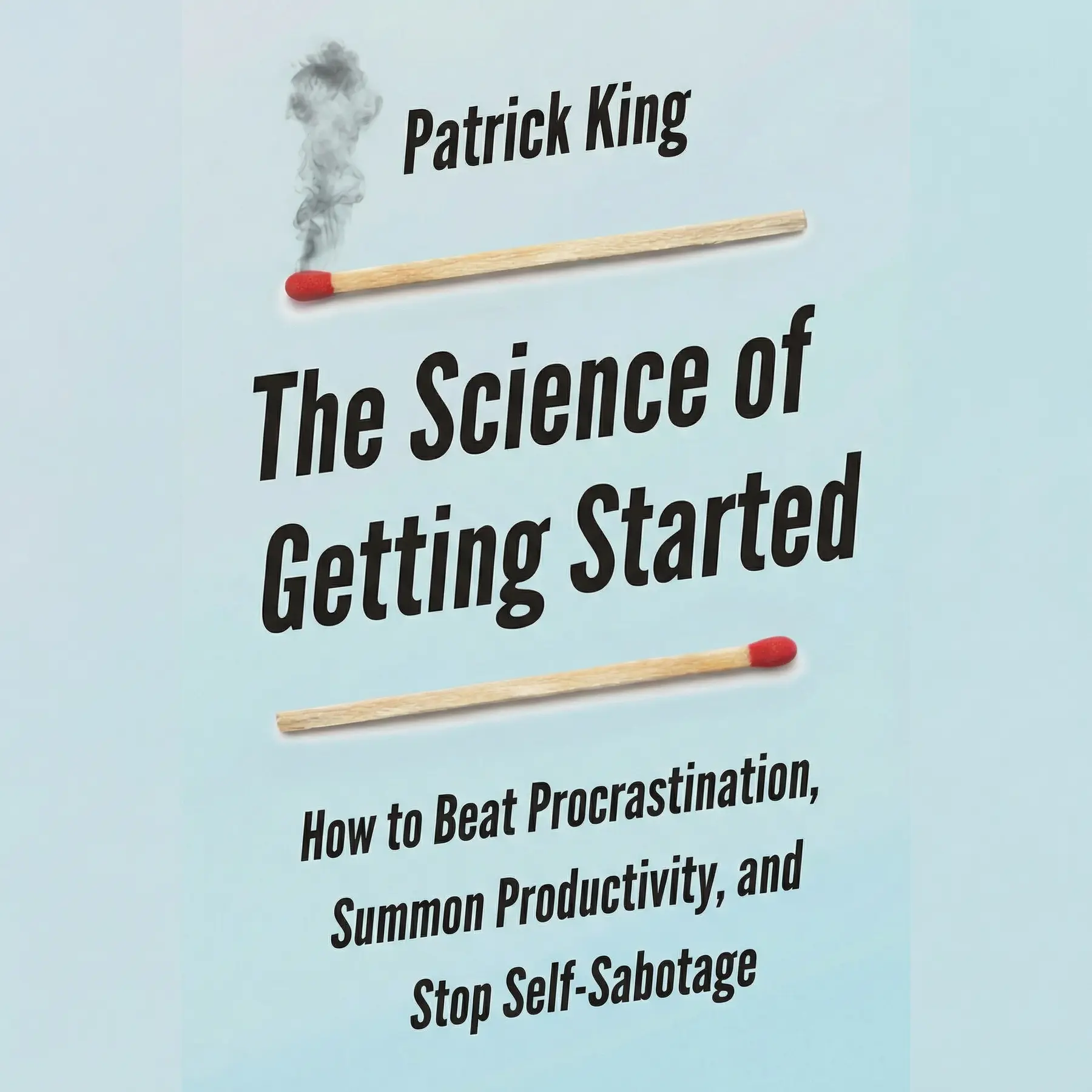
The Science of Getting Started: How to Beat Procrastination, Summon Productivity, and Stop Self-Sabotage
By Patrick King
The Science of Getting Started explores the psychology of procrastination, offering practical strategies to overcome brain-based resistance, build immediate momentum, and structure your life for consistent, long-term productivity and success.
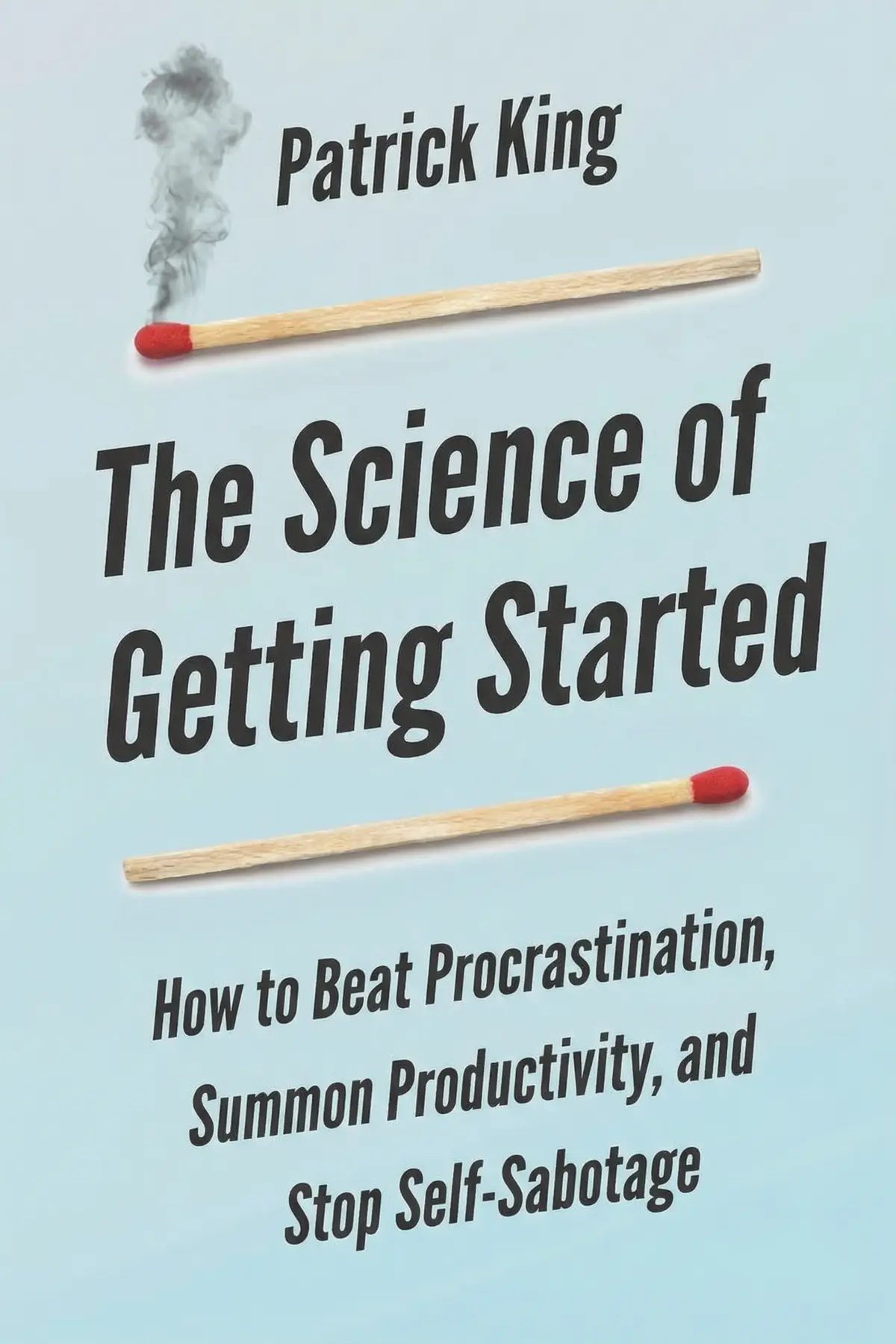
Table of Content
1. Introduction
1 min 30 sec
Think back to a project you’ve been meaning to start. Maybe it’s a side business, a home renovation, or just a difficult conversation you’ve been putting off. Now, consider the story of a father who promised to build a shelf for his newborn child. This wasn’t a complex piece of furniture, yet it took nearly eight years to complete. The child was already in elementary school by the time the first book sat on that wood. This wasn’t because the father lacked the skills or the materials; it was because he was trapped in the gravity of procrastination. He finally broke the spell not through a burst of superhuman willpower, but by shrinking the task until it was impossible to fail. He bought the nails one day. He measured the space a week later. He bought a single plank of wood the week after that.
This story illustrates the core challenge explored in The Science of Getting Started. We often view procrastination as a character flaw or a simple lack of discipline, but it is actually a complex psychological battle between different parts of our brain. This book serves as a tactical manual for winning that battle. It isn’t about working harder; it’s about working with your biology instead of against it. Over the course of this summary, we will explore why your brain is hardwired to choose the couch over the desk, how the laws of physics can be applied to your daily habits, and why the secret to finishing any great work is simply mastering the first two minutes of action. By the end, you’ll have a toolkit of psychological strategies to stop self-sabotage and finally build the ‘shelves’ in your own life.
2. The Psychological Loop of Delay
2 min 30 sec
Explore the internal battle between your immediate desires and long-term goals, and learn how a five-stage cycle keeps you stuck in a loop of avoidance.
3. Applying the Laws of Motion to Productivity
2 min 33 sec
Discover how the principles of physics can explain your inertia and provide a clear roadmap for generating momentum in your work.
4. The Paradox of Choice and Decision Fatigue
2 min 05 sec
Understand why having too many options can lead to paralysis and how to simplify your decision-making process to ensure action.
5. Shifting Focus from Results to Process
2 min 23 sec
Learn why fixating on the finish line can actually stop you from starting, and how adopting a process-oriented mindset builds lasting motivation.
6. Visualizing the Invisible Costs of Inaction
2 min 19 sec
Uncover the psychological biases that make us ignore the risks of delay and learn how to use ‘if-then’ planning to secure your future success.
7. The Architecture of a Productive Day
2 min 14 sec
Master the art of structuring your time to eliminate ‘zero days’ and use self-interrogation to stay on track even when distractions arise.
8. Conclusion
1 min 25 sec
In the end, the science of getting started is the science of self-mastery. We’ve seen that procrastination isn’t a mystery or a character flaw, but a biological hurdle rooted in our brain’s ancient desire for comfort. By understanding the cycle of unhelpful assumptions and avoidance, and by using tools like the HALT method and the laws of physics, we can dismantle the barriers that keep us stuck. We’ve learned that starting is often just a matter of showing up for two minutes, shrinking tasks until they lose their power to intimidate us, and shifting our focus from the daunting result to the manageable process.
The most important takeaway is that you do not need to feel ready to begin. Motivation is a fire that starts with a tiny spark of action, not the other way around. By committing to ‘non-zero days’ and using ‘if-then’ planning, you take the burden off your willpower and place it on your systems. Remember the story of the father and the shelf: the years of delay vanished the moment he started buying the nails. Your goals are waiting for their first ‘nail.’ Whether it’s writing a single word, making one phone call, or simply opening a document, the power to change your life is found in the first two minutes. So, stop waiting for the perfect moment, embrace the small start, and watch as your momentum transforms into the success you’ve been putting off. Now is the time to begin.
About this book
What is this book about?
Have you ever felt like your own worst enemy when it comes to finishing projects? The Science of Getting Started by Patrick King provides a deep dive into why we delay tasks and how we can stop. The book bridges the gap between complex psychological research and everyday application, explaining the 'war' between our impulsive limbic system and our rational prefrontal cortex. You’ll learn how to apply Newton's laws of motion to your habits, ensuring that once you start, you stay in motion. The book also tackles the paradox of choice and decision fatigue, showing how too many options can lead to paralysis. With tactical advice like the 'two-minute rule,' 'non-zero days,' and 'if-then' planning, King provides a roadmap for turning intentions into actions. The promise of this book is simple: by understanding the mechanics of your brain, you can stop waiting for motivation and start building the life you want, one small step at a time.
Book Information
About the Author
Patrick King
Patrick King is a social interaction specialist and conversation coach. Featured in numerous publications such as GQ Magazine, Forbes, and Huffington Post, he’s also a #1 Amazon best-selling author known for his works on dating and relationships. Some of his other popular books include The Art of Witty Banter and Better Small Talk.
Ratings & Reviews
Ratings at a glance
What people think
Listeners describe the book as a brief and skillfully composed guide, packed with actionable strategies and methods for overcoming procrastination. Furthermore, they value its clear layout, logical structure, and overall cost-effectiveness, with one listener mentioning that the content is relevant to various aspects of daily living. Additionally, the quality of the prose earns praise, as one listener points out the author’s effective use of brief summaries at the end of every chapter.
Top reviews
Boss
Finally got around to finishing this, and the STING method alone was worth the price of admission. King takes concepts like the 40-70 rule and makes them feel immediately applicable rather than just theoretical fluff. The way he breaks down the psychology of why we delay—the whole struggle between the limbic system and the prefrontal cortex—really clicked for me. It’s organized like a manual you can keep coming back to when you're stuck. I appreciated how each chapter ends with a quick summary to reinforce the main points. It’s concise and doesn't waste time on flowery prose. If you’re drowning in half-finished projects, this provides a clear ladder out.
Show morePaisley
As a chronic procrastinator, I’ve tried every app and planner under the sun, but this book actually addresses the mental battle. King explains the paradox of choice perfectly; sometimes having too many options is exactly why I end up doing nothing at all. The structure of the book is fantastic, allowing you to jump to specific challenges you're facing. I particularly liked the section on setting low thresholds for starting. Writing just the titles of slides instead of a whole presentation sounds simple, but it works. This is one of those rare books that provides actual value for money.
Show moreYuki
Ever wonder why you can’t just start the thing you know you need to do? This book breaks down that exact frustration into five manageable stages. King’s advice on self-interrogation and living by a calendar has already helped me clear out a backlog of emails that’s been haunting me for months. It’s a very practical guide that doesn’t get bogged down in unnecessary academic jargon. I’ve read a lot of Patrick King’s work, and this feels like his most organized effort to date. The 40-70 rule for decision-making is a total game changer for overthinkers.
Show moreNiphon
The chapter on 'zero days' changed my entire perspective on how I schedule my work week. Instead of aiming for perfection, the book encourages just moving the needle, which lowers the barrier to entry significantly. King’s writing style is punchy and direct, avoiding the bloat found in most business books. I did feel some of the strategies, like the HALT method, were a bit basic. However, the sheer variety of tools—from the Eisenhower Matrix to if-then statements—means there is something for everyone. It’s an easy read that you can get through in a weekend. I’ve already started using the two-minute rule with great success.
Show moreSofia
Picked this up because I was stuck in a cycle of avoidance and feeling the consequences. The 'Science' aspect is simplified, which makes it very readable for the average person. I loved how the author suggests reducing distractions as a way to fight the limbic system’s impulses. The if-then planning strategy has helped me automate some of my more tedious morning tasks. My only gripe is that it feels a little bit like a listicle at times, jumping from one tool to the next quite rapidly. Still, the summaries at the end of each chapter are helpful for a quick refresher.
Show moreCameron
Gotta say, Patrick King has a knack for taking complex psychological concepts and distilling them into actionable steps. The book isn't long, which is a blessing because who wants to read a 400-page book on how to stop wasting time? It gets straight to the point. I found the section on Newton's third law—the balance of productive and unproductive forces—to be a very helpful visual. While some of the advice feels familiar, the way it’s structured makes it much easier to implement than other productivity guides. It’s definitely worth a read if you need a kickstart.
Show moreCha
After hearing about the 'Science of Getting Started' on a podcast, I decided to give it a shot. The truth is, I’m someone who struggles with 'analysis paralysis,' and the focus on the paradox of choice hit home for me. King provides a lot of 'if-then' scenarios that take the guesswork out of my day. I do wish there was more depth regarding the biological components he mentions, as it stays fairly surface-level. But as a tactical manual for daily life, it’s quite effective. It’s the kind of book you keep on your desk and flip through for a quick boost.
Show moreWittaya
This book is a solid toolkit for anyone feeling stuck in a rut. I especially appreciated the focus on the 'two-minute rule' and breaking down projects into micro-tasks. King doesn't just tell you to 'be better,' he explains the internal struggle between the rational prefrontal cortex and the pleasure-seeking limbic system. My main critique is the structure; it can feel a little bit like a collection of summaries rather than a cohesive narrative. However, the value of the individual strategies is high enough that it doesn't matter much. It’s an efficient, helpful read that pays for itself quickly.
Show moreZanya
To be fair, most of the information in here isn't exactly groundbreaking if you've read any other productivity books in the last decade. King relies heavily on familiar analogies like Newton’s laws of motion to explain human behavior, which felt a bit repetitive for me. While the 'Science' in the title is there, it's more like a collection of existing summaries rather than new research. I found the anecdotes about his father building a shelf a little dry. However, the organization is solid. It’s a decent entry point for someone who has never touched a self-help book, but seasoned readers might find it redundant.
Show moreJack
Not what I expected after seeing all the five-star hype on social media. I opted for the audiobook during my morning commute, and frankly, the narrator’s monotonous tone made it difficult to stay engaged with the more technical sections. The book identifies different styles of procrastination, which was interesting, but I didn't see myself in many of the categories. It assumes procrastination is always a choice to seek pleasure over work, ignoring those of us who face actual executive dysfunction. It’s a bit of a 'just do it' manual wrapped in psychological terminology. Useful for some, but it felt a bit narrow in scope.
Show more
Readers also enjoyed
AUDIO SUMMARY AVAILABLE
Listen to The Science of Getting Started in 15 minutes
Get the key ideas from The Science of Getting Started by Patrick King, plus 5,000+ more titles in English and Thai.
- 5,000+ titles
- Listen as much as you want
- 7-day free trial
- Cancel anytime







