
14 min 24 sec
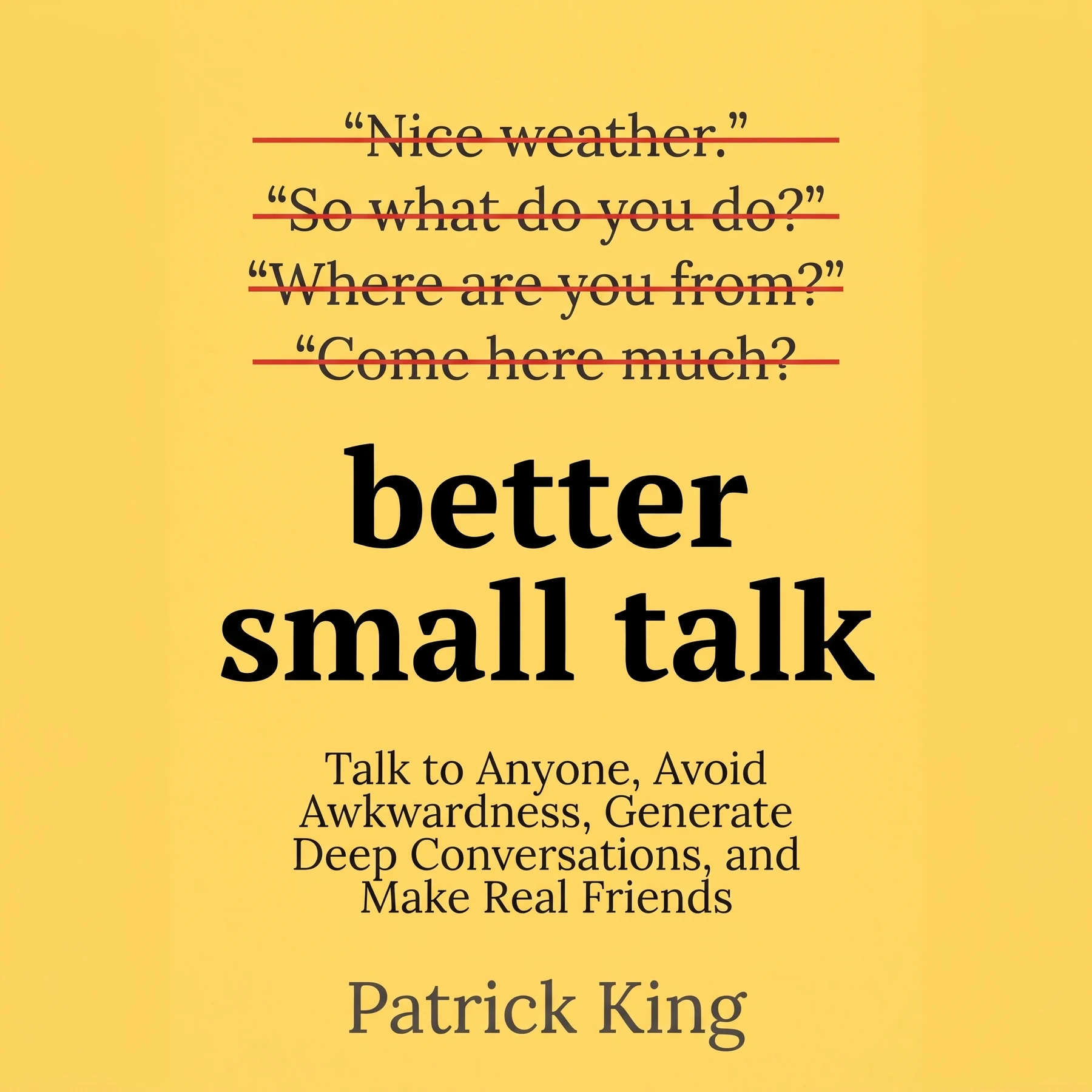
Better Small Talk: Talk to Anyone, Avoid Awkwardness, Generate Deep Conversations, and Make Real Friends
By Patrick King
Better Small Talk offers a strategic framework for overcoming social anxiety and mastering the nuances of human connection, turning awkward silences into opportunities for building lasting, meaningful relationships through actionable communication techniques.
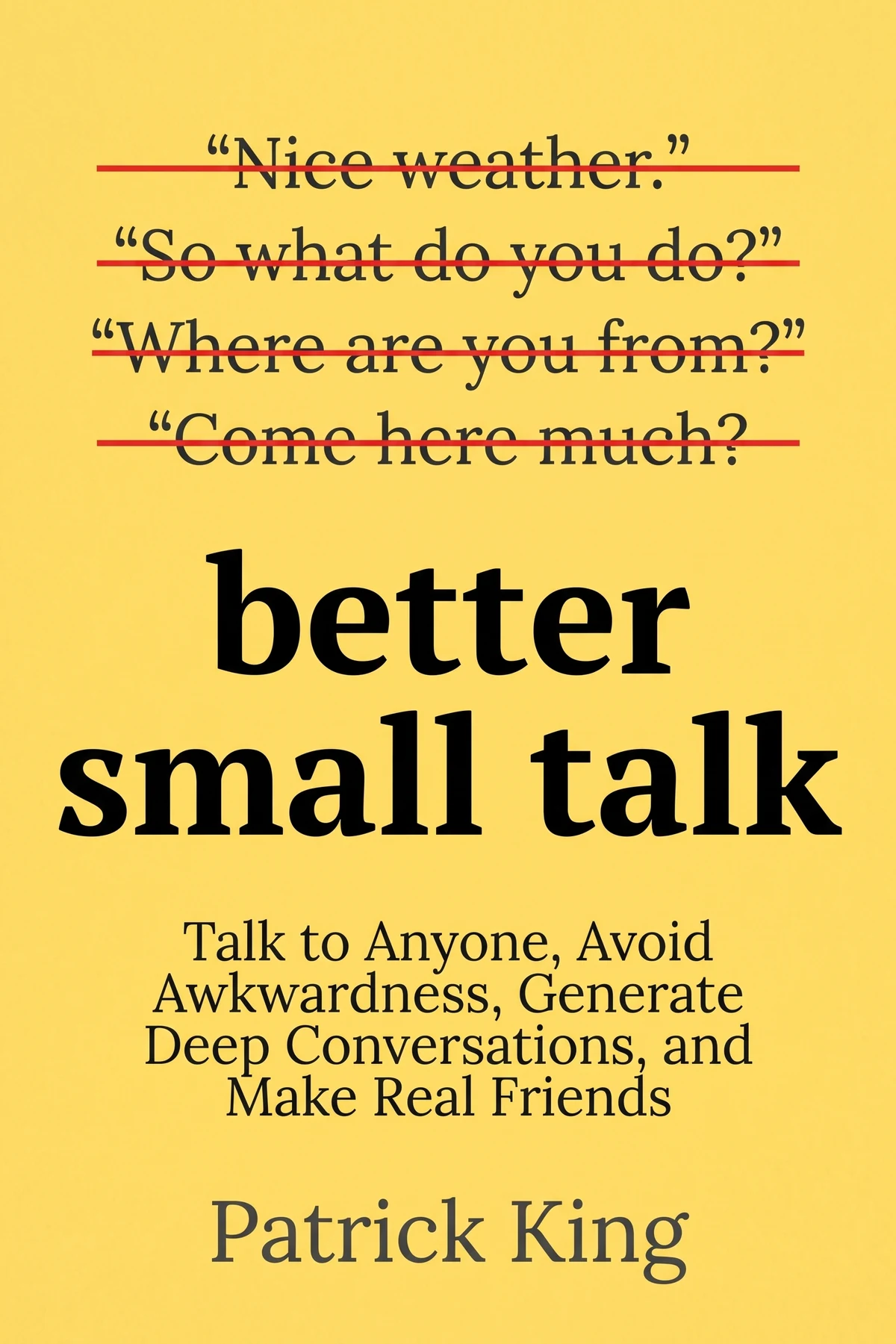
Table of Content
1. Introduction
1 min 40 sec
We have all been there: standing in a hallway or at a party, searching for words while the silence between us and a stranger grows increasingly heavy. It is a moment of profound vulnerability where our desire to connect clashes with our fear of being boring or intrusive. We often treat these interactions as tests of our innate charisma, believing that some people are simply born with the gift of gab while the rest of us are destined to stay on the sidelines. However, the reality is far more encouraging. Social mastery is not an accidental trait; it is a sophisticated craft that can be learned, practiced, and perfected.
In this exploration of Better Small Talk, we are going to look at how to dismantle the anxiety surrounding these brief encounters. The central theme here is that small talk is not an end in itself, but a vital bridge to deeper human connection. It is the necessary preamble to every significant relationship in our lives. By understanding the underlying structure of a good conversation, we can move from being passive observers to active participants in our social worlds.
Throughout this summary, we will examine the tactical ways to prime your brain for social success before you even step into a room. We will break down the natural progression of intimacy, from the initial greeting to the sharing of personal vulnerabilities. We will also explore how to use the power of narrative to make yourself more memorable and how to use mental agility to ensure you never hit a conversational dead end again. Whether you are looking to advance your career or simply make a new friend, the throughline remains the same: every great relationship begins with the courage to start a simple conversation.
2. Social Readiness as a Daily Practice
2 min 21 sec
Discover why treating your social skills like a physical workout can prevent mental blocks and help you approach every interaction with natural ease and confidence.
3. The Four Levels of Connection
2 min 40 sec
Learn the strategic architecture of a conversation, moving from polite weather talk to deep emotional bonding without overwhelming your partner.
4. Crafting the Narrative Hook
2 min 06 sec
Unlock the secret to being memorable by transforming dry facts into engaging mini-stories that invite others into your world.
5. Mental Agility Through Free Association
2 min 01 sec
Stop the fear of running out of things to say by mastering a simple mental technique that links one topic to a dozen new possibilities.
6. The Strategic Art of Inquiry
2 min 14 sec
Discover how to ask questions that go beyond the surface, uncovering the deeper motivations and beliefs of your conversation partners.
7. Conclusion
1 min 22 sec
As we wrap up our journey through the strategies of Patrick King, the overarching lesson is clear: meaningful conversation is a skill that is within everyone’s reach. It is not about having a perfectly polished personality or an endless supply of witty jokes. Instead, it is about the willingness to be present, the courage to be a little vulnerable, and the curiosity to truly see the person standing in front of you.
We have seen that social success begins long before the conversation starts, through a commitment to daily practice and ‘warming up’ our social muscles. We’ve learned that rapport is a ladder, where each rung—from small talk to emotional sharing—is essential for building a sturdy connection. We have explored the power of mini-stories to make ourselves memorable and the magic of free association to keep the dialogue lively and unpredictable. Finally, we’ve recognized that the most impactful thing we can do in any interaction is to ask the kind of questions that invite others to share their true selves.
The next time you find yourself in a social situation that feels daunting, remember that you have a toolkit at your disposal. Start small, stay curious, and don’t be afraid of the occasional pause. Every person you meet is a potential new world to explore, and with these techniques, you are well-equipped to navigate those worlds with confidence and grace. Social mastery is not a destination, but a lifelong practice of building bridges, one conversation at a time.
About this book
What is this book about?
Have you ever found yourself in a crowded room, wishing you could strike up a conversation but feeling paralyzed by the fear of saying the wrong thing? Better Small Talk is a practical roadmap designed to dismantle those social barriers. It moves beyond superficial advice, offering a deep dive into the mechanics of how people actually connect. The book promises to transform the way you perceive social interactions, shifting them from stressful obligations into rewarding experiences. By focusing on the subtle art of rapport-building, storytelling, and active inquiry, this guide provides the tools necessary to navigate any environment—be it a high-stakes professional gala or a casual coffee shop encounter. You will discover how to prepare your mind for social engagement, how to escalate a conversation from basic facts to deep emotional resonance, and how to keep the dialogue flowing even when you feel you have run out of things to say. Ultimately, it is about finding the courage to be authentic and the skill to be engaging.
Book Information
About the Author
Patrick King
Patrick King is a prominent voice in the field of social interaction and a writer whose work has reached audiences globally. As a social skills coach, he specializes in translating complex human behaviors into manageable, everyday strategies. King’s unique perspective is shaped by his own journey from being a self-described shy introvert to becoming an expert in communication. This personal evolution allows him to provide advice that is not only grounded in research and academic principles but also deeply empathetic to those who struggle with social anxiety. His other notable works include The Art of Witty Banter and How to Talk to Anyone.
Ratings & Reviews
Ratings at a glance
What people think
Listeners find that this guide offers excellent advice and functional knowledge, assisting them in improving their social skills through techniques that simplify casual conversation. They value its accessible nature, describing it as a fast-paced and engaging book packed with valuable insights. Listeners view it as a user-friendly and appropriately paced introductory resource, with one listener highlighting the effectiveness of its uncomplicated steps. However, listeners also observe that the prose is poorly constructed and contains numerous typographical errors.
Top reviews
Supranee
The chapter on Elicitation changed how I view networking almost overnight. I used to dread those awkward silences at cocktail parties where you just stand there nursing a drink. King breaks down the 'HPM' and 'SBR' methods in a way that feels natural rather than robotic, which is a rare find. This book functions as a treasure trove of actionable ideas for anyone who feels like they are constantly 'performing' a social role. It is light, fast-paced, and very readable for the average person. I have already started using the mini-story technique to answer the 'what do you do?' question, and the reactions have been much more engaged. While some critics say it is basic, the truth is that most of us fail at the basics every single day. For the price of a coffee, this is a fantastic investment in your social health.
Show moreChon
Wow, what a quick and punchy guide to a topic that usually feels so heavy and stressful. I notoriously talk to everyone already, yet I still found myself highlighting sections on 'appreciative listening' and 'mini-stories.' The book teaches you that small talk isn't the enemy—it is the backbone of every deep relationship you will ever have. I loved the idea of treating social skills like a muscle that needs a warm-up; now I make sure to chat with the grocery clerk before I head to a big event. The 1:1:1 format is pure gold for streamlining your personal anecdotes so they do not drag on forever. Truth is, the writing isn't Shakespeare, but the practicality of the steps makes up for the lack of literary flair. It is a nifty little volume that I will definitely revisit before my next big corporate networking event.
Show moreWanida
Finally got around to reading this after seeing it everywhere on social media lately. Frankly, the 1:1:1 format for a conversational resume is a total game changer for someone like me who tends to over-explain things. This is a very quick and punchy read that takes maybe two hours to finish. King gets straight to the point without much fluff, which I really appreciate. I liked the specific examples of what to say rather than just vague advice to 'be more confident.' My only real gripe is that the writing can feel a bit rushed, and I definitely spotted a few typos. Despite the minor polish issues, the 'free association' exercises are genuinely helpful for keeping a conversation from dying out. It is an entry-level book for sure, but sometimes we need those basic reminders to stop asking boring yes/no questions.
Show moreMichael
Ever wonder why some people just seem to 'click' with everyone while you are stuck talking about the weather? This book isn't a miracle cure, but it gives you the 'miracle tools' to start bridging that gap. I particularly liked the 'flow zone' technique which helps you balance sharing about yourself and showing genuine curiosity about others. In my experience, everyone could learn at least something from the 'free association' drills King suggests. They help you stop overthinking and just let the dialogue go where it needs to go. The book is very short, which is perfect for a weekend read. My only complaint is that some of the advice feels a bit manipulative if you follow it too closely. It is better used as a loose guide rather than a script. Still, it is a solid resource for anyone looking to stop the 'soul-killing' nature of bad small talk.
Show moreJin
Picked this up because my corporate book club suggested it, and it turned out to be a surprisingly practical read. I used to be one of those people who 'barreled into conversations headfirst' and ended up making things awkward. King’s advice about 'testing the waters' and using elicitation to get people to open up has really smoothed out my interactions. The book is full of cute and insightful guides, even if the writing style is a bit rough around the edges with some glaring typos. The 'ten-second relationships' concept is probably the most valuable thing I took away; it is about those tiny moments of connection that build your confidence. It is a smart read for anyone tired of awkward silences. It does not teach you to fake charisma, but it does teach you how to belong in a room full of strangers with dignity.
Show moreWoravit
As a socially anxious person with a couple of degrees, I often find myself being too wordy and intellectualizing simple interactions. Patrick King’s advice to build a 'conversational resume' was actually quite useful for pruning my long-winded stories into something digestible. To be fair, the book is part of a massive series, and you can tell the author is trying to stretch the material a bit thin. The references to scientific studies felt a bit like improvised crutches to support his arguments rather than deep dives into psychology. It is a decent 3.5-star read rounded down because of the repetitive structure and some remarks that try too hard to sound profound. However, the specific section on studying post-game athlete interviews for question structure was brilliant and something I had not considered before. It is a mixed bag of gold and grit.
Show moreMai
Patrick King provides some decent tools here, but the packaging is hit or miss for me. On one hand, the SBR framework is a great way to structure a pitch or a long-form answer. On the other hand, the book is incredibly repetitive and feels like it is screaming for a professional editor to fix the typos. It is a quick and captivating read in terms of pacing, but I often found myself rolling my eyes at the simplistic 'studies' cited to back up his points. Is this habit of reading self-credentialed coaches still serving us well? I am not entirely sure. But for an entry-level book on social skills, it does exactly what it says on the tin. It helps you get through a party without wanting to hide in the bathroom. It is helpful, if a little boring in its presentation of knowledge.
Show moreLucia
Look, I wanted to like this because I struggle with social anxiety, but it mostly felt like a collection of common sense tips. Do we really need a whole chapter telling us to ask open-ended questions? That is what I consider to be absolute conversation 101. The book is also riddled with distracting grammatical errors and typos that made it hard to take the advice seriously. I also have a massive distaste for books that use 3-5 bullet chapter summaries to repeat what I just read five minutes ago. If your content is that thin, maybe it should have been a long-form article instead of a paid e-book. There are a few nuggets of wisdom, like the idea of '10-second relationships' with baristas to warm up, but they are buried in filler. Better off reading Carnegie or just practicing in the real world.
Show moreSakura
I'm skeptical of authors who churn out twenty books in the same niche, and this volume unfortunately confirms some of those suspicions. While the advice makes sense on paper, it often feels like 'stating the obvious' for anyone who has basic social awareness. The book is very short, which some might see as a plus, but it feels more like a long article padded out. I found the section on 'dramatic reading' exercises to be a bit of a waste of my time. Who is actually going to do that before a first date? The author relies too much on 'A' studies and appeals to authority that do not always hold water. It is not 'disgusting' as some other reviewers say, but it definitely feels half-baked and rushed to market. I would skip this one and look for something with more psychological depth.
Show moreZanya
This felt like a collection of blog posts stitched together with zero editing and a lot of recycled ideas. I was hoping for actual substance, but instead, I got platitudes about how humans are social creatures and more 'how to' guides that felt copied. The author positions himself as a charisma coach, but the writing style is clunky and a bit condescending to the reader. One page was literally a wasted anecdote about climbing down a mountain that had nothing to do with the actual technique being discussed. It is a textbook example of a 'quantity over quality' publishing strategy that prioritizes volume over value. I found the constant self-promotion for his other 20+ books to be incredibly distracting. If you have ever had a single successful conversation in your life, you probably already know everything in here. Save your money and just go talk to a stranger for free.
Show more
Readers also enjoyed
AUDIO SUMMARY AVAILABLE
Listen to Better Small Talk in 15 minutes
Get the key ideas from Better Small Talk by Patrick King, plus 5,000+ more titles in English and Thai.
- 5,000+ titles
- Listen as much as you want
- 7-day free trial
- Cancel anytime







