
17 min 57 sec
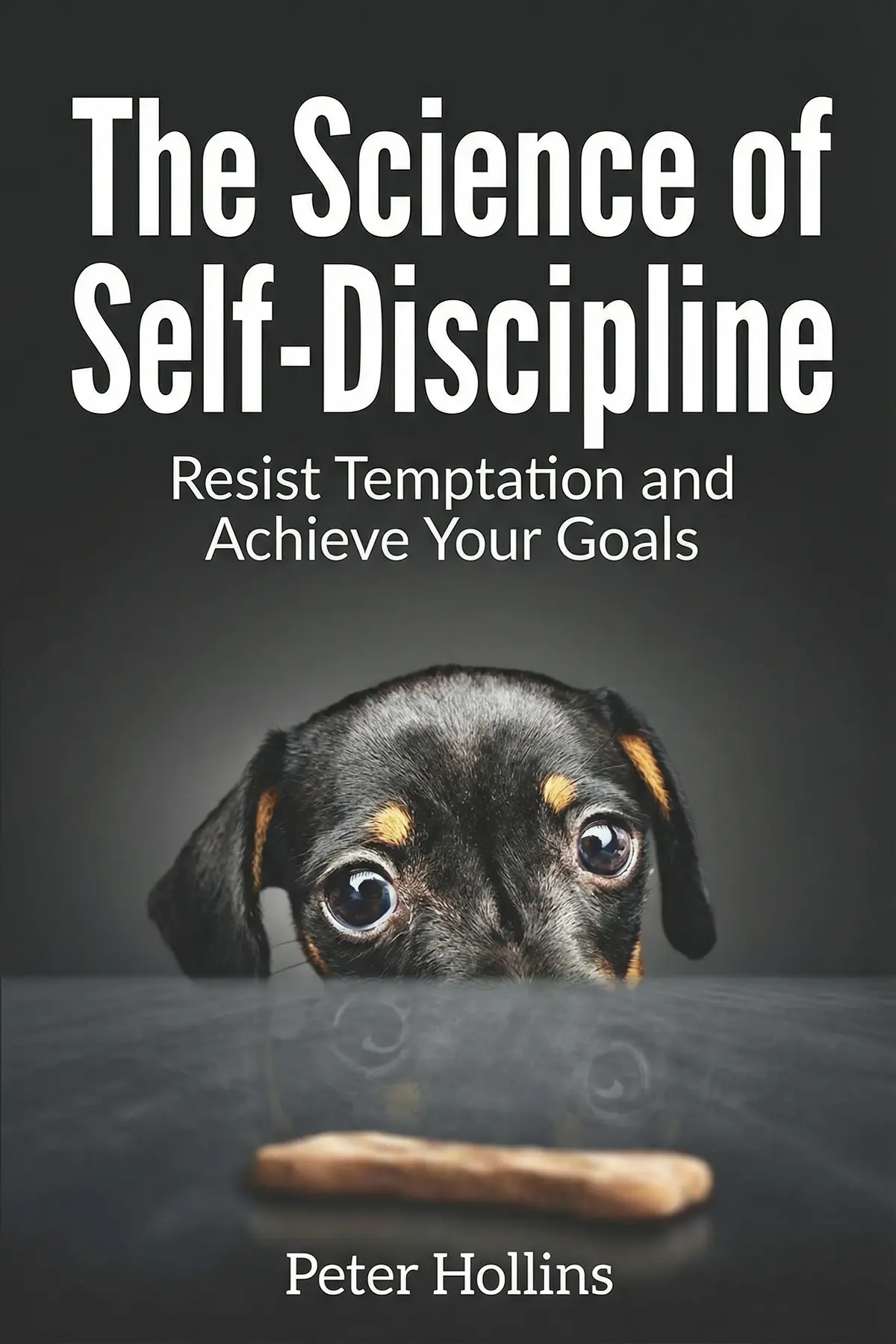
The Science of Rapid Skill Acquisition: Advanced Methods to Learn, Remember, and Master New Skills and Information
Unlock the secrets of accelerated learning by moving beyond passive memorization. This guide provides evidence-based strategies to deconstruct skills, optimize practice routines, and build a unique skill stack for long-term mastery.
Table of Content
1. Introduction
1 min 38 sec
In an era where the world changes at breakneck speed, the ability to learn quickly isn’t just a convenience—it is a superpower. We live in a time when information is everywhere, yet many of us feel paralyzed when it comes to actually gaining proficiency in something new. We might buy the books, sign up for the classes, and watch the tutorials, but somehow the expertise remains just out of reach. This happens because most of us are using a learning operating system that hasn’t been updated since grade school. We rely on passive absorption, hoping that if we just read enough or listen long enough, the skill will eventually click.
But real mastery doesn’t happen by accident. It is the result of a deliberate, scientific approach to how our brains and bodies adapt to new information. In this exploration of the methods developed by Peter Hollins, we are going to look at the architectural framework of rapid learning. We will move through the psychological stages of gaining a skill, the tactical ways to break down complex tasks, and the specific practice techniques that differentiate the masters from the perpetual beginners.
By the end of this journey, you’ll see that learning isn’t a mysterious gift bestowed upon a lucky few; it’s a repeatable process. You’ll understand how to identify the high-impact areas of any field, how to navigate the inevitable discomfort of being a novice, and how to build a social environment that almost forces you to succeed. This isn’t just about working harder—it’s about working in alignment with the way your mind actually works. Let’s dive into the strategies that can turn you from a passive consumer of information into a master of new skills.
2. The Psychological Journey of Mastery
2 min 10 sec
Discover the four stages of building competence and why initial frustration is actually a sign of progress on your path to mastery.
3. Deconstruction and the Power of the Vital Few
1 min 56 sec
Learn how to accelerate your progress by breaking complex skills into smaller parts and focusing on the 20% that yields 80% of the results.
4. Optimizing Practice Through Struggle and Variety
2 min 07 sec
Mindless repetition is a trap. Explore how techniques like interleaving and spaced repetition create deeper, more lasting neural connections.
5. Techniques for Profound Understanding
2 min 05 sec
Moving beyond memorization requires active engagement. Discover how the Feynman Technique and Bloom’s Taxonomy can solidify your knowledge.
6. The Strategic Advantage of Skill Stacking
2 min 04 sec
You don’t have to be the best in the world at one thing to be extraordinary. Learn how combining ‘good’ skills can make you irreplaceable.
7. Designing Your Ecosystem for Success
2 min 04 sec
Your surroundings and social circle have a profound impact on your habits. Find out how to curate your environment to make learning inevitable.
8. Maintaining the Beginner’s Mindset for the Long Haul
2 min 05 sec
Sustaining progress requires more than just tactics; it requires the right expectations and a willingness to be a ‘clumsy’ novice.
9. Conclusion
1 min 48 sec
Mastering a new skill is one of the most fulfilling experiences a human can have, but it is often made unnecessarily difficult by poor strategy. As we’ve seen through the lens of Peter Hollins’ work, the path to rapid acquisition is built on a foundation of intentionality. It starts with choosing the right skills and understanding the psychological stages of growth. It requires the surgical precision of deconstruction, using the 80/20 rule to focus on what truly moves the needle. It demands a sophisticated approach to practice—one that embraces struggle, variety, and strategic spacing to ensure that what we learn actually sticks.
But beyond the tactics, we’ve also explored the broader context of learning. We’ve seen how ‘skill stacking’ can create a unique competitive advantage and how our social and physical environments can either act as a wind at our back or a weight around our ankles. Most importantly, we’ve discussed the necessity of the beginner’s mindset and the importance of having a realistic, long-term perspective.
The throughline of all these strategies is active engagement. You cannot become a master by being a passive recipient of information; you must be an architect of your own education. Whether you are looking to pivot your career, pick up a new language, or finally learn that instrument you’ve had in the corner for years, these tools are now in your hands. Success isn’t reserved for the naturally gifted. It is available to anyone willing to apply the science of learning to their own life. Take one small step today: pick a skill, deconstruct its first 20%, and start practicing. The journey to mastery begins with that first, deliberate action.
About this book
What is this book about?
Have you ever felt that you spend hours studying or practicing only to see your progress stall? Many of us were never taught how to learn effectively, relying instead on outdated methods from our school days. The Science of Rapid Skill Acquisition changes the narrative by offering a comprehensive toolkit for modern learners. It moves away from the idea that talent is the primary driver of success and instead focuses on the mechanics of cognitive development and behavioral psychology. This summary provides a roadmap for anyone looking to master a new language, a professional craft, or a personal hobby in record time. It explores the stages of building competence, the power of focused practice over mindless repetition, and the importance of creating a social and physical environment that supports growth. By understanding how the brain encodes information and how to leverage the 80/20 rule, you can transform the way you approach any challenge. The promise is simple: by changing your strategy, you can achieve mastery faster and more reliably than you ever thought possible.
Book Information
About the Author
Peter Hollins
Peter Hollins is a best-selling author and researcher specializing in human psychology and behavior. He holds both a bachelors and masters degrees in psychology, and has collaborated with individuals from diverse backgrounds to unlock their potential and guide them toward success. Among his notable works are Finish What You Start, The Science of Self-Discipline, and The Science of Self-Learning.
Ratings & Reviews
Ratings at a glance
What people think
Listeners find the book educational and simple to digest, acting as a solid introduction to foundational learning principles. They value the actionable tips on accelerating skill acquisition, the straightforward prose, and the motivating material. Positive remarks highlight how clearly the ideas are presented, with one listener noting how it changes the way you think to better understand the concepts. Opinions on the quality of the writing are divided, as some consider it skillfully composed while others observe that it suffers from poor formatting.
Top reviews
Somsak
Finally got around to reading this, and it has fundamentally shifted how I approach my daily guitar practice. Instead of just mindlessly playing through scales, I’m now using the interleaving methods Hollins describes, and the results are already showing. The emotional takeaway for me was the reminder to embrace the 'beginner’s mindset' and find joy in the mistakes. It’s practical, evidence-based, and doesn’t make false promises about 'overnight' success. I loved the emphasis on curiosity as a fuel for persistence. The book is short enough to reread whenever you feel your motivation waning. If you want a guide that simplifies the path to mastery without being overly complex, this is the one. It truly empowers you to take control of your own education.
Show moreHassan
This book provides a solid roadmap for anyone looking to reinvent themselves through 'skill stacking.' I was particularly fascinated by the example of Scott Adams and how combining moderate skills can create an outsized impact on your career. It really changes the way you think about specialization versus being a generalist. Personally, I found the chapters on the physical and social environment to be the most helpful, as I often overlook how much my surroundings affect my focus. The advice is easy to implement immediately. It’s an inspirational read that focuses on the 'how' just as much as the 'why.' For an aggressive autodidact like myself, having these strategies laid out so clearly is a game changer. Five stars for the clarity and structure alone.
Show moreJoy
Learning is an essential skill in our fast-paced world, and Hollins captures the mechanics of it perfectly in this brief but dense work. I’ve been applying these findings for a few weeks now to my marathon training and my professional development, and I can testify that they work. The book emphasizes focused practice and tailored techniques over mindless repetition, which is a lesson we all need to hear. It’s inspirational without being cheesy. I especially liked the section on 'unconscious competence' and how to move past the awkward early phases of a new skill. The summaries at the end of the chapters actually served as great anchors for my memory. This is a must-read for anyone who feels stuck in their personal growth. It’s efficient, effective, and deeply encouraging.
Show moreOat
Ever wonder why traditional schooling feels so inefficient for learning real-world skills? This book offers a refreshing look at how we can bypass those old rote-memorization traps and actually start doing. I really appreciated the focus on deconstruction; breaking a big goal like 'learning piano' into tiny, manageable components makes the process feel way less daunting. The writing is accessible and avoids the heavy academic jargon that usually bogs down books about 'the science' of anything. It’s a quick read, but it provides a very clear roadmap for anyone looking to optimize their study time. While I wish there were more personal anecdotes to spice up the prose, the practical advice on the 80/20 rule is invaluable. It’s an excellent starting point for any aspiring polymath.
Show moreDuang
Picked this up on a whim during a Kindle sale and found it surprisingly actionable. Unlike a lot of self-help garbage, Hollins actually provides specific techniques like the Feynman Technique and elaborative interrogation to test your understanding. The truth is, most of us just read and hope things stick, which we know doesn't work. This book forces you to look at active recall and spaced repetition as the only ways forward. I particularly liked the section on 'unconscious incompetence' because it helped me realize why I was getting so frustrated with my new coding project. It’s not a long book, but it’s packed with enough frameworks to keep you busy for months. Definitely worth the price of admission if you're a student or professional.
Show moreSupranee
After hearing so much about the flaws in our traditional education system, I wanted a different perspective on adult learning. This book delivers exactly that by focusing on efficiency and the 'science' of how our brains actually retain information. The breakdown of the stages of learning was particularly enlightening for me. I’ve always struggled with the 'plateau' phase, but understanding it as a natural part of conscious competence made it easier to push through. The writing style is straightforward and clear, which I appreciate in a world of fluff-filled business books. It’s a great resource for my students and myself. My only gripe is that some of the anecdotes felt a bit loose and unsubstantiated. Still, the core methodology is very sound.
Show moreArjun
Look, I’m a bit of a skeptic when it comes to 'rapid' learning claims, but the techniques here are actually legitimate. Spaced repetition and deliberate practice aren't magic tricks—they are hard work—and Hollins doesn't sugarcoat that fact. The book is written in a very approachable, casual style that makes it easy to power through in a single sitting. I appreciated the specific tips on how to handle failure and use mistakes as feedback loops. It’s a very practical guide that focuses on high-yield activities rather than endless preparation. To be fair, it’s not the most original book on the market, but it’s a great time-saver for anyone who wants the highlights of learning science. It helped me get my side headings right for a new language I'm studying.
Show moreEarn
As someone who spends way too much time on productivity forums, this felt like a curated 'greatest hits' album of better-known concepts. There isn't much here that you won't find in 'The Personal MBA' or 'Flow,' but Hollins does a decent job of organizing it into one place. He captures the keywords well, though he speaks very rapidly through the definitions without going as deep as I’d like. It’s a bit like a summary service in book form. If you are looking for a deep, philosophical exploration of education, you should probably look elsewhere. However, if you want a fast-paced overview of various learning styles and mental models, it serves its purpose. It's a handy reference, even if it lacks a distinct voice of its own.
Show moreSomchai
The formatting of this book is incredibly frustrating and makes it hard to take the content seriously. It uses massive font and repetitive chapter recaps that take up nearly a third of the total length. To be fair, the core ideas about deliberate practice and feedback loops are valid, but they are presented in such a dry, dull style. I felt like I was reading a textbook written by someone who didn't actually want to be writing it. Even worse, large sections felt like they were pulled directly from Hollins’ other titles, which is a huge disappointment for returning readers. It is essentially a beginner's manual that lacks the depth required to actually master the complex concepts it introduces. It’s not exactly pseudo-science, but it’s certainly not high-level material either.
Show morePot
Wow, what a letdown. I picked this up hoping for a deep dive into cognitive science, but instead, I got a shallow compilation of blog posts and better books. The author doesn't seem to have an original thought in his head, preferring to simply regurgitate concepts from Cal Newport and the authors of 'Make It Stick.' Honestly, if you have already read any mainstream productivity book from the last decade, you can skip this entirely. It spends far too much time trying to sell itself to the reader rather than providing any real, unique utility. The constant summaries after every single chapter felt patronizing and like an obvious attempt to pad the page count. Save your money and just buy the source material he's citing instead of this derivative summary.
Show moreReaders also enjoyed
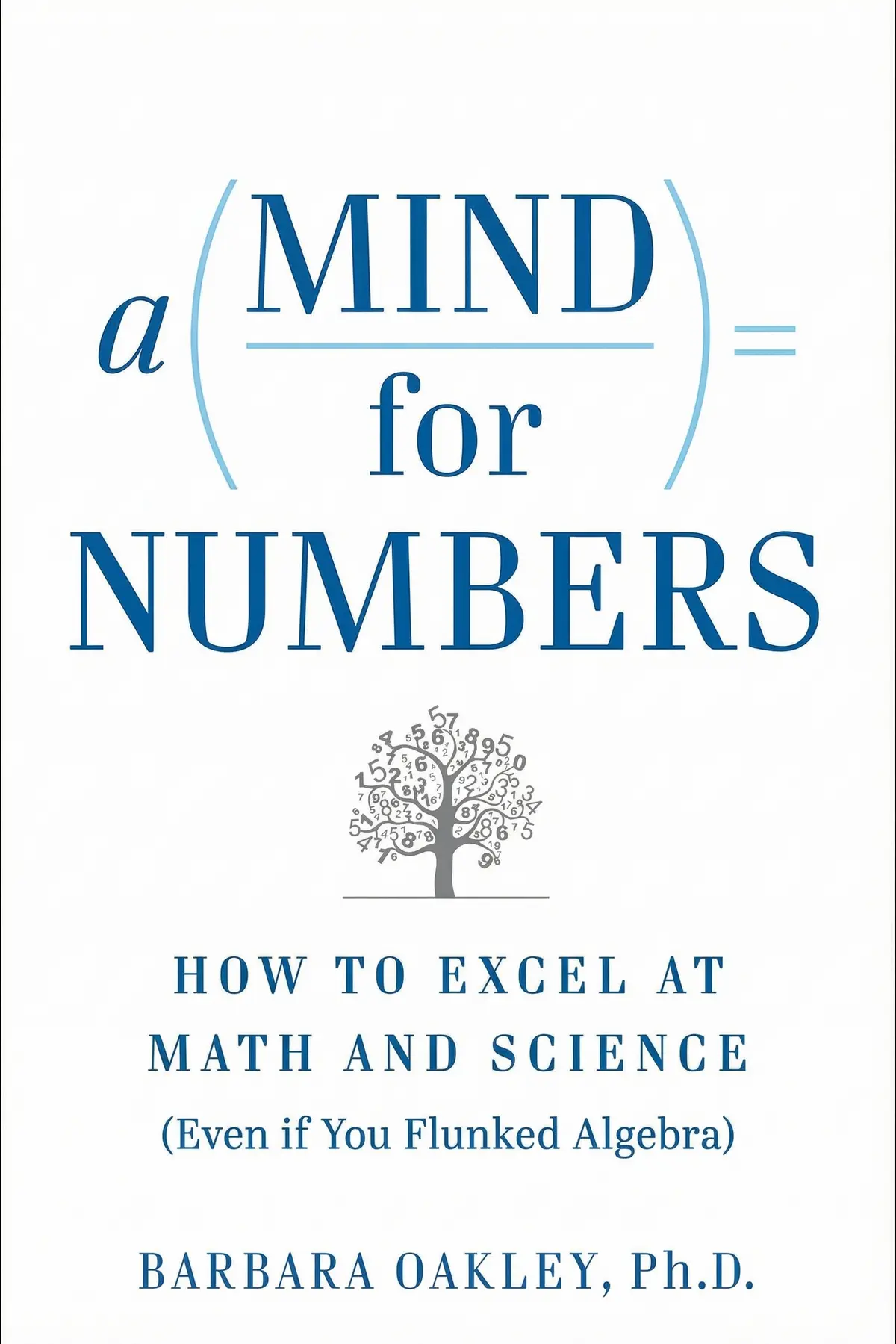
AUDIO SUMMARY AVAILABLE
Listen to The Science of Rapid Skill Acquisition in 15 minutes
Get the key ideas from The Science of Rapid Skill Acquisition by Peter Hollins, plus 5,000+ more titles in English and Thai.
- 5,000+ titles
- Listen as much as you want
- 7-day free trial
- Cancel anytime







