
15 min 38 sec
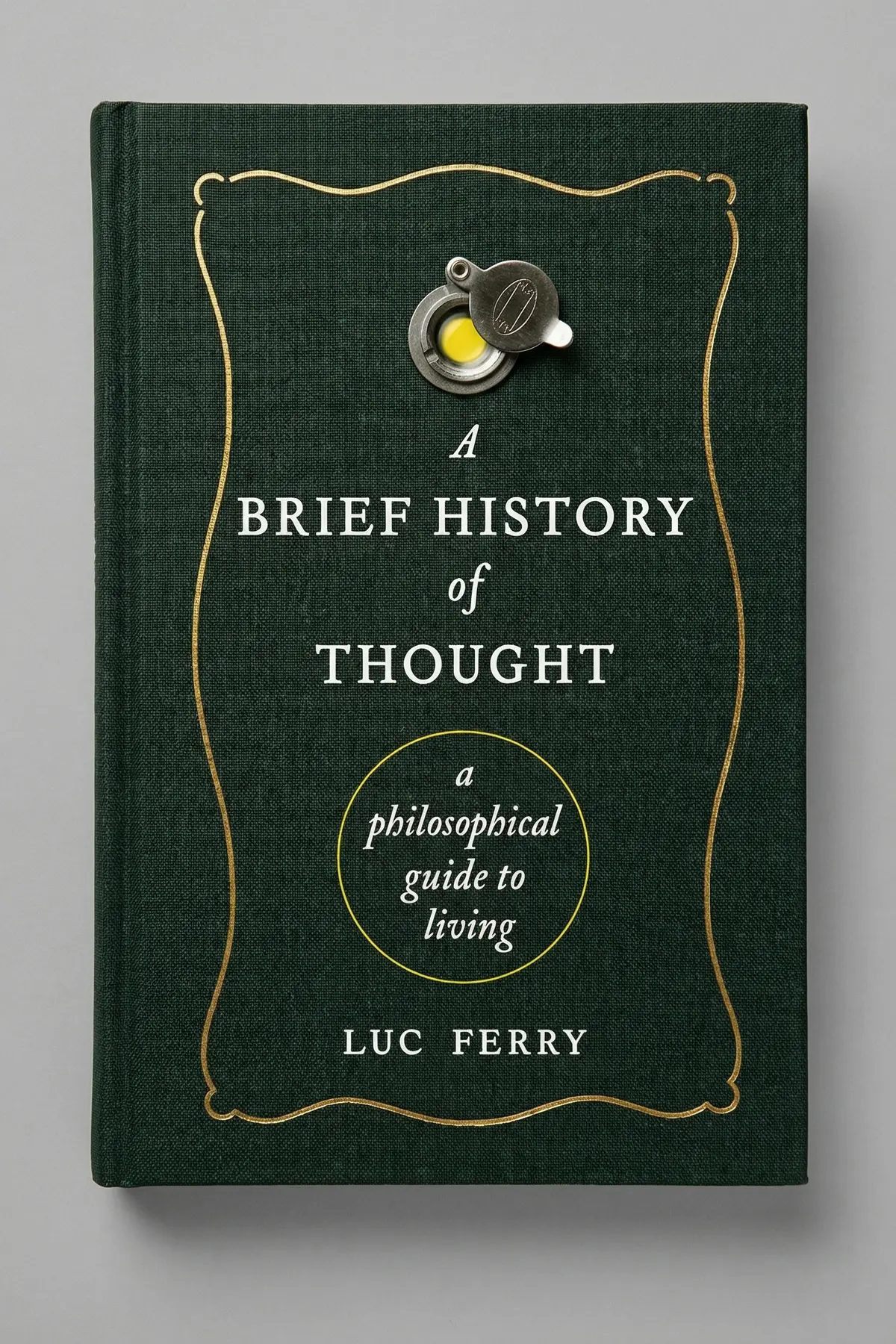
The Sunflower: On the Possibilities and Limits of Forgiveness
An exploration of one of life's most difficult moral questions, centered on a Holocaust survivor’s encounter with a dying Nazi who begs for absolution for his horrific crimes against humanity.
Table of Content
1. Introduction
1 min 35 sec
Imagine standing at the precipice of the most profound moral dilemma a human being could ever face. You are a prisoner, stripped of your name, your family, and your dignity, existing in a world where death is the only certainty. Suddenly, you are pulled from your daily labor and brought into a room to face one of your oppressors. But he isn’t there to torment you. Instead, he is dying, and he is begging you for something that only you can give: forgiveness. This is the staggering reality that Simon Wiesenthal faced in the Lemberg concentration camp in 1943.
His experience, and the haunting question it left behind, serves as the throughline for our exploration today. What do we owe those who have committed the unthinkable? Is forgiveness a personal gift, a divine mandate, or a legal impossibility? Through Wiesenthal’s own journey and the collective wisdom of dozens of thinkers he later consulted, we are forced to look into the darkest corners of history to find a glimmer of light. This isn’t just a story about the Holocaust; it’s a universal inquiry into the nature of justice and the heavy burden of mercy. As we move through these ideas, notice how the focus shifts from a single hospital room in occupied Poland to a global conversation that spans religions, cultures, and decades. We will examine why some believe forgiveness is the only path to a peaceful future, while others argue that certain acts are so heinous they lie forever beyond the reach of absolution. By the end, you may not have a simple answer, but you will have a much deeper understanding of what it means to be human in the face of inhumanity.
2. A Surreal Encounter at Death’s Door
2 min 39 sec
In the midst of the Holocaust’s brutality, a Jewish prisoner is unexpectedly asked to provide spiritual solace to a dying enemy who participated in a massacre.
3. The Weight of Silence and the Mercy of Secrets
2 min 30 sec
When faced with a plea for absolution, Wiesenthal chooses a path of silent empathy that continues to haunt him long after the war ends.
4. The Ethical Boundaries of Proxy Forgiveness
2 min 47 sec
Exploring the theological and philosophical reasons why many argue that certain crimes, like murder, are fundamentally beyond the reach of third-party absolution.
5. The Path to Freedom Through Compassion
2 min 18 sec
On the other side of the debate, voices from various cultures argue that forgiveness is essential for the survivor to move forward and break the cycle of hate.
6. The Necessity of the Unanswered Question
2 min 13 sec
The lack of a clear consensus on forgiveness suggests that the true value lies in the ongoing struggle to define our moral boundaries.
7. Conclusion
1 min 36 sec
As we conclude this journey through one of the most difficult chapters of human history, we are left standing where Simon Wiesenthal stood: in the uncomfortable space between two impossible choices. We have seen how the act of forgiveness can be viewed as both a betrayal of the dead and a liberation of the living. We’ve explored how different faiths and cultures draw the line at what can be excused and what must be punished.
The throughline of this exploration is that forgiveness is not a simple transaction. It is not a receipt given for a confession. Instead, it is a profound expression of our values. Whether you believe that Wiesenthal should have forgiven the soldier or that his silence was the only just response, the real takeaway is the importance of the struggle itself. By engaging with these questions, we prevent ourselves from becoming indifferent. We ensure that the victims are remembered and that the weight of moral responsibility is never forgotten.
In your own life, you may never face a dilemma as extreme as the one in that hospital room in 1943. But you will face moments where you must choose between holding onto a grievance and letting it go. When those moments come, remember the sunflower—the image of a flower growing over a grave, reaching for the light even in a place of death. Use the complexity we’ve discussed today as a guide. Don’t look for easy answers. Instead, look for the response that most honors the humanity in yourself and in others. The conversation about forgiveness has no end, and by participating in it, you contribute to a more thoughtful and compassionate world.
About this book
What is this book about?
The Sunflower is a profound examination of the limits and possibilities of mercy. It begins with the true story of Simon Wiesenthal, a concentration camp prisoner who is summoned to the bedside of a fatally wounded SS soldier. The soldier, haunted by his role in a mass murder, seeks forgiveness from a representative of the people he helped destroy. Wiesenthal’s response—and his subsequent lifelong questioning of that response—forms the heart of this narrative. Beyond the personal memoir, the work expands into a global dialogue, incorporating the perspectives of religious leaders, philosophers, and fellow survivors. It addresses the tension between justice and compassion, the theology of repentance in different faiths, and the psychological burden of hatred. Ultimately, the book doesn't offer a simple solution but instead invites the listener to consider what they would do when faced with the unforgivable, making it a timeless meditation on the human spirit's capacity for grace.
Book Information
About the Author
Simon Wiesenthal
Simon Wiesenthal was a survivor of the Holocaust who transformed his life's mission into the pursuit of justice. After the war, he dedicated himself to locating and bringing Nazi war criminals to account for their actions. He authored several books on his experiences and his work, including The Murderers Among Us and Justice Not Vengeance. His efforts led to the establishment of the Simon Wiesenthal Center in Los Angeles, an organization focused on fighting for Jewish human rights and preserving the memory of the Holocaust.
Ratings & Reviews
Ratings at a glance
What people think
Listeners find this work to be a remarkable read featuring superb prose and deep subject matter, rendering it an ideal resource for group discussions. Additionally, the gripping account of the Holocaust and the philosophical exploration of ethical accountability are well-regarded, as one listener notes the various perspectives and opinions provided are quite eye-opening. Nevertheless, the speed of the narrative and the heavy themes draw varied opinions; while some consider it deeply touching, others remark that the story is simply too sorrowful to enjoy.
Top reviews
Sebastian
Wow. This is one of those rare books that actually makes you look inward and question your own character. The imagery of the sunflower—a symbol of connection to the world that the prisoners were denied—is absolutely heartbreaking. Wiesenthal captures the dehumanization of the camps with such precision that you can almost feel the dust and the despair. The central dilemma is a masterpiece of ethical tension. I found myself closing the book every few pages just to think. The responses from various thinkers at the end are wonderful tools for further reflection, even if I didn't agree with all of them. It is a profound meditation on whether we even have the right to forgive crimes committed against others. Simply essential reading.
Show moreBee
What would you do? That is the question that haunts every page of this incredible book. Wiesenthal doesn't just tell a story; he invites you into his own unresolved torment. The scene where he visits the SS officer's mother after the war was particularly moving and complicated. It shows that he was a man of immense character, even if he couldn't bring himself to offer the words the dying man wanted. The variety of viewpoints in the back of the book is staggering. From rabbis to secular philosophers, each one adds a new layer to the problem. It’s a profound narrative about the impossibility of speaking for the dead. This should be required reading in every ethics course.
Show moreKru
Simon Wiesenthal's writing is sparse yet devastatingly effective. He manages to convey the atmosphere of the 'Polytechnic' turned hospital with such clarity that you feel the silence of the room where Karl lies dying. This isn't just a Holocaust story; it’s an exploration of what it means to be human in an inhumane system. The way he describes the 'God is on vacation' sentiment among the prisoners is chilling. I found the symposium section to be an enlightening look at how culture and religion shape our sense of mercy. It’s a wonderful tool for anyone trying to understand the nuances of moral responsibility. Even the responses I disagreed with helped me clarify my own stance on the limits of forgiveness.
Show moreRapee
Picked this up for a local reading group and was immediately gripped by the moral weight of Wiesenthal’s predicament. The first half is a visceral, haunting memoir about a dying SS officer named Karl who begs a Jewish prisoner for absolution. Wiesenthal's silence is deafening. His prose is sparse, lacking any unnecessary flourish, which makes the horrors he describes feel even more immediate and suffocating. To be fair, the second half—the symposium—is a bit of a mixed bag. While it’s fascinating to see how figures like the Dalai Lama and Desmond Tutu grapple with the question, some responses felt a bit repetitive or detached from the reality of the camps. However, the core narrative about the sunflowers on the German graves versus the anonymity of the Jewish dead will stay with me forever. It’s a perfect catalyst for meaningful conversation about the heavy price of reconciliation.
Show moreNiphon
As someone who has studied the Holocaust extensively, I found this book offered a unique angle I hadn’t fully considered before. It isn't just about survival; it's about the psychological burden of being asked to speak for an entire people. Truth is, the scenario Wiesenthal presents is almost unbearable. A soldier who participated in atrocities wants a clean conscience before he dies, and he chooses a random prisoner to grant it. The writing is incredibly powerful. I particularly appreciated the diverse spectrum of moral perspectives included in the second half. It was enlightening to see the sharp divide between the Jewish and Christian responses to the concept of forgiveness. Some might find the philosophical section a bit dry compared to the memoir, but I think it’s necessary to flesh out the complexity of the situation.
Show morePongpan
A haunting look at the limits of grace and the reality of evil. Simon Wiesenthal's writing style is direct and honest, avoiding sentimentality while describing the unthinkable. The encounter with the dying Nazi, Karl, is paced like a thriller, yet carries the weight of a religious text. Look, I’ll be honest: the book is devastatingly sad. It’s not a light read for a sunny afternoon. Some of the contributors in the symposium section come off as a bit preachy, particularly those who haven't experienced trauma themselves, but that almost adds to the book's value. It highlights the gap between abstract theory and lived experience. I’d recommend this to anyone interested in moral responsibility and history.
Show moreOwen
After hearing so much about this book, I finally picked it up, and it lived up to the reputation. The contrast between the 'sunflower' on the German graves and the 'fossa' awaiting the Jews is a brilliant, tragic metaphor. Wiesenthal is a gifted storyteller who manages to make a philosophical problem feel like a life-or-death struggle. Gotta say, the Jewish perspectives in the symposium resonated with me far more than the others. They seemed to understand that forgiveness isn't just a feeling, but a matter of justice and law. My only minor gripe is that some of the responses in the back felt a bit dated, but the core story is timeless. It’s an amazing read that will spark hours of debate.
Show moreSuthida
Finally finished this and I'm still processing the core dilemma. The writing is excellent, and the story itself is remarkably tight. Wiesenthal captures the nuances of his own doubt perfectly. He didn't just walk out of that room and forget; he carried that dying man's request for decades. That kind of honesty is rare. The book is very moving, though it can be quite sad depending on your own history and beliefs. I think the highlight for me was seeing the different ways that survivors of other genocides responded to his question. It reminds us that these aren't just academic puzzles—they are real questions that people have to live with. A truly compelling and necessary piece of literature.
Show moreJeeranan
This book is less of a cohesive story and more of a heavy moral burden presented in two distinct parts. I loved the first 100 pages. The narrative of Simon being pulled from his work detail to hear a murderer's confession is riveting and well-written. However, the second half dragged significantly for me. Personally, I found that reading 50+ short essays on the same topic became incredibly redundant after a while. Many of the religious leaders offered the same platitudes about turning the other cheek which felt a bit glib given the context of the Holocaust. It's an important book for group discussions, but as a reading experience, the pacing is quite uneven. I'm glad I read it, but I don't think I'd revisit the symposium section.
Show moreMind
Frankly, the first half of the book is a five-star masterpiece, but the second half is a bit of a slog. The memoir portion is one of the most compelling things I've ever read. It's short, punchy, and deeply disturbing. But then you get to the essays, and the momentum just stops. I think the book would have been more effective with fewer, more in-depth responses rather than a huge symposium of 50+ people. Some of the contributors seemed to be speaking from a place of extreme privilege, which made their calls for 'unconditional love' feel a bit tone-deaf. It’s a solid 3.5 for me, rounded down because the pacing in the latter half was so difficult to get through.
Show moreReaders also enjoyed
A Guide to the Good Life: The Ancient Art of Stoic Joy
William B. Irvine

A Force for Good: The Dalai Lama's Vision for Our World
Daniel Goleman
A Little History of Philosophy
Nigel Warburton
A Theory of Justice
John Rawls
A New Earth: Awakening to Your Life’s Purpose
Eckhart Tolle
AUDIO SUMMARY AVAILABLE
Listen to The Sunflower in 15 minutes
Get the key ideas from The Sunflower by Simon Wiesenthal, plus 5,000+ more titles in English and Thai.
- 5,000+ titles
- Listen as much as you want
- 7-day free trial
- Cancel anytime







