
17 min 02 sec
The Things We Make: The Unknown History of Invention from Cathedrals to Soda Cans
By Bill Hammack
Explore the hidden logic of creation in Bill Hammack’s look at the engineering method. From ancient cathedrals to modern soda cans, discover how practical rules of thumb shape our entire world.
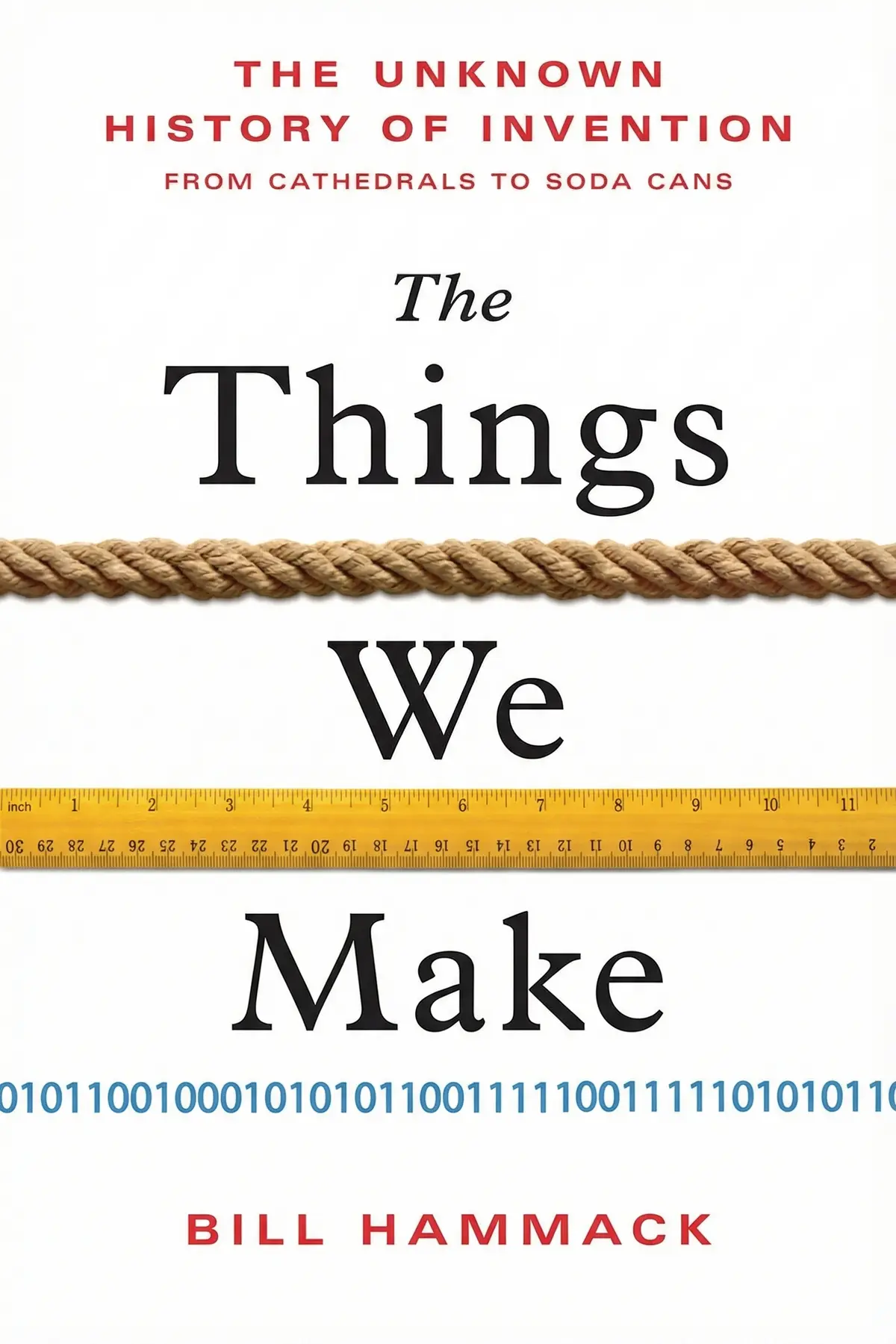
Table of Content
1. Introduction
1 min 30 sec
Have you ever looked at a towering skyscraper or even something as simple as a stapler and wondered how humanity actually figured out how to make it work? We often imagine that every great invention began with a complex mathematical formula or a breakthrough in a high-tech lab. However, the true story of how we built the modern world is much more grounded, gritty, and surprisingly intuitive. It centers on a concept known as the engineering method—a practical approach to problem-solving that has been used by everyone from ancient stone masons to the creators of the smartphone in your pocket.
In this exploration of Bill Hammack’s insights, we are going to pull back the curtain on the hidden history of invention. We will see how builders in the Middle Ages constructed massive cathedrals without knowing calculus, and how a search for a better way to detect enemy planes during wartime eventually gave us the microwave oven in our kitchens. The throughline here is simple yet profound: engineering is the art of using what you have to get what you want, even when you don’t have all the answers.
By the time we finish, you will stop seeing the objects around you as mere things. Instead, you will see them as the results of clever trade-offs, cultural influences, and a relentless pursuit of ‘what works.’ Whether it is the shape of a soda can or the ergonomics of a bicycle, every detail of our world is a testament to the engineering method. Let’s dive into how this mindset functions and why it is the most powerful tool for progress that humanity has ever possessed.
2. The Essence of the Engineering Method
2 min 06 sec
Ancient builders didn’t need modern physics to create architectural wonders. Discover the power of heuristics and how simple physical tools replaced complex calculations.
3. Defining the Standard for the Average Person
2 min 14 sec
Designing for everyone often means designing for no one in particular. Learn how the ‘average’ human became the blueprint for the objects in our homes.
4. Navigating Scarcity and Geographic Constraints
2 min 11 sec
Innovation often flourishes when resources are tight. See how ancient wine merchants used inflated goat skins and donkeys to beat the odds of geography.
5. The Strategic Partnership Between Science and Engineering
1 min 51 sec
While they are often confused, science and engineering play very different roles. Learn why having a hammer doesn’t make you a carpenter.
6. The Collaborative Nature of Breakthroughs
1 min 51 sec
The image of the lone genius in a lab is largely a myth. Discover the hidden teams and rivalries that truly powered the electric age.
7. How War and Accidental Discovery Drive Innovation
1 min 55 sec
Some of our most common household items weren’t designed for the home at all. Explore the surprising wartime origins of the microwave.
8. Embracing Imperfection as a Path to Progress
1 min 49 sec
Engineering isn’t about being right the first time; it’s about being less wrong every time. Learn why failure is the most important part of the process.
9. Conclusion
1 min 35 sec
As we look back at the journey from the master masons of the Middle Ages to the high-tech innovations of the modern era, a clear pattern emerges. The things we make are not just collections of atoms or results of cold logic. They are physical manifestations of the engineering method—a way of thinking that values pragmatism, tolerates uncertainty, and learns from every stumble. We have seen that the ‘best’ solution is rarely a fixed point; it is a moving target influenced by our culture, our resources, and our understanding of the people we serve.
The next time you hold a soda can, walk across a bridge, or use a microwave, take a moment to appreciate the centuries of rules of thumb and hard-won intuition that made that object possible. Realize that it exists because someone was willing to make a trade-off, someone was willing to test a hypothesis, and someone was willing to learn from a failure. Engineering is a deeply human endeavor, a creative art that uses the tools of science to build a bridge toward a better future.
You can apply this same mindset to your own life. When faced with a daunting problem, you don’t need a perfect plan or all the answers. You just need a reliable rule of thumb to get started. Be willing to iterate, be open to making adjustments as you go, and remember that progress is usually the result of being just a little bit better today than you were yesterday. The world is built on these small, practical steps, and by adopting the engineering method, you become a part of that grand, ongoing story of creation.
About this book
What is this book about?
The world is filled with objects we often take for granted, from the simple curve of a beverage container to the complex internals of a power plant. In this exploration of the history and philosophy of invention, we pull back the curtain on the 'engineering method'—a specific way of thinking that prioritizes practical solutions over theoretical perfection. It is a journey through time that reveals how ancient builders and modern designers alike use heuristics and intuition to overcome impossible odds. By following the development of iconic inventions, you will learn why things look and function the way they do. The book promises to change your perspective on the artificial world, showing that engineering is not just about math and science, but a creative and deeply human art form. It uncovers the trade-offs, cultural biases, and collaborative efforts that define the things we make, offering a new lens through which to view every tool and structure in your daily life.
Book Information
About the Author
Bill Hammack
Bill Hammack is a professor of chemical engineering who has gained international acclaim as the 'Engineer Guy' on YouTube. His passion for demystifying complex technological concepts has earned him prestigious honors, including the Carl Sagan Award for Public Understanding of Science and the Edwin F. Church Medal. Hammack is a prolific author in the field, having written works such as How Engineers Create the World and Eight Amazing Engineering Stories, all aimed at bringing the wonders of engineering to a general audience.
Ratings & Reviews
Ratings at a glance
What people think
Listeners find the book highly insightful, as one review mentions how it breaks down the underlying logic and methodology of engineering. It also serves as an excellent pick for engineering fans, with one listener characterizing it as a wonderful treatise on the humanity of engineering. Additionally, the text contains fascinating historical stories and is highly readable.
Top reviews
Darius
Finally got around to reading Hammack's latest, and it is a wonderful treatise on the humanity of engineering. Most people think of engineering as just cold, hard math, but this book proves it is a creative art form. The stories about the kelek rafts and the master masons of the 13th century are absolutely gripping. I loved the explanation of 'rules of thumb' and how they allow us to build even when the science isn't fully understood yet. Hammack’s style is accessible and warm, making complex logic feel like a conversation over coffee. It is easily one of the most insightful books I have read this year regarding how we shape our world.
Show morePatchara
As a long-time subscriber to the 'Engineer Guy' YouTube channel, I was eager to see Hammack’s philosophy in print. He does not disappoint! This book captures the logic and approach of engineering perfectly, illustrating how humans use limited resources to solve pressing challenges. The illustrations are a fantastic touch that help visualize the concepts like the pointed arches in Saint-Chappelle. I particularly enjoyed the discussion on trade-offs, like why soda cans are shaped the way they are to balance strength and storage. It is a fascinating look at technology that celebrates the trial and error required for real-world breakthroughs. Highly recommended for any curious mind!
Show morePalm
To be fair, I expected a dry textbook, but what I got was a wonderful treatise on human ingenuity. Bill Hammack explains the 'Engineering Method' with such clarity that even a non-technical reader can grasp the brilliance of a 50-foot raft on the Euphrates. The way he describes the trade-offs between cost, time, and safety really humanizes the profession. It isn't just about math; it's about making the best possible decision with limited resources. The stories about the soda can and the steam turbine are highlights that I’ve already shared with several friends. If you want to understand the logic behind the ordinary objects in your house, you should definitely pick this up.
Show moreRoydao
Wow, Hammack really nails the distinction between science and engineering in a way that feels incredibly fresh and necessary. I loved the story of Georgena Terry designing bicycles specifically for women’s proportions—it’s a perfect example of the engineering method in action. The book is full of these kinds of inclusive, diverse examples that show how engineering touches every life differently. It’s an easy read, but it leaves you with a much deeper appreciation for the 'invisible' steps behind every invention. From the light bulb to the microwave, the focus on trial and error is truly inspiring. This is a must-read for anyone who loves knowing how the world actually functions.
Show moreAnawin
Ever wonder how ancient civilizations built massive structures without modern calculators? It turns out they relied on something Hammack calls the 'engineering method,' a pragmatic approach based on trial, error, and reliable rules of thumb. The chapter on medieval cathedrals and the simple rope trick used to determine wall thickness was a total 'aha' moment for me. Hammack rephrases complex logic into something easy to read and deeply insightful. While the second half of the book meanders a bit into long-winded histories of specific individuals, the core message about how we solve problems under uncertainty is powerful. It’s a great read for anyone curious about the humanity hidden inside our technology.
Show moreJun
What a fascinating look at the 'rules of thumb' that actually govern our physical world. The story of the microwave oven and how it evolved from wartime magnetrons was a highlight for me. Hammack explains the engineering method as a way of dealing with incomplete information, which is a lesson that applies far beyond the workshop. I also appreciated the discussion on how cultural biases can affect design, like crash test dummies or game controllers. The writing is incredibly easy to read and manages to be educational without ever feeling like a lecture. There are some minor pacing issues in the middle, but the historical anecdotes more than make up for it.
Show morePensri
The information presented here is undeniably interesting, though the pacing felt a bit uneven throughout the second half of the text. I appreciated the deep dive into the steam turbine and the soda can, but some chapters felt much more polished than others. As an engineer, I enjoyed the distinction between our field and pure science, particularly the idea that we often act before the theory is finalized. However, the tone shifts from academic to casual quite abruptly. Truth is, it’s a decent introductory book for hobbyists, but seasoned professionals might find it a bit light on technical substance. It’s an okay read, just not the definitive work I was expecting.
Show moreNiphon
I'm an engineer by trade, so I usually love books about our history, and this one offered a solid defense of our discipline. I especially liked the point that engineering often precedes the scientific understanding of why something works. However, the book felt somewhat like a series of disjointed essays that didn't always mesh together into a single argument. The section on ceramic dish techniques felt far too long compared to other, more pressing innovations mentioned earlier. It’s a decent read for the commute, but I wanted a more unified narrative structure. To be fair, Hammack’s voice is clear and his passion for the 'rules of thumb' is contagious, but it didn't quite satisfy my craving for a deep history.
Show moreLeo
This felt like a collection of leftover chapters rather than a cohesive narrative about the history of making. While the first half makes an excellent point about engineering not being 'applied science,' the second half drags significantly. Do we really need a ten-page deep dive into one man's specific techniques for ceramic dishes? It felt like a 'fix-up' novel where disparate essays were stitched together by an editor. Furthermore, the occasional political interjections about the status of women and non-European races felt jarringly out of place. They didn't follow the author’s main technical points and served only to interrupt the flow of what should have been a focused history. It was a bit blah overall.
Show moreTippawan
I was really enjoying the technical history until the author started shoehorning in modern social ideologies. When a book about the mechanical evolution of the world starts using terms like 'cisgender,' I lose interest immediately. Engineering should be about the physics and the logic of the build, not about buying into silly academic jargon. There were also several interruptions where an editor clearly stepped in to lecture the reader on the status of women in the past. These sections felt completely disconnected from the actual engineering points being made. It’s a shame because the historical anecdotes were actually quite good, but the ideological slant ruined the experience for me.
Show moreReaders also enjoyed

A History of the World in 6 Glasses
Tom Standage
21 Lessons for the 21st Century
Yuval Noah Harari

A Long Way Gone: Memoirs of a Boy Soldier
Ishmael Beah


AUDIO SUMMARY AVAILABLE
Listen to The Things We Make in 15 minutes
Get the key ideas from The Things We Make by Bill Hammack, plus 5,000+ more titles in English and Thai.
- 5,000+ titles
- Listen as much as you want
- 7-day free trial
- Cancel anytime







