
Feathers: The Evolution of a Natural Miracle
Thor Hanson
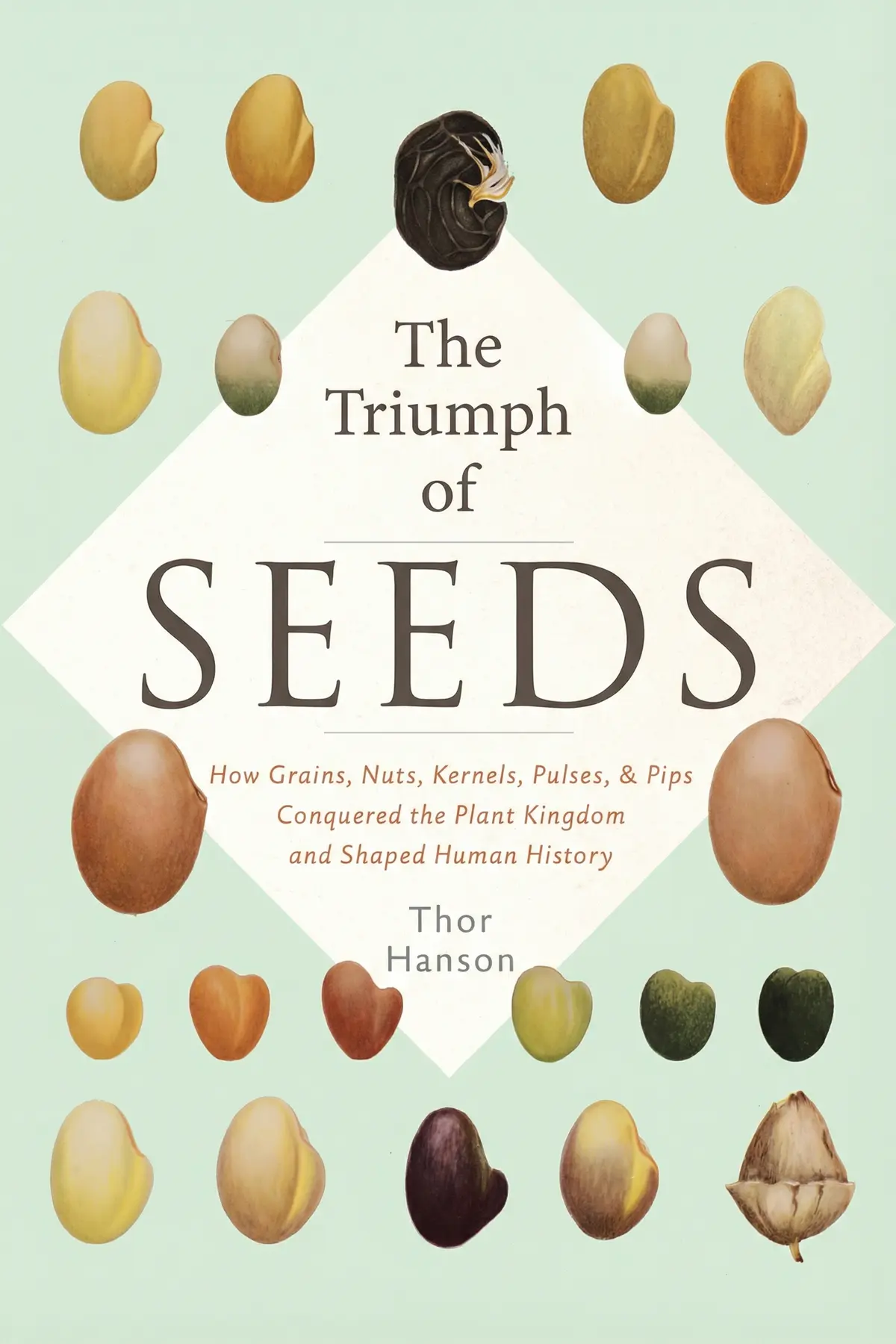
The Triumph of Seeds explores how tiny, unassuming seeds have shaped natural history and human civilization through their extraordinary evolutionary adaptations for survival, dispersal, and energy storage.
1 min 48 sec
Think about your morning routine for a moment. Perhaps you started your day with a cup of coffee, put on a cotton t-shirt, and had a slice of toast. While these things seem mundane, they all share a common, miraculous origin: the seed. In the grand narrative of life on Earth, we often focus on the massive trees or the vibrant flowers, but the real star of the show is the tiny package that makes it all possible. Thor Hanson’s exploration into the world of seeds reveals that these are not just passive biological units. They are, in fact, the victors of an evolutionary race that has lasted millions of years. They are sophisticated, resilient, and surprisingly influential in the shaping of human destiny.
In this summary, we are going to look at why seeds are one of nature’s most successful inventions. We will explore how they moved from humble beginnings to become the dominant form of plant life, and how their unique traits—like their ability to store energy and endure harsh conditions—have direct parallels in our own history. From the spice trade that redrew the maps of the world to the molecular biology that allows a seed to survive a desert drought, the story of the seed is really the story of life’s persistence.
We often take seeds for granted because they are small and quiet. But as we’ll see, their ‘triumph’ is a result of brilliant engineering and strategic adaptation. By the time we finish, you’ll look at a simple sunflower seed or a peppercorn not just as a snack or a seasoning, but as a masterpiece of natural technology that keeps our world functioning. Let’s dive into the fascinating mechanisms and historical ripples created by these tiny powerhouses.
2 min 07 sec
Discover how plants moved away from a total dependence on water to create a self-contained life-support system that allowed them to conquer the land.
1 min 59 sec
Explore why seeds are the ultimate energy bars of the natural world and how this concentrated nutrition fueled the rise of human civilization.
1 min 45 sec
Learn how seeds can effectively pause time, surviving for years or even centuries in a state of suspended animation until conditions are perfect.
2 min 01 sec
Discover the chemical and physical barriers seeds use to prevent being eaten, from rock-hard shells to potent natural toxins.
1 min 50 sec
Uncover the varied and often surprising ways seeds travel across the globe, using everything from wind and water to animal hitchhiking.
2 min 01 sec
See how the search for specific seeds, like pepper and cotton, redirected the course of empires and fueled the global economy.
1 min 44 sec
As we’ve seen, the ‘triumph’ of seeds isn’t just a catchy title; it is a literal description of how a specific biological strategy came to dominate the planet. Seeds are masterpieces of efficiency, combining endurance, protection, and energy into a single, portable package. They allowed plants to move from the water to the land, survived the extinction of the dinosaurs, and eventually provided the foundation for every human civilization that has ever existed. By understanding the biology of the seed—its dormancy, its defenses, and its dispersal—we gain a deeper insight into the resilience of life itself.
What this really means for us is a shift in perspective. The next time you walk through a garden or even just look at the ingredients in your pantry, remember the incredible journey those seeds have taken. They are the result of millions of years of evolution, each one a tiny time capsule waiting for its moment to shine. The survival mechanisms that allow a seed to wait for rain in a desert are the same ones that allow us to store food for the future.
Ultimately, Thor Hanson’s exploration reminds us that the smallest things can have the biggest impact. Seeds may be quiet, and they may be small, but they are incredibly powerful. They feed us, they clothe us, and they have driven the very course of our history. By appreciating and protecting seed diversity, we aren’t just looking after the environment; we are securing the very things that make our modern lives possible. The triumph of seeds is, in many ways, our triumph too, and keeping that connection strong is essential for the world to come.
The Triumph of Seeds is a deep dive into the hidden world of seeds, explaining how these small biological marvels conquered the planet. It covers the evolution of seeds from ancient spores, their ingenious methods of self-defense and survival, and their incredible ability to wait decades—or even centuries—for the right moment to sprout. The book also connects the biology of seeds to the course of human history. It illustrates how our reliance on seeds for food, fuel, and fabric has driven global trade, exploration, and the rise of agriculture. By the end, listeners gain a profound appreciation for how seeds represent the ultimate survival strategy in the natural world and why they remain the bedrock of our existence.
Dr. Thor Hanson is a conservation biologist from the Pacific Northwest and an award-winning author. A Guggenheim Fellow, his other books include Feathers and The Impenetrable Forest.
Thor Hanson
Listeners find the writing engaging and well-crafted, noting that the impressive research and historical context make the topic very approachable. They value the focus on various seeds and their significant impact on human existence, with one listener pointing out how they've shaped history and mankind. The book is praised for its quality, as one listener describes it as an excellent doorway into a rewarding world. While listeners admire the author's deep knowledge, some observe that the narrative occasionally wanders into personal tales.
This book is a masterclass in making botany feel urgent and alive. Thor Hanson manages to weave the evolutionary history of seeds into a narrative that feels as much like a thriller as a science text. I was particularly struck by the "baby in a box with a lunch" metaphor, which simplified complex biological processes without feeling patronizing. While the historical bits about Columbus and global trade routes are fascinating, they do lean a bit into old-school romanticism. Still, the way he explains how seeds shaped human civilization—from the caffeine in our morning coffee to the cotton in our clothes—is undeniably brilliant. It’s the kind of book that makes you stare at your garden with newfound respect.
Show moreThe chapter on the Almendro tree and the complex relationships between seed eaters and flesh eaters is worth the price of admission alone. Thor Hanson has a gift for taking the most minute biological details and turning them into epic stories of survival and ingenuity. I loved how he framed seeds as "inventive changing miracles" that have outlasted empires and ice ages. Some might find the tone a bit too whimsical, but in my experience, that's exactly what makes pop science work for a broad audience. It’s educational without being stuffy, and it successfully highlights how these tiny packets of life are the literal foundation of our world.
Show moreAfter hearing so many good things about "The Triumph of Seeds," I finally sat down with it and was completely charmed. The way Hanson connects the biology of seeds to the history of human trade—specifically chocolate, coffee, and spices—is just superlative. He has this way of making the mundane seem extraordinary, like describing the mechanics of a seed that can fly for miles on a gust of wind. Some chapters on evolution were a bit dense, but if you stick with it, the payoff is immense. It's a short read that packs a punch, even if the author's personal asides about his home life are a bit hit-or-miss for me.
Show moreFinally got around to reading this, and it’s easily one of the most engaging science books on my shelf. I especially loved the sections on how seeds like the almendro have adapted to survive in such specific, competitive environments. Thor Hanson’s writing is well-paced and full of those "did you know?" facts that you’ll end up repeating to anyone who will listen. The book manages to be both a celebration of natural history and a sobering look at how much we still don't know about the plant kingdom. Even with the slightly over-the-top personal anecdotes, it remains a superlative look at the tiny miracles that keep our planet running.
Show moreEver wonder why some plants are spicy while others are sweet? Hanson’s exploration of capsaicin and the role of fungi in seed development was easily my favorite part of this whole journey. The writing is incredibly accessible, though frankly, the frequent digressions about his three-year-old son, Noah, occasionally broke the flow of the scientific narrative. I appreciate the human element, but I was here for the botany first and foremost. That said, the research into how seeds survive dormant periods is mind-blowing. It's a solid pop-sci read that bridges the gap between a dry textbook and a casual nature documentary. Great for anyone who loves a bit of garden trivia.
Show morePicked this up after loving Hanson's other work on bees, and I found the enthusiasm here just as contagious. This book focuses heavily on the "how" and "why" of seeds, covering everything from flight mechanisms to the chemistry of poisons. Look, I know some readers aren't fans of the personal stories about his kid, but I felt they added a layer of warmth to what could have been a very dry subject. My only real gripe is that I wanted even more on the genetics side of things. It’s an excellent doorway into a rewarding world of botany, but it definitely leaves you wanting to go hunt out more specialized books.
Show moreThis is exactly the kind of book that makes me want to take a botany class from a passionate professor. Hanson writes with such clear joy for his subject that it’s hard not to get swept up in the drama of a seed’s journey through a bird’s digestive tract. The "lunch" metaphor for the endosperm is such a clever way to think about how plants set their offspring up for success. While the narrative occasionally wanders into personal tales that don't always feel relevant, the core information is solid and presented with great humor. It’s a wonderful mix of reality, history, and scientific wonder that I’ll be recommending to my gardening group.
Show moreTruth is, I didn't expect to be so fascinated by the thickness of a seed shell or the specific evolution of capsaicin. Hanson is an expert at distilling complex ecological concepts into something that the "common reader" can enjoy and understand. The book moves at a brisk pace, leaping from coal field evidence to modern seed banks with ease. I did find the focus on human interest narratives a bit high at times, but I suppose that’s the trade-off for making science "entertaining." If you're looking to become a botanical genius overnight, this isn't the book for you, but it’s a brilliant starting point for a deeper appreciation of nature.
Show moreAs someone who usually devours biology books, I found this one to be a bit of a mixed bag. On one hand, the information regarding seed shell thickness and evolutionary "arms races" is genuinely top-tier. On the other hand, there were a few passages about Indigenous diets and European colonization that felt remarkably dated and, to be fair, quite uncomfortable to read. I also expected a bit more academic rigor; it sometimes felt like I was reading a curated collection of Wikipedia entries rather than a cohesive thesis. It serves as a decent introduction for a layperson, but seasoned science readers might find the depth lacking and the personal anecdotes a bit distracting.
Show moreNot what I expected at all, and unfortunately, not in a good way. The science is buried under a mountain of anecdotes about the author’s toddler, which feels like a failure of editing more than a stylistic choice. To be honest, I was also really put off by the way Hanson romanticizes figures like Columbus without acknowledging the darker side of that history. There’s a weird undertone where European agricultural "superiority" is used to explain colonization, which felt totally unnecessary and scientifically questionable. I wanted a book about seeds and evolution, not a memoir about parenting mixed with outdated historical perspectives. It was a chore to finish.
Show more
Lisa Kaltenegger
J. Craig Venter
Carl Zimmer
AUDIO SUMMARY AVAILABLE
Get the key ideas from The Triumph of Seeds by Thor Hanson, plus 5,000+ more titles in English and Thai.







