
A River in Darkness: One Man’s Escape from North Korea
Masaji Ishikawa
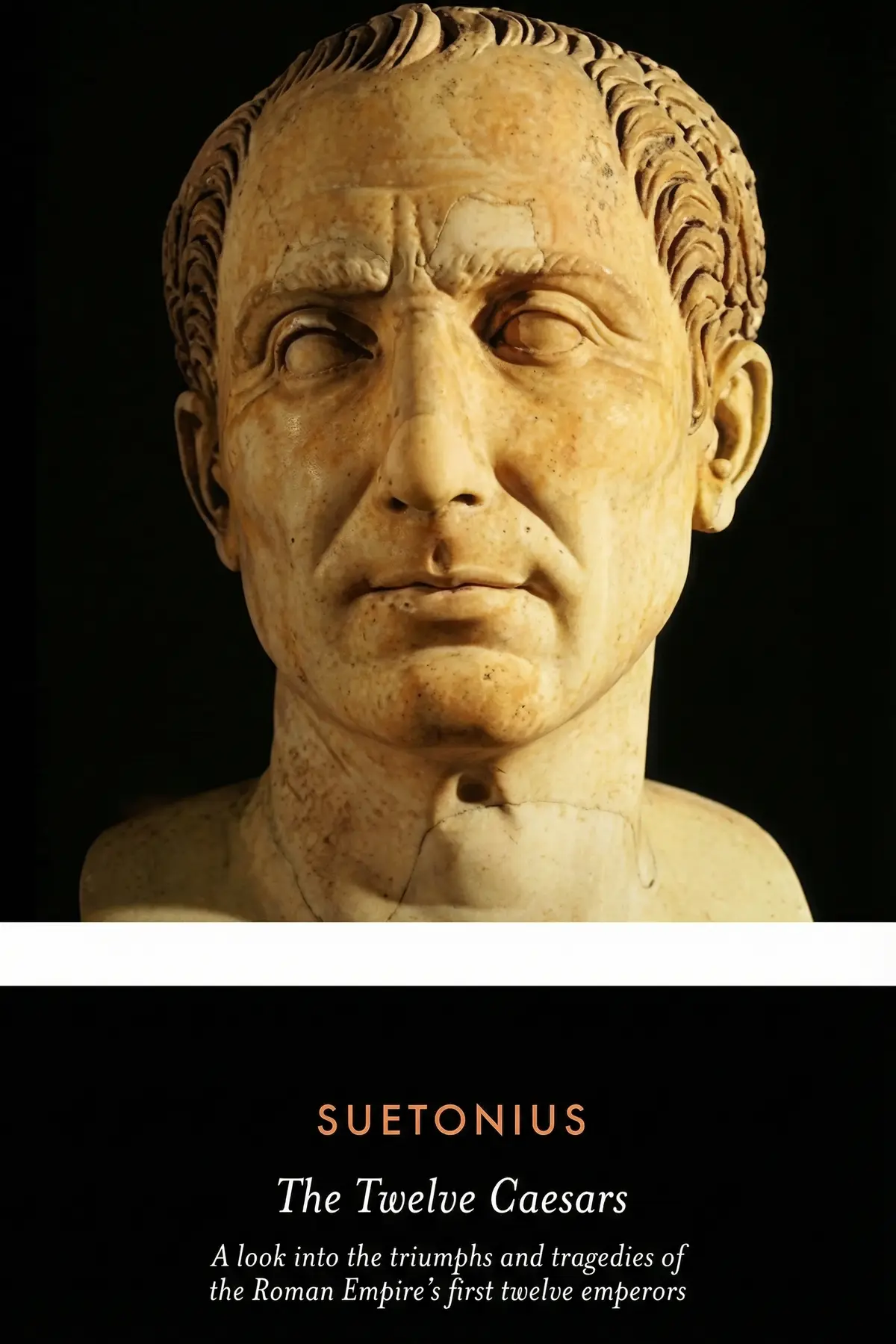
A classic exploration of the first twelve leaders of the Roman Empire, detailing their personal quirks, political strategies, and the dramatic shifts in power that defined early Roman history.
2 min 06 sec
Imagine standing at the center of the world, where a single person’s whim can move legions across continents or transform the architectural face of the most powerful city on Earth. This was the reality of the Roman Empire, a vast territory that once reached from the rainy hills of northern England to the sun-scorched sands of the Sahara, and from the Atlantic coast of Portugal to the bustling markets of the Middle East. At the very heart of this immense web of power sat the emperor. Some of these men were visionary architects of peace, while others were driven by paranoia, vanity, or outright madness.
To understand the true nature of this power, we must look through the eyes of Gaius Suetonius Tranquillus, a man who lived within the halls of the Roman administration and had access to the secrets of the elite. In this exploration, we aren’t just looking at dry dates or troop movements; we are delving into the flesh-and-blood personalities of the men who wore the purple. Suetonius provides us with a front-row seat to the triumphs that built an empire and the tragedies that nearly tore it apart. Through his biographies, we see the transition from a failing Republic to a structured monarchy, observing the shift from the ruthless ambition of Julius Caesar to the divine posturing of Caligula and the eventual practical restoration led by Vespasian.
As we journey through these accounts, we will see the patterns of history emerge—how charisma can lead to tyranny, how fear can cripple a ruler, and how even the most powerful men are often haunted by their own mortality. We will witness the rise of the Julio-Claudian line and its dramatic end, the chaos of civil war, and the dawn of the Flavian dynasty. This is a story of human nature under the ultimate pressure of absolute authority. It is a chronicle of how Rome was built, burned, and rebuilt, guided by the hands of twelve very different individuals who each left an indelible mark on the world. So, let’s begin our descent into the corridors of the Palatine Hill and meet the first of these giants: the man whose very name became a title for all who followed.
3 min 40 sec
Explore the formative years and relentless drive of a teenager who survived political purges to become the most powerful man in Rome.
3 min 41 sec
Witness the transition of a young, vengeful heir into the architect of Rome’s longest era of peace and stability.
3 min 20 sec
Follow the tragic and terrifying trajectory of an emperor who started as the people’s ‘star’ but ended as a self-proclaimed god.
3 min 23 sec
Discover how a man once mocked for his physical infirmities became a successful conqueror and a dedicated, if fearful, ruler.
3 min 27 sec
Step into the world of an emperor who prioritized artistic fame over the welfare of his people, leading to one of Rome’s most infamous eras.
3 min 15 sec
Observe the fragility of the Roman state as four different men seize and lose the throne in a single, violent year.
3 min 08 sec
See how a man of modest origins used wit, discipline, and fiscal rigor to pull the Roman Empire back from the brink of ruin.
3 min 16 sec
Contrast the short, compassionate reign of Titus with the dark, paranoid years of his brother Domitian that ended a dynasty.
1 min 59 sec
The journey through the lives of the twelve Caesars is more than a simple history lesson; it is a profound study in the corrupting influence of power and the resilience of a state. We have seen how Julius Caesar’s ambition shattered an old world and how Augustus’s vision built a new one. We have witnessed the terrifying depths to which a ruler can sink when they lose touch with their humanity, as seen in the madness of Caligula and the vanity of Nero. Yet, we have also seen how practical leadership and a commitment to order, embodied by men like Vespasian and Titus, can pull a society back from the edge of oblivion.
Suetonius does not shy away from the flaws of these men. He reminds us that even the most powerful individuals are subject to their own fears, petty envies, and physical limitations. The transition from the Julio-Claudian line to the Flavian dynasty shows that the stability of an empire rests not just on the strength of its armies, but on the character and the fiscal responsibility of its leaders. When we look back at these twelve men, the throughline is clear: absolute power acts as a magnifying glass for the human soul. It takes the inherent traits of a man—whether they be generosity, paranoia, or a love for the arts—and projects them onto a global stage with world-altering consequences.
As we close this chapter on ancient Rome, we are left with a lasting impression of the fragility of peace and the importance of civic discipline. The lessons from the Palatine Hill are as relevant today as they were two millennia ago. We learn that a leader’s true legacy is not found in the marble statues they erect or the gods they claim to be, but in the stability they leave behind and the welfare of the people they serve. Rome survived the excesses of the few because of the systems built by the many, but it was the character of the Caesars that defined the color and tone of an entire epoch. In the end, Suetonius teaches us that history is made by individuals, but its weight is carried by everyone.
This summary provides an in-depth look at Suetonius’s biographical accounts of Rome’s most famous and infamous leaders. It begins with the ambitious rise of Julius Caesar, whose actions dismantled the Roman Republic, and continues through the established dynasty of Augustus, the erratic reigns of Caligula and Nero, and the eventual stabilization under the Flavian emperors. The narrative explores the psychological and moral dimensions of these rulers, examining how absolute power influenced their character and the state. Readers will discover the contrasts between the frugal, disciplined Augustus and the flamboyant, destructive Nero. It also covers the chaotic 'year of four emperors' and the pragmatic reconstruction of the Roman state under Vespasian. By focusing on the personal lives and specific anecdotes recorded by Suetonius, the text offers a human-centric view of an empire stretching from Britain to the Middle East, highlighting the triumphs, tragedies, and eccentricities that shaped the Western world.
Gaius Suetonius Tranquillus was a distinguished Roman scholar and historian born around 69 CE into a prosperous family. He was a prolific intellectual who focused his work on the biographies of significant cultural and political figures, while also studying Roman customs and poetry. Suetonius held influential positions within the imperial courts of Trajan and Hadrian, which provided him with unique access to official records and personal anecdotes. His most famous contribution to history is The Twelve Caesars, completed around 122 CE, which remains a primary source for understanding the lives of Rome’s early emperors.
Listeners find this an intriguing listen that offers significant glimpses into ancient Roman civilization and is specifically useful for grasping the Caesars. Furthermore, the history is presented in an absorbing way that avoids being dry, and the depth of detail is highly regarded. However, opinions on the translation and readability are split; some find it superb, while others mention the antiquated language makes it a challenge to process. The prose and overall clarity also receive varied critiques.
Picked this up after hearing about the scandalous reputation of the early Roman emperors. Frankly, Suetonius delivers exactly what you would want from an ancient tabloid writer. The Robert Graves translation makes the text feel incredibly modern and snappy, despite the age of the original source material. I was particularly gripped by the psychological profiles, which focus less on troop movements and more on the private habits of men like Augustus and Tiberius. While some might find the lack of rigorous military history disappointing, I found the personal anecdotes provided a far more vivid picture of Roman life. It is a remarkable piece of history that shows humans have not changed much in two millennia. Highly recommended for any history buff wanting the unfiltered version of the Caesars.
Show moreThe chapter on Caligula is truly disturbing and serves as a haunting reminder of what happens when absolute power meets absolute instability. Suetonius manages to craft a narrative that is both lively and terrifying, painting pictures of emperors who were as much performance artists as they were politicians. I was fascinated by the specific details regarding Nero’s elaborate attempts to murder his mother, which read like a bizarre dark comedy. The information quality is top-notch because the author actually had access to imperial archives, giving us a fly-on-the-wall perspective that other historians often miss. Even when the accounts seem like tall tales, they reveal so much about the anxieties of the Roman public. This is a must-read for anyone who thinks modern politics is uniquely crazy.
Show moreAfter hearing so much about the novel I, Claudius, reading the original source material was an eye-opening experience. Robert Graves clearly took massive inspiration from this text, and you can see why the stories are so enduring. The narrative of Nero’s death is especially moving and dramatic, showcasing the author's ability to create a set-piece that sticks in your mind long after you have closed the book. It is amazing to think that these stories survived for nearly two thousand years to tell us about the dangers of dynastic power. The inclusion of maps and a glossary in the Penguin edition was incredibly helpful for keeping track of the various factions and family trees. It is a dense but rewarding journey through the peak of Roman civilization.
Show moreTruth is, this feels less like a dusty history book and more like a warning about the nature of humanity. The archetypes Suetonius describes—the suspicious leader, the disillusioned heir, the rock-star politician—are evergreen and occur throughout history. I found the sections on omens and signs particularly interesting because they show how even the most powerful men in the world were slaves to superstition. The writing is vivid and often shockingly blunt, which I personally preferred over more formal, dry academic works. Even if half the stories are just urban legends, they capture the political theater of the era perfectly. It is an essential read for anyone interested in the psychology of power and the legacy of the Roman world.
Show moreEver wonder what it would be like if a gossip column covered the fall of the Roman Republic? Suetonius gives us a glimpse into that world with a collection of biographies that feel more like a political tatler than a dry textbook. The detail is incredible, ranging from Julius Caesar’s attempts to hide his baldness to the terrifying madness of Caligula. Personally, I think the division between public deeds and private scandals is a bit jarring, but it definitely keeps the pacing fast. Some sections feel a bit repetitive, and the reliance on omens can get overwhelming after the tenth dead chicken. However, the insight into the mechanics of power and the personal flaws of these leaders is absolutely invaluable for understanding Western civilization.
Show moreWow. I did not expect a book written in 121 CE to be this racy or entertaining. Suetonius has a disenchanted eye that strips away the marble statues and shows us the flawed, often disgusting men underneath the titles. From Nero’s failed singing career to the bizarre sexual gymnasts of Tiberius, the book is a non-stop parade of the weird and wonderful. My only real gripe is that the translation quality can be hit-or-miss depending on which edition you grab; some older versions are incredibly dry. Luckily, the core stories about political theater and the theatrical executions are strong enough to carry the weight. It is fascinating to see how the Caesars used their power to both distract and dominate the Roman populace.
Show moreFinally got around to finishing this, and I am struck by how much Julius Caesar reminded me of a modern populist politician. Suetonius captures the interplay of debt, bribery, and public image in a way that feels surprisingly contemporary. The way he describes Caesar combing his thin hair forward to hide his baldness is such a humanizing, petty detail that bridges the gap between centuries. I will say that the lack of internal consistency in the narrative can be puzzling at times, especially when Suetonius contradicts himself regarding an emperor's character. Despite those flaws, the sheer volume of specific details about daily imperial life is breathtaking. It is a fascinating read that provides a much-needed human perspective on the legendary figures of the Roman Empire.
Show moreAs someone who enjoys classical history, I found this to be a bit of a mixed bag. Truth is, the language can feel quite old-fashioned and stiff in places, making it a slow slog through certain passages. While the detail is undeniably impressive, the writing style lacks a certain clarity that would make it more accessible to a casual modern reader. I appreciated the sections on Vespasian and Titus for their more grounded approach, but the endless lists of portents and dreams started to wear thin after a while. It provides great insight into the Roman mindset, yet the lack of a cohesive narrative thread between the lives makes it feel disjointed. It is an important historical document, but perhaps not the most engaging bedtime reading for everyone.
Show moreLook, if you are expecting a rigorous military history of the Roman Empire, you should probably look elsewhere. This book focuses almost entirely on the personality and private eccentricities of the Caesars rather than the mechanics of government or warfare. While some of the anecdotes are hilarious—like Caligula wanting to make his favorite horse a priest—the lack of focus on administration makes the Empire seem like a chaotic mess of slaves and freedmen. In my experience, the writing can be a bit repetitive as each life follows the same rigid structure of birth, public life, and private scandals. It is a great resource for trivia and understanding Roman culture, but as a biography, it feels a bit shallow and uncritical.
Show moreNot what I expected at all, and to be fair, I found the experience quite underwhelming compared to the hype. The structure is incredibly haphazard, as Suetonius seems more interested in listing random anecdotes than presenting an organic, logical flow of history. He jumps from military exploits to bedroom antics without much connective tissue, making it hard to track the true cause and effect of political shifts. I also struggled with the uneven length of the chapters; the first few lives are massive, while the later ones feel like rushed footnotes. While the historical content is technically detailed, the lack of critical analysis regarding the sources makes the whole thing feel like a collection of urban legends. It is a difficult read that simply did not click for me.
Show moreMasaji Ishikawa
Charles C. Mann
Ben Macintyre

Andrew Ross Sorkin


Fay Bound Alberti
James Shapiro


AUDIO SUMMARY AVAILABLE
Get the key ideas from The Twelve Caesars by Suetonius, plus 5,000+ more titles in English and Thai.







